


Installation Instructions

ED7400 Series
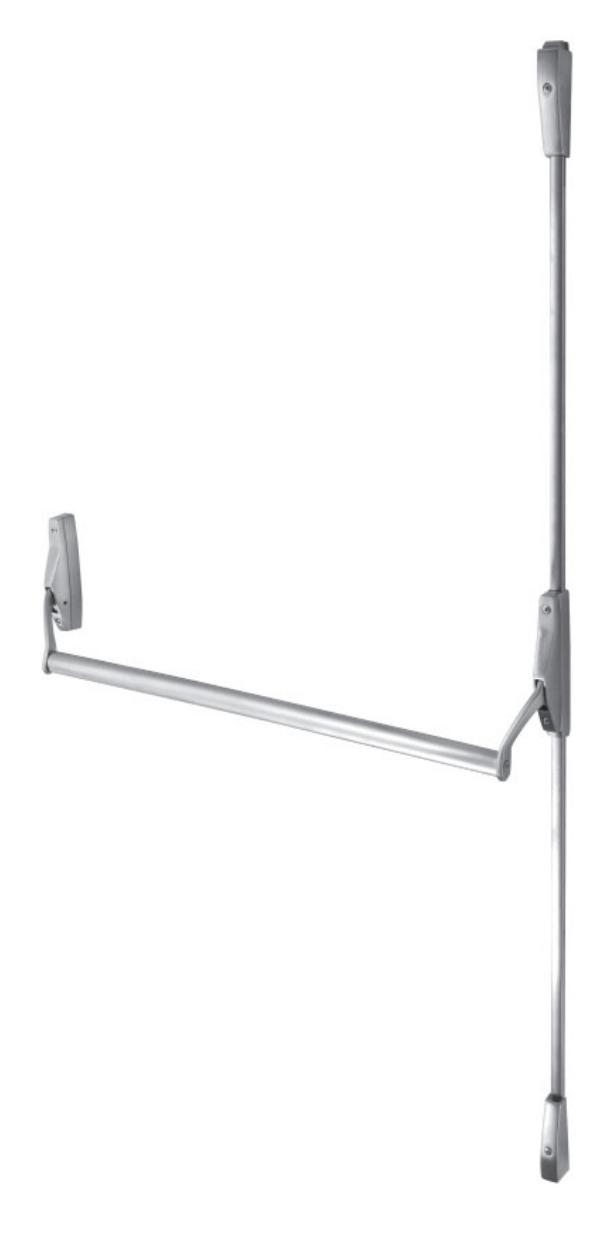
Surface Vertical Rod Exit Device
WARNING
This product can expose you to lead which is known to the state of California to cause cancer and birth defects or other reproductive harm. For more information go to www. P65warnings.ca.gov.
For installation assistance contact Corbin Russwin 1-800-543-3658 • techsupport.corbinrusswin@assaabloy.com
Copyright © 2018, 2023, ASSA ABLOY Access and Egress Hardware Group, Inc. All rights reserved. Reproduction in whole or in part without the express written permission of ASSA ABLOY Access and Egress Hardware Group, Inc. is prohibited.
WARNING
Attention Installer: Improper installation may result in damage to the product and void the factory warranty.
Surface Vertical Rod Exit Device
Installation Instructions

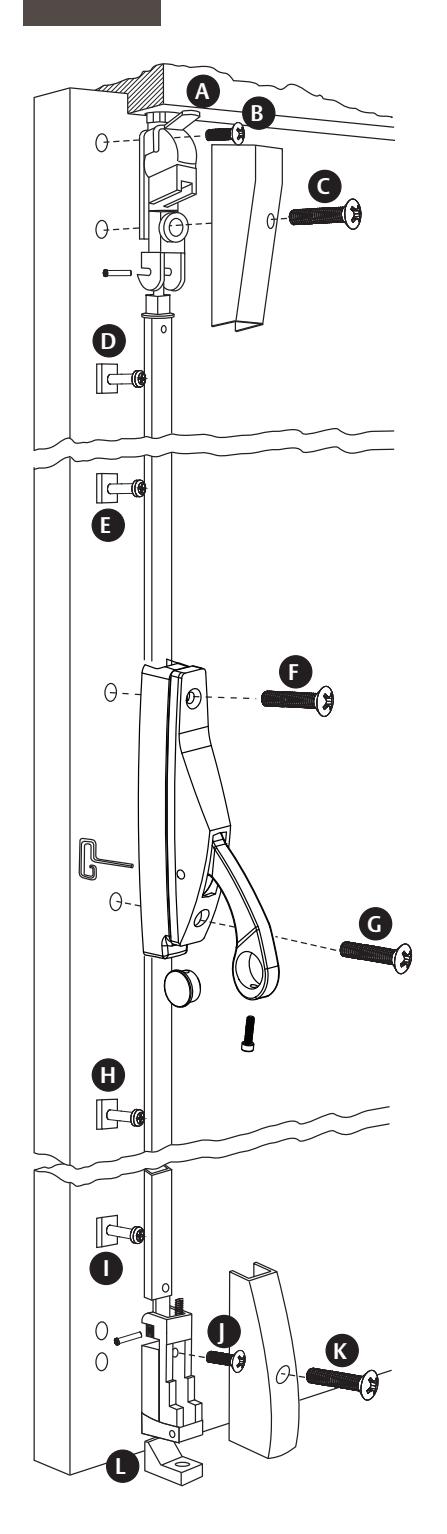
| Screw Guide | ||
| Screw | Wood Door | Metal Door |
| A |
Top Strike
#12 Round Head WS |
#12-24 Pan Head Machine
Screws |
| B |
1/4-20 Binding Head Machine Screw and 7/16" Sex
Nut |
|
| C | 1/4-20 Oval Head Mach Screw and 7/16" Sex Nut | |
| D | #12 Round Head WS |
#12 Round Head Tapping
Screw (Use 5/32" drill) |
| E | #12 Round Head WS |
#12 Round Head Tapping
Screw (Use 5/32" drill) |
| F | 1/4-20 Oval Head Mach Screw and 7/16" Sex Nut* | |
| G | 1/4-20 Oval Head Mach Screw and 7/16" Sex Nut* | |
| H | #12 Round Head WS |
#12 Round Head Tapping
Screw (Use 5/32" drill) |
| I | #12 Round Head WS |
#12 Round Head Tapping
Screw (Use 5/32" drill) |
| J |
1/4-20 Binding Head Machine Screw and 7/16" Sex
Nut |
|
| K | #14 Oval Head WS |
1/4-20 Oval Head Self Tap
ping (Use #3 drill) |
| L |
Surface Bottom Strike
#14 Flat Head WS |
1/4-20 Flat Head Mach
Screws x 3415 Star Anchor or equiv. |
| M |
Flush Bottom Strike
#14 Flat Head WS |
1/4-20 Flat Head Mach
Screws x 3415 Star Anchor or equiv. |
* Sex Nut not required if outside trim used.
Figure 1
Surface Vertical Rod Exit Device
Installation Instructions

2 Locate All Inside Holes on Centerline
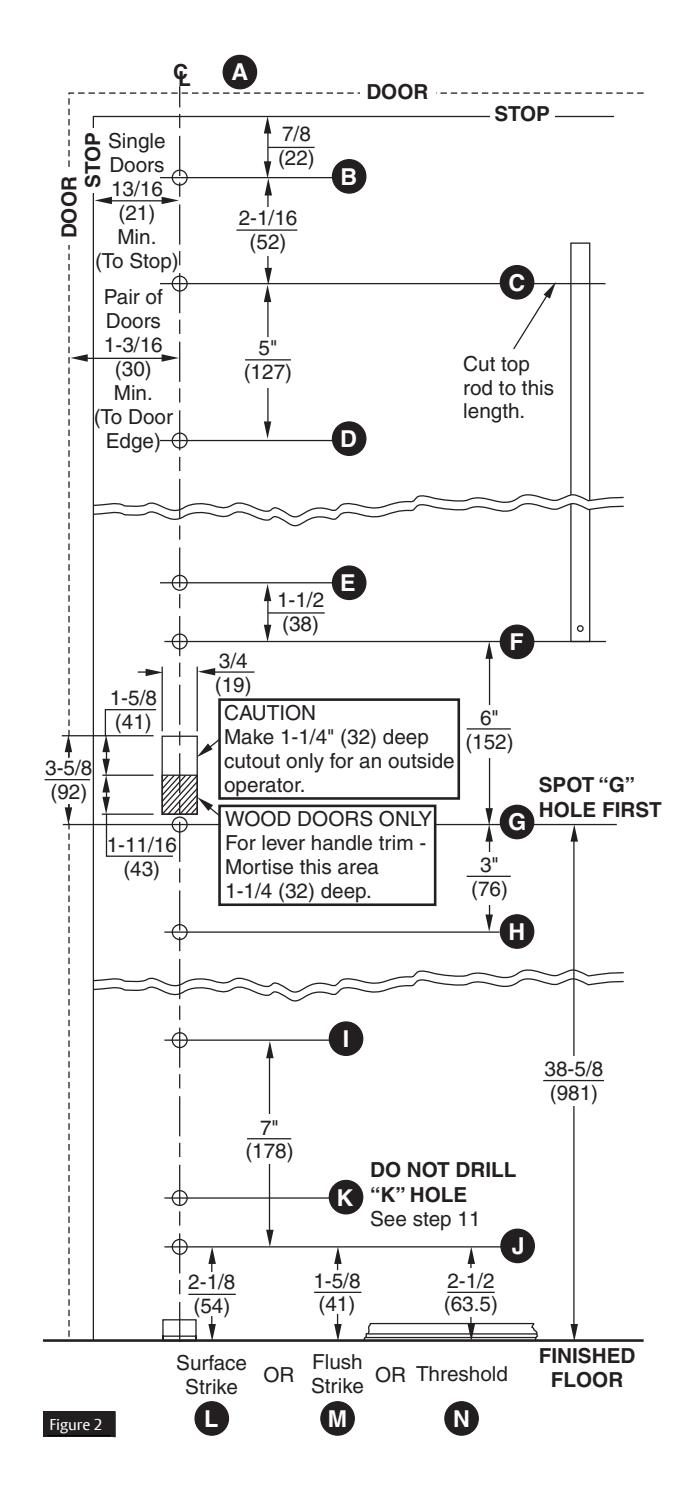
Spot and drill holes B to J for screws and sex nuts (as listed in screw guide - Figure 1 on page 2). (Figure 2) SPOT G FIRST.
NOTE: 13/16" (21mm) minimum distance between stop and centerline with single doors. With pair of doors, 1-3/16" (30) minimum centerline to edge of door.
NOTE: If you have outside operator and trim, use case mounting holes F and G to locate trim template.
Surface Vertical Rod Exit Device
Installation Instructions
3 Mount Top and Bottom Strikes
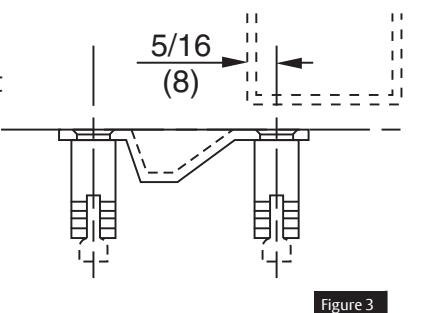
Using centerline established on door, close door and mount strikes against door.
NOTE: Except for fl ush bottom strike. See drawing for position. (Figure 3)
4 Cut and Assemble Top Rod
1. Measure distance from bottom screw hole "C" of top latch case to top screw hole "F" in active case.
(Figure 2 on page 3)
- 2. Cut undrilled end of top rod to this length.
- 3. Seat adjustable rod connector as shown in cut end of rod. (Figure 4)
- 4. Using hole as guide, drill through connector and rod. Figure 4
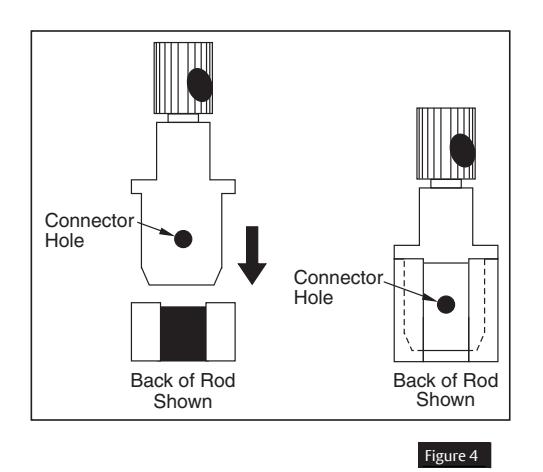
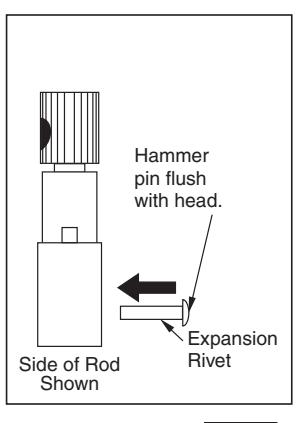
Figure 5
-
5. Secure with expansion rivet from front of rod. (Figure 5)
5 Insert Rod Guides - Position Top Rod
Figure 6
- 1. Install 4 top and bottom rod guides exactly on centerline. (D, E, H, I; Figure 2 on page 3)
- 2. Seat screw but do not crush guide.
- 3. Rotate guide "D" so track is horizontal.
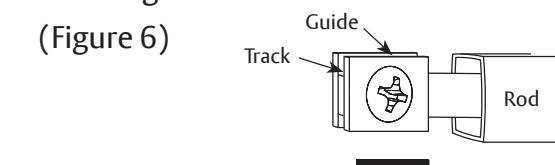
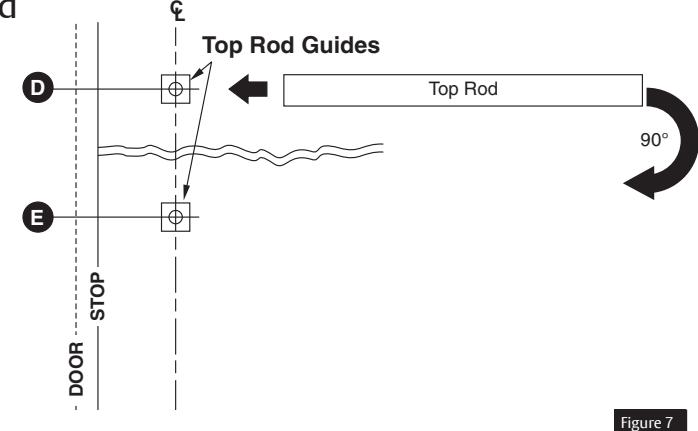
4. Slip top rod over guide and rotate to vertical position, sliding rod down over guide "E". (Figure 7)
Surface Vertical Rod Exit Device
Installation Instructions
6 Mount Top Latch Frame
Retract latch and secure case with screw "B". (Figure 8)
7 Mount Bottom Rod
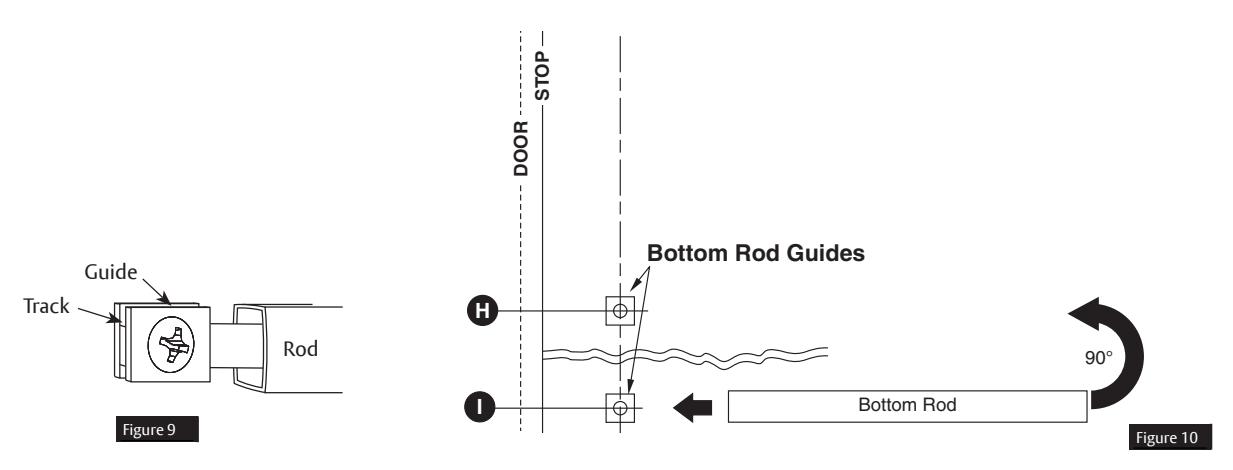
- 1. Turn guide "I" so track is horizontal. (Figure 9)
- 2. Slip bottom rod over guide and rotate to vertical position, sliding rod up over guide "H". (Figure 10)
8 Mount Active Case and Attach Rods
- 1. Position case so that pins in back engage holes in top and bottom rods. (Figure 11)
- 2. Secure with screws F and G. (Figure 1 on page 2)
NOTE: If you have outside trim follow template furnished.
TO REVERSE HAND:
- 1. Remove two (2) screws from back of each case to separate bodies from covers.
- 2. Switch covers and reassemble.
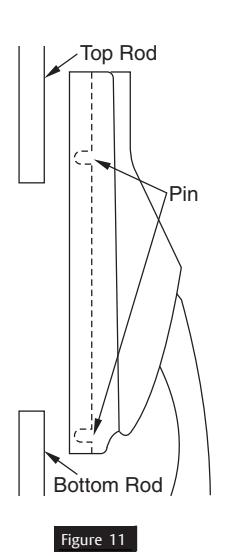
Figure 8
Surface Vertical Rod Exit Device
Installation Instructions
Figure 12
9 Mount Active Case and Attach Rods
- 1. Slide bar through active and inactive case with 3/16" hole towards active case. Secure with 10-24 x 3/4" cap screw. (Figure 12)
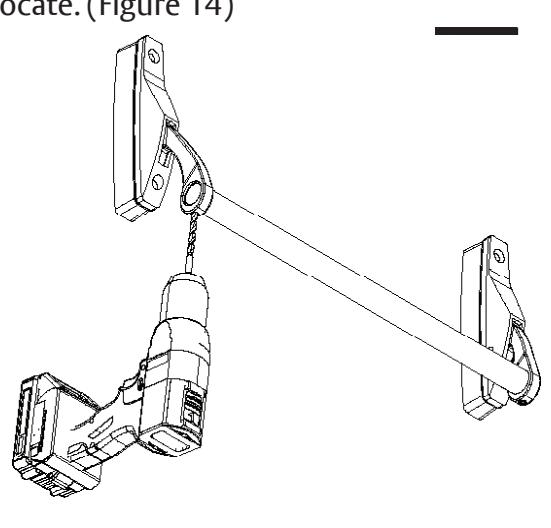
- 2. Mark bar at inactive case and cut. (Figure 13) Length of crossbar should be fl ush to 1/16" less than fl ush from face of crossbar arm.
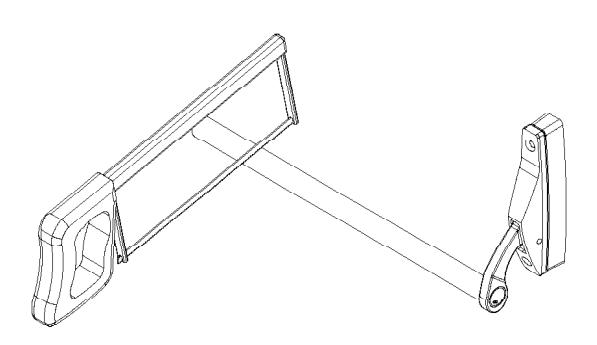


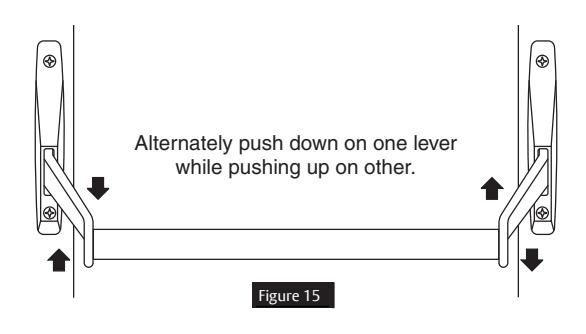
NOTE: If levers do not work freely, check for binding of levers due to improper bar length or case misalignment.
FM463 1/23
For installation assistance contact Corbin Russwin
Surface Vertical Rod Exit Device
Installation Instructions
10 Adjust Top Latch
- 1. Shut door.
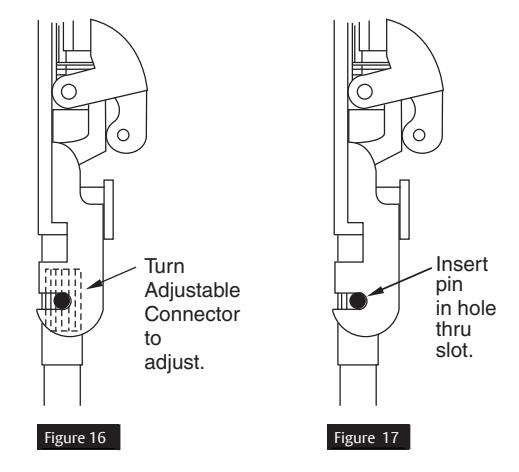
- 2. Turn adjustable rod connector until head touches underside of slide. (Figure 16)
- 3. Insert pin. (Figure 17)
- 4. Depress crossbar.
- 5. If latch does not retract completely, remove pin and turn connector out one (1) turn.
- 6. Repeat until latch bolt just disengages.
NOTE: For maximum security, do not over-adjust.
11 Mount Bottom Latch Frame
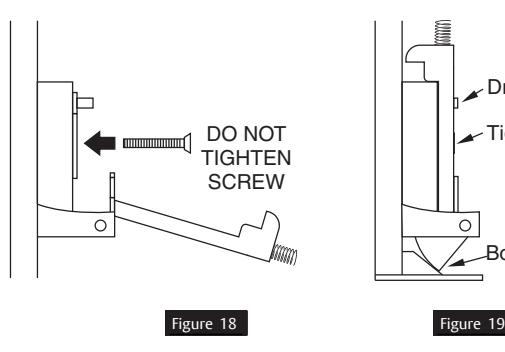
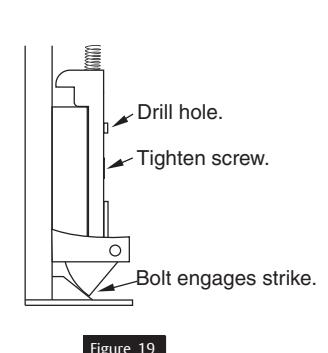
- 1. Insert screw "J" through slot in frame into bottom hole. (Figure 18)
- 2. Position frame so that latch just engages strike. (Figure 19)
- 3. Tighten bottom screw.
- 4. Using hole "K" in frame as a guide, drill door through hole in frame.
- 5. Insert screw "K".

12 Adjust Bottom Rod Length & Engage Latch
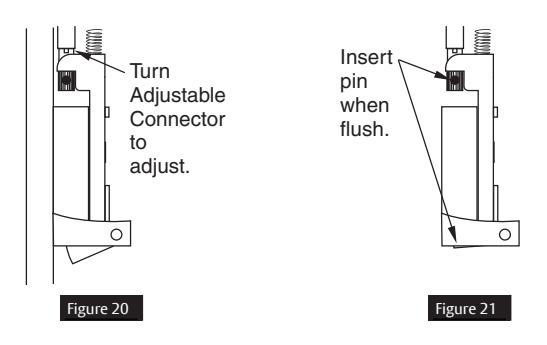
- 1. Dog down active case.
- 2. Turn adjustable rod connector so that latch bolt is fl ush with bottom of frame. (Figure 20)
- 3. Insert pin in adjustable rod connector. (Figure 21)
- 4. Undog active case.
13 Mount Latch Covers
Bottom
- 1. Position bottom latch cover above bottom latch frame and slide down to engage spring. (Figure 22)
- 2. Secure with furnished screw.
Top
1. Position and secure with screw through bottom hole in frame.
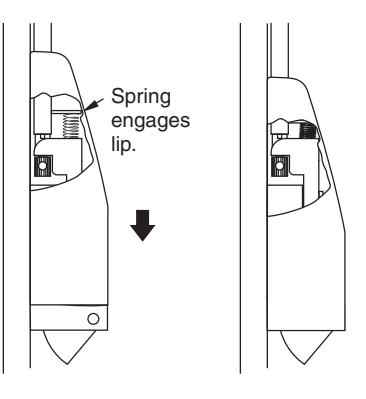
Figure 22
13 Test Operation
Latches should tightly engage strikes in closed position.
If door can be pushed open without depressing crossbar, top rod connector has been over-adjusted. See Step 10.
When crossbar is depressed, latches should freely disengage strikes.
When active and inactive cases are dogged down, latches should disengage strikes.
If not, remove top and bottom latch cases and readjust adjustable rod connectors. See Steps 10 and 12.