Schlage Knob Rekeying Manual Guide
Open the original PDF document
View PDF

Rekeying Quick Start Guide
INTRODUCTION
Rekeying and Rekeying Kit
SECTION 1
Lever Rekeying
SECTION 2
Knob Rekeying
SECTION 3
Deadbolt Rekeying
SECTION 4
Keypad Lock Rekeying
SECTION 5
Keypad Deadbolt Rekeying
SECTION 6
Handleset Rekeying
SECTION 7
Appendix
Cylinder Repinning, Disengagement, Glossary of Terms

Rekeying
Rekeying: What You Need to Know
Rekeying is a precise process that requires expertise—particularly when it involves rekeying multiple products. By offering this service at your store, you're helping customers make their keys match by taking advantage of the safest and most reliable rekeying method on the market.
In this guide, you'll find detailed, easy-to-follow instructions for rekeying any Schlage lock cylinder. Each section—organized by product function includes a list of features and benefits to help guide your conversation with customers and reinforce their choice in Schlage—the one most trusted by consumers.
Additionally, you'll find expanded product views that outline the components of each product, as well as helpful hints and quick tips to further your knowledge of Schlage products. All of this is designed to support your role as a key resource, both to consumers and in-store.
Recommend Electronic Locks and Change a Code Not Keys
If you sense managing keys is becoming a challenge for your customer, you may want to recommend a Schlage keypad lock.
- Schlage Keypad Deadbolts: Consumer Digest Best Buy for two years running
- Schlage Keypad Levers: ideal for doors with a single-hole prep
More and more customers are finding that our keyless products are much more convenient…not to mention a better investment over the long run with no more keys to lose, hide, carry or forget. Best of all, they can unlock their door—at any time with a simple four-digit code they designate.
When security really matters and your reputation is on the line, recommend Schlage products.
DID YOU KNOW?
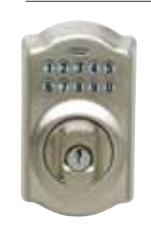
Camelot Keypad Deadbolt
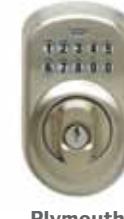
Plymouth Keypad Deadbolt
throw deadbolt because the engineers at Schlage wanted to ensure the deadbolt locks securely in place even as doors contract and expand from temperature and humidity changes outside. Rated ANSI Grade 2 by BHMA, Schlage Keypad Locks provide great security for residential openings.
Schlage Keypad Locks
»
- • Programmable at the lock—holds up to 19 different user codes
- • Easily installed with just a screwdriver no wiring required
- • Powered by a 9V battery that lasts up to three years


i

Rekeying
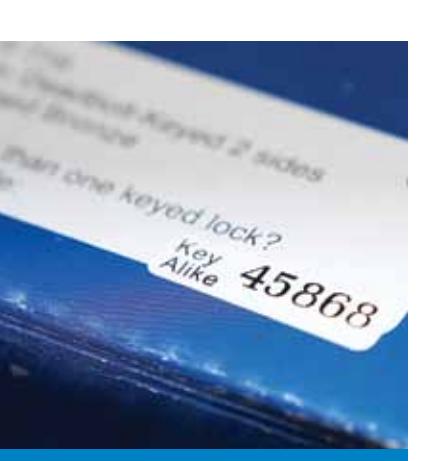
Helpful Hint: If your customer is looking for two security products that are the same function (ie. two keyed levers or two security sets) that use the same key, find two packages that have the same key alike number on the top panel of the packaging. Please note, products are not keyed alike across functions. !
Which Comes First? Rekeying Multiple Products
When you are rekeying multiple products to match a key in one of the packages (not a key from the customer), you can reduce the amount of time required by strategically choosing the order in which you rekey. For instance, if you are rekeying a handleset and a knob, rekey the knob to match the keys in the handleset package. This will take you less time.
| REKEYING TI M E |
|---|
| Lever |
| Knob |
|
Single Cylinder
Deadbolt |
|
Keypad
Lock |
|
Double Cylinder
Deadbolt |
|
Security
Set |
|
Keypad
Deadbolt |
|
Front Entry
Handleset |
Lots of Products to Rekey?
Remind your customer that changing codes on a keypad lock or keypad deadbolt is a lot easier than changing keys or rekeying locks. In fact, on keypad locks, keys are only needed if customers ignore the low battery warning and the battery expires.
Rekeying from a Duplicate Key
Use caution when using a duplicate (aftermarket) key in the rekeying process. Duplicate keys wear faster and can result in key cut discrepancies during the rekeying process that cause the cylinder to stick when locked and unlocked after the cylinder is repinned.
Reminder: While you are rekeying to the duplicate key, make sure all of the bottom pins in the cylinder are completely flush. (You may have to substitute smaller or larger pins if the duplicate key is too worn.)
If you are rekeying from a duplicate, follow these steps:
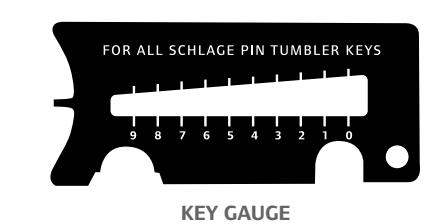
Use the Key Gauge to Determine Pin Combinations
- A With key cuts facing up, slide key into the opening of key gauge, located near the number "0." Move key to first cut, or notch, from the key bow.
- B Slide key left until it stops on a number.
- C Write down number and proceed to the next cut.
- D Repeat until all cuts have a corresponding number—from bow to the tip of key. This five- or six-digit number is the key combination or "bitting."
KEY CUTS
Helpful Hint: !
Helpful Hint: Advise your customers to
have additional keys made with the correct key cuts so they have a new key that functions smoothly in the rekeyed lock.
!
between two numbers, pick the lower number (shallower cut).
If the key lands

ii iii

Keying Kit
Schlage Rekeying Kits provide everything you need to get the job done—including all the tools and parts you need for repinning the cylinders of most Schlage locksets so that they work with a single key.
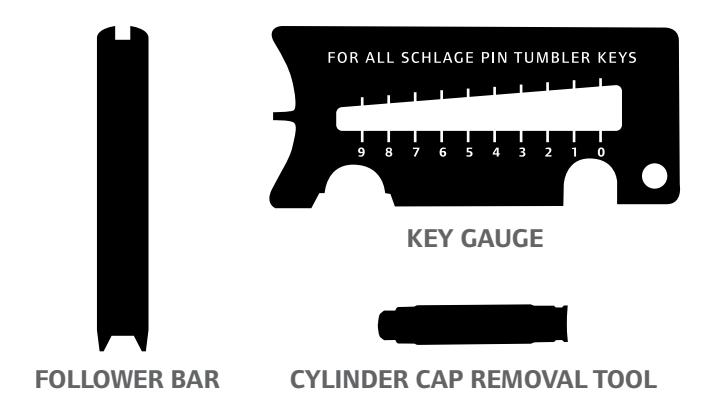
The following tools are included in the Keying Kit:
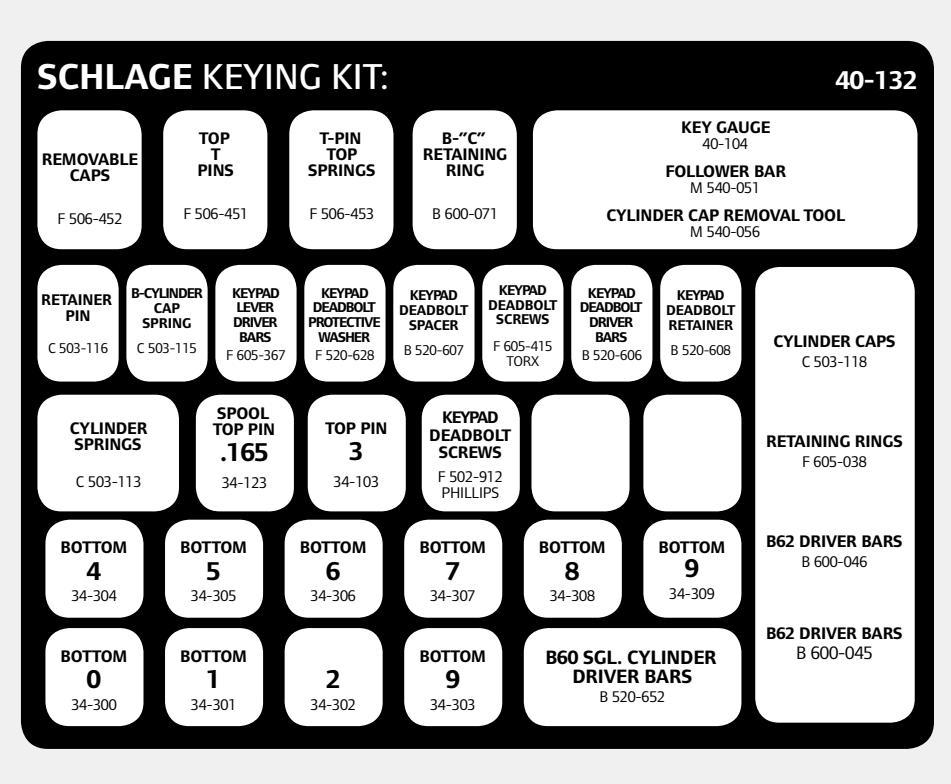
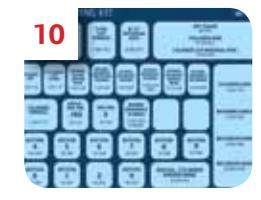
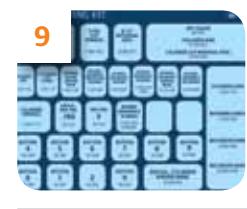
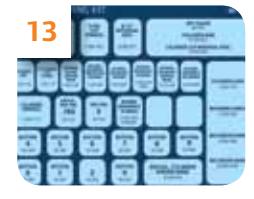
THE KIT MAP
Navigating your way through the Kit tray.
PARTS LIST:
- Bottom pins
- Top pins
- Springs
- · Cylinder caps
- Cap pins
- · Cap pin springs
- B-Series deadbolt tailpieces
- · Key gauge
- · Plug follower
- Cylinder cap removal tool
- · Follower bar

2
Unlock lever and leave key in cylinder.
Use key gauge to dislodge lever from
chassis.
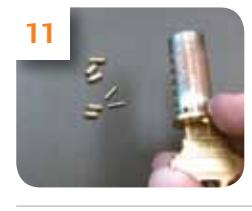
Empty existing pins out of cylinder. Remove original key.
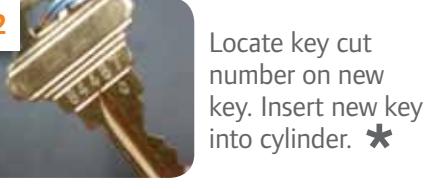
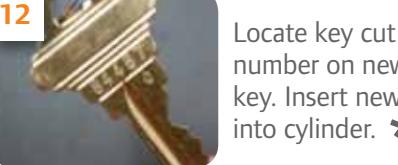
Locate key cut number on new key. Insert new key into cylinder. *

If a key number cannot be located or if rekeying from a duplicate key, use key gauge to determine appropriate pin height. See page iii for more information.
Remove lever portion from chassis.
Review rekey kit map for pin locations and match numbers to new key.
Remove key from cylinder and push cylinder out of the lever.
Insert correct numbered pin into first hole, reading cylinder right to left. !

11
7
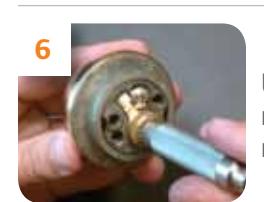
Remove C clip from cylinder (by twisting like you are peeling an apple).
Insert correct numbered pin into second hole.
Insert original key into cylinder and rotate it to the two o'clock position.
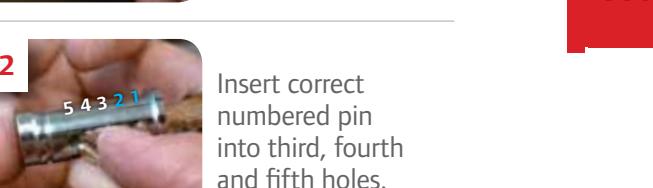
Insert correct numbered pin into third, fourth and fifth holes.
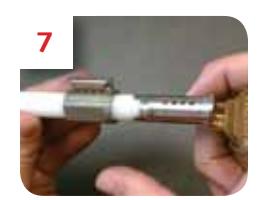
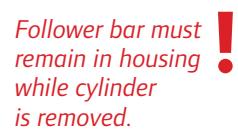
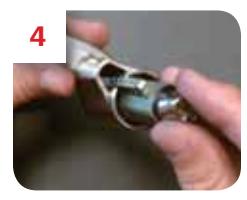
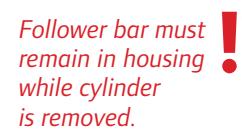
Use follower bar to slide cylinder housing away from cylinder. Do not remove follower bar. !
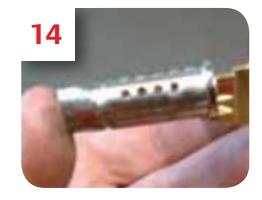
Verify all inserted pins are completely flush with top of cylinder.
Continued on next page.

Lever Rekeying Guide
lever Rekeying Instructions
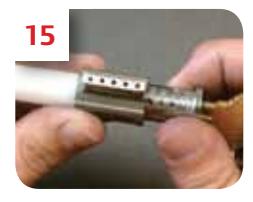
Slide cylinder housing from follower bar back over cylinder.
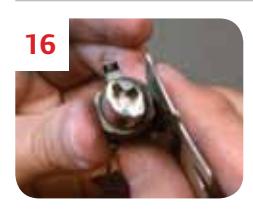
Insert C clip back on cylinder. Remove the key.
Insert complete cylinder assembly back into lever component.
Place lever component with cylinder back on chassis. !
Insert new key and rotate until you can lock the lever component in place.
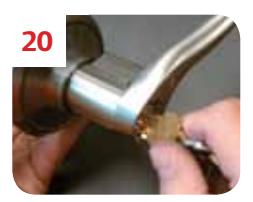
Simulate locking and unlocking the product to confirm rekey success.
knob Rekeying Instructions
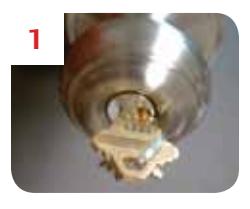
Unlock knob and leave key in cylinder.
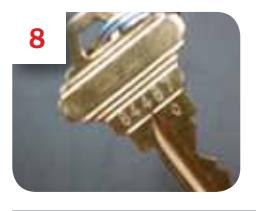
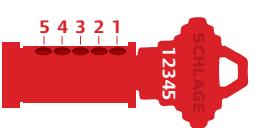
Locate key cut number on new key. Insert new key into cylinder. *
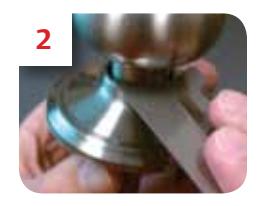
Use key gauge to remove knob from chassis.
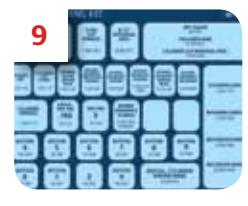
Review rekey kit map for pin locations and match numbers to new key.
pin height. See page iii for more information.
6
determine appropriate
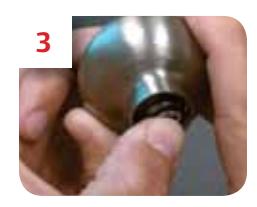
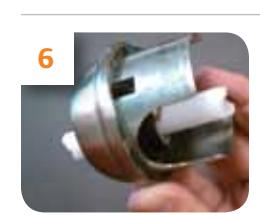
Remove key from cylinder and push cylinder out of knob.
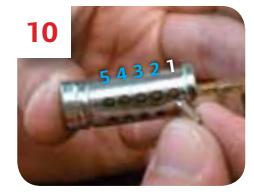
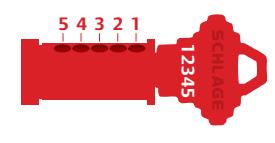
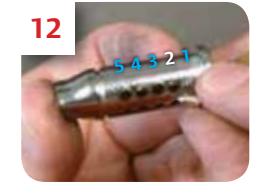
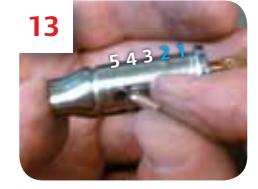
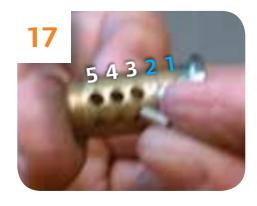
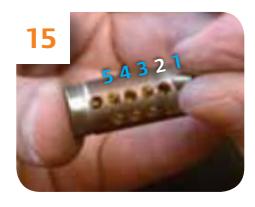
Insert correct numbered pin into first hole, reading cylinder right to left. !
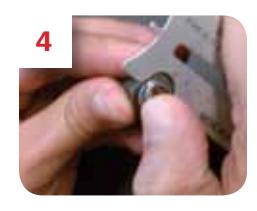
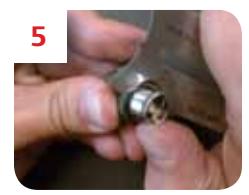
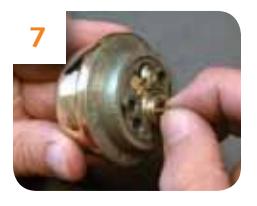
Remove C clip from cylinder (by twisting like you are peeling an apple).
Insert correct numbered pin into second hole.
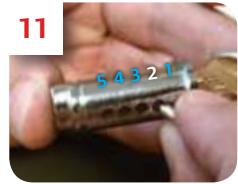
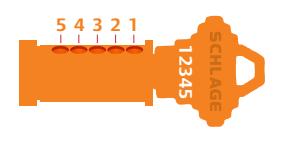
54321
12345
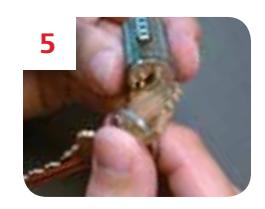
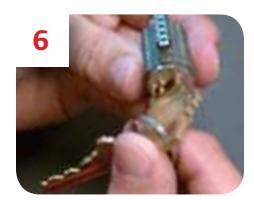
Insert original key into cylinder and rotate it to the two o'clock position.
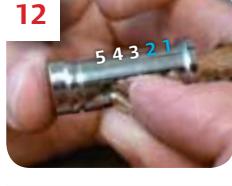
and fifth holes.

Removing the cylinder through the rear of the knob requires no more than five pounds of force (or the amount of force required to push an elevator button). If you require more force, the cylinder is not aligned
correctly for removal.
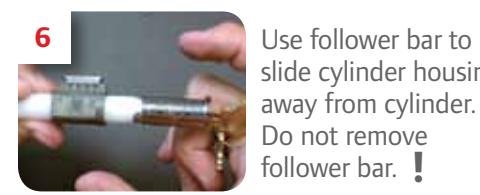
slide cylinder housing away from cylinder. Do not remove follower bar. !
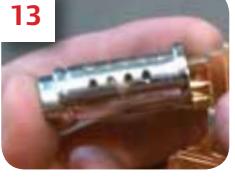
Verify all inserted pins are completely flush with top of cylinder.
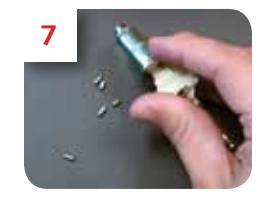
Empty existing bottom pins out of cylinder. Remove original key.
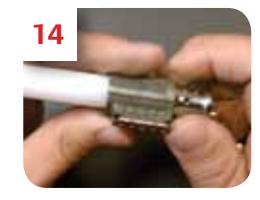
Slide cylinder housing from follower bar back over the cylinder.
Continued on next page.

Knob Rekeying Guide
knob Rekeying Instructions
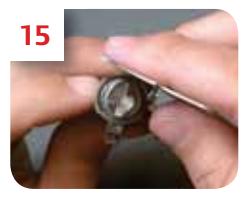
Insert C clip back on cylinder. Remove the key.
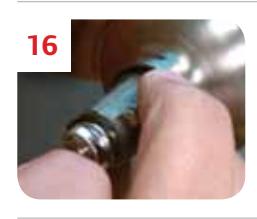
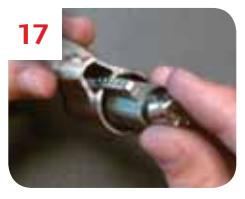
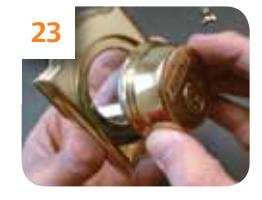
Insert complete cylinder assembly back into the knob.
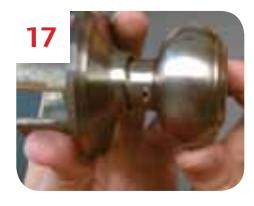
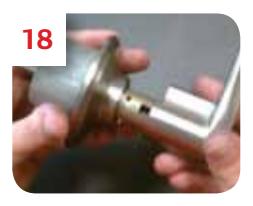
Place knob with cylinder back on chassis. !
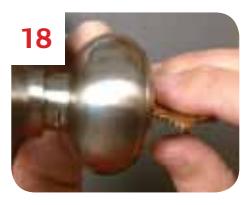
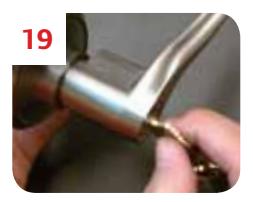
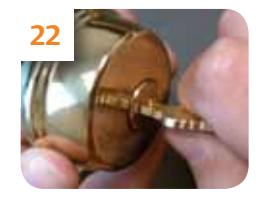
Insert new key and move to the unlock position. Rotate until you can lock the knob component in place.
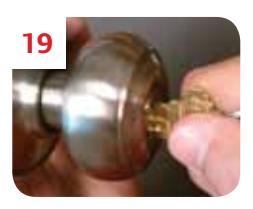
Simulate locking and unlocking the product to confirm rekey success.
Take the product clamshell out of the box. Carefully remove the deadbolt from the package by unsnapping the tabs in the upper corners of the clamshell.
deadbolt Rekeying Instructions
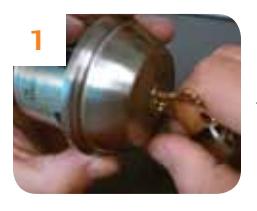
Remove deadbolt from package and insert original key.
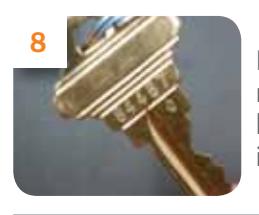
Locate key cut number on new key. Insert new key into cylinder. *
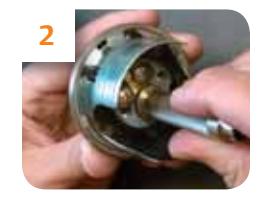
Use cylinder cap removal tool to remove cylinder cap.
Review rekey kit map for pin locations and match numbers to new key.
Insert correct numbered pin into first hole, reading cylinder right to left. !
5
3
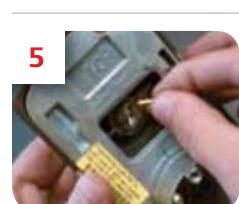
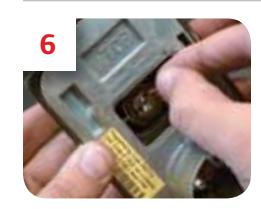
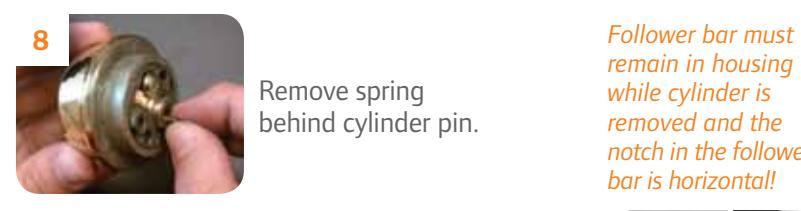
Remove spring behind cylinder pin.
Rotate the key to the two o'clock position.
Remove cylinder pin.
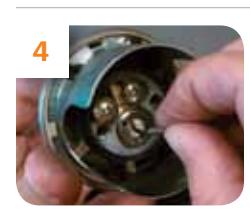
Insert correct numbered pin into second hole.
Insert correct numbered pin into third, fourth and fifth holes.
Use follower bar to slide deadbolt housing away from cylinder. Do not remove follower bar. !
Verify all inserted pins are completely flush with top of cylinder. *
Empty existing bottom pins out of cylinder. Remove original key.
Push cylinder back into deadbolt housing using the follower bar. Remove the key.
Continued on next page.

If a key number cannot be located or if rekeying from a duplicate key, use key gauge to determine appropriate pin height. See page iii for more information.
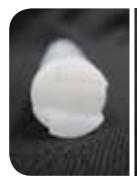
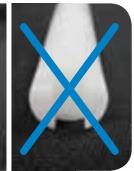
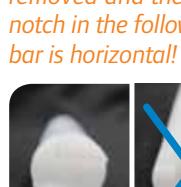
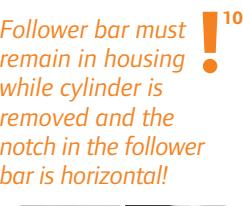
Follower bar must remain in housing while cylinder is removed and the notch in the follower bar is horizontal! ! 6
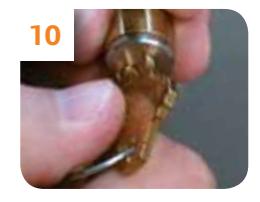
10
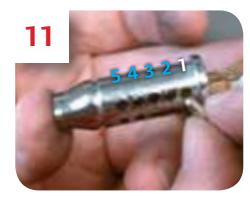
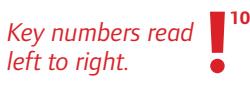
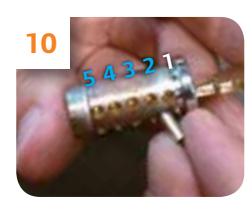
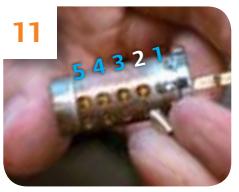
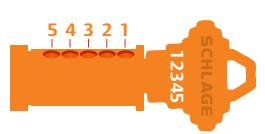
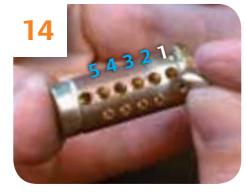
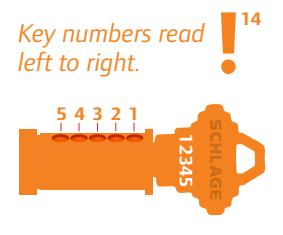
Key numbers read left to right. !

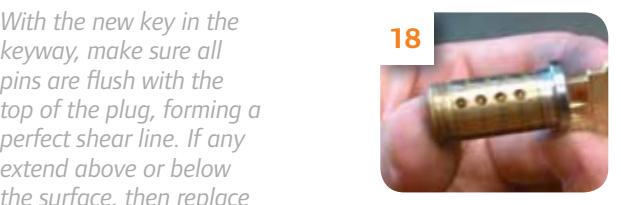
With the new key in the keyway, make sure all pins are flush with the top of the plug, forming a perfect shear line. If any extend above or below the surface, then replace with correct sizes.


Deadbolt Rekeying Guide
DEADBOLT Rekeying Instructions
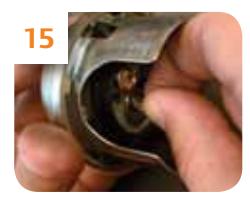
Re-insert cylinder spring.
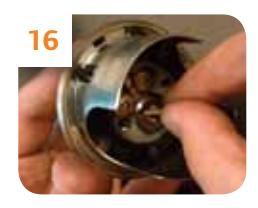
Re-insert cylinder pin.
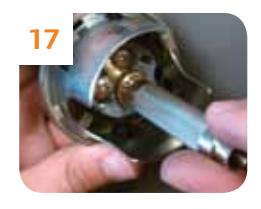
Use cylinder cap removal tool to tighten cylinder cap back on cylinder.
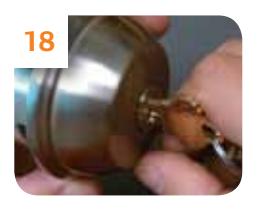
Simulate locking and unlocking the deadbolt to confirm rekey success.
keypad lock Rekeying Instructions
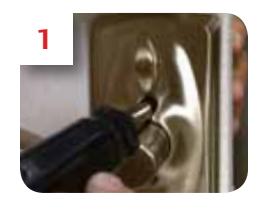
Remove interior portion of keypad lock from packaging.
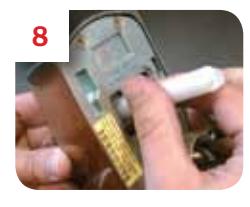
Use follower bar to slide keypad lock housing away from cylinder. Do not remove follower bar. !
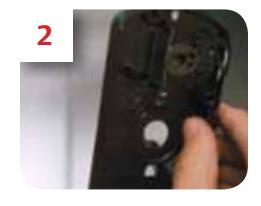
Remove support piece from packaging.
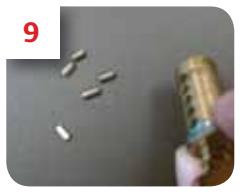
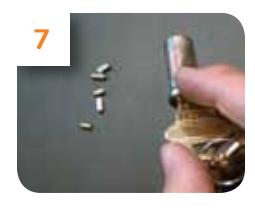
Empty existing pins out of cylinder. Remove original key.
Open built-in door on exterior portion of keypad lock.
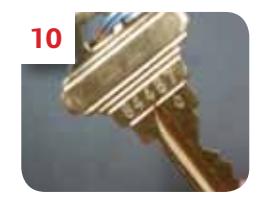
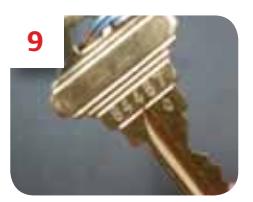
Locate key cut number on new key. Insert new key into cylinder. *
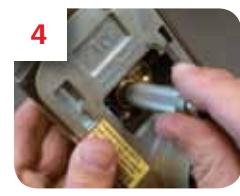
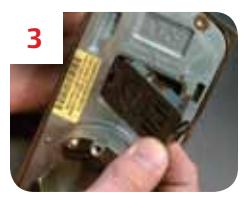
Use cylinder cap removal tool to remove cylinder cap.
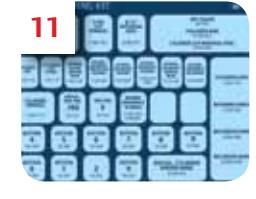
Review rekey kit map for pin locations and match numbers to new Schlage key.
Remove cylinder pin.
Insert correct numbered pin into first hole, reading cylinder right to left. !
Remove spring behind cylinder pin.
Insert correct numbered pin into second hole.
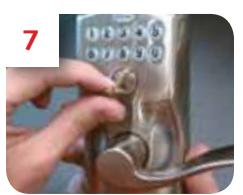
Insert original key and rotate key to the two o'clock position.
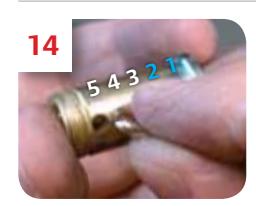
Insert correct numbered pin into third, fourth and fifth holes.
Continued on next page.

If a key number cannot be located or if rekeying from a duplicate key, use key gauge to determine appropriate pin height. See page iii for more information.
Follower bar must remain in housing while cylinder is removed and the notch in the follower bar is horizontal! ! 8
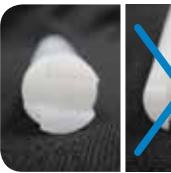
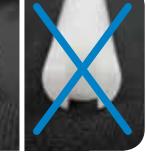
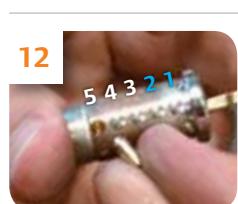
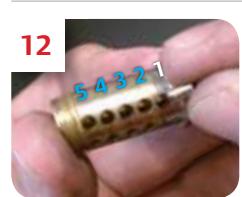
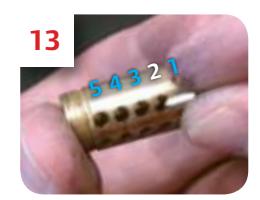
Key numbers read left to right. ! 12

Keypad Lock Rekeying Guide
keypad lock Rekeying Instructions

With the new key in the keyway, make sure all pins are flush with the top of the plug, forming a perfect shear line. If any extend above or below the surface, then replace with correct sizes.
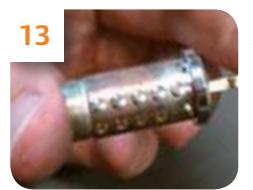
Verify all inserted pins are completely flush with top of cylinder. *
Use cylinder cap removal tool to tighten cylinder cap back on cylinder.
Push cylinder back into keypad lock housing using the follower bar. Remove the key.
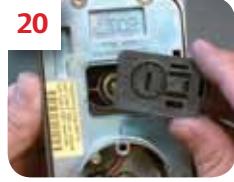
Replace built-in door back onto lock assembly.
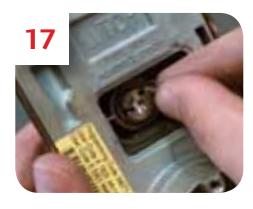
Re-insert cylinder spring.
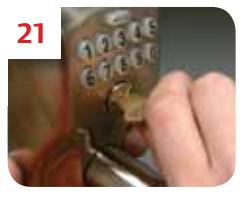
Simulate locking and unlocking the keypad lock to confirm rekey success.
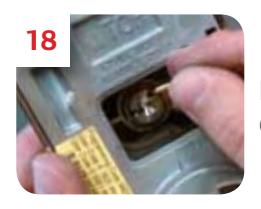
Re-insert cylinder pin.
KEYPAD DEADBOLT REKEYING INSTRUCTIONS
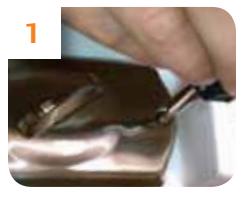
Remove interior metal escutcheon from packaging.
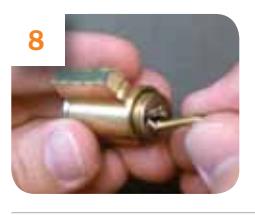
Remove cylinder pin.
Screws may require a Phillips screwdriver.

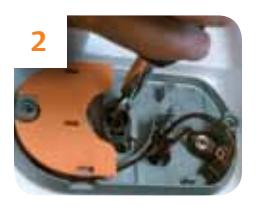
Remove inner plate from packaging.
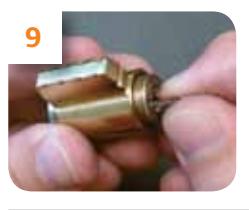
Remove spring behind cylinder pin.
Remove the six screws from exterior portion of keypad deadbolt.
Insert original key and rotate it to the two o'clock position.
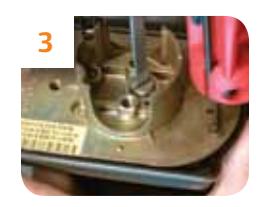
Remove deadbolt turn portion from the assembly.
Use follower bar to slide cylinder housing away from cylinder. Do not remove follower bar.

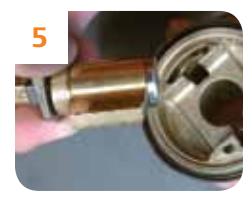
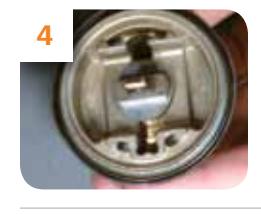
Remove cylinder from the deadbolt turn.
Empty existing bottom pins out of cylinder. Remove original key.
Locate key cut number on new key. Insert new key into cylinder. *

If a key number cannot be located or if rekeying from a duplicate key, use key gauge to determine appropriate pin height. See page iii for more information.
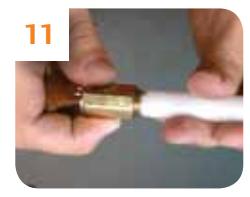
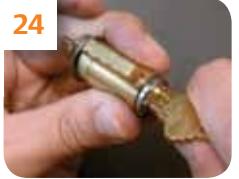
Remove the three pieces attached to cylinder.
Review rekey kit map for pin locations and match numbers to new key.
Use cylinder cap removal tool to remove cylinder cap.
CONTINUED ON NEXT PAGE.

Keypad Deadbolt Rekeying Guide
KEYPAD DEADBOLT Rekeying Instructions

keyway, make sure all pins are flush with the top of the plug, forming a perfect shear line. If any extend above or below the surface, then replace with correct sizes.
tip
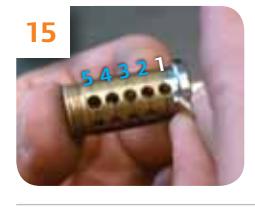
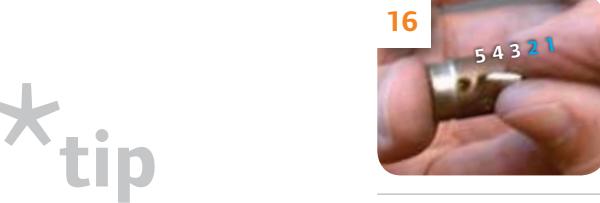
Insert correct numbered pin into first hole, reading cylinder right to left. !
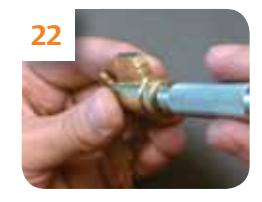
Use cylinder cap removal tool to tighten cylinder cap back on cylinder.
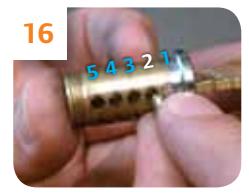
Insert correct numbered pin into second hole.
Place additional parts back onto cylinder assembly.
Insert correct numbered pin into third, fourth and fifth holes.
Simulate locking and unlocking the deadbolt to confirm rekey success.
Verify all inserted pins are completely flush with top of cylinder. *
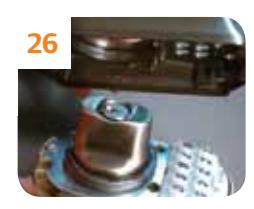
Place deadbolt turn with the cylinder back onto keypad deadbolt assembly.
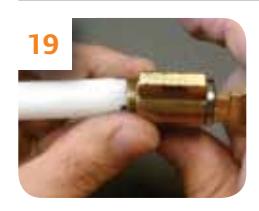
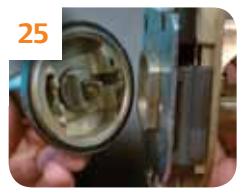
Push cylinder back into cylinder housing using the follower bar. Remove the key.
Place outer cover back onto keypad deadbolt assembly.
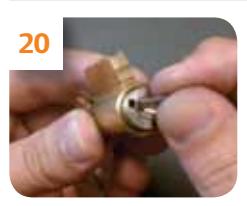
Re-insert cylinder spring.
Screw in the six screws to finish the assembly of keypad exterior portion.
Re-insert cylinder pin.
handleset Rekeying Instructions
Open handleset box.
Remove spring behind cylinder pin.
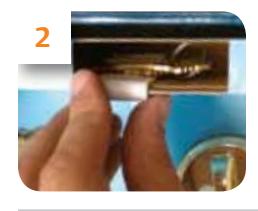
Locate keys in top of box on clip.
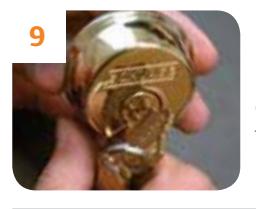
Insert original key and rotate it to the two o'clock position.
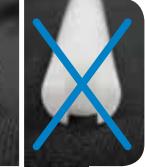
Remove deadbolt from packaging using a Phillips screwdriver.
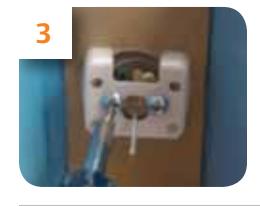
Use follower bar to slide cylinder housing away from cylinder. Do not remove follower bar. !

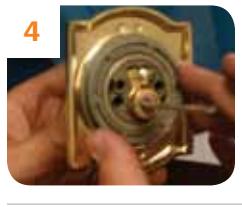
5
Remove support ring from deadbolt.
Remove
decorative plate.
Empty existing bottom pins out of cylinder. Remove original key.

If a key number cannot tip
be located or if rekeying from a duplicate key, use key gauge to determine appropriate pin height. See page iii for more information.
Use cylinder cap removal tool to remove cylinder cap.
Review rekey kit map for pin locations and match numbers to new key.

Remove cylinder pin.
Insert correct numbered pin into first hole, reading cylinder right to left. !
Continued on next page.
14

Handleset Rekeying Guide
handleset Rekeying Instructions
Insert correct numbered pin into second hole.
Simulate locking and unlocking the deadbolt to confirm rekey success.
With the new key in the keyway, make sure all pins are flush with the top of the plug, forming a perfect shear line. If any extend above or below the surface, then replace with correct sizes.
Insert correct numbered pin into third, fourth and fifth holes.
Place decorative back plate back onto deadbolt component.
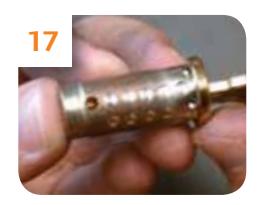
Verify all inserted pins are completely flush with top of cylinder. *
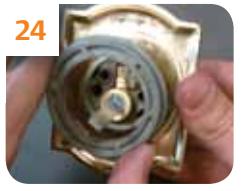
Place support ring behind decorative back plate.
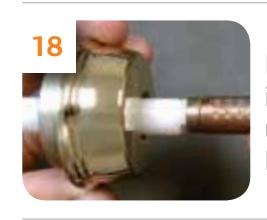
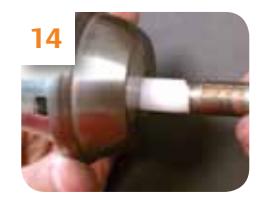
Push cylinder back into cylinder housing using the follower bar. Remove the key.
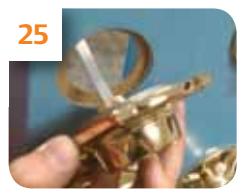
Place deadbolt assembly pack onto packaging.
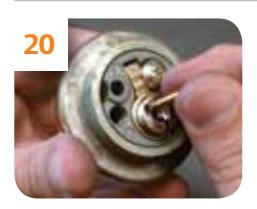
Re-insert cylinder spring.
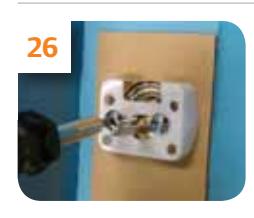
Fasten packaging support piece back onto deadbolt.
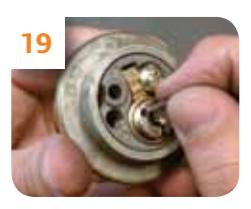
Re-insert cylinder pin.
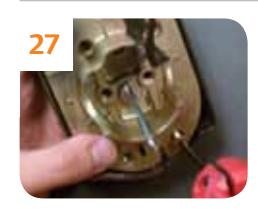
27 Repackage product.
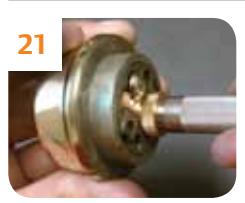
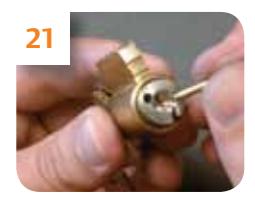
Use cylinder cap removal tool to tighten cylinder cap back on cylinder.


Cylinder Repinning
Compressible cylinders can also be rekeyed from the top of the cylinder by following these easy steps:
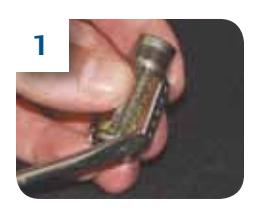
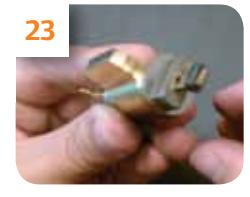
Remove stainless steel cap.
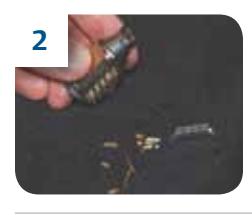
Re-insert top T-pins and springs on top of bottom pins.
Empty bottom pins, top T-Pins and top springs from cylinder.
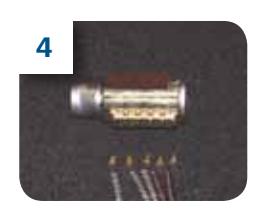
Attach a new stainless steel cap to top of cylinder body by aligning the holes in top cap with holes in springs. !
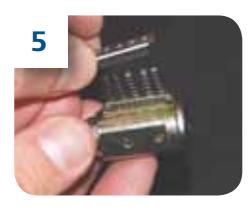
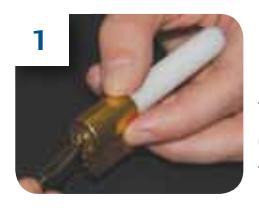
Insert new bottom pins into the holes on the top of cylinder.

Disengagement of Top Pins and Springs


Glossary of Terms
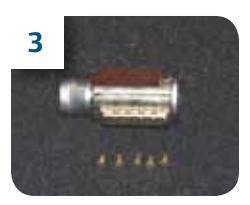
Insert square notched end of follower bar into cylinder shell from rear.
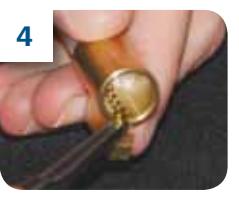
Slide follower bar forward to hold pin and spring in place.
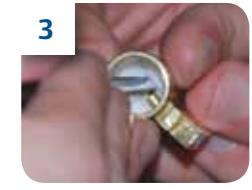
Install spring into back chamber and balance top pin (#3) on top of spring.
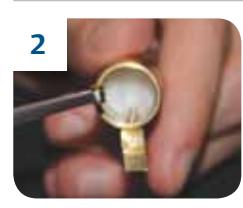
Repeat until all chambers are loaded.
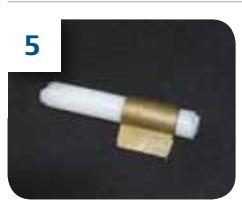
Using follower bar groove as a guide, push pin into its chamber against spring pressure with flat edge of tweezers or small flat blade screwdriver.

ANSI American National Standards Institute.
backset The distance from the edge of door to the center line of prep.
bottom pin A bullet-shaped tumbler that comes in a variety of lengths that correspond to
the depths of the key cuts.
chassis The body of the lock itself, without any trim.
cylinder The portion of a lock comprised of the plug, shell, pins (tumblers) and
springs. A properly cut key allows the plug to rotate the tailpiece or drive
mechanism which unlocks the lock.
hand The direction a door swings, always referenced from the outside.
housing A larger portion of some cylinder assemblies which encases the cylinder (plug
and shell).
latchbolt A spring operated bolt with a beveled face to permit latching action when
door closes.
master pin A cylindrical-shaped tumbler which is flat on both ends, placed between the
top and bottom pin to create an additional shear line.
pin tumbler Today's standard tumbler mechanism consists of a series of bottom pin,
mechanism top pin and spring for each cut (notch) of the key.
pin tumblers Small sliding pins in a lock cylinder that work against coil springs. They
prevent the cylinder plug from rotating unless all are aligned simultaneously
by cuts of the proper depths in the key.
plug The portion of a cylinder which contains the keyway and rotates with the key.
rose A circular trim plate attached to the door under the knob or lever.
shear line The area where the top surface of the cylinder plug and inside surface of the
shell meet, and the height to which the bottom pins must be raised by the
key in order to rotate the plug.
shell The portion of the cylinder immediately surrounding the plug.
strike The metal plate recessed in the frame that receives latch or bolt when the
door is closed.
top pin A cylindrical-shaped tumbler which is flat on both ends and is installed
directly under a coil spring in its chamber.
tailpiece A usually flat actuator which extends from the back of the cylinder plug and
engages in the lock to operate the latch or bolt.


7.2 7.3