Rixson 5313-5315 Series Floor Closers Offset Hung Single Acting Handed Installation Instructions
Open the original PDF document
View PDFCloser Adjustment
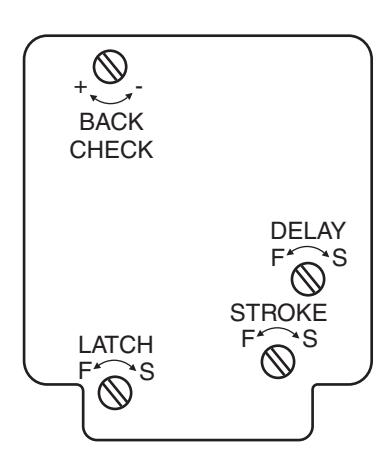
Closing speeds can be adjusted to suit local conditions and requirements. Label on closer face designates the purpose of each adjustment screw. Adjustments are for speed control.
- A. The stroke valve allows adjustment from open to 15°.
- B. The latch valve allows adjustment from 15° to closed position.
- C. IMPORTANT: Back check valve option must be adjusted to vary resistance from light to firm at 70° of door opening.
- D. The delay valve option allows closing speed adjustment from o en position to 65°. p
Repairs, parts replacement or internal adjustments must be done by a Rixson authorized repair agency. Consult www.rixson.com for an authorized repair agency in your area.

Rixson® is a registered trademark of Yale Security Inc., an ASSA ABLOY Group company. Copyright© 2005, 2009, Yale Security Inc., an ASSA ABLOY Group company. All rights reserved. Reproduction in whole or in part without the express written permission of Yale Security Inc. is prohibited.
RIXSON ®
5313-5315 Floor Closer
Offset Hung Single Acting Handed
ASSA ABLOY
Installation Instructions
5310 (06-09)
Template
PAGE 4
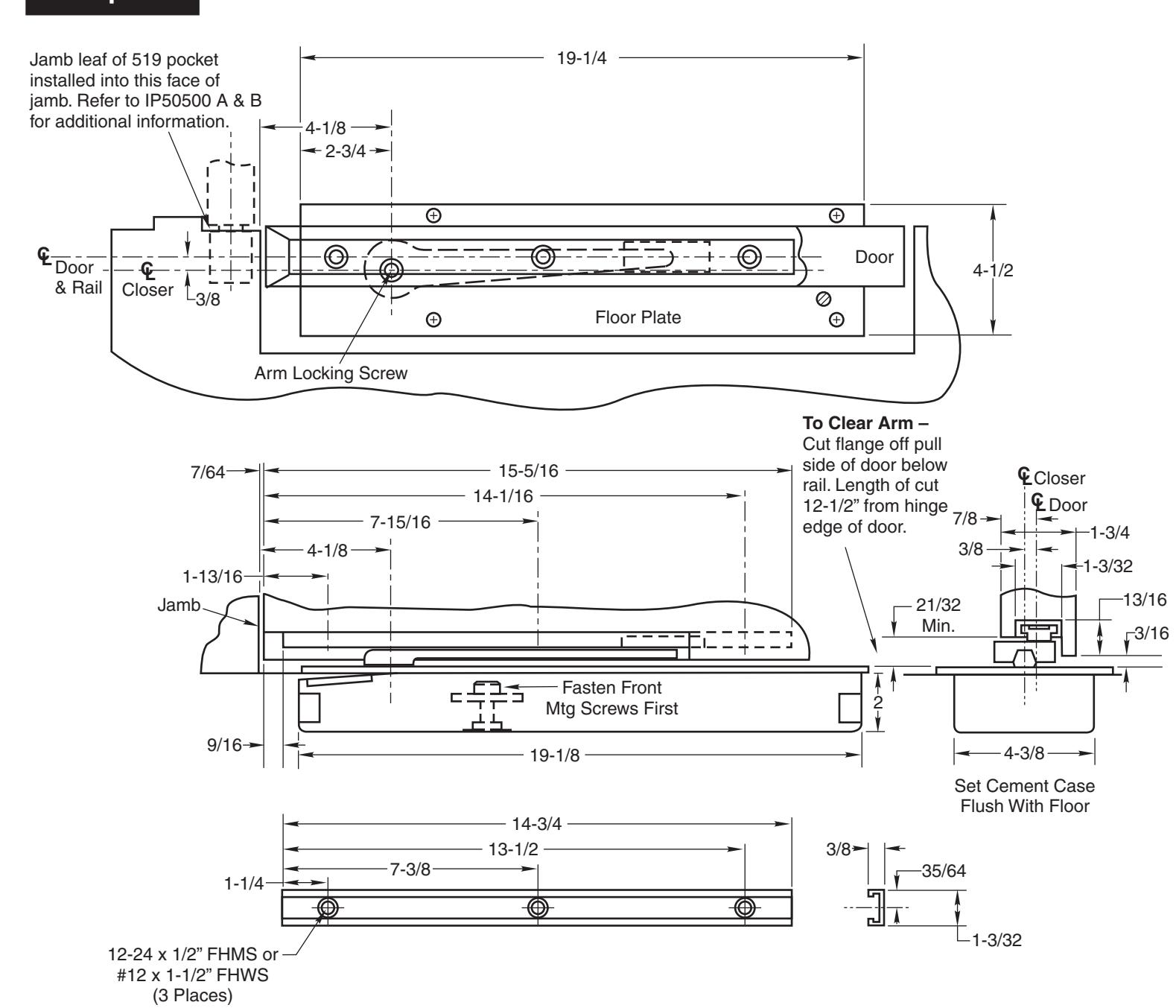
Notes:
- 1. Do not scale drawing.
- 2. Right Hand Shown.
- 3. All dimensions given in inches.
- 4. Solid door line represents door in open position with closer wound. Dashed door line represents door in closed position with closer at rest.
- 5. See IP50500 A & B for door mortising.
- 6. Consult factory for door thickness other than 1-3/4" or for extended spindle lengths.
Conversion from inches to metric: inch x 25.4.
Rixson Specialty Door Controls www.rixson.com 866-474-9766 Technical Department Rixson Specialty Door Controls www.rixson.com 866-474-9766 Technical Department
How To Determine Hand of Door
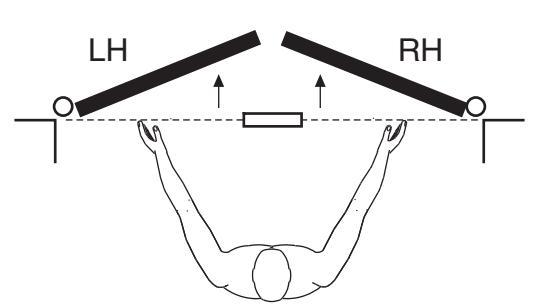
Face a door swinging open away from you. If it opens to the right, it is right hand. If it opens to the left, it is left hand.
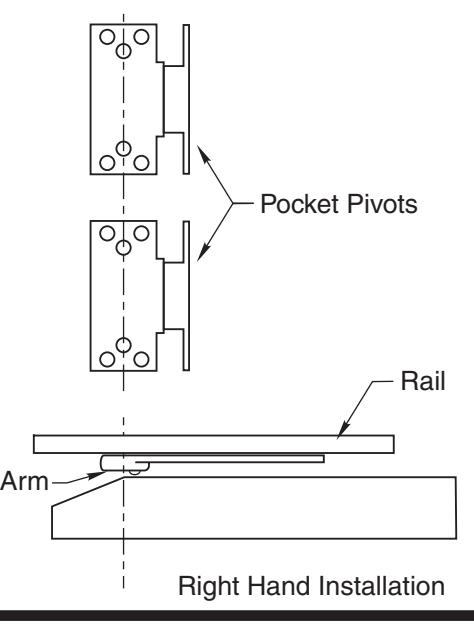
Use plumb line to make sure that center line of top pivot pin lines up with center line of closer spindle.
Installation Instructions
1. Locating Closer
LEVEL IN BOTH
-
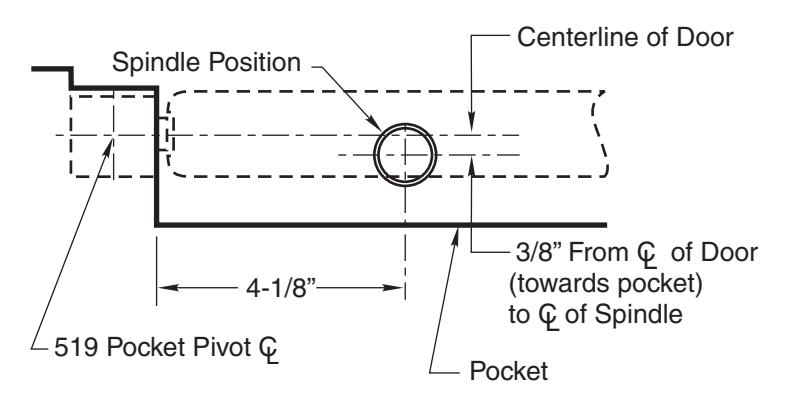
Spindle Position A. Measure from push side of door 1/2 the thickness of the door to determine centerline of door.
- B. To determine centerline of closer measure back towards the pocket 3/8" from center line of door.
- C. Where the 4-1/8" and 3/8" measurements intersect indicate the centerline of closer spindle.
2. Install Cement Case in Floor
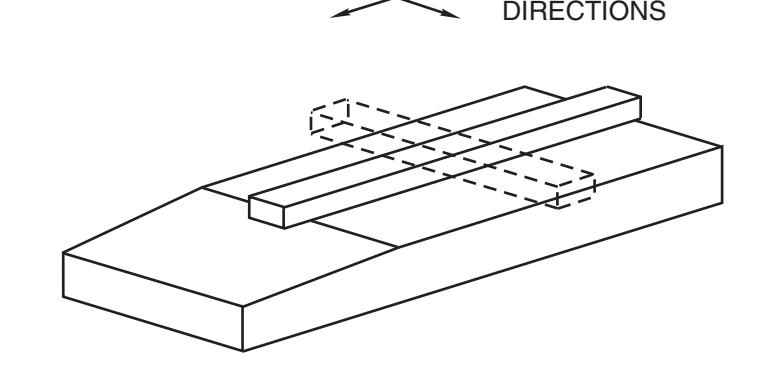
- A. Cement case is set flush with finished floor.
- B. Set cement case with closer in floor and block in position.
- C. Case should be parallel with center line of door.
- D. CEMENT CASE SHOULD BE LEVEL. Place levels per Illustration.
- E. Grout in cement case with closer. Cement should not get between closer and case.
- F. If centerline of closer needs position adjustment, loosen hold down screws (4) and reposition closer. Tighten hold down screws closest to spindle first then tighten screws at cylinder end. Note: Closer must be lifted approx. 1/8" before repositioning.
4. Attach Arm
- A. Mortise door for pocket pivots per IS-519 template.
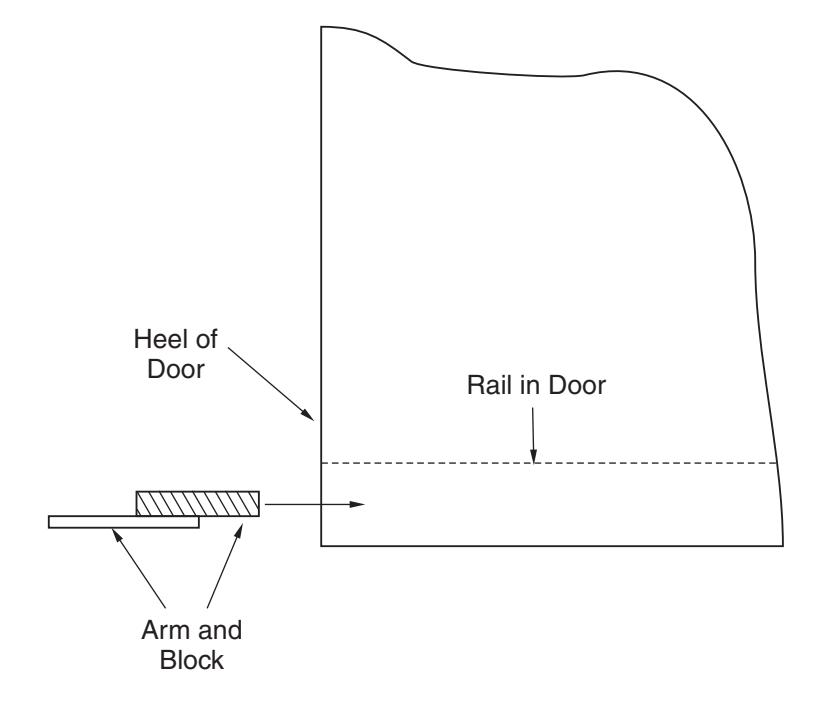
- B. Install rail in door per template. Rail to be located 9/16" from hinge edge of door.
- C. Secure rail in place and hang door on pocket pivots. Use a plumb line to assure that door is in vertical alignment.
- A. Close latch and stroke valves. (Turn Clockwise)
- B. Slide arm block into rail through heel edge of door.
- C. With door almost closed slide arm onto spindle thru notch in end of arm. (Rock door back and forth to seat arm on spindle.)
- D. Secure arm to spindle with screw furnished. THE ARM SCREW MUST BE FASTENED SECURELY. (Tighten screw when rocking door back and forth.)