Norton Rixson Fundamentals of ADA Standards Brochure_43410
Open the original PDF document
View PDF


FUNDAMENTALS OF ADA STANDARDS:
Opening Solutions for Compliance in Higher Education Facilities
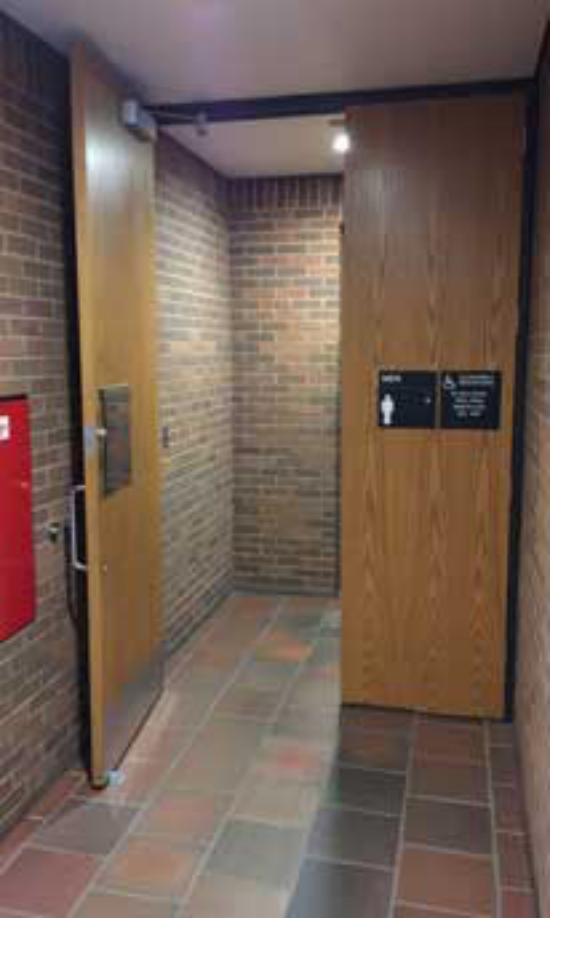
The ADA mandate applies to collegesponsored activities on & off campus, including internships.
INTRODUCTION
Higher education campuses are as varied as their academic areas of expertise — law and medical schools, military schools, city colleges and world-leading universities — but they all share a common need to provide for the accessibility, safety and security of students, staff and visitors at all times.
A campus is often like a small city unto itself, with a range of facilities and services, including classrooms and lecture halls, theaters, bookstores, laundromats, cafés, athletic facilities, student housing and more. The range of occupancy types on a campus can almost be overwhelming, and the variety of door openings needed to meet the requirements of each space can multiply exponentially. While the needs of so many door openings vary from weather proofing, sound containment and energy efficiency to smoke/fire control and access control, this challenge becomes more complex when attempting to meet the requirements of the Americans with Disabilities Act (ADA).
The ADA requires U.S. colleges that receive federal funds to provide the accommodations students need to live and learn on campus. Some 11 percent of undergrads report disabilities, and an unknown number never declare them. College campus buildings are required to be easily accessible for those with physical disabilities, including impaired mobility, loss of vision or hearing. But not all have embraced the latest ADA Amendments Act of 2008. The ADA Act made it clear that the law protects people with all kinds of disabilities including the majority of disabilities that are not visible.
The law defines a disability as a physical or mental impairment that lasts longer than six months and substantially limits one or more major life activities, including learning, eating, sleeping, seeing, hearing, walking, standing, communicating or concentrating. Unlike in K12 education, where school districts must provide accommodations for all students with disabilities, higher ed institutions are required to support only students who report a disability and request help. The ADA mandate applies to college-sponsored activities on and off campus, including internships.
The ADA is a civil rights law designed to provide protection for people with disabilities. The law is divided into four major titles that prohibit discrimination against the disabled in:
- Employment Title I
- Public Services and Transportation Title II
- Public Accommodations Title III
- Telecommunications Title IV
Title III encompasses doors and door controls, essentially stating that owners of certain types of buildings must remove barriers and provide people with disabilities with access equal to, or similar to, that available to the general public. This eBook will focus on the implications of Title III, specifically Section 404, and its impact on doors, door hardware and openings in regard to higher education facilities.
THE AMERICANS WITH DISABILITIES ACT (ADA) BACKGROUND
The Americans with Disabilities Act (ADA) became law in 1990. The ADA is a civil rights law (not a building code) that prohibits discrimination against individuals with disabilities in all areas of public life, including jobs, schools, transportation, and all public and private places that are open to the general public. The purpose of the law is to make sure that people with disabilities have the same rights and opportunities as everyone else. The ADA gives civil rights protections to individuals with disabilities similar to those provided to individuals on the basis of race, color, sex, national origin, age, and religion. It guarantees equal opportunity for individuals with disabilities in public accommodations, employment, transportation, state and local government services, and telecommunications. The ADA is divided into five that relate to different areas of public life.
In 2008, the Americans with Disabilities Act Amendments Act (ADAAA) was signed into law and became effective on January 1, 2009. The ADAAA made a number of significant changes to the definition of "disability." The changes in the definition of disability in the ADAAA apply to all titles of the ADA, including Title I (employment practices of private employers with 15 or more employees, state and local governments, employment agencies, labor unions, agents of the employer and joint management labor committees); Title II (programs and activities of state and local government entities); and Title III (private entities that are considered places of public accommodation).
UNDERSTANDING ADA TITLE III — PUBLIC ACCOMMODATIONS
This title prohibits private places of public accommodation from discriminating against individuals with disabilities. Examples of public accommodations include privatelyowned, leased or operated facilities like hotels, restaurants, retail merchants, doctor's offices, golf courses, private schools, day care centers, health clubs, sports stadiums, movie theaters, and so on.
Title III of the ADA sets the minimum standards for accessibility for alterations and new construction of facilities. It also requires public accommodations to remove barriers in existing buildings where it is easy to do so without much difficulty or expense. This title directs businesses to make "reasonable modifications" to their usual ways of doing things when serving people with disabilities. It also requires that they take steps necessary to communicate effectively with customers with vision, hearing, and speech disabilities. This title is regulated and enforced by the U.S. Department of Justice.
About 56.7 million people — 19 percent of the population recorded having a disability in 2010, according to a broad definition of disability, with more than half of them reporting the disability was severe, according to a comprehensive report on this population released by the U.S. Census Bureau.
ADA TITLE III, SECTION 404 - DOORS, DOORWAYS & GATES
The ADA defines an "accessible" opening as, among other things, comprising:
-
a door with a minimum 32˝ (813 mm) clear opening
- easily manipulated handles
-
a maximum OPENING FORCE similar to American National Standards Institute (ANSI) Standard A117.1**
- a minimum closing time
- the capability of opening to at least 90°
**This is different from ANSI Standard A156.4, which covers CLOSING FORCE.
Complete details of the ADA standards regarding Doors, Doorways and Gates, including detailed diagrams, measurements, and examples can be found here:
Following is an excerpted overview of ADA Section 404, containing some of the more prominent standards relative to higher ed facilities:
404.1 General. Doors, doorways, and gates that are part of an accessible route shall comply with 404.
EXCEPTION: Doors, doorways, and gates designed to be operated only by security personnel shall not be required to comply with 404.2.7, 404.2.8, 404.2.9, 404.3.2 and 404.3.4 through 404.3.7.
404.2.1 Revolving Doors, Gates, and Turnstiles. Revolving doors, revolving gates, and turnstiles shall not be part of an accessible route.
404.2.2 Double-Leaf Doors and Gates. At least one of the active leaves of doorways with two leaves shall comply with 404.2.3 and 404.2.4.
404.2.3 Clear Width. Door openings shall provide a clear width of 32 inches (815 mm) minimum. Clear openings of doorways with swinging doors shall be measured between the face of the door and the stop, with the door open 90 degrees. Openings more than 24 inches (610 mm) deep shall provide a clear opening of 36 inches (915 mm) minimum. There shall be no projections into the required clear opening width lower than 34 inches (865 mm) above the finish floor or ground. Projections into the clear opening width between 34 inches (865 mm) and 80 inches (2030 mm) above the finish floor or ground shall not exceed 4 inches (100 mm).
EXCEPTIONS: (1.) In alterations, a projection of 5/8 inch (16 mm) maximum into the required clear width shall be permitted for the latch side stop. (2.) Door closers and door stops shall be permitted to be 78 inches (1980 mm) minimum above the finish floor or ground.
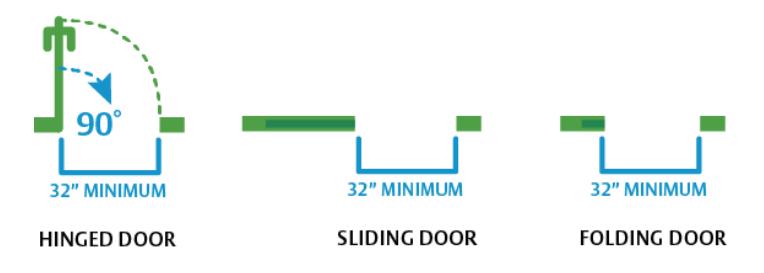
Figure 1: Clear Width of Doorways.
404.2.8.1 Door Closers and Gate Closers. Door closers and gate closers shall be adjusted so that from an open position of 90 degrees, the time required to move the door to a position of 12 degrees from the latch is 5 seconds minimum.
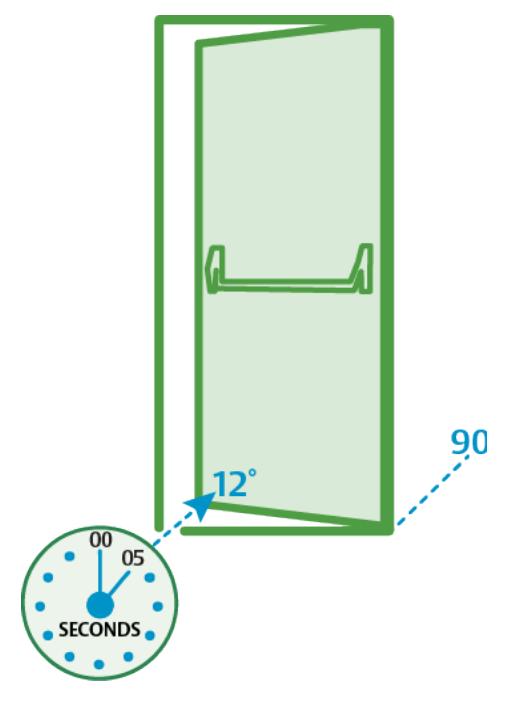
Figure 2: Door Closers and Gate Closers.
404.2.9 Door and Gate Opening Force. Fire rated doors shall have a minimum opening force allowable by the appropriate administrative authority. The force for pushing or pulling open a door or gate other than fire rated doors shall be as follows:
- (1.) Interior hinged doors & gates: 5 pounds (22.2 N) maximum.
- (2.) Sliding or folding doors: 5 pounds (22.2 N) maximum.
These forces do not apply to the force required to retract latch bolts or disengage other devices used to hold the door or gate in a closed position.
ADVISORY: The maximum force pertains to the continuous application of force necessary to fully open a door, not the initial force needed to overcome the inertia of the door.
404.3 Automatic and Power-Assisted Doors and Gates. Automatic doors and automatic gates shall comply with 404.3. Full-powered automatic doors shall comply with ANSI/BHMA A156.10 (incorporated by reference, see "Referenced Standards" in Chapter 1). Low-energy and power-assisted doors shall comply with ANSI/BHMA A156.19
(1997 or 2002 edition) (incorporated by reference, see "Referenced Standards" in Chapter 1).
404.3.4 Doors in Series and Gates in Series. Doors in series and gates in series shall comply with 404.2.6.
404.3.5 Controls. Manually operated controls shall comply with 309. The clear floor space adjacent to the control shall be located beyond the arc of the door swing.
404.3.6 Break Out Opening. Where doors and gates without standby power are a part of a means of egress, the clear break out opening at swinging or sliding doors and gates shall be 32 inches (815 mm) minimum when operated in emergency mode.
EXCEPTION: Where manual swinging doors and gates comply with 404.2 and serve the same means of egress compliance with 404.3.6 shall not be required.
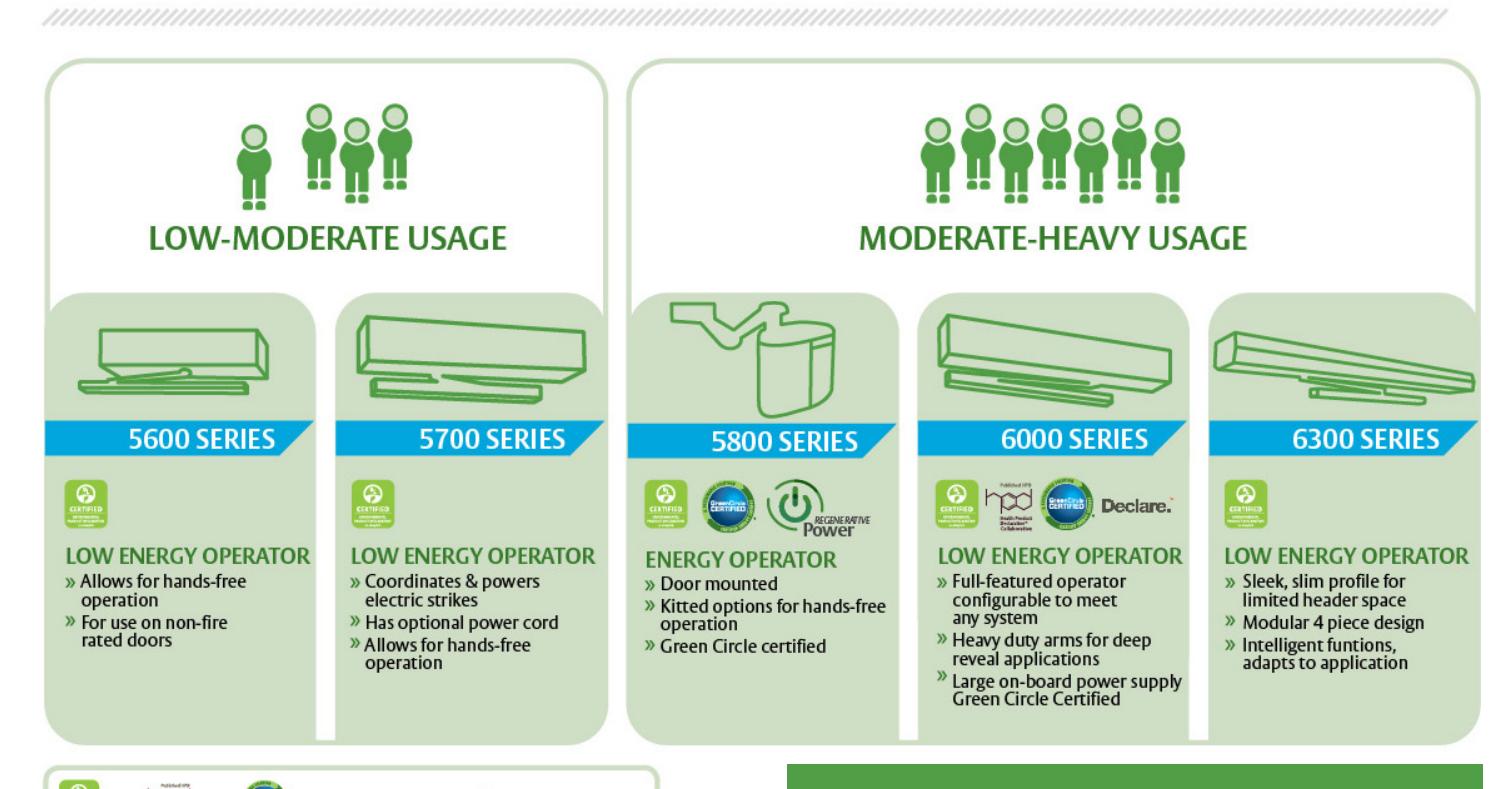
Figure 3: Low Energy Operator Selection Guide.
ADDITIONAL RESOURCES
The ADA law in effect for over 27 years, this eBook is intended to provide an introductory overview of ADA legislation relative to doors and door controls. Leading manufacturers of doors, door hardware, access control and security systems have a wealth of information and in-house consultants available. ASSA ABLOY has experienced door control consultants available to assist any facility with ADA compliance, door safety and security, energy efficiency and enhanced building access. Whether asking a question or requesting an onsite consultation, ASSA ABLOY's local Sales Offices and Specification Consultants are here to help!
INDUSTRY RESOURCES
ADA Section 404: Doors, Doorways, and Gates
ADA National Network - Basic Building Blocks Course
APPA Leadership in Educational Facilities
ASSA ABLOY RESOURCES
Access control, locks, doors and hardware for college & university facilities
Higher Education Facility Challenges
Safety and Compliance on Campus
ASSA ABLOY is the global leader in door opening solutions, dedicated to satisfying end-user needs for security, safety and convenience
Since 1880, Norton door controls have been an integral part of schools, hospitals and businesses around the globe. When you need products and people that perform at the highest level, rely on Norton – From Open to Close.
Norton Door Controls | www.nortondoorcontrols.com
3000 Highway 74 East | Monroe, NC 28112 | Tel: 1-877-974-2255 | Fax: 1-800-338-0965
ASSA ABLOY Door Security Solutions Canada | www.assaabloy.ca
160 Four Valley Drive | Vaughan, Ontario, L4K 4T9 Canada | Tel: 800-461-3007 | Fax: 1-905-738-2478