Norton Rixson 78 BF Series Door Closer 78BD, 78EF, Non-Hold Open, Regular or Parallel Arm Installation Instructi…_80-9349-0001-020
Open the original PDF document
View PDF

Installation Instructions
Traditional Style Handed Door Closer Non Hold Open Models
An Incorrectly installed or improperly adjusted door closer can cause property damage or personal injury. These installation instructions should be followed to avoid the possibility of misapplication or misadjustment.
Adjustable (Sizes 2 thru 4) 78B/D
(Sizes 5 & 6)
78E/F
- Read these instructions before proceeding with the installation.
- Sex-bolts are required for mounting closer body or arm to non-reinforced hollow metal and wood or plastic-faced composite fire door.
- Make sure that the door opens the full angle desired and latches without binding action or interference.
-
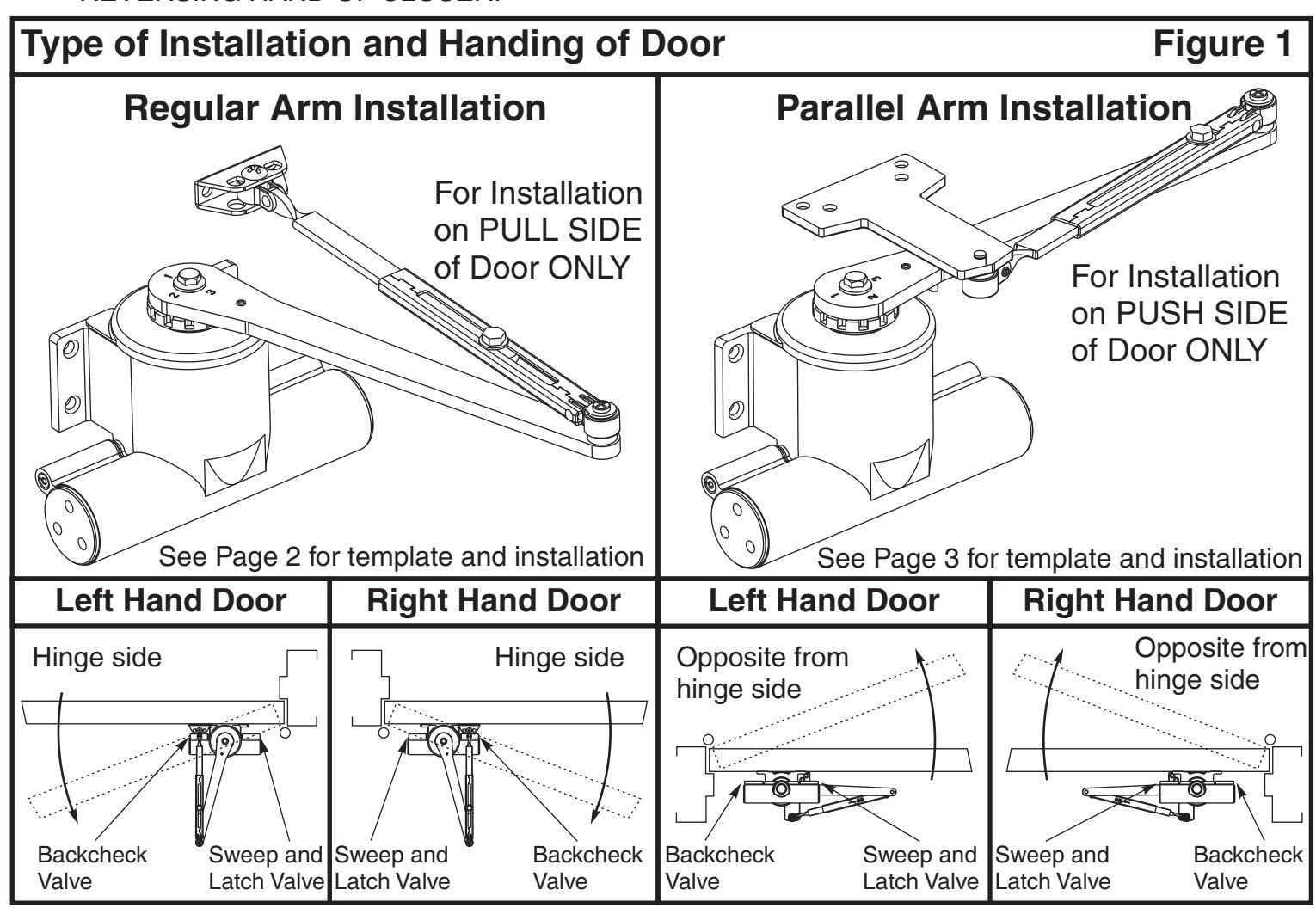
Select the type of installation from Figure 1 below.
- Note: For special applications, a separate door and frame preparation template is packed with these instructions. Use this instruction sheet for installation sequence and closer adjustments only.
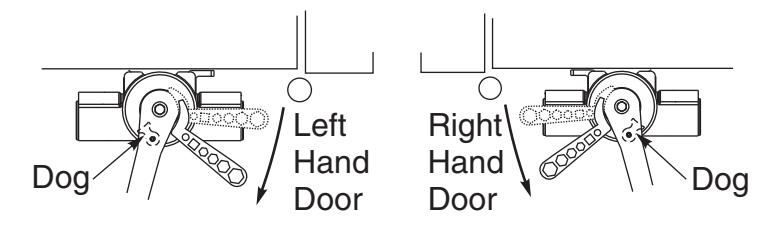
- Check hand of door, see Figure 1 below. Hand of door closer must be the same as hand of door. Door closer is handed, but can be easily reversed. SEE PAGE 4 FOR INSTRUCTIONS FOR REVERSING HAND OF CLOSER.
78 Series Non Hold Open Door Closers — Regular Arm

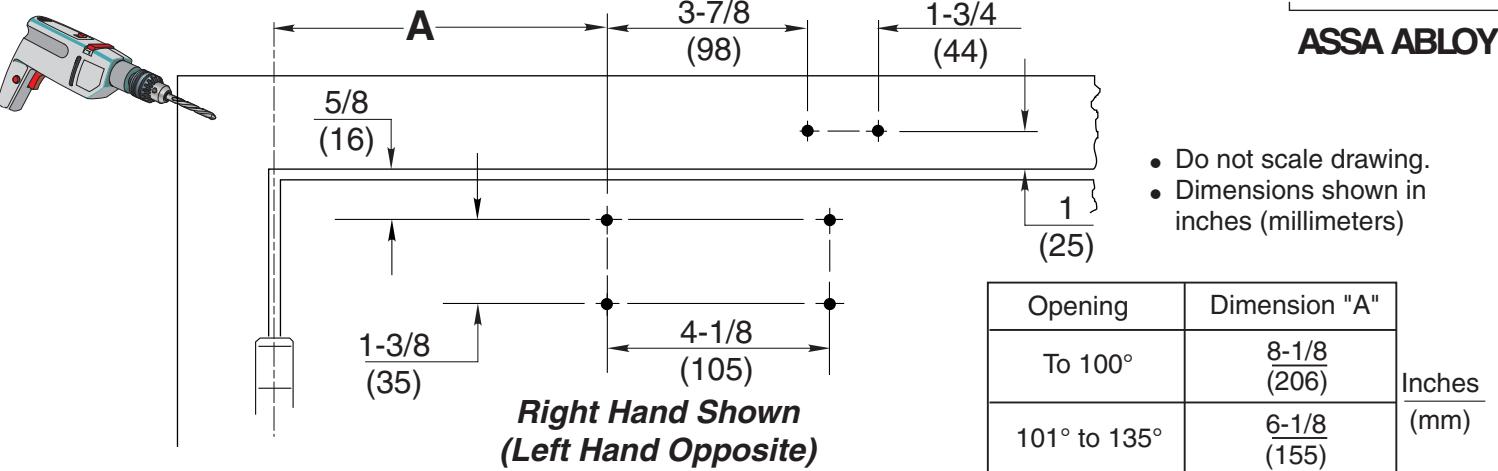
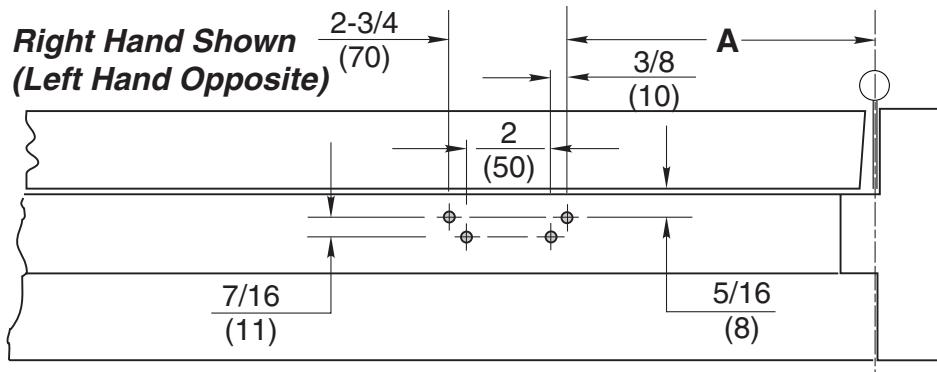
- 1. Using the template above, select the angle of opening desired. Locate and mark the 4 holes on the door for the door closer body and the 2 holes on the frame for the arm shoe.
- 2. Prepare the door and frame for fasteners using the information from "Preparation for Fasteners" chart below.
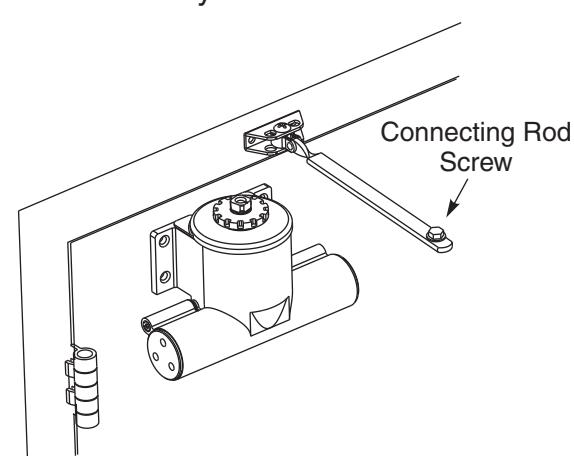
- 3. Install closer body to door and the connecting rod / shoe assembly to the frame as shown.
4. Following the main arm indexing illustrations as shown, place main arm assembly onto the closer pinion shaft. Install and tighten main arm screw with 1/2 in. wrench.
| Indexing of Main A | m Figure 2 |
|---|---|
| Pinion Shaft | Arm Mark |
| Index Mark | |
| 2 3 | 2 7 |
| Arm Mark | Pinion Shaft \ |
| Index Mark | |
| Left Hand Door | Right Hand Door |
- 5. Remove screw from connecting rod. Open door slightly and assemble connecting rod into tubular slide. Close door. Adjust secondary arm assembly so that the main arm is perpendicular (90°) to face of door. Tighten screw securely.
- 6. Closing Tension Place wrench (packed with door closer) on ratchet as shown. Swing wrench away from hinge to wind spring between 3 to 10 notches, engage dog in ratchet. Increase or decrease spring power to suit conditions. CAUTION - Overwound spring (more than 10 notches) will cause spring breakage.
| Preparation for Fasteners | ||||||
|---|---|---|---|---|---|---|
| Fasteners | Door or Frame | Drill-Sizes | ||||
| Standard | Self-Drilling Screw | Aluminum or Metal | No drill required | |||
|
Wood
(see Note) |
3/16" (4.30 mm)
(Pilot hole required) |
|||||
| 1/4" - 20 machine screw | Metal |
Drill: #7 (0.201" dia.)
Tap: 1/4" - 20 |
||||
| Optional | Sleeve nuts and bolts |
Hollow
Metal |
9/32" (7 mm) through;
3/8" (9.5 mm) door face opposite to closer |
|||
| Aluminum or Wood | 3/8" (9.5 mm) through | |||||
| Through-bolts and grommet-nuts | All |
9/32" (7 mm);
3/8" (9.5 mm) dia. x 3/8" (9.5 mm) deep on door opposite to closer |
||||
Note: Wood doors/frames
Pilot hole must be drilled when using self-drilling screws.
ASSA ABLOY, the global leader in door opening solutions
78 Series Non Hold Open Door Closers — Parallel Arm

ASSA ABLOY
|
Door
Opening |
Α | В |
|---|---|---|
| To 130° |
7-3/4
(197) |
8-1/2
(216) |
| 130° to |
5-3/4
(149) |
6-1/2
(165) |
- Do not scale drawing
- Dimensions shown in inches (mm)
Right Left
Dog Door Door Dog
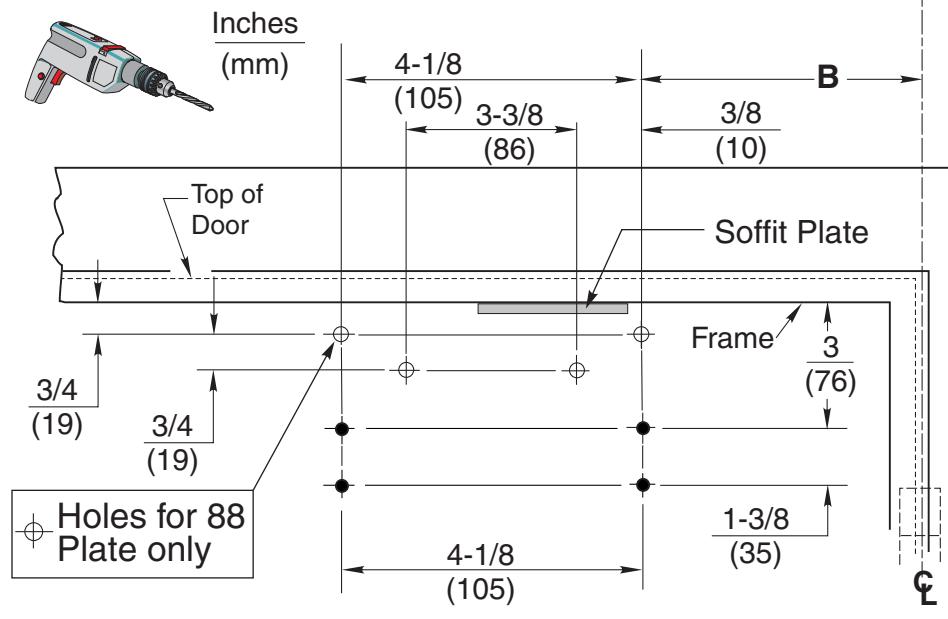
- Using the template above, select the angle of opening desired. Locate and mark 4 holes on the door for either the closer body or #88 drop plate and the 4 holes on the frame for #1618 soffit plate.
- 2. Prepare the door and frame for fasteners using the information from "Preparation for Fasteners" chart on page 2.
- 3. Install closer body to door. If 88 drop plate is used, mount it first, then fasten the closer to the drop plate. Fasten soffit plate to frame soffit with 4 mounting screws.
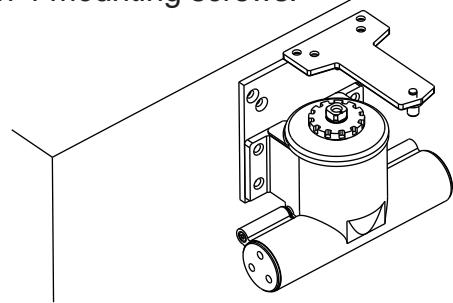
4. Following the main arm indexing illustrations as shown at right, place main arm assembly onto the closer pinion shaft. Install and tighten main arm screw with 1/2 in. wrench.
- 5. Remove screw from connecting rod. Open door slightly and assembly connecting rod into tubular slide. Close door. Adjust secondary arm assembly so that the main arm is approximately parallel with face of door. Tighten screw securely.
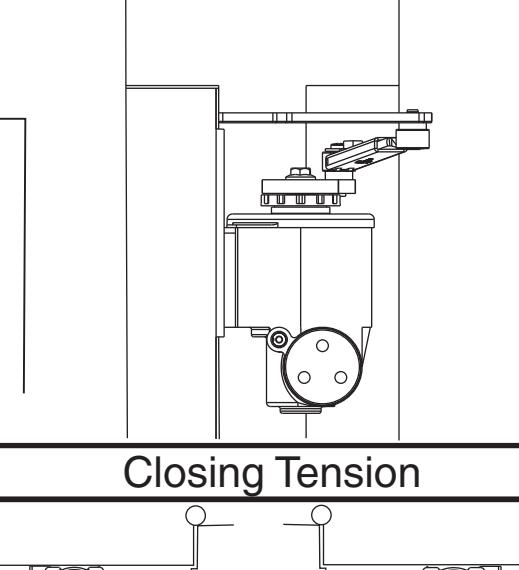
- 6. Closing Tension Place wrench (packed with door closer) on ratchet as shown. Swing wrench toward hinge to wind spring between 3 to 10 notches, engage dog in ratchet. Increase or decrease spring power to suit conditions. CAUTION Overwound spring (more than 10 notches) will cause spring breakage.
| Indexing of Main A | rm Figure 3 |
|---|---|
| Pinion Shaft Index Mark | Arm Mark |
| N N | Pinion Shaft |
| Arm Mark | Index Mark |
| Left Hand Door | Right Hand Door |
78 Series Adjustments Page
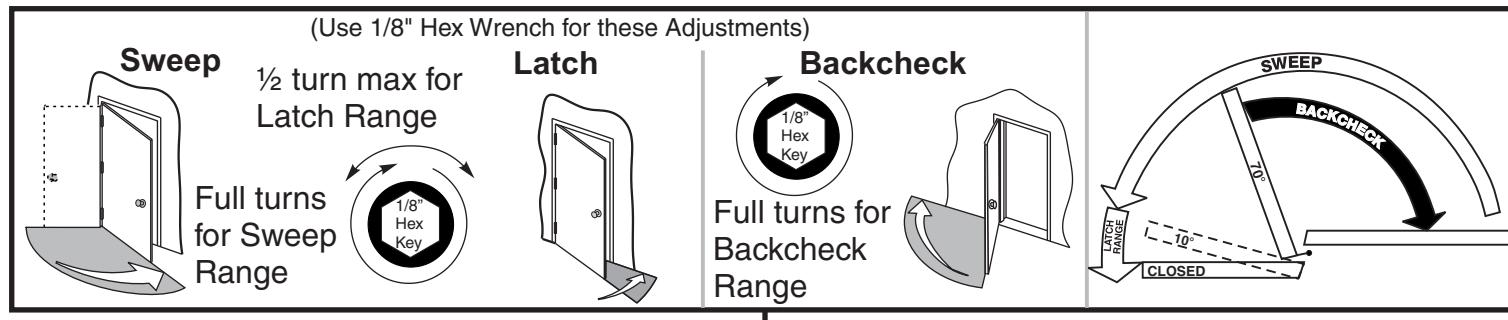
Regular Arm Closer Adjustment:
Closing Speed: Controlled by the regulating valve on the end of the closer closest to the hinge.
Sweep Speed: Controls the door's speed in the sweep speed range, shown above. Full 360° clockwise turns decreases the sweep speed. Full 360° counter-clockwise turns increases the sweep speed.
Latch Speed: Controls the door's speed in the latch range, shown above. A partial turn, up to a maximum of ½ turn (180°) in either direction determines the latch speed.
Backcheck: Controlled by the regulating valve on the end of the closer farthest from the hinge. Backcheck cushions or slows the door opening speed near the end of the opening cycle. Full 360° clockwise turns increases resistance to opening. Full 360° counter-clockwise turns decreases resistance to opening.
Note: If backcheck is encountered extremely early in the opening cycle, rotate the valve turn (180°) to eliminate early opening resistance.
Caution: To avoid damage to closer, never fully close the backcheck regulating valve.
Parallel Arm Closer Adjustment:
Closing Speed: Controlled by the regulating valve on the end of the closer farthest from the hinge.
Sweep Speed: Controls the door's speed in the sweep speed range, shown above. Full 360° clockwise turns decreases the sweep speed. Full 360° counter-clockwise turns increases the sweep speed.
Latch Speed: Controls the door's speed in the latch range, shown above. A partial turn, up to a maximum of ½ turn (180°) in either direction determines the latch speed.
Backcheck: Controlled by the regulating valve on the end of the closer closest to the hinge. Backcheck cushions or slows the door opening speed near the end of the opening cycle. Full 360° clockwise turns increases resistance to opening. Full 360° counter-clockwise turns decreases resistance to opening.
Note: If backcheck is encountered extremely early in the opening cycle, rotate the valve 1/2 turn (180°) to eliminate early opening resistance.
Caution: To avoid damage to closer, never fully close the backcheck regulating valve.
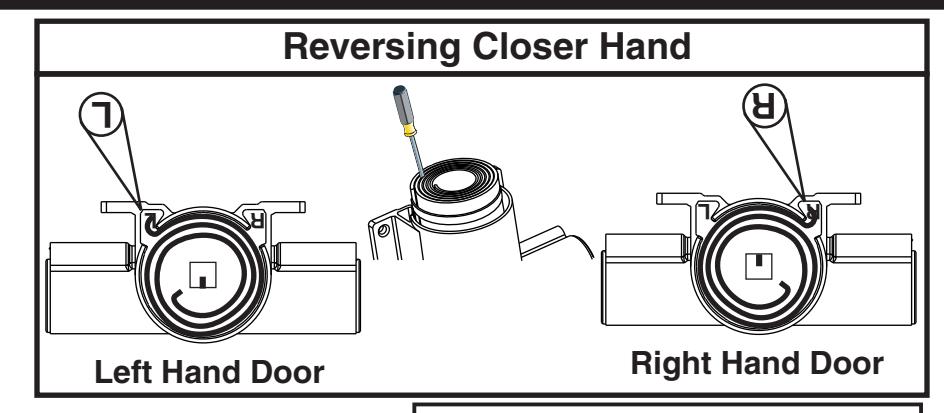
To Reverse Closer Hand:
- 1. Remove main arm screw, arm assembly, ratchet, and top cover.
- 2. Lift out spring using screwdriver wedged between coils (see figure at right).
- 3. Reverse spring and re-assemble to required hand (see figure at right).
- 4. Rotate shaft to required hand (see figure at right).
- 5. Replace cover and insert ratchet, lining up slot with inner hook on spring.