Guide to Selecting an Electric Strike
Open the original PDF document
View PDF

Guide to selecting an electric strike
With so many electric strikes on the market today identifying the right solution can seem like an overwhelming task. This brief guide highlights some important considerations when making your selection. Allegion security and safety consultants are here to help you every step of the way. You can turn to us for expertise and service at any time before, during or after installation.
Openings which do not function properly from a mechanical perspective cannot effectively carry out their mission as access control points. Door misalignment and sag should be identified and corrected before access control is deployed. Likewise, worn or misaligned hinges should be addressed to prevent damage to the door and frame. Your door closer must also be strong enough to allow for proper latching.
1. Application
Electric strikes are a cost effective alternative for applications where electrified lock mechanisms are not practical. What makes electric door strikes different from traditional lock strike plates is the movable keeper. The keeper interacts with the latch bolt of the lockset or panic hardware, either securing it to lock the door, or allowing the latchbolt to be pulled through the keeper for access.
When selecting a strike, begin by defining the application and operational requirements. For example, you may have a perimeter door with an entry buzzer or emergency exit doors connected to the fire alarm system. Regardless of the application, Von Duprin offers a full portfolio of electric strikes to address it.
Our new construction portfolio provides a wide breadth of factory orderable options to address virtually any new construction application. For aftermarket installations where flexibility is key, our portfolio includes modular products with many field configurable options. No matter what Von Duprin electric strike you choose, you can be confident that it will perform. Each of our strikes is designed and tested to meet the highest standards in the industry.
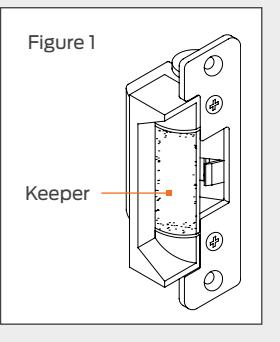
Quick survey Define the application and operational requirements Identify the application: Aftermarket New construction Heavy duty Medium duty Traffic control
2. Lockset
There are a wide variety of locksets on the market today which necessitate the need for many different types of electric strikes. To determine which strike is compatible with the manufacturer and model number of your lockset there are several factors you need to consider, including the type of lockset and the latch bolt dimensions.
The electric strike must accommodate both the length and position of the latchbolt, deadlatch and, in some circumstances, the deadbolt. It is important to reference the manufacturer's compatibility chart and stay within spec to minimize the amount of alterations required. Field modification of the door or frame typically voids the label on fire rated openings.
When electric strikes are used with panic devices it is important to designate the type — rim, mortise, concealed vertical rod/cable or surface vertical rod. Electric strikes are not typically recommended for use with vertical rod devices because it must be installed less bottom rod (LBR).
Choosing a compatible electric strike is only the first step. You must also check the installation instructions and properly position the centerline of the electric door strike in relation to the centerline of the lockset to ensure optimal performance.
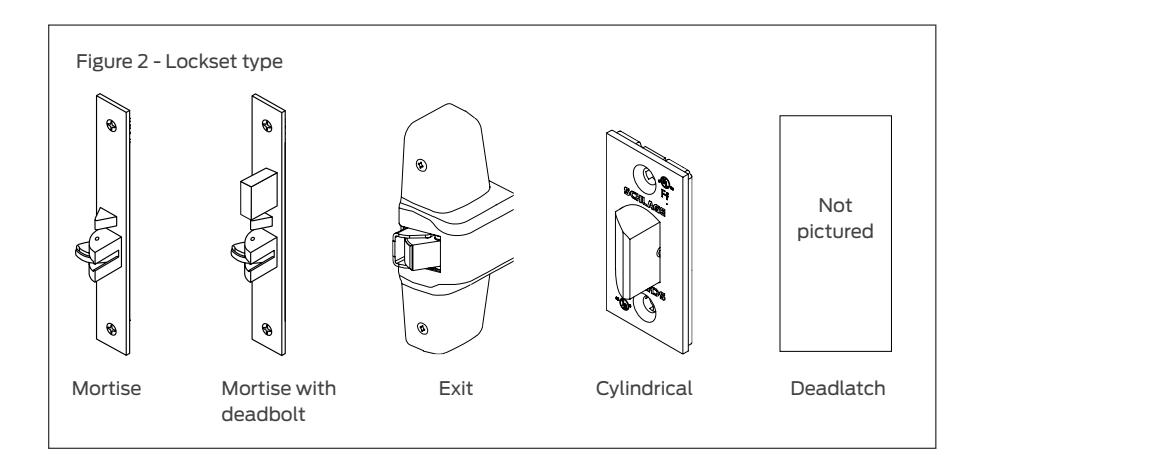
Quick survey
Identify the type of lockset
- Cylindrical
- Mortise
- Mortise with deadbolt
- Exit
If exit device:
- Rim
- Mortise
- Surface vertical rod
- Concealed vertical rod/cable
3. Type of doors
An electric strike replaces the standard mechanical strike of a lockset or exit device. On single doors, the electric strike mounts to the frame. For a pair of doors the electric strike can mount either to the inactive leaf or to the mullion. When selecting an electric strike for such applications it is important to ensure that the stile width and thickness of the inactive leaf can accommodate the strike prep. Electric strikes are not typically used on pairs of doors where both leaves are active.
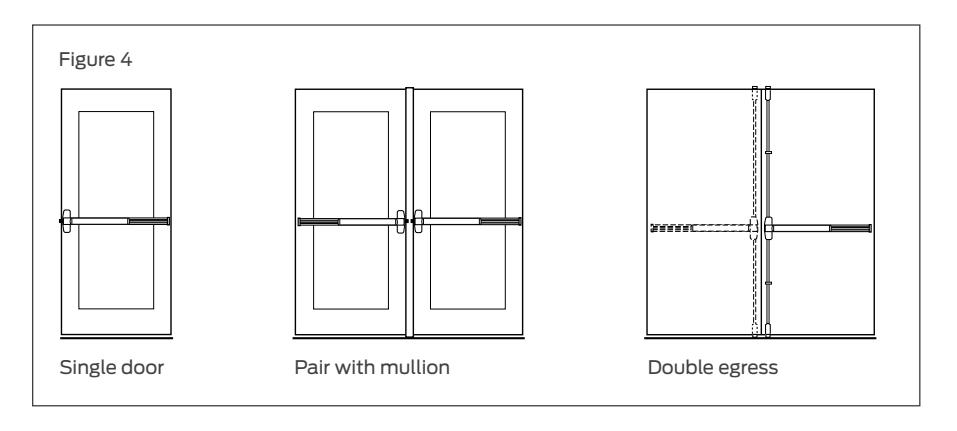
Quick survey
Identify the type of doors
- Single
- Pair inactive leaf
- Pair mullion
- Pair- two active leafs
4. Dimensions
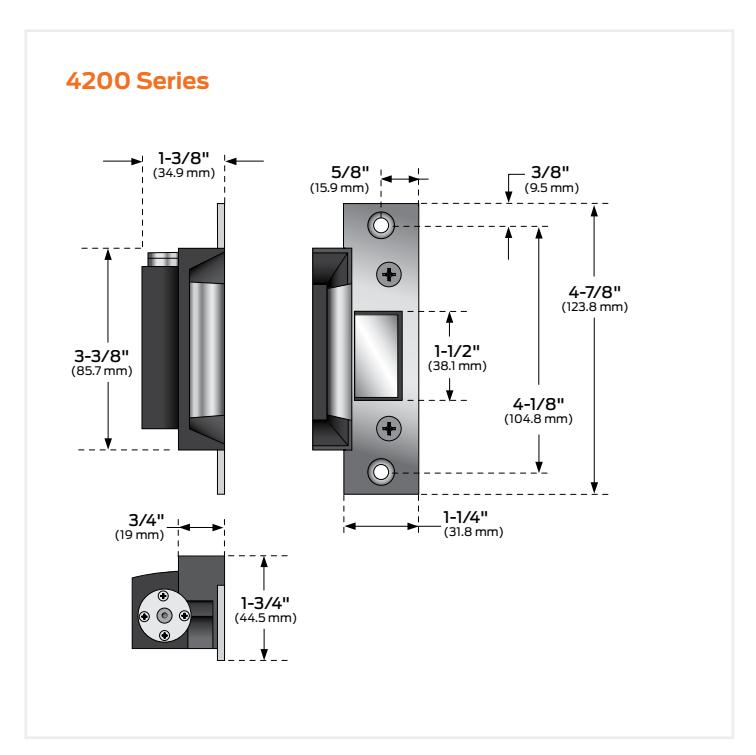
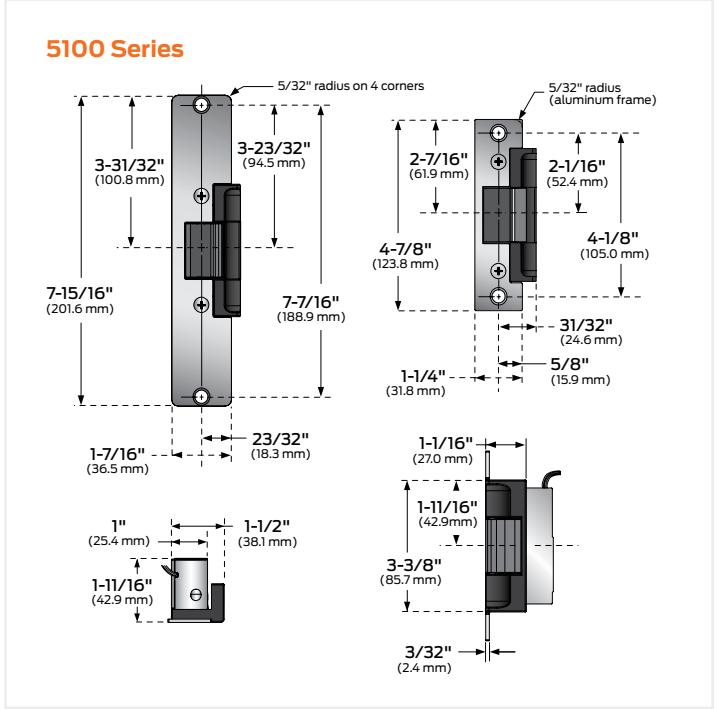
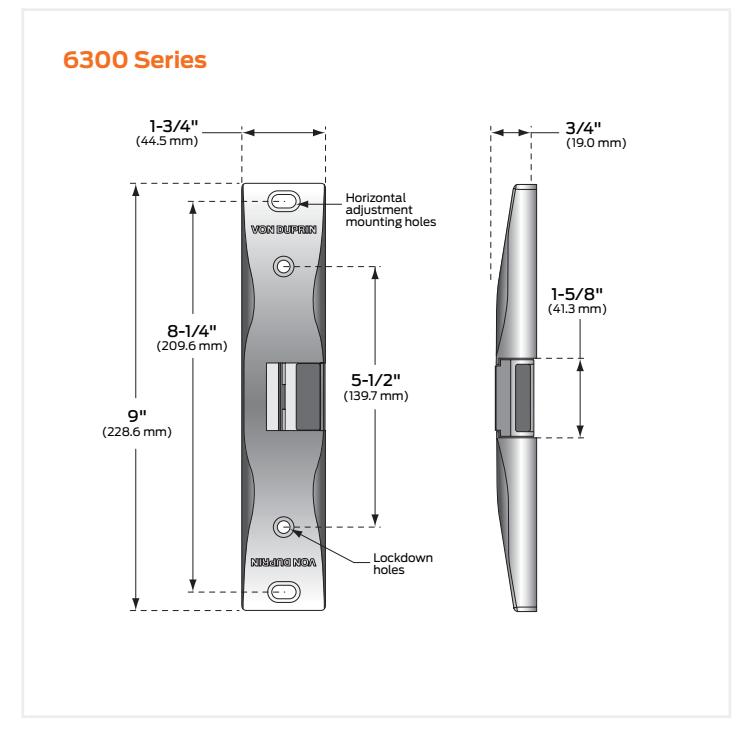
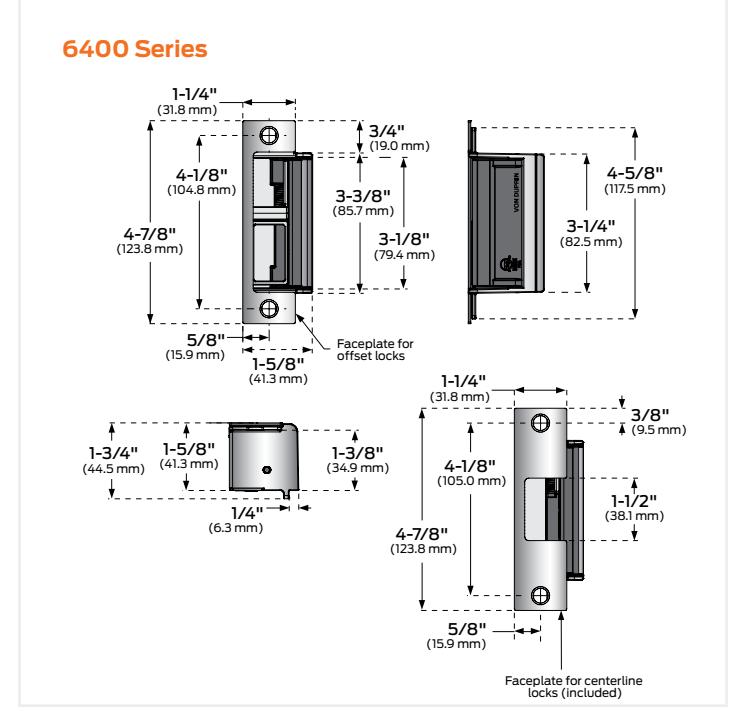
When retrofitting a mechanical strike, begin by examining the dimensions of the existing prep. The height of a standard ASA prep is 4 7 ⁄8", which corresponds to the typical face plate length of the strike. Likewise you must examine the height, width and depth of the cutout to ensure it can accommodate the minimum clearance and backbox depth of the strike. As previously noted, it is important to also be aware of the dimensions of the latchbolt to ensure the strike cavity is deep enough to accept it.
5. Door and frame material
Electric strikes have unique design elements to accommodate either specific or multiple types of doors and frames.
- Wood frames typically require longer face plates to provide stability. Cutting away too much of a wood frame can compromise its integrity so proper installation is essential.
- Hollow metal frames are sometimes filled with grout, making installation difficult. Many Von Duprin strikes feature an internal solenoid to allow for easier installation even if a frame is reinforced.
- Aluminum frames are often between 1 ¾" and 2" wide and include glass that can protrude into the frame, so it is important to verify the dimensions.
Quick survey
Identify the door and frame material
- Wood
- Hollow metal
- Aluminum
6. Codes
Fail-secure strikes default to a locked state when power is removed, and will unlock to allow access when power is applied. Electric strikes for fire-rated doors designed to stop or slow fire progression must be fail-secure to ensure positive latching.
Fail-safe strikes default to an unlocked state when power is removed, and power must be continuously applied to maintain a locked condition. These strikes have more limited application and are thus less frequently installed. Fail-safe electric strikes may not be used on fire doors, because they do not ensure positive latching.
Quick survey
Determine code requirements
- Fire-rated
- Non fire-rated
- Other
7. Power requirements
The most common electric strikes on the market today are 24 VDC (direct current). However, other options including 12 or 24 VAC (alternating current) are also available. All devices fed from a power supply must be the same voltage and current output capability.
Quick survey
Determine the required voltage
- 12 VDC
- 12 VAC
- 24 VDC
- 24 VAC
Record load of all devices
Record capacity of supply
8. Additional options
Finally it is important to document any additional options that are required.
- Latchbolt monitoring indicates when the latchbolt is extended into the strike cavity.
- Locked status monitoring indicates if the strike is electrically locked or unlocked.
- Rectifier kit allows DC strikes to be used where AC current is present.
- Entry buzzer for fail-secure applications- where an audible indication is required to notify that the door is unlocked.
Allegion, the Allegion logo, Von Duprin, and the Von Duprin logo are trademarks of Allegion plc, its subsidiaries and/or affiliates in the United States and other countries. All other trademarks are the property of their respective owners.
About Allegion
Allegion (NYSE: ALLE) is a global pioneer in safety and security, with leading brands like CISA®, Interflex®, LCN®, Schlage® and Von Duprin®. Focusing on security around the door and adjacent areas, Allegion produces a range of solutions for homes, businesses, schools and other institutions. Allegion is a $2 billion company, with products sold in almost 130 countries. For more, visit www.allegion.com.