Glynn Johnson 100 Series Overhead Door Stop Holder Report 113315
Open the original PDF document
View PDFGLYNN-JOHNSON OVERHEAD DOOR HOLDER 100 SERIES

Allegion is pioneering safety by protecting people where they live and work – and protecting our environment at the same time. We promote the health and safety of our employees, customers and local community members worldwide through our commitment to conducting business in a safe and environmentally responsible manner.
Additionally, Allegion recognizes the value of the Leadership in Energy and Environmental Design (LEED) rating system to building environmentally safe and sustainable structures. By using Life Cycle Assessment and Environmental Product Declarations, we aim to provide our customers with the information they need to make decisions regarding their own sustainable building concepts and green solutions.
At Allegion, we value the importance of a cleaner world and are committed to being a responsible member of our global communities.



According to ISO 14025, EN 15804, and ISO 21930:2007
This declaration is an environmental product declaration (EPD) in accordance with ISO 14025. EPDs rely on Life Cycle Assessment (LCA) to provide information on a number of environmental impacts of products over their life cycle. Exclusions: EPDs do not indicate that any environmental or social performance benchmarks are met, and there may be impacts that they do not encompass. LCAs do not typically address

the site-specific environmental impacts of raw material extraction, nor are they meant to assess human health toxicity. EPDs can complement but cannot replace tools and certifications that are designed to address these impacts and/or set performance thresholds – e.g. Type 1 certifications, health assessments and declarations, environmental impact assessments, etc. Accuracy of Results: EPDs regularly rely on estimations of impacts, and the level of accuracy in estimation of effect differs for any particular product line and reported impact. Comparability: EPDs are not comparative assertions and are either not comparable or have limited comparability when they cover different life cycle stages, are based on different product category rules or are missing relevant environmental impacts. EPDs from different programs may not be comparable.
| PROGRAM OPERATOR | UL Environment | |
|---|---|---|
| DECLARATION HOLDER | Schlage Lock Co,- Allegion | |
| DECLARATION NUMBER | 4787103471.120.1 | |
| DECLARED PRODUCT | Glynn-Johnson Overhead Door Stop Holder-100 Series | |
|
REFERENCE
PCR |
Product Category Rule (PCR) for preparing an Environmental Product Declaration
(EPD) for Product Group, Builders Hardware UL9004. Version: April 3rd, 2014. |
|
|
REFERENCE PCR
STANDARD |
☐
EN 15804 (2012) ☐ ISO 21930 (2007) ☐ ISO 21930 (2017) |
|
| DATE OF ISSUE | April 23, 2019 | |
| PERIOD OF VALIDITY | 5 Years | |
|
CONTENTS OF THE
DECLARATION The PCR review was conducted by: |
Product definition and information about building physics
Information about basic material and the material's origin Description of the product's manufacture Indication of product processing Information about the in-use conditions Life cycle assessment results Testing results and verifications |
PCR Review Panel
epd@ulenvironment.com |
|
14025 by Underwriters Laboratories
☐ INTERNAL |
This declaration was independently verified in accordance with ISO
☒ EXTERNAL |
Grant R. Martin, UL Environment |
|
This life cycle assessment was independently verified in
accordance with ISO 14044 and the reference PCR by: |
Thomas P. Gloria, Industrial Ecology Consultants |


According to ISO 14025, EN 15804 and ISO 21930:2007
1. Product Definition and Information
1.1. Description of Company/Organization
Allegion is a global pioneer in safety and security, with leading brands like aptiQ®, LCN®, Schlage®, Steelcraft® and Von Duprin®. Focusing on security around the door and adjacent areas, Allegion produces a range of solutions for homes, businesses, schools and other institutions. Allegion is a $2 billion company, with products sold in almost 130 countries.
As a subsidiary of Allegion plc, Glynn-Johnson is known throughout the industry as the "overhead door holder specialist". Delivering both superior quality and exceptional performance, Glynn-Johnson products are offered in a wide variety of popular finishes and configurations providing the flexibility needed to meet the most demanding door control applications.
1.2. Product Description
Product Identification
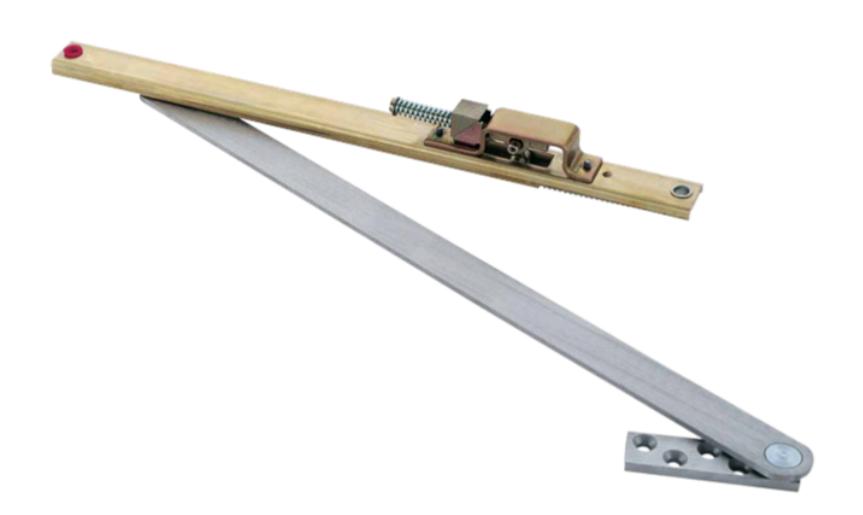
Glynn-Johnson 100 Series holders and stops provide the most reliable and versatile concealed overhead door control. They are designed for installation on virtually all types of doors mounted on conventional type butt hinges, pivots, continuous hinges, swing clear hinges and numerous other specialty hinges. When used in conjunction with many surface-applied door closers, 100 Series holders and stops provide the most effective control for entrance doors and vestibule doors of all types, as well as heavy or often used interior doors. Templates provided allow for variable mounting positions, ranging from 85° - 110° of opening.
Product Specification
Overhead door stop characteristics:
- Door Opening: 33 1/16" - 39"
1.3. Application
Glynn-Johnson overhead door stops are designed to be used in commercial applications such as health care, education, hospitality, and retail. The product can also be used residentially if desired.
BHMA Standards Applicable:
| G-J MODEL | BHMA* |
FEDERAL
SPECIFICATIONS |
|---|---|---|
| 101-106 H | C01511 | 1160 |
| 101-106 S | C01541 | - |
| 101-106 F | C01531 | - |
* All 100 Series models are designed for heavy-duty applications and far exceed BHMA cycle test and force test requirements for Grade 1 holders and stops.

ENVIRONMENTAL PRODUCT DECLARATION


Glynn-Johnson Overhead Door Stops
According to ISO 14025, EN 15804 and ISO 21930:2007
1.4. Declaration of Methodological Framework
This LCA is a cradle-to-gate with options (C1-C4) study. A summary of the life cycle stages can be found in Table 9.
The cut-off criteria are described in Section 0 and allocation procedures are described in Section 2.8. No known flows are deliberately excluded from this EPD.
1.5. Technical Data
Table 1: Overhead door stop - 100 Series sizing chart
| Вι | JTTS/ OFFSET PI | vots | CENTE | R HUNG | ||||
|---|---|---|---|---|---|---|---|---|
| Size | Door opening | Stop only | Hold open | Friction |
Door
opening |
Stop only | Hold open | Friction |
| 1 | 18"-23" | 101S | 101H | 101F | - | - | - | - |
| 2 | 23 1/16"- 27" | 102S | 102H | 102F | - | - | - | - |
| 3 | 27 1/16"- 33" | 103S | 103H | 103F | 33 1/16"- 39" | 103S | 103H | 103F |
| 4 | 33 1/16"- 39" | 104S | 104H | 104F | 39 1/16"- 45" | 104S | 104H | 104F |
| 5 | 39 1/16"- 45" | 105S | 105H | 105F | 45 1/16"- 51" | 105S | 105H | 105F |
| 6 | 45 1/16"- 51" | 106S | 106H | 106F | 51 1/16"- 59" | 106S | 106H | 106F |
This chart illustrates the most common types of hinging and door opening sizes.
1.6. Properties of Declared Product as Delivered
For shipping, all door stops are packaged individually in cardboard boxes. Along with the overhead door holder and stop, an instruction manual, labels and screw bag are also included.
1.7. Material Composition
The materials that make up the flooring product are indicated in Table 2.
Table 2: Material Composition
| MATERIAL | Mass % |
|---|---|
| Stamped steel | 55.3 % |
| Hot dipped galvanized steel | 31.3 % |
| Cold rolled steel | 5.5 % |
| Copper | 7.6 % |
| Finish | 0.3 % |
1.8. Manufacturing
Glynn Johnson products are manufactured at Allegion's Indianapolis plant, located at 2720 Tobey Dr, Indianapolis, IN 46219. The manufacturing of overhead door holders and stops begins when raw materials are received at the plant. Raw material parts are pre-formed by suppliers. Manufacturing can be summarized as finishing of parts, assembly of



According to ISO 14025, EN 15804 and ISO 21930:2007
the final product, packaging and shipping. Raw materials processing begins at receiving. These materials are extruded 300 Series stainless steel and heavy gauge brass parts. Once received, the parts are sent to be cut to appropriate size, stamped and hole punched. Metal waste at this portion of the process is collected and recycled. After this, products are washed with mild soap, rinsed, dried, and finished. Once the product is cooled, the proper labels are affixed, and the product is stored in crates and tested. Along with the overhead door holder and stop, an instruction manual, labels and a screw bag are also included in cardboard boxes.
Product is shipped to customers via UPS or LTL carriers.
Natural resources used in the manufacturing process include electricity, natural gas and water. Steel waste is also generated throughout each step as the product is formed, sheared and assembled. All steel waste is collected and recycled offsite.
1.9. Packaging
Packaging utilized in the shipment of the product is described in Table 3.
PACKAGING TYPE MATERIAL AMOUNT (KG) DISPOSAL PATHWAY Box Cardboard 0.013 Landfilled (20%), Incinerated (5%), Recycled (75%) Bag for screws Polyethylene 0.0004 Landfilled (68%), Incinerated (17%), Recycled (15%)
Table 3: Packaging
1.10. Transportation
It is assumed that all raw materials are distributed by truck, based on global region. An average distance using this information was calculated and used in the model.
An average shipping distance from the manufacturing location to the customer was utilized and was calculated from sales records. The transportation distance for all waste flows is assumed to be 161 km based on best available data.
1.11. Product Installation
Detailed installation instructions can be found online. While installation equipment is required to install the product, it is not included in the study as these are multi-use tools and the impacts per declared unit is considered negligible. All waste generated during installation, including packaging waste, is disposed of according to the tables found in Section 2.8.5 of Part A: Life Cycle Assessment Calculation Rules and Report Requirements from UL Environment.
1.12. Reuse, Recycling, and Energy Recovery
Glynn-Johnson produts may be recycled or resued at the end of life. The LCA that this EPD is created from takes the conservative approach by assuming that all products are disposed of within the system boundary.
1.13. Disposal
Disposal pathways in the EPD are modeled in accordance with disposal routes and waste classification referenced in Sections 2.8.5 and 2.8.6 of Part A: Life Cycle Assessment Calculation Rules and Report Requirements from UL Environment. This indicates an end-of-life split amongst landfill, recycling, and incineration pathways.

ENVIRONMENTAL PRODUCT DECLARATION

Glynn-Johnson Overhead Door Stops
According to ISO 14025, EN 15804 and ISO 21930:2007
2. Life Cycle Assessment Background Information
2.1. Declared Unit
The declared unit is one 100 series overhead door stop, as indicated in Table 4.
Table 4: Declared Unit
| NAME | VALUE | Unit |
|---|---|---|
| Declared Unit | 1 doc | r stop |
| Mass | 1.30 | kg |
2.2. System Boundary
The type of EPD is cradle-to-gate with options (C1-C4). All LCA modules are included and are summarized in Table 5.
Table 5: System Boundary
|
MODULE
NAME |
DESCRIPTION |
ANALYSIS
PERIOD |
SUMMARY OF INCLUDED ELEMENTS |
|---|---|---|---|
| A1 | Product Stage: Raw Material Supply | 2018 | Raw Material sourcing and processing as defined by secondary data. |
| A2 | Product Stage: Transport | 2018 | Shipping from supplier to manufacturing site. Fuel use requirements estimated based on product weights and estimated distance. |
| А3 | Product Stage: Manufacturing | 2018 | Energy, water and material inputs required for manufacturing products from raw materials. Packaging materials and manufacturing waste are included as well. |
| A4 |
Construction Process Stage:
Transport |
2018 | Shipping from manufacturing site to project site. Fuel use requirements estimated based on product weights and mapped distance. |
| A5 | Construction Process Stage: Installation | 2018 | Installation materials, installation waste and packaging material waste. |
| B1 | Use Stage: Use | MND | Module not declared |
| B2 | Use Stage: Maintenance | MND | Module not declared |
| В3 | Use Stage: Repair | MND | Module not declared |
| B4 | Use Stage: Replacement | MND | Module not declared |
| B5 | Use Stage: Refurbishment | MND | Module not declared |
| В6 | Operational Energy Use | MND | Module not declared |
| В7 | Operational Water Use | MND | Module not declared |
| C1 | EOL: Deconstruction | 2018 | No inputs required for deconstruction. |
| C2 | EOL: Transport | 2018 | Shipping from project site to landfill. Distance assumed to be 100 miles from installation site to landfill. |
| C3 | EOL: Waste Processing | 2018 | Waste processing not required. All waste can be processed as is. |
| C4 | EOL: Disposal | 2018 | Assumes all products are sent to landfill. Landfill impacts modeled based on secondary data. |
| D | Benefits beyond system | MND | Module not declared |



According to ISO 14025, EN 15804 and ISO 21930:2007
2.3. Estimates and Assumptions
All estimates and assumptions are within the requirements of ISO 14040/44. The majority of the estimations are within the primary data. The primary data was collected as annual totals including all utility usage and production information. For the LCA, the usage information was divided by the production to create an energy and water use per declared unit, i.e., one door stop. Another assumption is that the installation tools are used enough times that the per door stop impacts are negligible.
2.4. Cut-off Criteria
All inputs in which data was available were included. Material inputs greater than 1% (based on total mass of the final product) were included within the scope of analysis. Material inputs less than 1% were included if sufficient data was available to warrant inclusion and/or the material input was thought to have significant environmental impact. Cumulative excluded material inputs and environmental impacts are less than 5% based on total weight of the functional unit. The list of excluded materials and energy inputs include:
-
Some raw materials were excluded. This was due to lack of adequate representative secondary data within GaBi. However, the excluded materials were significantly below the cut-off criteria and include minor additives. The excluded materials include:
- o Finish (0.3% of the door stop)
2.5. Data Sources
Primary data were collected by facility personnel and from utility bills and was used for all manufacturing processes. Whenever available, supplier data was used for raw materials used in the production process. When primary data did not exist, secondary data for raw material production was utilized from GaBi Database Version 8.7.1.30, Service Pack 35.
2.6. Data Quality
Geographical Coverage
The geographical scope of the manufacturing portion of the life cycle is Indianapolis, Indiana. This LCA uses country specific energy datasets that take into account US eGrid specific energy and transportation mixes. Overall, the geographic coverage of primary data is considered good.
Time Coverage
Primary data were provided by Allegion associates and represent calendar year 2018. Using 2018 data meets the PCR requirement that manufacturer specific data be within the last 5 years. Time coverage of this data is considered good. Data necessary to model cradle-to-gate unit processes was sourced from thinkstep LCI datasets. Time coverage of the GaBi datasets varies from approximately 2010 to present. All datasets rely on at least one 1-year average data. Overall time coverage of the datasets is considered good and meets the requirement of the PCR that all data be updated within a 10-year period. The specific time coverage of secondary datasets can be referenced in the dataset references table in each supplemental LCA report.
Technological Coverage
Primary data provided by Allegion are specific to the technology that the company uses in manufacturing their product. It is site specific and considered of good quality. It is worth noting that the energy and water used in manufacturing the product includes overhead energy such as lighting, heating and sanitary use of water. Sub-metering was not available



According to ISO 14025, EN 15804 and ISO 21930:2007
to extract process only energy and water use from the total energy use. Sub-metering would improve the technological coverage of data quality. Data necessary to model cradle-to-gate unit processes was sourced from thinkstep LCI datasets. Technological coverage of the datasets is considered good relative to the actual supply chain of Allegion. While improved life cycle data from suppliers would improve technological coverage, the use of lower quality generic datasets does meet the goal of this EPD.
2.7. Period under Review
The period under review is calendary year 2018.
2.8. Allocation
General principles of allocation were based on ISO 14040/44. Where possible, allocation was avoided. When allocation was necessary it was done on a physical mass basis. Allocation was most prevalent in the secondary GaBi datasets used to represent upstream processes. As a default, GaBi datasets use a physical mass basis for allocation.
3. Life Cycle Assessment Scenarios
Table 6: Transport to the building site (A4)
| NAME | VALUE | UNIT |
|---|---|---|
| Fuel type | Diesel | |
| Liters of fuel | 39.0625 | l/100km |
| Vehicle type | Truck | |
| Transport distance | 846.5 | km |
| Capacity utilization | 0.65 | % |
| Gross density of products transported | 221.71 | kg/m3 |
| Capacity utilization volume factor | 1 | - |
Table 7: Installation into the building (A5)
| NAME | VALUE | UNIT |
|---|---|---|
| Fasteners | 0.124 | kg |
| Product loss per functional unit | 0.0006 | kg |
|
Waste materials at the construction site before waste
processing, generated by product installation |
0.014 | kg |
| Biogenic carbon contained in packaging | 0.0475 | kg CO2e |
| Direct emissions to ambient air, soil and water | 0 | kg |
| VOC emissions | N/A | μg/m3 |
Table 8: End of life (C1-C4)
| NAME | VALUE | UNIT | |
|---|---|---|---|
| Collected separately | 1.36 | kg | |
| Collection process | Collected with mixed construction waste | 0 | kg |



According to ISO 14025, EN 15804 and ISO 21930:2007
| NAME | VALUE | UNIT | |
|---|---|---|---|
| Reuse | 0 | kg | |
| Recycling | 1.15 | kg | |
| Recovery | Landfill | 0.204 | kg |
| Incineration | 0 | kg | |
| Disposal | Product or material for final deposition | 0.204 | kg |
4. Life Cycle Assessment Results
Table 9: Description of the system boundary modules
| PRODUCT STAGE | STAGE |
CONSTRUCT
ION PROCESS |
USE STAGE | END OF LIFE STAGE |
BENEFITS AND
LOADS BEYOND THE SYSTEM BOUNDARY |
||||||||||||
|---|---|---|---|---|---|---|---|---|---|---|---|---|---|---|---|---|---|
| A1 | A2 | A3 | A4 | A5 | B1 | B2 | B3 | B4 | B5 | B6 | B7 | C1 | C2 | C3 | C4 | D | |
|
Raw material
supply |
Transport | Manufacturing |
Transport from
gate to site |
Assembly/Install | Use | Maintenance | Repair | Replacement | Refurbishment |
Building Operational
Energy Use During Product Use |
Building Operational
Water Use During Product Use |
Deconstruction | Transport |
processing
Waste |
Disposal |
Reuse, Recovery,
Recycling Potential |
|
| EPD Type | X | X | X | MND MND MND MND MND | MND | MND | X | X | X | X | MND | ||||||
4.1. Life Cycle Impact Assessment Results
Table 10: North American Impact Assessment Results – Stainless Steel Option
| TRACI V2.1 | A1-A3 | A4 | A5 | B1 | B2 | B3 | B4 | B5 | B6 | B7 | C1 | C2 | C3 | C4 | D |
|---|---|---|---|---|---|---|---|---|---|---|---|---|---|---|---|
| AP [kg SO2 eq] | 1.50E-02 | 1.36E-04 | 1.04E-03 | MND | MND | MND | MND | MND | MND | MND | 0.00E+00 | 4.72E-05 | 0.00E+00 | 4.98E-05 | MND |
| EP [kg N eq] | 1.80E-03 | 1.13E-05 | 3.67E-05 | MND | MND | MND | MND | MND | MND | MND | 0.00E+00 | 4.59E-06 | 0.00E+00 | 5.60E-06 | MND |
|
GWP 100 [kg CO2
eq] |
8.76E+00 | 3.00E-02 | 1.97E-01 | MND | MND | MND | MND | MND | MND | MND | 0.00E+00 | 0.00E+00 | 1.75E-02 | 0.00E+00 | MND |
|
ODP [kg CFC-11
eq] |
3.40E-08 | -1.59E-16 | -6.09E-15 | MND | MND | MND | MND | MND | MND | MND | 0.00E+00 | 0.00E+00 | -9.37E-17 | 0.00E+00 | MND |
|
Resources [MJ,
LHV] |
5.57E-02 | 1.52E-01 | 0.00E+00 | MND | MND | MND | MND | MND | MND | MND | 0.00E+00 | 3.29E-02 | 0.00E+00 | 1.79E-02 | MND |
| POCP [kg O3 eq] | 2.45E-01 | 3.17E-03 | 1.10E-02 | MND | MND | MND | MND | MND | MND | MND | 0.00E+00 | 1.06E-03 | 0.00E+00 | 8.24E-04 | MND |



According to ISO 14025, EN 15804 and ISO 21930:2007
Table 11: North American Impact Assessment Results – Brass Option
| TRACI V2.1 | A1-A3 | A4 | A5 | B1 | B2 | B3 | B4 | B5 | B6 | B7 | C1 | C2 | C3 | C4 | D |
|---|---|---|---|---|---|---|---|---|---|---|---|---|---|---|---|
| AP [kg SO2 eq] | 1.66E-02 | 1.55E-04 | 1.04E-03 | MND | MND | MND | MND | MND | MND | MND | 0.00E+00 | 4.94E-05 | 0.00E+00 | 5.21E-05 | MND |
| EP [kg N eq] | 1.75E-03 | 1.29E-05 | 3.67E-05 | MND | MND | MND | MND | MND | MND | MND | 0.00E+00 | 4.80E-06 | 0.00E+00 | 5.85E-06 | MND |
|
GWP 100 [kg CO2
eq] |
7.89E+00 | 3.42E-02 | 1.97E-01 | MND | MND | MND | MND | MND | MND | MND | 0.00E+00 | 1.83E-02 | 0.00E+00 | 9.35E-03 | MND |
|
ODP [kg CFC-11
eq] |
3.40E-08 | -1.81E-16 | -6.09E-15 | MND | MND | MND | MND | MND | MND | MND | 0.00E+00 | -9.80E-17 | 0.00E+00 | -4.91E-16 | MND |
|
Resources [MJ,
LHV] |
8.53E+00 | 6.36E-02 | 1.52E-01 | MND | MND | MND | MND | MND | MND | MND | 0.00E+00 | 3.44E-02 | 0.00E+00 | 1.88E-02 | MND |
| POCP [kg O3 eq] | 1.81E-01 | 3.63E-03 | 1.10E-02 | MND | MND | MND | MND | MND | MND | MND | 0.00E+00 | 1.11E-03 | 0.00E+00 | 8.61E-04 | MND |
Table 12: EU Impact Assessment Results – Stainless Steel Option
| CML V4.2 | A1-A3 | A4 | A5 | B1 | B2 | B3 | B4 | B5 | B6 | B7 | C1 | C2 | C3 | C4 | D |
|---|---|---|---|---|---|---|---|---|---|---|---|---|---|---|---|
|
ADPelement [kg Sb
eq] |
5.22E-06 | 5.62E-09 | 1.10E-05 | MND | MND | MND | MND | MND | MND | MND | 0.00E+00 | 3.32E-09 | 0.00E+00 | 3.70E-09 | MND |
| ADPfossil [MJ, LHV] | 1.05E+02 | 4.16E-01 | 2.30E+00 | MND | MND | MND | MND | MND | MND | MND | 0.00E+00 | 2.46E-01 | 0.00E+00 | 1.39E-01 | MND |
| AP [kg SO2 eq] | 1.39E-02 | 9.99E-05 | 1.08E-03 | MND | MND | MND | MND | MND | MND | MND | 0.00E+00 | 3.56E-05 | 0.00E+00 | 3.80E-05 | MND |
| EP [kg PO4-3 eq] | 2.06E-03 | 2.82E-05 | 6.86E-05 | MND | MND | MND | MND | MND | MND | MND | 0.00E+00 | 1.03E-05 | 0.00E+00 | 8.68E-06 | MND |
|
GWP 100 [kg CO2
eq] |
8.82E+00 | 3.00E-02 | 1.98E-01 | MND | MND | MND | MND | MND | MND | MND | 0.00E+00 | 1.75E-02 | 0.00E+00 | 8.99E-03 | MND |
|
ODP [kg CFC-11
eq] |
3.12E-08 | 2.79E-18 | 2.15E-15 | MND | MND | MND | MND | MND | MND | MND | 0.00E+00 | 1.65E-18 | 0.00E+00 | 3.27E-17 | MND |
|
POCP [kg ethene
eq] |
1.48E-03 | -1.43E-05 | 5.61E-05 | MND | MND | MND | MND | MND | MND | MND | 0.00E+00 | -5.36E-06 | 0.00E+00 | 3.37E-06 | MND |
Table 13: EU Impact Assessment Results – Brass Option
| CML V4.2 | A1-A3 | A4 | A5 | B1 | B2 | B3 | B4 | B5 | B6 | B7 | C1 | C2 | C3 | C4 | D |
|---|---|---|---|---|---|---|---|---|---|---|---|---|---|---|---|
|
ADPelement [kg Sb
eq] |
3.67E-04 | 6.42E-09 | 1.10E-05 | MND | MND | MND | MND | MND | MND | MND | 0.00E+00 | 3.47E-09 | 0.00E+00 | 3.87E-09 | MND |
| ADPfossil [MJ, LHV] | 9.84E+01 | 4.75E-01 | 2.30E+00 | MND | MND | MND | MND | MND | MND | MND | 0.00E+00 | 2.57E-01 | 0.00E+00 | 1.46E-01 | MND |
| AP [kg SO2 eq] | 1.66E-02 | 1.14E-04 | 1.08E-03 | MND | MND | MND | MND | MND | MND | MND | 0.00E+00 | 3.73E-05 | 0.00E+00 | 3.98E-05 | MND |
| EP [kg PO4-3 eq] | 1.75E-03 | 3.22E-05 | 6.86E-05 | MND | MND | MND | MND | MND | MND | MND | 0.00E+00 | 1.08E-05 | 0.00E+00 | 9.07E-06 | MND |
|
GWP 100 [kg CO2
eq] |
7.94E+00 | 3.42E-02 | 1.98E-01 | MND | MND | MND | MND | MND | MND | MND | 0.00E+00 | 1.83E-02 | 0.00E+00 | 9.40E-03 | MND |
|
ODP [kg CFC-11
eq] |
3.12E-08 | 3.19E-18 | 2.15E-15 | MND | MND | MND | MND | MND | MND | MND | 0.00E+00 | 1.73E-18 | 0.00E+00 | 3.41E-17 | MND |
|
POCP [kg ethene
eq] |
1.31E-03 | -1.63E-05 | 5.61E-05 | MND | MND | MND | MND | MND | MND | MND | 0.00E+00 | -5.61E-06 | 0.00E+00 | 3.53E-06 | MND |



According to ISO 14025, EN 15804 and ISO 21930:2007
4.2. Life Cycle Inventory Results
Table 14: Resource Use – Stainless Steel Option
| PARAMETER | A1-A3 | A4 | A5 | B1 | B2 | B3 | B4 | B5 | B6 | B7 | C1 | C2 | C3 | C4 | D |
|---|---|---|---|---|---|---|---|---|---|---|---|---|---|---|---|
| PERE [MJ, LHV] | 8.99E+00 | 1.29E-02 | 4.94E-01 | MND | MND | MND | MND | MND | MND | MND | 0.00E+00 | 7.65E-03 | 0.00E+00 | 1.09E-02 | MND |
| PERM [MJ, LHV] | 0.00E+00 | 0.00E+00 | 0.00E+00 | MND | MND | MND | MND | MND | MND | MND | 0.00E+00 | 0.00E+00 | 0.00E+00 | 0.00E+00 | MND |
| PERT [MJ, LHV] | 8.99E+00 | 1.29E-02 | 4.94E-01 | MND | MND | MND | MND | MND | MND | MND | 0.00E+00 | 7.65E-03 | 0.00E+00 | 1.09E-02 | MND |
| PENRE [MJ, LHV] | 1.26E+02 | 4.18E-01 | 2.51E+00 | MND | MND | MND | MND | MND | MND | MND | 0.00E+00 | 2.47E-01 | 0.00E+00 | 1.43E-01 | MND |
| PENRM [MJ, LHV] | 0.00E+00 | 0.00E+00 | 0.00E+00 | MND | MND | MND | MND | MND | MND | MND | 0.00E+00 | 0.00E+00 | 0.00E+00 | 0.00E+00 | MND |
| PENRT [MJ, LHV] | 1.26E+02 | 4.18E-01 | 2.51E+00 | MND | MND | MND | MND | MND | MND | MND | 0.00E+00 | 2.47E-01 | 0.00E+00 | 1.43E-01 | MND |
| SM [kg] | 0.00E+00 | 0.00E+00 | 0.00E+00 | MND | MND | MND | MND | MND | MND | MND | 0.00E+00 | 0.00E+00 | 0.00E+00 | 0.00E+00 | MND |
| RSF [MJ, LHV] | 0.00E+00 | 0.00E+00 | 0.00E+00 | MND | MND | MND | MND | MND | MND | MND | 0.00E+00 | 0.00E+00 | 0.00E+00 | 0.00E+00 | MND |
| NRSF [MJ, LHV] | 0.00E+00 | 0.00E+00 | 0.00E+00 | MND | MND | MND | MND | MND | MND | MND | 0.00E+00 | 0.00E+00 | 0.00E+00 | 0.00E+00 | MND |
| FW [m3] | 2.69E-02 | 5.02E-05 | 1.24E-03 | MND | MND | MND | MND | MND | MND | MND | 0.00E+00 | 2.97E-05 | 0.00E+00 | 1.70E-05 | MND |
Table 15: Resource Use – Brass Option
| PARAMETER | A1-A3 | A4 | A5 | B1 | B2 | B3 | B4 | B5 | B6 | B7 | C1 | C2 | C3 | C4 | D |
|---|---|---|---|---|---|---|---|---|---|---|---|---|---|---|---|
| PERE [MJ, LHV] | 1.18E+01 | 1.48E-02 | 4.94E-01 | MND | MND | MND | MND | MND | MND | MND | 0.00E+00 | 8.00E-03 | 0.00E+00 | 1.14E-02 | MND |
| PERM [MJ, LHV] | 0.00E+00 | 0.00E+00 | 0.00E+00 | MND | MND | MND | MND | MND | MND | MND | 0.00E+00 | 0.00E+00 | 0.00E+00 | 0.00E+00 | MND |
| PERT [MJ, LHV] | 1.18E+01 | 1.48E-02 | 4.94E-01 | MND | MND | MND | MND | MND | MND | MND | 0.00E+00 | 8.00E-03 | 0.00E+00 | 1.14E-02 | MND |
| PENRE [MJ, LHV] | 1.22E+02 | 4.78E-01 | 2.51E+00 | MND | MND | MND | MND | MND | MND | MND | 0.00E+00 | 2.59E-01 | 0.00E+00 | 1.49E-01 | MND |
| PENRM [MJ, LHV] | 0.00E+00 | 0.00E+00 | 0.00E+00 | MND | MND | MND | MND | MND | MND | MND | 0.00E+00 | 0.00E+00 | 0.00E+00 | 0.00E+00 | MND |
| PENRT [MJ, LHV] | 1.22E+02 | 4.78E-01 | 2.51E+00 | MND | MND | MND | MND | MND | MND | MND | 0.00E+00 | 2.59E-01 | 0.00E+00 | 1.49E-01 | MND |
| SM [kg] | 0.00E+00 | 0.00E+00 | 0.00E+00 | MND | MND | MND | MND | MND | MND | MND | 0.00E+00 | 0.00E+00 | 0.00E+00 | 0.00E+00 | MND |
| RSF [MJ, LHV] | 0.00E+00 | 0.00E+00 | 0.00E+00 | MND | MND | MND | MND | MND | MND | MND | 0.00E+00 | 0.00E+00 | 0.00E+00 | 0.00E+00 | MND |
| NRSF [MJ, LHV] | 0.00E+00 | 0.00E+00 | 0.00E+00 | MND | MND | MND | MND | MND | MND | MND | 0.00E+00 | 0.00E+00 | 0.00E+00 | 0.00E+00 | MND |
| FW [m3] | 3.40E-02 | 5.73E-05 | 1.24E-03 | MND | MND | MND | MND | MND | MND | MND | 0.00E+00 | 3.10E-05 | 0.00E+00 | 1.77E-05 | MND |
Table 16: Output Flows and Waste Categories – Stainless Steel Option
| PARAMETER | A1-A3 | A4 | A5 | B1 | B2 | B3 | B4 | B5 | B6 | B7 | C1 | C2 | C3 | C4 | D |
|---|---|---|---|---|---|---|---|---|---|---|---|---|---|---|---|
| HWD [kg] | 7.07E-08 | 3.39E-09 | 7.81E-09 | MND | MND | MND | MND | MND | MND | MND | 0.00E+00 | 2.00E-09 | 0.00E+00 | 5.01E-10 | MND |
| NHWD [kg] | 1.54E-01 | 1.58E-05 | 2.82E-02 | MND | MND | MND | MND | MND | MND | MND | 0.00E+00 | 9.32E-06 | 0.00E+00 | 2.04E-01 | MND |
| RWD [kg] | 8.32E-03 | 9.27E-07 | 8.35E-05 | MND | MND | MND | MND | MND | MND | MND | 0.00E+00 | 5.48E-07 | 0.00E+00 | 1.38E-06 | MND |
| CRU [kg] | 0.00E+00 | 0.00E+00 | 0.00E+00 | MND | MND | MND | MND | MND | MND | MND | 0.00E+00 | 0.00E+00 | 0.00E+00 | 0.00E+00 | MND |
| MFR [kg] | 0.00E+00 | 0.00E+00 | 1.09E-02 | MND | MND | MND | MND | MND | MND | MND | 0.00E+00 | 0.00E+00 | 1.15E+00 | 0.00E+00 | MND |




According to ISO 14025, EN 15804 and ISO 21930:2007
| PARAMETER | A1-A3 | A4 | A5 | B1 | B2 | B3 | B4 | B5 | B6 | B7 | C1 | C2 | C3 | C4 | D |
|---|---|---|---|---|---|---|---|---|---|---|---|---|---|---|---|
| MET [kg] | 0.00E+00 | 0.00E+00 | 7.61E-04 | MND | MND | MND | MND | MND | MND | MND | 0.00E+00 | 0.00E+00 | 0.00E+00 | 0.00E+00 | MND |
|
EEE [MJ,
LHV] |
0.00E+00 | 0.00E+00 | 7.1E-04 | MND | MND | MND | MND | MND | MND | MND | 0.00E+00 | 0.00E+00 | 0.00E+00 | 0.00E+00 | MND |
|
EET [MJ,
LHV] |
0.00E+00 | 0.00E+00 | 7.1E-04 | MND | MND | MND | MND | MND | MND | MND | 0.00E+00 | 0.00E+00 | 0.00E+00 | 0.00E+00 | MND |
Table 17: Output Flows and Waste Categories – Brass Option
| PARAMETER | A1-A3 | A4 | A5 | B1 | B2 | B3 | B4 | B5 | B6 | B7 | C1 | C2 | C3 | C4 | D |
|---|---|---|---|---|---|---|---|---|---|---|---|---|---|---|---|
| HWD [kg] | 9.90E-08 | 3.87E-09 | 7.81E-09 | MND | MND | MND | MND | MND | MND | MND | 0.00E+00 | 2.10E-09 | 0.00E+00 | 5.24E-10 | MND |
| NHWD [kg] | 3.65E-01 | 1.80E-05 | 2.82E-02 | MND | MND | MND | MND | MND | MND | MND | 0.00E+00 | 9.75E-06 | 0.00E+00 | 2.14E-01 | MND |
| RWD [kg] | 9.33E-03 | 1.06E-06 | 8.35E-05 | MND | MND | MND | MND | MND | MND | MND | 0.00E+00 | 5.73E-07 | 0.00E+00 | 1.45E-06 | MND |
| CRU [kg] | 0.00E+00 | 0.00E+00 | 0.00E+00 | MND | MND | MND | MND | MND | MND | MND | 0.00E+00 | 0.00E+00 | 0.00E+00 | 0.00E+00 | MND |
| MFR [kg] | 0.00E+00 | 0.00E+00 | 1.09E-02 | MND | MND | MND | MND | MND | MND | MND | 0.00E+00 | 0.00E+00 | 1.21E+00 | 0.00E+00 | MND |
| MET [kg] | 0.00E+00 | 0.00E+00 | 7.61E-04 | MND | MND | MND | MND | MND | MND | MND | 0.00E+00 | 0.00E+00 | 0.00E+00 | 0.00E+00 | MND |
|
EEE [MJ,
LHV] |
0.00E+00 | 0.00E+00 | 7.1E-04 | MND | MND | MND | MND | MND | MND | MND | 0.00E+00 | 0.00E+00 | 0.00E+00 | 0.00E+00 | MND |
|
EET [MJ,
LHV] |
0.00E+00 | 0.00E+00 | 7.1E-04 | MND | MND | MND | MND | MND | MND | MND | 0.00E+00 | 0.00E+00 | 0.00E+00 | 0.00E+00 | MND |
5. LCA Interpretation
The dominance analysis shows that the Production Stage (A1-A3) of the life cycle is responsible for the vast majority of impacts (91-100%, on average) across all impact categories. A1-A3 includes the extraction, processing and sourcing of all materials. A deviation to this pattern is in the impact category of abiotic depletion. Installation accounts for the majority of impacts in this category.
6. Additional Environmental Information
6.1. Environment and Health During Manufacturing
Allegion meets all federal and state standards related to the Environment and Health during manufacturing. Additionally, Allegion employs a strict waste minimization and recycling program that reduces and recycles waste produced in the manufacturing process.
Beyond what is regulated, there are no additional environment and health considerations during the production of goods.
6.2. Environment and Health During Use
There are no environmental or health considerations during the use of the product.


According to ISO 14025, EN 15804 and ISO 21930:2007
7. Supporting Documentation
The full text of the acronyms found in Section 4 are found in Table 18.
Table 18. Acronym Key
| ACRONYM | TEXT | ACRONYM | TEXT |
|---|---|---|---|
| LCA Indicators | |||
|
ADP
elements |
Abiotic depletion potential for non-fossil resources | GWP | Global warming potential |
| ADP-fossil | Abiotic depletion potential for fossil resources | OPD | Depletion of stratospheric ozone layer |
| AP | Acidification potential of soil and water | POCP | Photochemical ozone creation potential |
| EP | Eutrophication potential | Resources | Depletion of non-renewable fossil fuels |
| LCI Indicators | |||
| PERE |
Use of renewable primary energy excluding
renewable primary energy resources used as raw materials |
PENRT |
Total use of non-renewable primary energy
resources (primary energy and primary energy resources used as raw materials) |
| PERM |
Use of renewable primary energy resources used
as raw materials |
SM | Use of secondary materials |
| PERT |
Total use of renewable primary energy resources
(primary energy and primary energy resources used as raw materials) |
RSF | Use of renewable secondary fuels |
| PENRE |
Use of non-renewable primary energy excluding
non-renewable primary energy resources used as raw materials |
NRSF | Use of non-renewable secondary fuels |
| PENRM |
Use of non-renewable primary energy resources
used as raw materials |
FW | Net use of fresh water |
| HWD | Disposed-of-hazardous waste | MFR | Materials for recycling |
| NHWD | Disposed-of non-hazardous waste | MET | Materials for energy recovery |
| RWD | Disposed-of Radioactive waste | EEE | Exported electrical energy |
| CRU | Components for reuse | EET | Exported thermal energy |
8. References
- 1. Life Cycle Assessment, Allegion, Core LCA report for Product Groups Under BHMA PCR. WAP Sustainability Consulting. October 2015.
- 2. Life Cycle Assessment, Allegion, Supplemental LCA Report for Holders and Stops: 100 Series. WAP Sustainability Consulting. July 2019.
- 3. Product Category Rule (PCR) for preparing an Environmental Product Declaration (EPD) for Product Group Builders Hardware (UL 9004). Version: April 3rd, 2014.
- 4. ISO 14044: 2006 Environmental Management Life cycle assessment Requirements and Guidelines.
- 5. ISO 14025: 2006 Environmental labels and declarations Type III environmental declarations Principles and Procedures.


According to ISO 14025, EN 15804 and ISO 21930:2007
- 6. ISO 21930: 2007 Sustainability in building construction -- Environmental declaration of building products
- 7. EN 15804: 2012-04 Sustainability of construction works Environmental Product Declarations Core rules for the product category of construction product.