DynaLock 3101B Series Installation Instructions
Open the original PDF document
View PDF

INSTALLATION DESCRIPTION
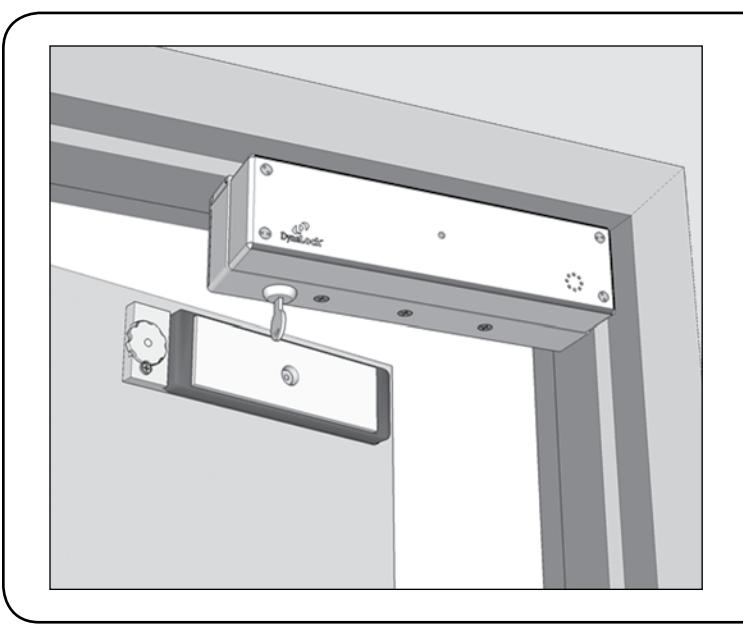
The 3101B Delay Egress System is a 1500 pound holding force electromagnetic lock electronically controlled to provide a 15 or 30 second delay in unlocking.
The 3101B requires both mechanical and electrical installation procedures as described herein.
When completed, a simple adjustment procedure to set door movement will finalize the installation.
HANDLING
The electromagnetic lock and armature are ruggedly constructed and designed to provide years of trouble-free service. Care must be taken during installation and use that the lock face and armature face are kept free of dirt, rust, paint, or any other obstruction which may interfere with the lock and armature making good contact.
MECHANICAL INSTALLATION
Familiarize yourself with the door and frame conditions. The lock must mount rigidly to the underside of the door frame header and against the vertical strike jamb. The door mounted armature is supplied with hardware that allows it to pivot slightly and pull away from the door as part of the delayed egress function.
NOTE: This lock does not change hands to match the hand of the door. Do not remove the coil assembly from the lock housing.
NOTE: For locks ordered with the DSM option, please verify that two magnets are installed inside the armature housing.
ELECTRICAL INSTALLATION
After mechanical installation is complete the 3101B needs to be wired and adjusted. A continuous power source, 12 or 24 VDC or VAC is required. Once low voltage power is supplied the unit is fully operational. Delay egress systems also normally require fire panel tie-in. All other wiring is for selected options.
NOTE: Please see Egress Sensor Adjustment (page 8) before applying power.

TABLE OF CONTENTS
| General Information | 1 |
|---|---|
| Bill Of Materials | 2 |
| Using The Template | 3 |
| Mounting The Armature Assembly 4 | |
| Mounting The Lock 5 | |
| Basic Set-Up | 6 |
| Basic Wiring | 7 |
| Egress Sensor Adjustment | 8 |
| Indicator Descriptions 9 | |
| Optional Set-Up | 10 |
| Option Wiring | 11-12 |
| Factory Wiring | 13 |
| Exploded Parts View | 14-15 |
REQUIRED TOOLS
- (1) Electric Drill
- (1) #2 Phillips Screwdriver
- (1) Soft Faced Mallet
- (1) Hammer
- (1) Center Punch
- (1) Pencil & Tape
Drill Bits: 1/8", 5/16", 3/8", 9/16"
MODEL #3101B BILL OF MATERIALS
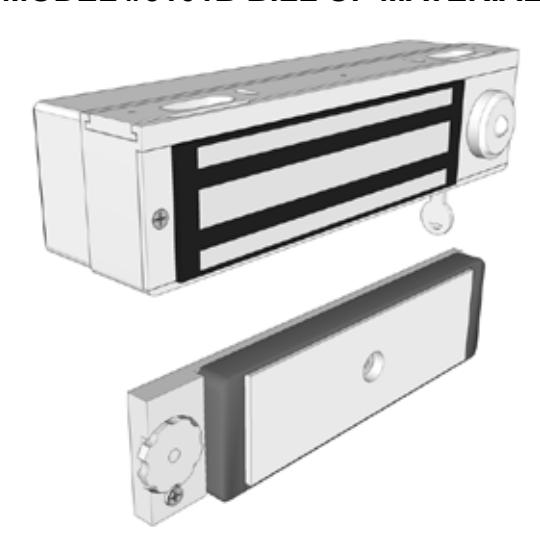
- (1) 3101B LOCK ASSEMBLY
- (1) ARMATURE
- (1) ARMATURE HOUSING
- (1) ARMATURE MOUNTING PLATE ASSEMBLY
- (1) HARDWARE KIT
- (1) DOOR SIGN "15 SECONDS" *
- (1) TEMPLATE
- (1) INSTALLATION MANUAL
HARDWARE KIT CONTENTS (PN 301325)
(5) Fas-Trak Mounting Screws #10 x 1" phillips pan head tek screw (5) Fas-Trak Mounting Screws 10-24 x 1/2" phillips pan head machine screw (1) Armature Mounting Screw 5/16-18 x 1" hex flat head machine screw, turned (1) Armature Spacer 3/8"D x 0.360"L (1) Armature Spring Compression spring (4) Armature Mounting Plate Screws #10 x 1" phillips flat head sheet metal screw (4) Armature Housing Mounting Screws 8-32 x 3/8" phillips machine screw (1) Anti-Tamper Cover Screwdriver #6 spanner key (1) Fas-Trak Set Screw Wrench 1/8" ball head hex wrench (1) Armature Bolt Wrench 3/16" hex wrench (1) Thread Locking Compound Liquid (2) Bypass/Reset Key (1) Mini Screwdriver QTY. ITEM DESCRIPTION
NOTE: For further parts clarification refer to the Exploded Parts View on page 14 or consult factory.
* & quot;30 SECONDS" SIGN AVAILABLE

MOUNTING CONSIDERATIONS
Inspect the door frame and determine if an angle bracket, spacer or filler plate will be required for installation. The lock will require a 2-9/16" wide header stop for a suitable mounting surface.
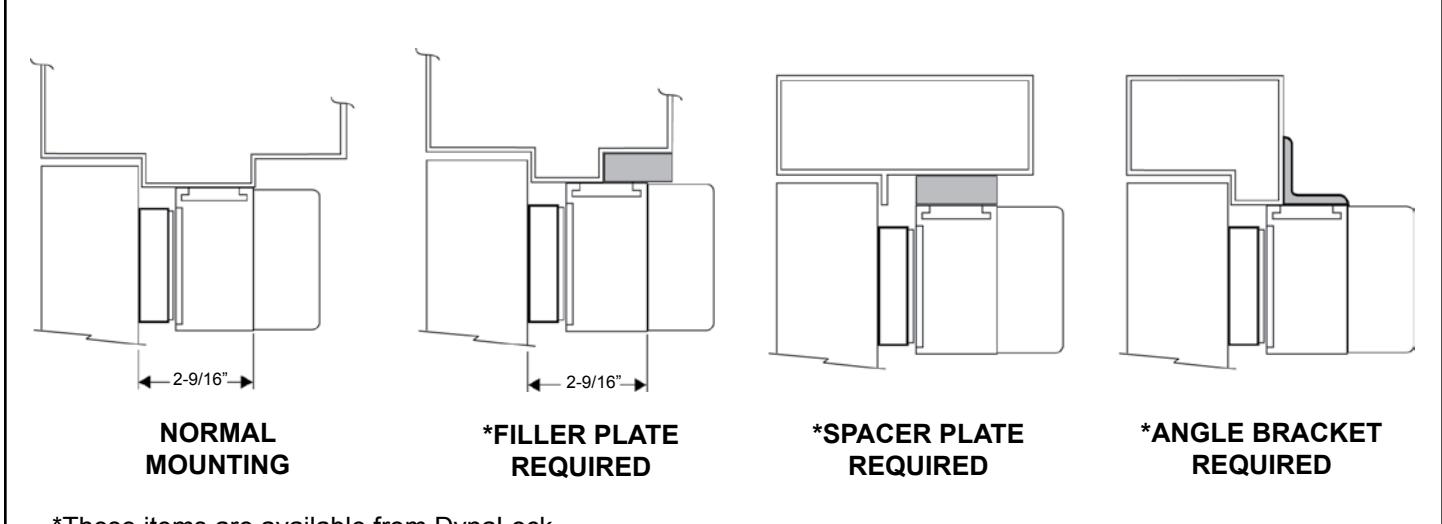
*These items are available from DynaLock.
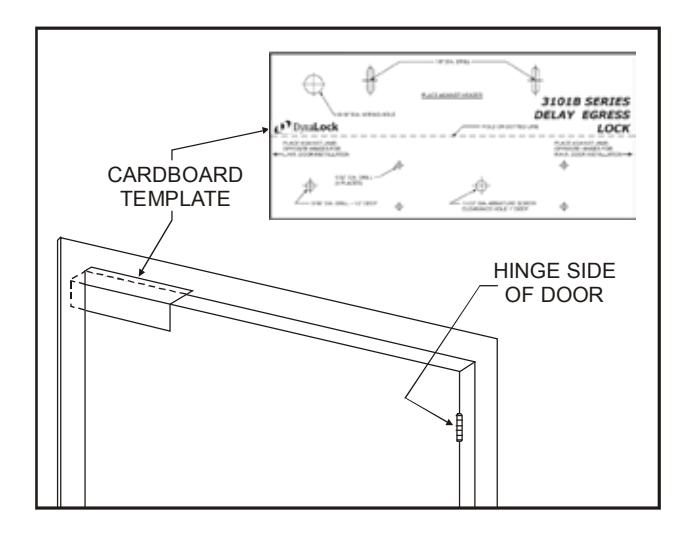
USING THE TEMPLATE
- Fold the template on the dotted line to form a 90 degree angle. Scoring the template with a straight edge and a screwdriver will make it fold easier. 1.
- With the door in the closed and latched position place the template against the header and door with one edge against the vertical strike jamb and tape in place. 2.
- Transfer all hole locations to both the door and header with a center punch, then remove the template from the door. 3.
- Referring to the template drill two 1/8" dia. lock mounting holes and one 9/16" dia. wiring hole in the top of the frame, at the transferred locations. 4.
-
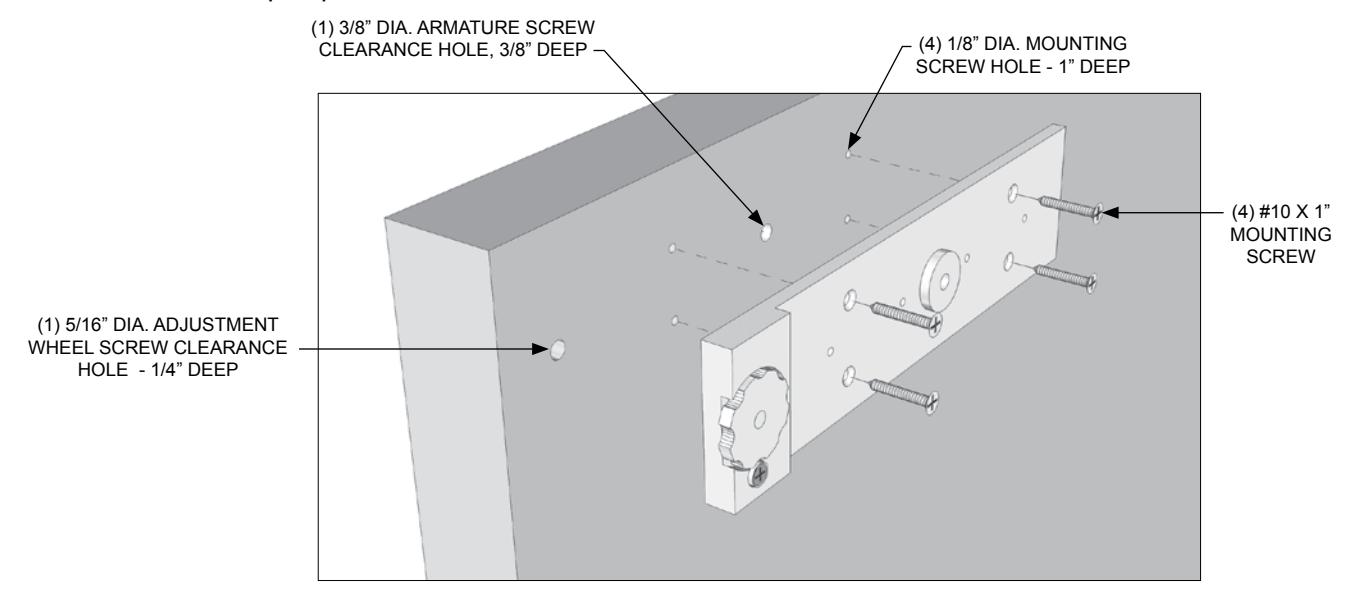
Drill the remaining transferred holes in the face of the door to accept the Armature Mounting Plate Assembly: 5.
- a. Four 1/8" dia. mounting screw holes, 1" deep.
- b. One 3/8" dia. armature screw clearance hole, 3/8" deep.
- c. One 5/16" dia. adjustment wheel screw clearance hole, 1/4" deep.

MOUNTING THE ARMATURE ASSEMBLY
Using the four #10 x 1" flat head sheet metal screws attach the armature mounting plate to the door. Firmly tighten the screws with a #2 phillips screw driver.
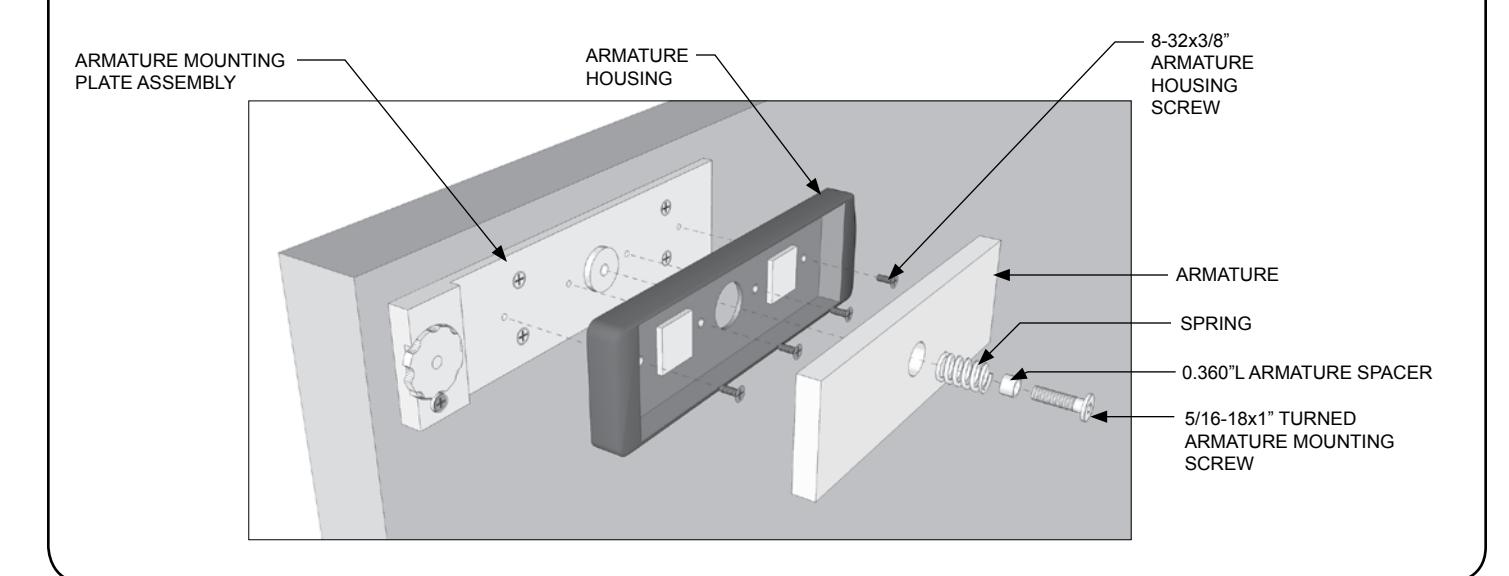
Attach the Armature to the Mounting Plate Assembly using the hardware supplied. Apply the supplied thread locking compound to the threads of the Armature Mounting Screw and firmly tighten with a 3/16" hex wrench. The head of the armature mounting screw must not project beyond the face of the armature. Failure to properly secure the Armature to the door could result in serious injury or possible security breach.
Check the installation by pushing in on a corner of the Armature - it should move. Although the mounting screw is tight the Armature should have approximately 1/4" of free play, under slight spring tension.

MOUNTING THE LOCK
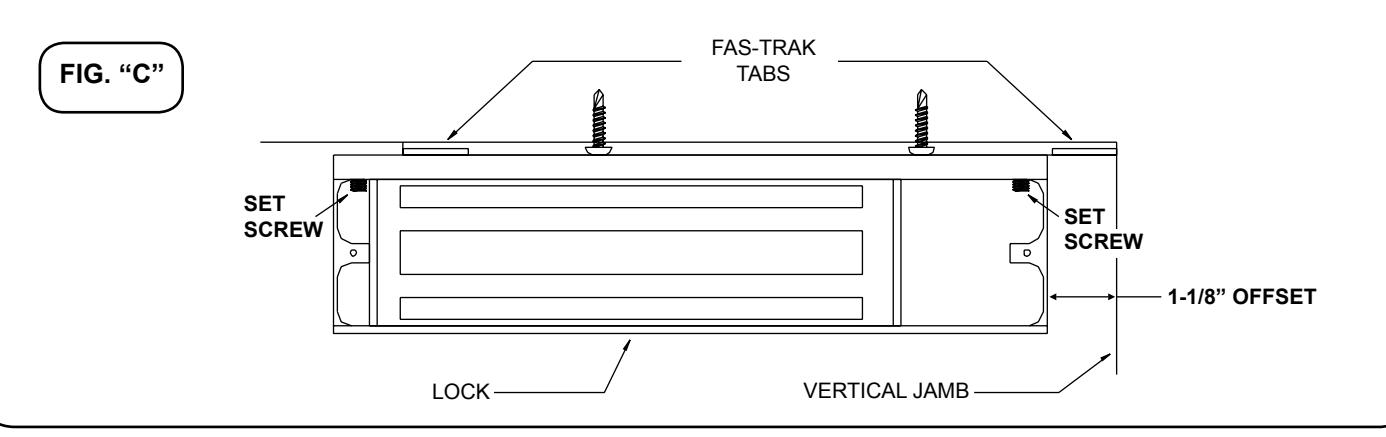
- Before installation begins remove the rear Electronics Cover, End Cover and Sensor Cover Assembly (see page 14 for parts locations). Carefully unplug the sensor harness from the circuit board connector labeled J5 then detach the Sensor Cover Assembly from the lock. In the upper inside corners of the lock housing are located two #1/4-28 set screws. Using the 1/8" ball head hex wrench loosen (do not remove) the two set screws until the Fas-Trak Baseplate is free (Fig. "C"). Remove the Fas-Trak. 1.
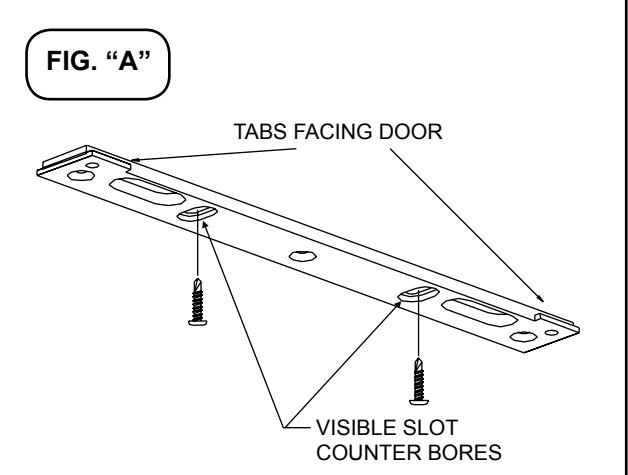
- Place the Fas-Trak against the header with the slot counter bores visible and the tabs facing the door (Fig. "A"). Attach the Fas-Trak to the header at both slotted hole locations, with two #10 x 1" tek screws or 10-24x1/2" machine screws. Tighten the screws just snug enough to allow for final adjustment. 2.
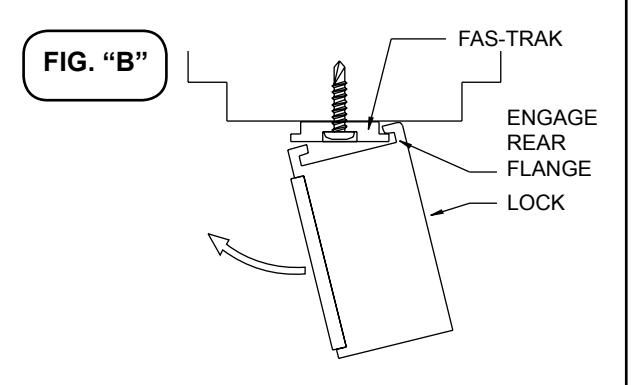
- Temporarily mount the lock to the Fas-Trak by offsetting the lock 1-1/8" from the jamb (Fig. "C") and tipping the front of the lock down engaging the rear flange of the Fas-Trak (Fig. "B"). Rotate the lock up allowing one tab to pass through the corresponding notch in the top of the lock housing. Slide the lock into position. Close and latch the door. Check that the armature and lock faces make full contact. If any adjustment is required gently tap the housing with a soft mallet until full contact is achieved. Open the door, remove the lock from the Fas-Trak and tighten both slot screws. Drive three more screws into the header using the Fas-Trak as a physical template. Screw heads must not project above the Fas-Trak. 3.
Any roughed-in wiring may be brought in at this time through the slotted wiring holes. Re-install the lock on the Fas-Trak. Firmly tighten both housing set screws with the 1/8" ball head hex wrench. Re-install the End Cover and Sensor Cover Assembly. Carefully plug the Sensor harness back into the J5 connector on the circuit board (see page 13 for connector information). If the lock wiring and set-up are not being done at this time replace the Electronics Cover and see that these instructions are left for the electrical installer. 4.

INSTALLATION INSTRUCTIONS 705 Emmett Street Bristol, CT 06010
BASIC SET-UP
Remove the Electronics Cover to expose the circuit board assembly. 1.
- Voltage Selection 2. V
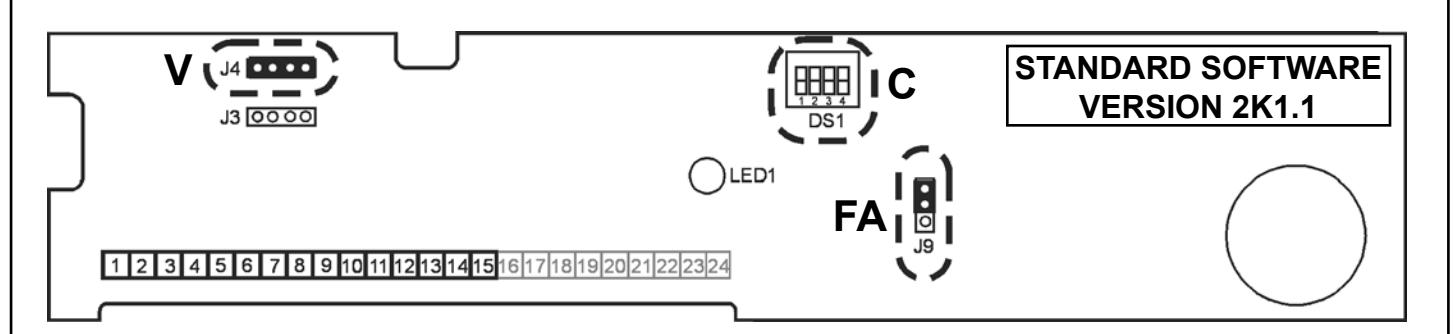
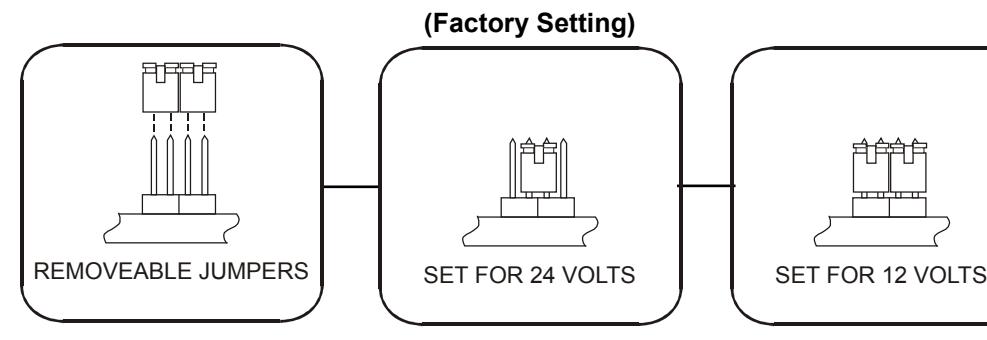
Check that the voltage selection jumper (J4) is properly set to match your input power. Note that all locks are factory set for 24 volts.
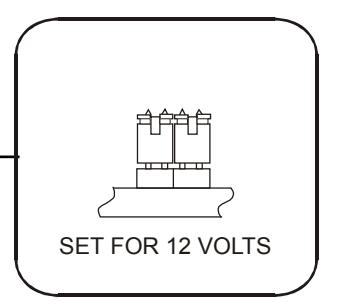
- Fire Alarm Control 3. FA
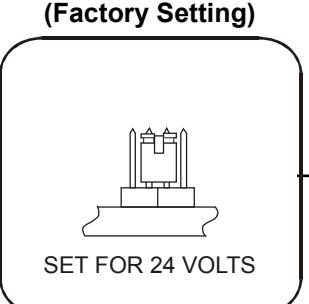
Check that the fire alarm control jumper (J9) is properly set to match your fire panel input contacts. If fire panel tie-in is not required leave jumper at factory setting (N.O.).
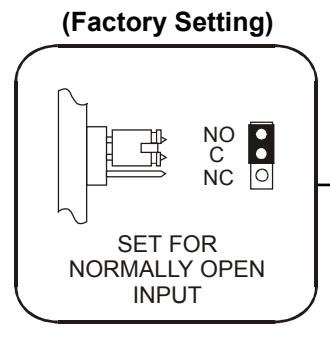
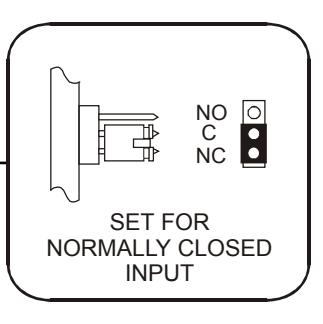
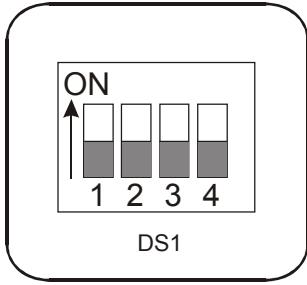
- System Selector Switches 4. C
The selector switches (DS1) that control major system functions are factory set to the OFF position for basic lock operation. Switch 1 will be used during sensor adjustment (page 8). Switches 2, 3 and 4 are only used for options described on page 10.
(Factory Setting)

BASIC WIRING
Basic hook-up is shown below. For other system features hook-up see "Option Wiring" (page 11).
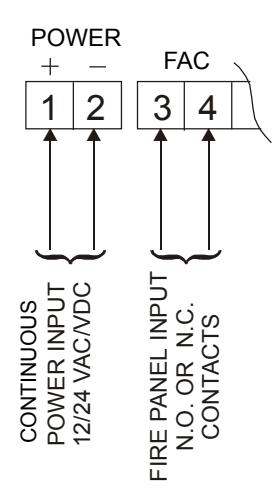
Terminals 1& 2 - Power Input. May be 12 or 24 Volts, AC or DC, uninterrupted. Current requirement is 0.75 Amps for 12 Volts and 0.5 Amps for 24 Volts (check voltage selection jumpers "V" - page 6).
DO NOT INTERRUPT INPUT POWER (TERMINALS 1 & 2) FOR AUTHORIZED ACCESS/EGRESS. EXTERNAL ACCESS/EGRESS CONTROLS (EX. KEYPAD, CARD READER, ETC.) SHOULD USE DEDICATED BYPASS TERMINALS 7 & 8 or 9 & 10 (SEE PAGE 11).
Terminals 3 & 4 - Fire Panel Input. May be normally-open (N.O.) or normally-closed (N.C.) dry contacts from fire panel (check fire alarm control jumper "FA" - page 6).
When the fire panel trips, the 3101B will release, the audible will sound a constant tone and the bi-color LED (LED1) will change to green. When the fire panel is reset, the 3101B will reset and lock.
NOTE: DO NOT APPLY POWER TO TERMINALS 3 & 4 OR DAMAGE WILL OCCUR.
PROPER OPERATION OF THE 3101B REQUIRES ADJUSTMENT OF THE EGRESS SENSOR PROCEED TO EGRESS SENSOR ADJUSTMENT

EGRESS SENSOR ADJUSTMENT
The sensor and armature assembly are designed for use on a door with existing mechanical latching hardware. If used on a door without a latch, false alarms are possible. In these cases, we suggest using an external trigger such as our 6451 Exit Sensor Bar - connect using terminals 11&12 and disable this internal sensor (see pages 10&11).
SEE PAGE 10 FOR LOCATION OF ELECTRONIC PARTS MENTIONED IN THIS SECTION
- With the door closed and latched apply input power to terminals 1 & 2. Slide selector switch (DS1) #1 to the ON position to activate the Set-Up mode. Rotate the on-board keyswitch counter-clockwise. The 3101B should now be unlocked (LED1-OFF). 1.
- Open the door. Temporarily remove the Adjustment Wheel Stop from the Armature Mounting Plate and close the door. Set aside for re-installation later. 2.
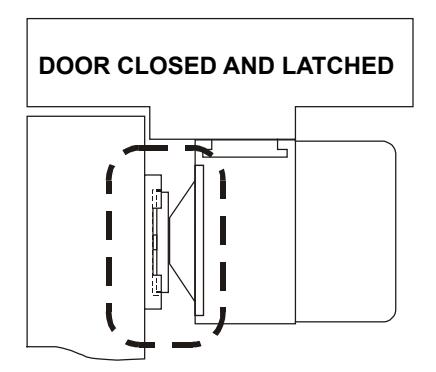
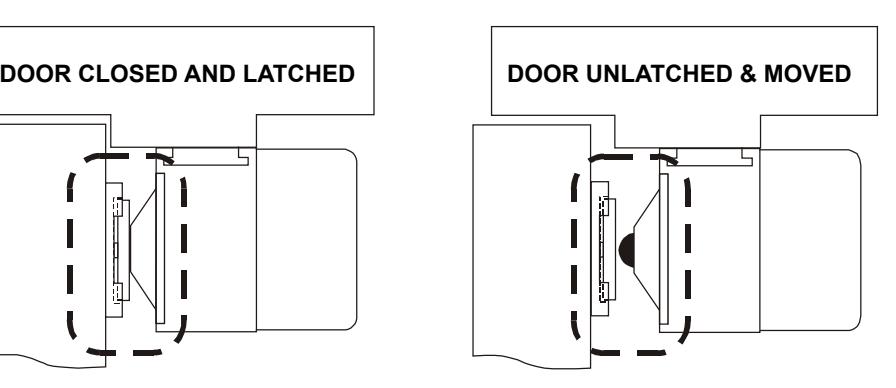
- With the door closed observe the bi-color LED (LED1) on the circuit board. It should be lit red. If it is not lit, rotate the adjustment wheel counter-clockwise as necessary to ensure that it will contact and fully depress the ball plunger on the lock. Rattle the door to ensure the LED remains lit. 3.
- With the door closed and LED1 lit red, unlatch and slowly open the door. The LED will shut off as soon as the door opens far enough for the ball plunger to fully project. 4.
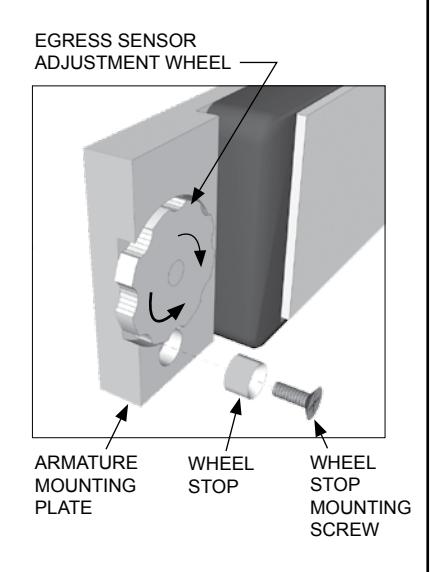
- With adjustment completed, re-install the adjustment wheel stop to lock-in the adjustment. Close the door, slide selector switch (DS1) #1 back to the OFF position and return the on-board keyswitch to the center position to relock the 3101-B. 5.
- Unlatch and push on the door until delay egress triggers (1-3 seconds). The audible will sound and LED1 will flash red. After 15 seconds the lock will release. Turn the on-board keyswitch clockwise to reset the lock. If delayed egress triggers too soon, or fails to trigger, re-adjust the sensor adjustment wheel for desired sensitivity. 6.
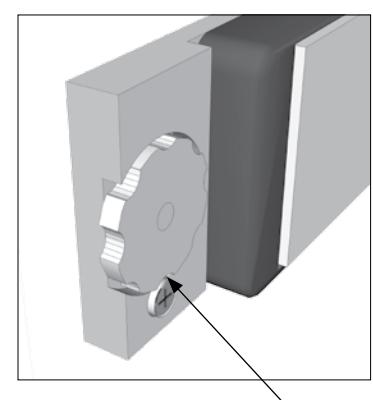
WHEEL STOP INSTALLED (LOCKS ADJUSTMENT)

BUILT-IN KEYSWITCH OPERATION
| POSITION | DESCRIPTION |
|---|---|
| CENTER | NORMAL / LOCKED |
| CLOCKWISE (SPRING LOADED) | RESET AFTER DELAY EGRESS ALARM |
| COUNTER-CLOCKWISE | BYPASS / UNLOCKED WITHOUT ALARM |
INDICATOR & AUDIBLE DESCRIPTIONS
LED1 - BI-COLOR LED INDICATOR
(Located at center of circuit board.) Indicates lock status and monitors door movement during egress sensor adjustment.
LED2 - WATCHDOG LED INDICATOR
(Located upper right corner of circuit board.) Troubleshooting indicator - monitors proper operation of the microprocessor.
| CONDITION | AUDIBLE SIGNAL | LOCK | LED 1 | LED 2 |
|---|---|---|---|---|
| DELAY EGRESS ALARM |
One second pulse rate during
delay cycle. |
ON | BLINK RED | RED |
| DELAY EGRESS ALARM |
Steady tone after delay until
reset. |
OFF | GREEN | RED |
|
FIRE ALARM
RELEASE |
Steady tone until fire alarm
contacts are reset. |
OFF | GREEN | RED |
|
OPTIONAL REMOTE
AUTHORIZED BYPASS (TERMINALS 7&8 / 9&10) |
None, unless bypass audible
is enabled (dip switch 2). If door is held open past relock time, goes into delay egress alarm & requires reset. |
OFF | GREEN | RED |
|
FACTORY SERVICE
REQUIRED |
Steady tone. | N/A | N/A |
BLINK RED
OR OFF |
| POOR MAGNETIC BOND |
Rapid pulse rate until problem
is corrected (only functional with Dynastat Force Sensor option). |
N/A | FAST BLINK RED | RED |

1-877-DynaLock www.dynalock.com
MODEL 3101B DELAY EGRESS SYSTEM
INSTALLATION INSTRUCTIONS 705 Emmett Street Bristol, CT 06010
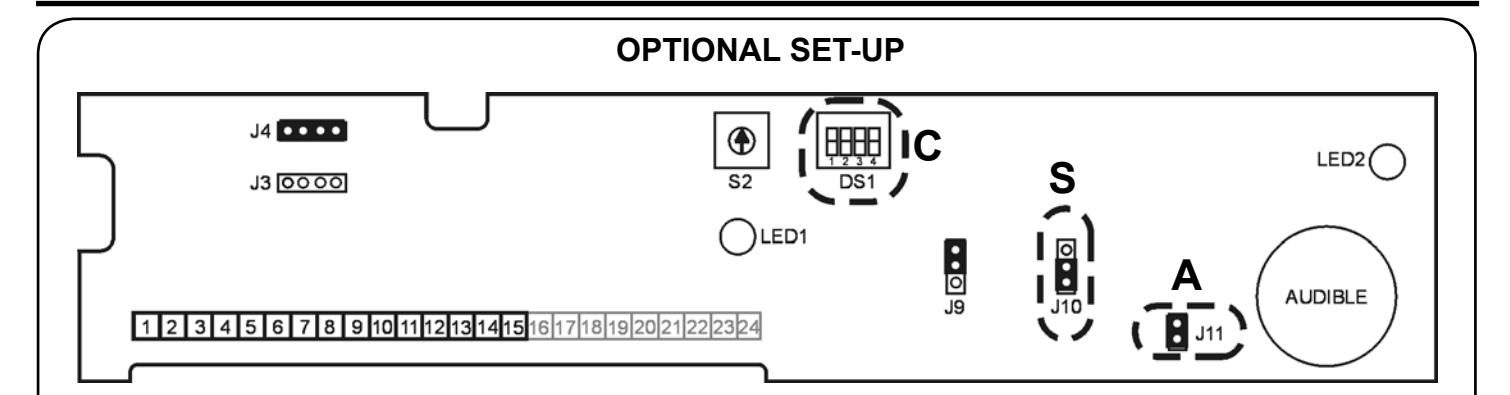
- System Selector Switches 1. C
Set the System Selector Switches (DS1) to address your specific system requirements. The normal factory setting is all switches off.
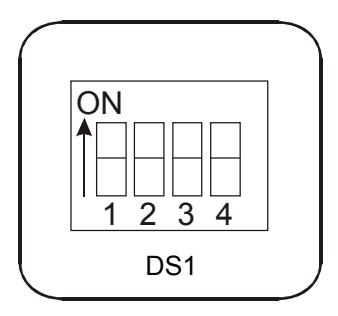
| MODE SETTINGS | |||
|---|---|---|---|
| SWITCH | FUNCTION | OFF | ON |
| 1 | SYSTEM SET-UP | NORMAL | SET-UP MODE |
| 2 |
*
BYPASS AUDIBLE |
DISABLED | ENABLED |
| 3 | NUISANCE DELAY | 1 SEC. | 3 SEC. |
| 4 | EGRESS DELAY | 15 SEC. | 30 SEC. |
* Only applies to terminals 9&10 (see next page)
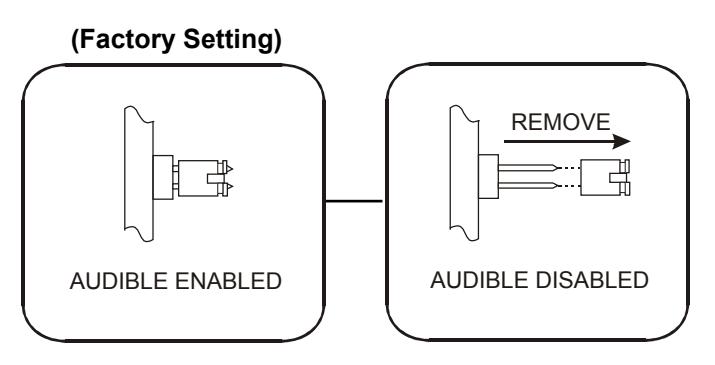
- Audible Selector 2. A
The on-board audible is normally enabled for local signaling of lock and alarm status. To completely disable the audible remove jumper (J11).
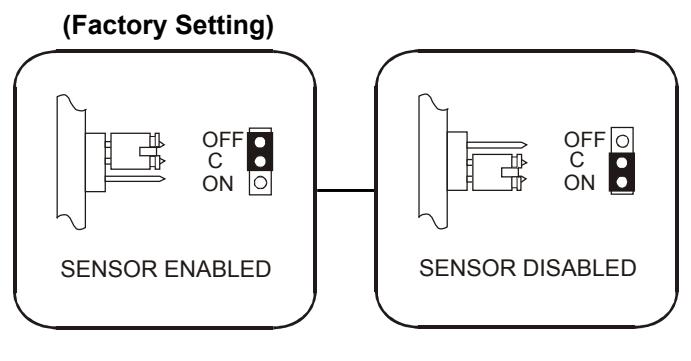
- Sensor Control 3. S
The egress sensor may be disabled if you wish to trigger the lock via external remote contacts on input terminals 11 & 12. Position jumper (J10) to disable the egress sensor as shown.

1-877-DynaLock www.dynalock.com
MODEL 3101B DELAY EGRESS SYSTEM
INSTALLATION INSTRUCTIONS 705 Emmett Street Bristol, CT 06010
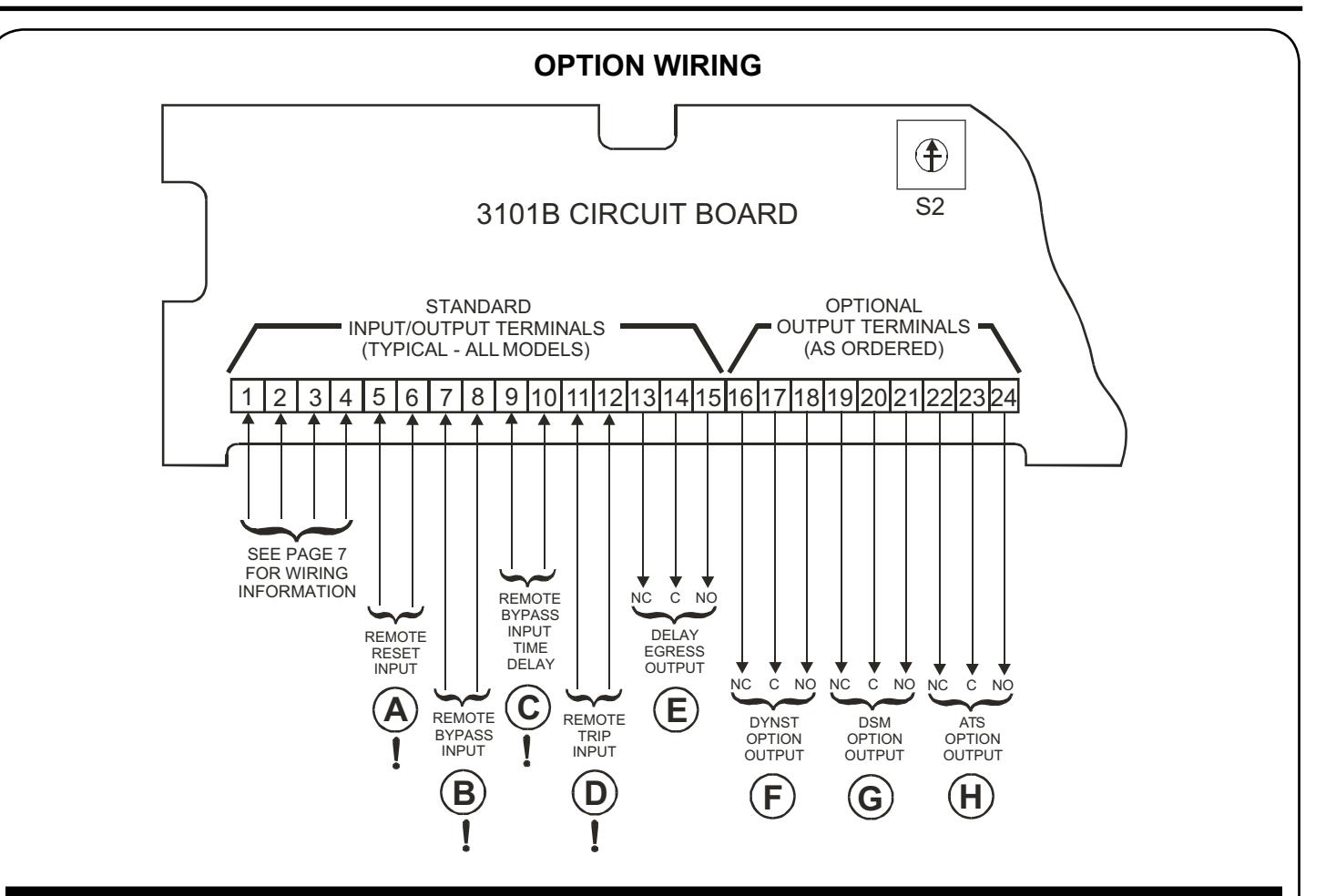
! WARNING: DO NOT APPLY POWER TO INPUTS MARKED " ! " OR DAMAGE WILL OCCUR
INPUT DESCRIPTIONS
REMOTE RESET INPUT A C
Momentarily closing a normally-open dry contact across terminals 5 & 6 will reset and re-lock the 3101B following delayed egress and re-closure of door.

REMOTE BYPASS INPUT TIME DELAY
Momentarily closing a normally-open dry contact across terminals 9 & 10 will immediately release the lock without alarm. The door will remain unlocked for a period of time controlled by on-board adjustable timer S2. To increase the delay rotate timer S2 clockwise. Range is 1 to 75 seconds (~5 sec. per click).

REMOTE BYPASS INPUT B D
Momentarily closing a normally-open dry contact across terminals 7 & 8 will immediately release the lock without alarm. The door will remain unlocked until the contact is opened. Connect authorized access/egress control(s) here (typical).

REMOTE TRIP INPUT
Momentarily closing a normally-open dry contact across terminals 11 & 12 will initiate delayed egress. This input may be used as a redundant or substitute means of triggering delayed egress if built-in sensor initiation is not desired (see page 10, note 3).

OPTION WIRING MONITORING OUTPUT DESCRIPTIONS DELAY EGRESS OUTPUT Delay egress alarm monitoring. SPDT dry relay contacts rated 1Amp @ 24 Volts Contacts change state upon initiation of delayed egress, after the nuisance delay has elapsed. They remain in that state until door is closed and reset. DYNST OPTION OUTPUT Dynastat bond sensor monitoring. SPDT dry relay contacts rated 1Amp @ 24 Volts Contacts change state to signal lock status as either secure or unsecure. Armature misalignment can also create an unsecure condition. DSM OPTION OUTPUT Door position sensor monitoring. SPDT dry relay contacts rated 0.5Amp @ 24 Volts Contacts change state to signal physical door position as either closed or open. DSM is an independent circuit that does not require lock power to operate. ATS OPTION OUTPUT Anti-Tamper Switch monitoring. SPDT dry relay contacts rated 0.5Amp @ 24 Volts Contacts change state to signal removal of the lock electronics cover. TYPICAL WIRING NOTE: INDICATORS ARE NOT INCLUDED NOTE: INDICATORS ARE NOT INCLUDED NOTE: INDICATORS ARE NOT INCLUDED 13 14 15 ALARM SECURE NC C NO TO INDICATOR POWER SUPPLY 16 17 18 UNSECURE SECURE NC C NO TO INDICATOR POWER SUPPLY 19 20 21 OPEN CLOSED NC C NO TO INDICATOR POWER SUPPLY 22 23 24 TAMPER NORMAL NC C NO TO INDICATOR POWER SUPPLY E F G H
NOTE: INDICATORS ARE NOT INCLUDED

INSTALLATION INSTRUCTIONS 705 Emmett Street Bristol, CT 06010
NOTES:
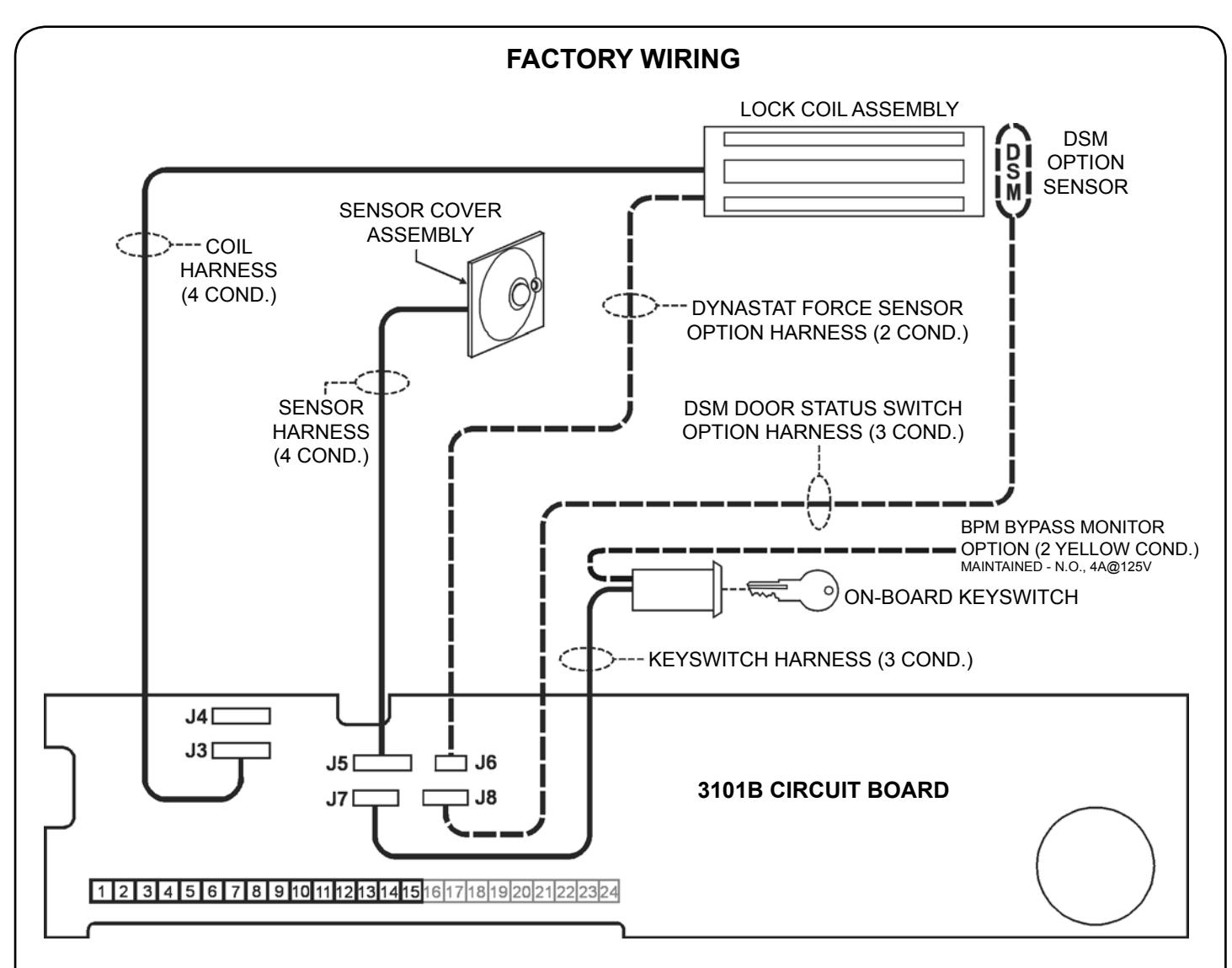
- Harnesses J6 and J8 are only present if the 3101B is equipped with the DYN Dynastat Force Sensor and/or DSM - Door Status Switch Options. 1.
-
Observe polarity when re-connecting the J5, J7 and J8 harness connectors. Orient these connectors with respect to harness wire colors as follows: 2.
- J5 WHT GRN RED BLK J7 WHT BLK BLU J8 GRN WHT RED
- Harness connectors J3 and J6 are not polarity sensitive. 3.
- J3 & J4 are interchangeable jumpers can go on J3 and coil can go on J4. 4.

1-877-DynaLock www.dynalock.com
MODEL 3101B DELAY EGRESS SYSTEM
INSTALLATION INSTRUCTIONS 705 Emmett Street Bristol, CT 06010
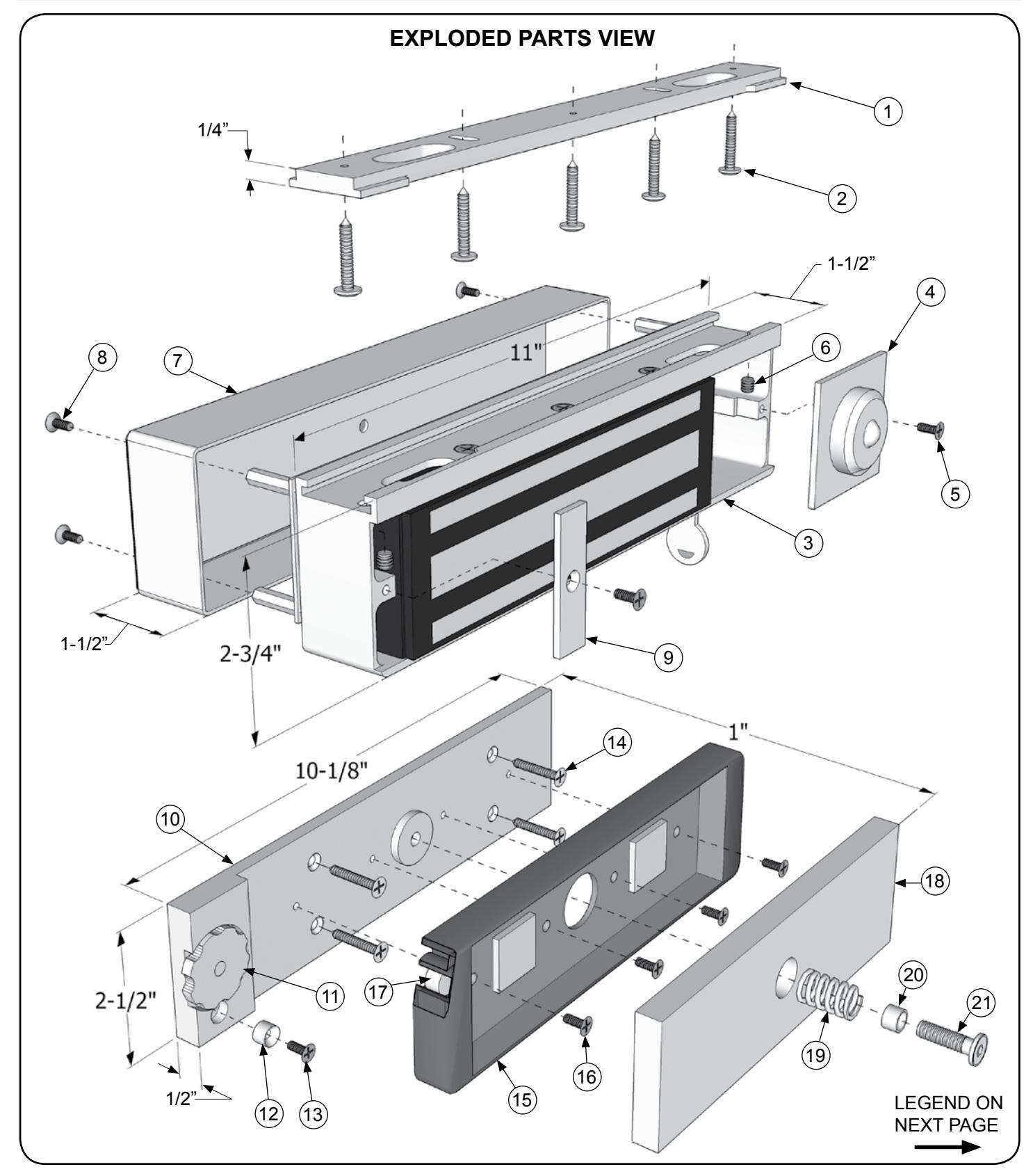

EXPLODED PARTS VIEW LEGEND
| ITEM | DESCRIPTION | PART # |
|---|---|---|
| 1 | Fas-Trak Baseplate | 300011 |
| 2 | #10x1" Self-Tapping Screw | * |
| 2 | 10-24x1/2" Machine Screw | * |
| 3 | Lock Housing | |
| 4 | Access Cover & Sensor Assembly | 301037 |
| 5 | 8-32x3/8" Machine Screw | 300608 |
| 6 | 1/4-28x1/4" Set Screw | 300604 |
| 7 | Electronics Cover | 300353 |
| 8 | 6-32x1/2" Spanner Security Screw | 700058 |
| 9 | End Cover | 300010 |
| ITEM | DESCRIPTION | PART # |
|---|---|---|
| 10 | Armature Mounting Plate Assy. | 301038 |
| 11 | Sensor Adjustment Wheel & Stud | 301383 |
| 12 | Wheel Stop | 301003 |
| 13 | 8-32x1/2" Wheel Stop Screw | 301005 |
| 14 | #10x1" FHS Mtg. Plate Screw | * |
| 15 | Armature Housing w/ pads | 301334 |
| 16 | 8-32x3/8" Armature Mtg. Screw | * |
| 17 | Disc Magnet (DSM only) | 301289 |
| 18 | Armature | 300373 |
| 19 | Compression Spring | * |
| 20 | 0.360"L Armature Spacer | * |
| 21 | 5/16-18x1" Armature Bolt (turned) | * |
* Part of Hardware Kit (301325)
Refer to Page 14 for parts locations.
PLEASE DELIVER THIS MANUAL AND THE KEYS TO THE END USER UPON COMPLETION OF THE 3101B INSTALLATION
FOR PRODUCT SUPPORT AND PARTS ORDERING INFORMATION CONTACT:
DynaLock Corp. 705 Emmett Street Bristol, CT 06010
Bus: (877) 396-2562 Toll-Free USA
(860) 582-4761 Fax: (860) 585-0338
DYNALOCK ON THE INTERNET:
E-mail: info@dynalock.com Website: www.dynalock.com

GWXT Auxiliary Lock
FWAX Special Locking Arrangements CSFM California State Fire Marshal