Corbin Russwin MP9800 Series Multi-Point Lock with Access 600 Installation Instructions_FM437
Open the original PDF document
View PDF

MP9800 Series
Access 600<sup>®</sup> Integrated Wiegand with and without MELR Option (Electric Latch Retraction)
Multi-Point Lock
Attention Installer: Please read these instructions carefully to prevent missing important steps. Please NOTE: Improper installations may result in damage to the lock and void the factory warranty. Important: The accuracy of the door preparation is critical for proper functioning and security of this lock. Misalignment can cause premature wear and a lessening of security.
WARNING
This product can expose you to lead which is known to the state of California to cause cancer and birth defects or other reproductive harm. For more information go to www.P65warnings.ca.gov.
Ce produit peut vous exposer au plomb qui, dans l'état de la Californie, est reconnu pour causer le cancer, des anomalies congénitales ou d'autres problèmes de reproduction.
Pour plus d'informations, visitez: www.P65warnings.ca.gov.
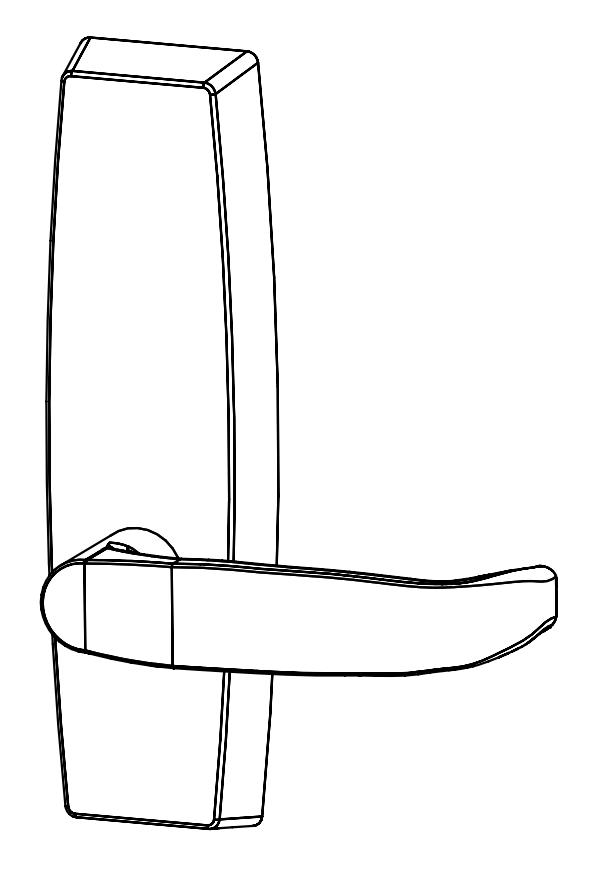
MP9800 Series Access 600 Integrated Wiegand with and without MELR Option (Electric Latch Retraction)
Multi-Point Lock
Installation Instructions
| TOC | Table of Contents |
|---|---|
| 1 |
Warnings
3 |
| 2 |
General Description
3 |
| 3 |
Features
4 |
| 4 |
Regulatory Specifications
4 |
| 5 |
Wiring Diagram - Reader LED Configuration
5 |
| 6 |
Wiring Diagram - Typical Access 600 Application (12/24VDC Lock)
6 |
| 7 |
Access 600 Series M802 MP9800 Series
7 |
| 8 |
Access 600 Series M812 MP9800 Series
8 |
| 9 |
Access 600 Series M802 MELR Add-on
9 |
| 10 |
Access 600 Series M812 MELR Add-on
10 |
| 11 |
Installation
11 |
| 12 |
Concealed Door Position Switch Installation
18 |
| 13 |
Mechanical Operation Check
18 |
| 14 |
Electrical Operation Check
19 |
MP9800 Series Access 600 Integrated Wiegand with and without MELR Option (Electric Latch Retraction)
Multi-Point Lock
Installation Instructions

1 Warnings

Changes or modifications to this unit could void the user's authority to operate the equipment. ALWAYS disconnect power before making any electrical or mechanical adjustments to the system. Observe precautions for handling electrostatic sensitive devices.
This device complies with Part 15 of the FCC Rules. Operation is subject to the following two conditions: (1) this device may not cause harmful interference, and (2) this device must accept any interference received, including interference that may cause undesired operation.
NOTE: This equipment has been tested and found to comply with the limits for a Class B digital device, pursuant to Part 15 of the FCC Rules. These limits are designed to provide reasonable protection against harmful interference in a residential installation. This equipment generates, uses and can radiate radio frequency energy and if not installed and used in accordance with the instructions, may cause harmful interference to radio communications. However, there is no guarantee that the interference will not occur in a particular installation. If this equipment does cause harmful interference to radio or television reception, which can be determined by turning the equipment off and on, the user is encouraged to try to correct the interference by one or more of the following measures:
- Reorient or relocate the receiving antenna
- Increase the separation between the equipment and receiver
- Connect the equipment into an outlet on a circuit different from that to which the receiver is connected
- Consult the dealer or an experienced technician for help
Contains FCC ID: U4A-SCSEHF Contains IC: 6982A-SCSEHF
The term "IC:" before the radio certification number only signifies that Industry Canada technical specifications were met. This Class B digital apparatus meets all requirements of the Canadian Interference Causing Equipment Regulations. Operation is subject to the following two conditions: (1) this device may not cause harmful interference, and (2) this device must accept any interference received, including interference that may cause undesired operation.
Cet appareillage numérique de la classe B répond à toutes les exigences de l'interférence canadienne causant des règlements d'équipement. L'opération est sujette aux deux conditions suivantes: (1) ce dispositif peut ne pas causer l'interférence nocive, et (2) ce dispositif doit accepter n'importe quelle interférence reçue, y compris l'interférence qui peut causer l'opération peu désirée.
Any retrofit or other field modification to a fire rated opening can potentially impact the fire rating of the opening, and SARGENT Manufacturing makes no representations or warranties concerning what such impact may be in any specific situation. When retrofitting any portion of an existing fire rated opening, or specifying and installing a new fire-rated opening, please consult with a code specialist or local code official (Authority Having Jurisdiction) to ensure compliance with all applicable codes and ratings.
2 General Description
The Corbin Russwin Access 600 Integrated Wiegand multi-point lock combines all standard access control components into a single device. This integrated approach significantly reduces installation time and creates a streamlined aesthetic that blends flawlessly into any environment. The Access 600 features an open architecture platform that can easily be integrated into existing access control systems.
Tools Required - (Same for all Series Products)
-
Phillips screw driver Drill with bits
- Slotted screw driver #8-32 tap & drill (for metal door applications)
Installation Instructions

3 Features
All Access 600 Multi Point Locks
- UL and CUL listed for use on Fire Doors
- Multi point lock furnished for 1-3/4" doors
- Fail safe or fail secure available
- Door Position Switch (708F989) supplied for monitoring
- 24VDC motor operated trim available
- Wire from EAC Panel to door must be shielded with a drain terminated at EAC Panel controller
Access 600 MP9800 Series Multi Point Lock
• Cylinder override available for MP9800 with Auxiliary Control
4 Regulatory Specifications
The M802 125 kHz (proximity) version of the Open Architecture Wiegand Access Control platform requires a proximity card/fob/tag presentation to gain entry. The 125 kHz reader operates on 12 VDC.
The M812 13.56 MHz iCLASS® (contactless) version of Open Architecture Wiegand Access Control Platform requires an iCLASS card/ fob/tag presentation to gain entry. The 13.56 MHz iCLASS reader operates on 12VDC or 24VDC.
| Access 600 M802 | Access 600 M812 | |||
|---|---|---|---|---|
| 12VDC / 24VDC System: | ||||
|
• Reader Draw= 150mA
• Actuator Draw= 400mA (inrush / 15mA continuous) • Total System Draw = 550mA |
• Reader Draw= 125mA
• Actuator Draw= 400mA (inrush / 15mA continuous) • Total System Draw = 525mA |
|||
| 12VDC System (MELR): | ||||
|
• Reader Draw = 150mA
• 12VDC MELR Module Draw = 850mA • Total System Draw = 1 Amp |
• Reader Draw = 125mA
• 12VDC MELR Module Draw= 850mA • Total System Draw = 975mA |
|||
| 24VDC System (MELR): | ||||
|
• Reader Draw = 150mA
(Reader is always 12VDC) • 24VDC MELR Module Draw = 700mA • Total System Draw = 850mA |
• Reader Draw = 125mA
• 24VDC MELR Module Draw = 700mA • Total System Draw = 825mA |
|||
• UL 294 Access Control Performance Ratings*: Destructive Attack Level I *For Non-ELR Configured Product
| Line Security | Level I |
| Endurance | Level IV |
| Standby Power | Level I |
- ANSI/BHMA A156.25 Listed Grade 1 Compliant
- UL and CUL listed for use on Fire Doors
- This product meets the requirements of CAN/ULC-S319-05 Equipment Class I
Wiring methods shall be in accordance with the National Electrical Code (ANSI/NFPA70), CSA 22.1, Canadian Electrical Code (CEC), Part I, Safety Standard for Electrical Installations, local codes, and the authorities having jurisdiction.
Installation Instructions
5 Wiring Diagram - Reader LED Configuration
|
Product
8 PIN CONNECTOR |
4 PIN CONNECTOR | |||||||||||
|---|---|---|---|---|---|---|---|---|---|---|---|---|
| 1-Black | 2-Red | 3-White | 4-Green | 5-Orange | 6-Blue | 7-Brown | 8-Yellow | 1-Violet | 2-Gray | 3-Pink | 4-Tan | |
| ACCESS CONTROL DEVICES: Access 600 Mortise, ElectroLynx wire Color / Function assignments | ||||||||||||
|
Corbin Russwin
ACCESS 600 SERIES |
12/24VDC
(Reader) |
WIE- GAND | WIE- GAND | RX | RX | EGND | LED |
12/24 VDC
(LOCK RELAY) |
DPS
(NC) |
DPS
(COM) |
||
| Mortise | NEG | POS | DATA_1 | DATA_0 | NO | COM |
REF.
*DIA- GRAMS |
REF.
*DIA- GRAMS |
NEG | POS | DPS | DPS |
| Cylindrical/Exits | NEG | POS | DATA_1 | DATA_0 | NO | COM | NEG | POS | - | - | ||
The Harmony Series reader can be configured for (3) modes of LED operation. Call 1-800-810-WIRE for details.
Mode 1:
- Red LED 'ON' when powered.
- Presenting a valid credential causes LED to 'FLICKER' green and return to red state.
NOTE: LED wire is unconnected.
Mode 2:
- Green LED "ON" when powered.
- No Flicker after presenting valid credential.
NOTE: LED wire must be connected to circuit GROUND of system's power supply.
Mode 3:
• EAC Panel controls LED operation.
NOTE:
- Control of LED is a function of EAC panel equipment (i.e. relay) to toggle between green and red.
- When LED wire is tied directly into EAC panel relay, no AC signals should be applied on wire or door reader performance will be impacted.
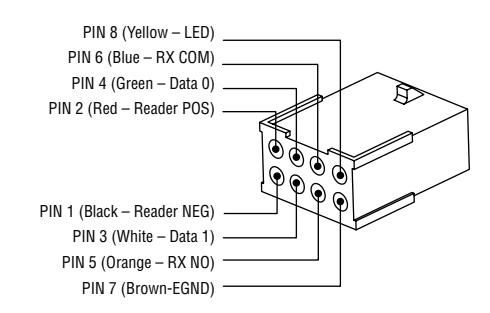
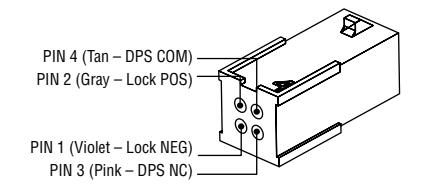
Wire Gauge Charts
|
Total
One-Way |
Load Current @ 12VDC | |||||||
|---|---|---|---|---|---|---|---|---|
|
Length of
Wire Run (ft) |
1/4A | 1/2A | 3/4A | 1A | 1-1/4A | 1-1/2A | 2A | 3A |
| 100 | 20 | 18 | 16 | 14 | 14 | 12 | 12 | 10 |
| 150 | 18 | 16 | 14 | 12 | 12 | 12 | 10 | — |
| 200 | 16 | 14 | 12 | 12 | 10 | 10 | — | — |
| 250 | 16 | 14 | 12 | 10 | 10 | 10 | — | — |
| 300 | 16 | 12 | 12 | 10 | 10 | — | — | — |
| 400 | 14 | 12 | 10 | — | — | — | — | — |
| 500 | 14 | 10 | 10 | — | — | — | — | — |
| 750 | 12 | 10 | — | — | — | — | — | — |
| 1,000 | 10 | — | — | — | — | — | — | — |
| 1,500 | 10 | — | — | — | — | — | — | — |
|
Total
One-Way |
Load Current @ 24VDC | ||||||||||
|---|---|---|---|---|---|---|---|---|---|---|---|
|
Length of
Wire Run (ft) |
1/4A | 1/2A | 3/4A | 1A | 1-1/4A | 1-1/2A | 2A | 3A | |||
| 100 | 24 | 20 | 18 | 18 | 16 | 16 | 14 | 12 | |||
| 150 | 22 | 18 | 16 | 16 | 14 | 14 | 12 | 10 | |||
| 200 | 20 | 18 | 16 | 14 | 14 | 12 | 12 | 10 | |||
| 250 | 18 | 16 | 14 | 14 | 12 | 12 | 12 | 10 | |||
| 300 | 18 | 16 | 14 | 12 | 12 | 12 | 10 | — | |||
| 400 | 18 | 14 | 12 | 12 | 10 | 10 | — | — | |||
| 500 | 16 | 14 | 12 | 10 | 10 | — | — | — | |||
| 750 | 14 | 12 | 10 | 10 | — | — | — | — | |||
| 1,000 | 14 | 10 | 10 | — | — | — | — | — | |||
| 1,500 | 12 | 10 | — | — | — | — | — | — | |||
Installation Instructions

ASSA ABLOY
6
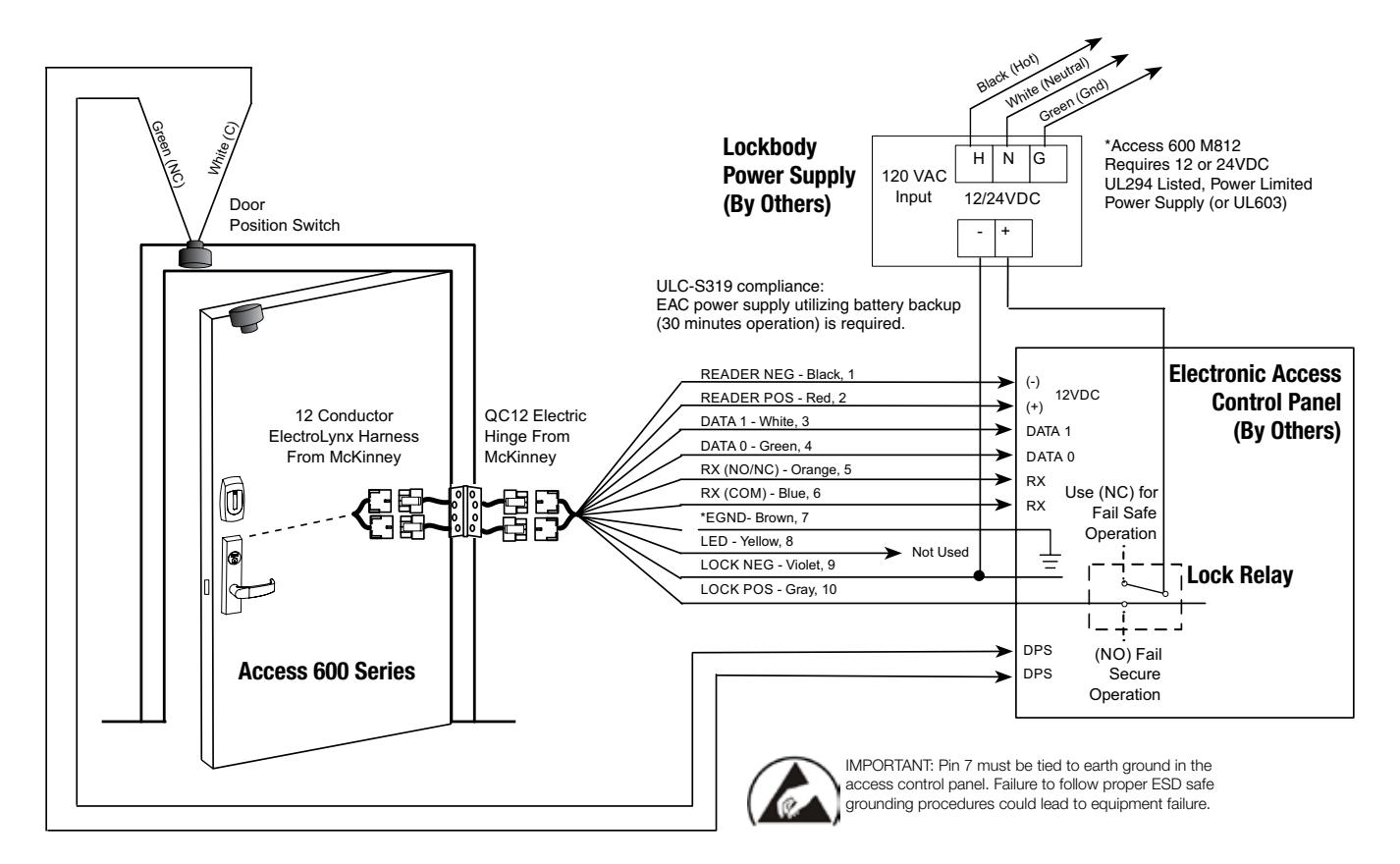
Wiring Diagram - Typical Access 600 Application (12/24VDC Lock)
Mode 1:
LED wire not used = RED LED "ON" when powered
NOTE: Standard Application Shown. For Alternative Applications Contact 1-800-810-WIRE (9473)
*Reader Electronics Require 12 or 24VDC UL294 Listed, Power Limited Power Supply (or UL603)
| Access 600 M802 | Access 600 M812 |
|---|---|
| 12VDC / 24VDC System: | |
|
|
| 12VDC System (MELR): | |
|
|
| 24VDC System (MELR): | |
|
|
MELR not evaluated for UL 294 compliance, CAN/ULC-S319-05 and BHMA A156.25
Installation Instructions

7 Access 600 Series M802 MP9800 Series
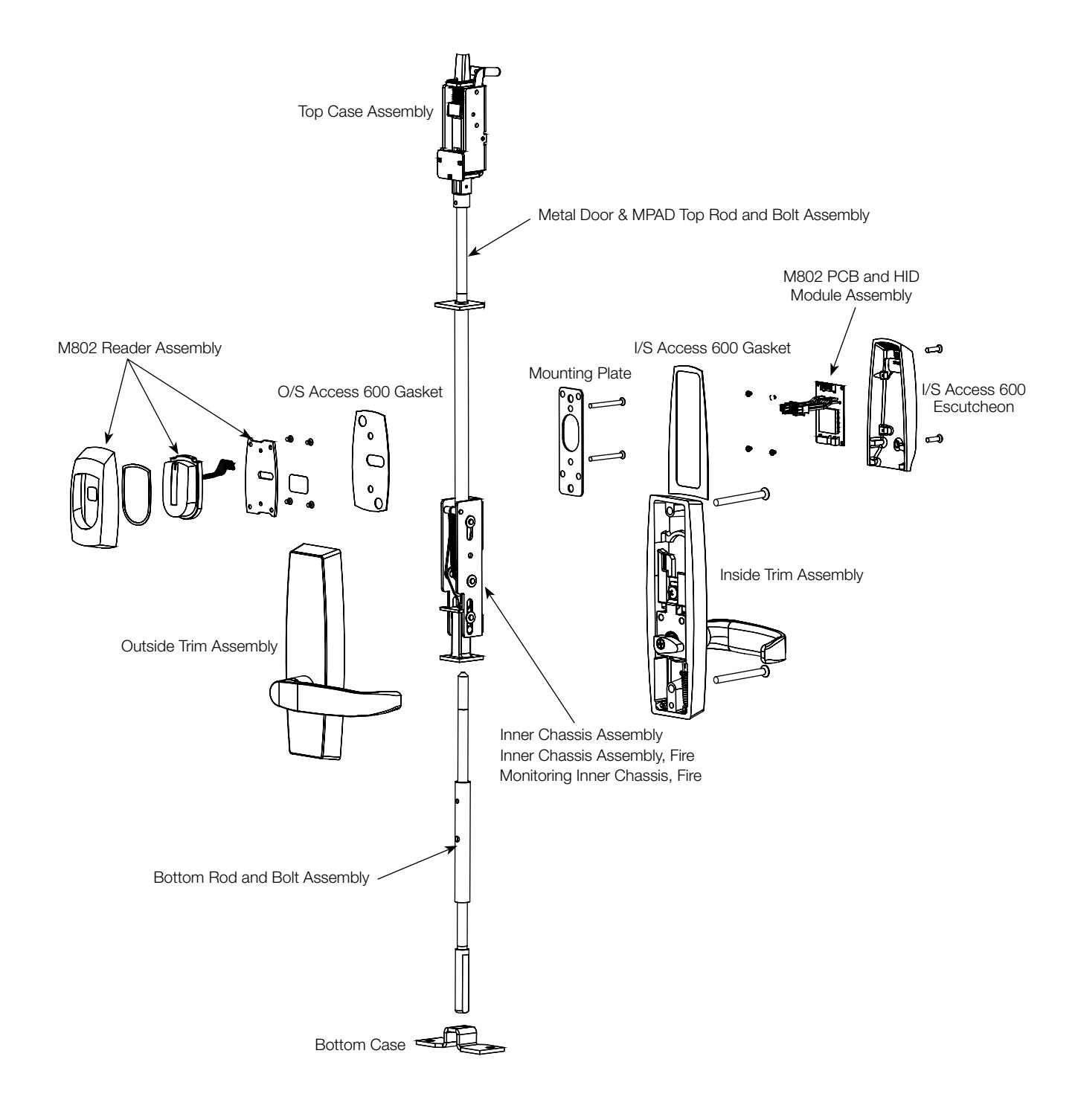
Installation Instructions

8 Access 600 Series M812 MP9800 Series
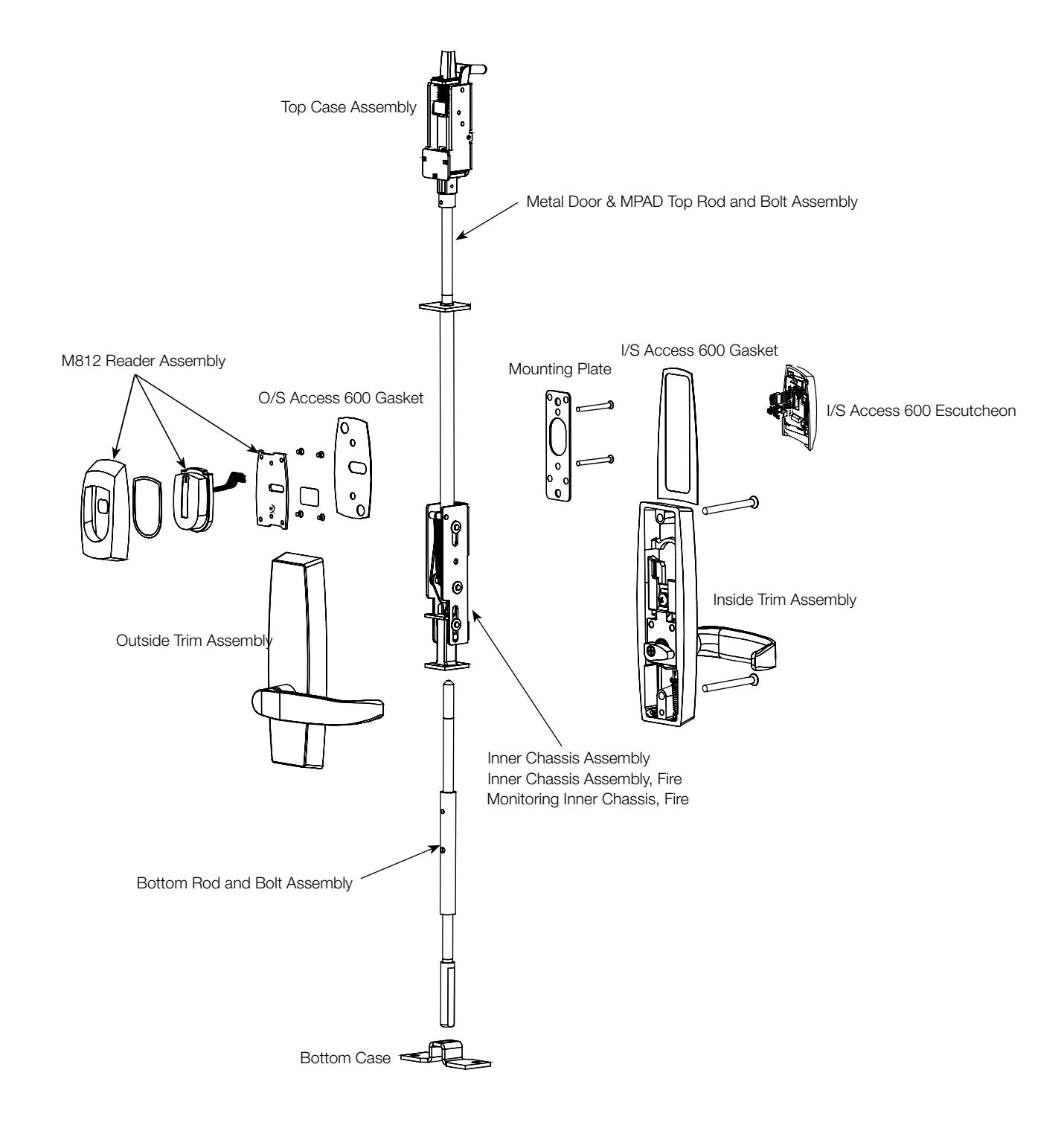
Installation Instructions

9 Access 600 Series M802 MELR Add-on
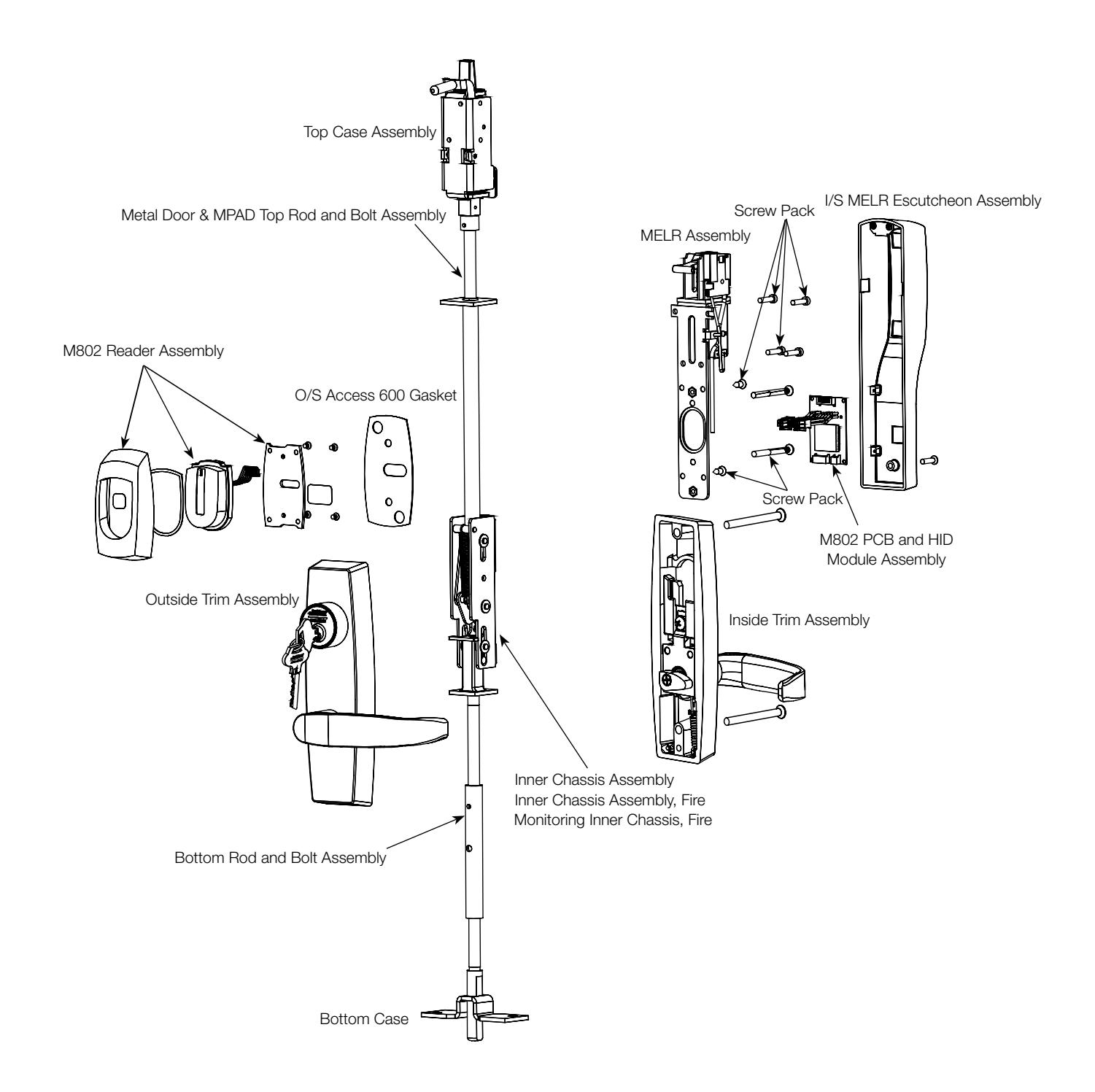
Installation Instructions

10 Access 600 Series M812 MELR Add-on
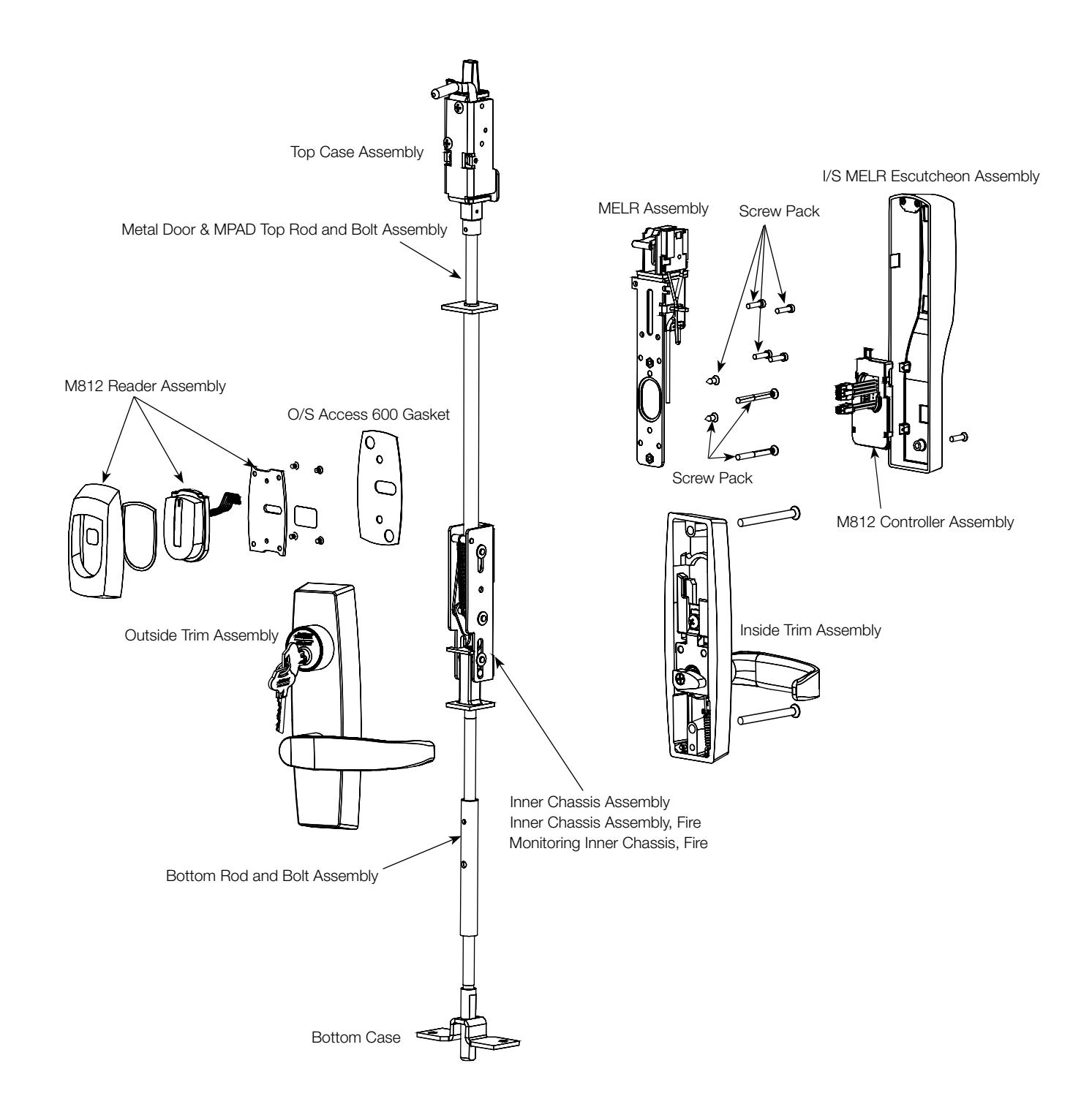
Installation Instructions
11 Installation
A. Prepare door.
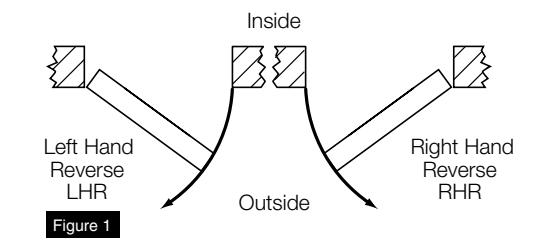
- 1. Verify hand and bevel of door. (Figure 1)
- Check hand of door. Multi-point lock may be handed.
- Door should be fitted and hung.
- Verify box label for size of multi-point lock, function and hand.
Note: MP9800 locks with Access 600 are handed and NOT field reversible.
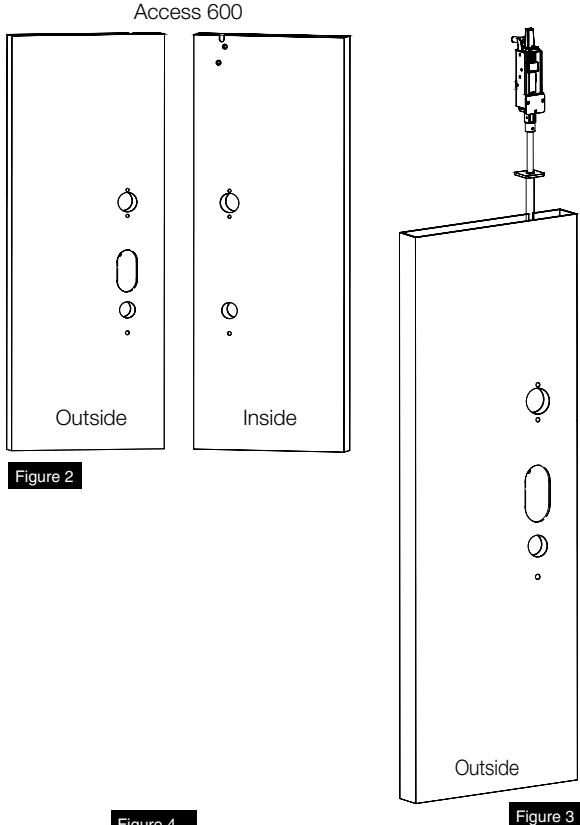
2. Prepare door.
If door is not pre-drilled, prepare door according to appropriate template. Refer to templates at corbinrusswin.com. (Figure 2)
- Metal door (Steel & MPAD): FM438 - Templates: T31242
-
Wood door (MPWD): FM436
- Templates: T31243
Note: For MELR door prep see Step F and use plastic template.
B. Install rod and top case.
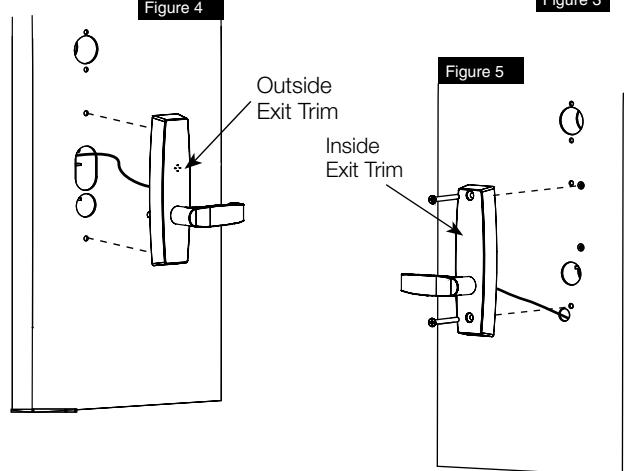
- 1. Refer to instruction sheet FM438 for rod and inner case installation on metal doors.
- 2. Refer to instruction sheet FM436 for rod and inner case installation on wood doors. (Figure 3)
C. Install outside and inside trim.
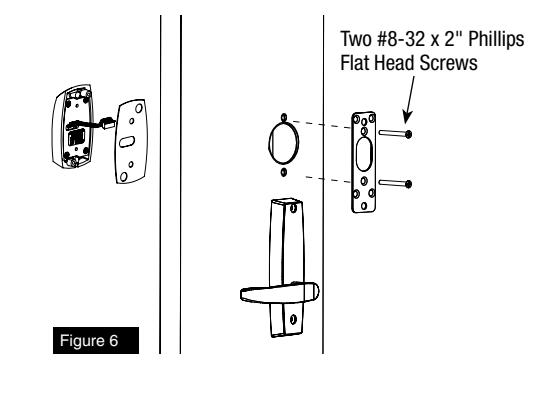
- 1. Outside Trim
- For exterior applications, use gasket (765F859) to seal escutcheon and outside door surface. (Figure 4)
- Feed wire through hole and attach outside exit trim to door.
- 2. Inside Trim
- Position trim carefully onto inside of door. Be careful not to pinch wire harness.
- Mount inside trim lever using two (2) #1/4"-20 x 3" Phillips oval head machine screws. (Figure 5)
Installation Instructions

11 Installation continued
D. Install outside escutcheon.
1. Feed reader cable connector located on back of outside escutcheon from outside of door through ribbon cable hole on door. (Figure 6)
E. Install inside mounting plate on multi point lock without MELR.
1. Securely tighten outside escutcheon with two (2) #8-32 x 2" Phillips flat head screws through mounting plate. (Figure 6)
F. Install inside mounting plate on multi point lock with MELR.
1. Prepare MELR mounting holes if required.
IMPORTANT: If manufacturer has not pre-drilled door, prepare door per instructions below, using plastic template included with device. Screw hole orientation is not affected by handing. If door is pre-drilled by manufacturer, continue to step G.
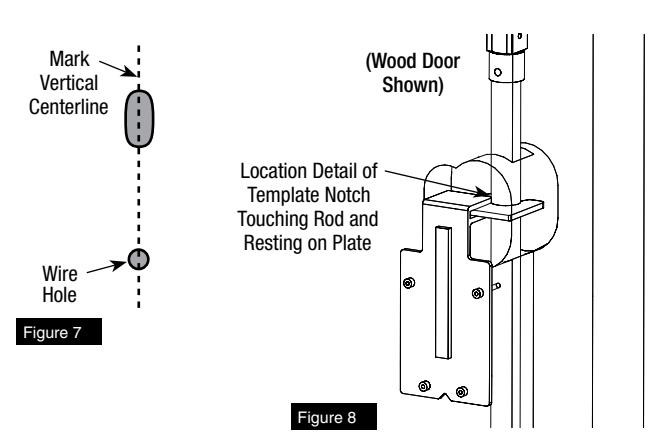
- 2. Mark vertical centerline of slot and wire hole on door. (Figure 7)
- 3. Mount template onto plate. For wood doors, ensure template notch is touching rod to provide lateral positioning. (Figure 8)
- 4. Check that template is square to door. (Figure 9)
- 5. Using template bushings as a guide, drill four (4) 1/16" holes. (Figure 10)
- 6. Remove template.
- 7. For metal door, increase 1/16" pilot holes to #29 (.136) and tap for #8-32.
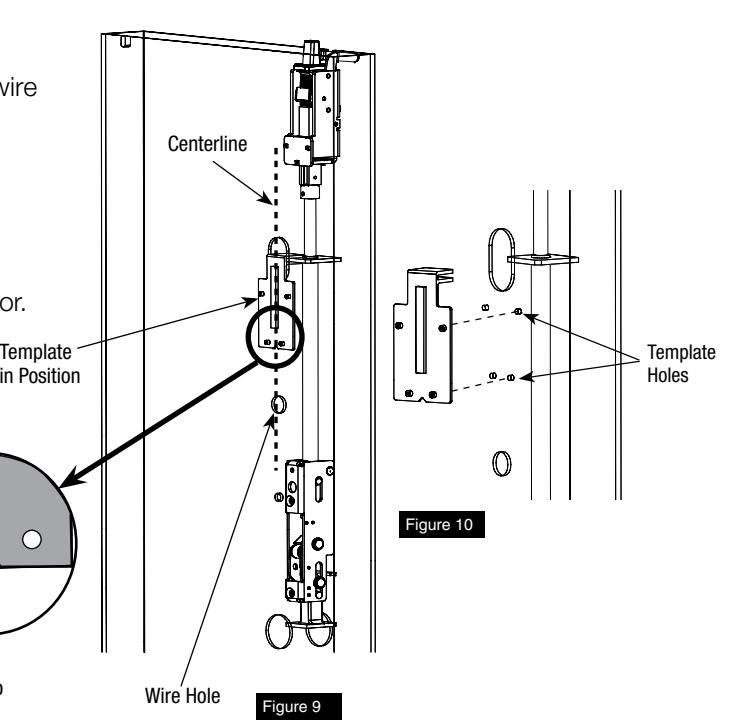
Detail of Notch in Template Aligned to Vertical Centerline
Installation Instructions

11 Installation continued
G. Install MELR assembly.
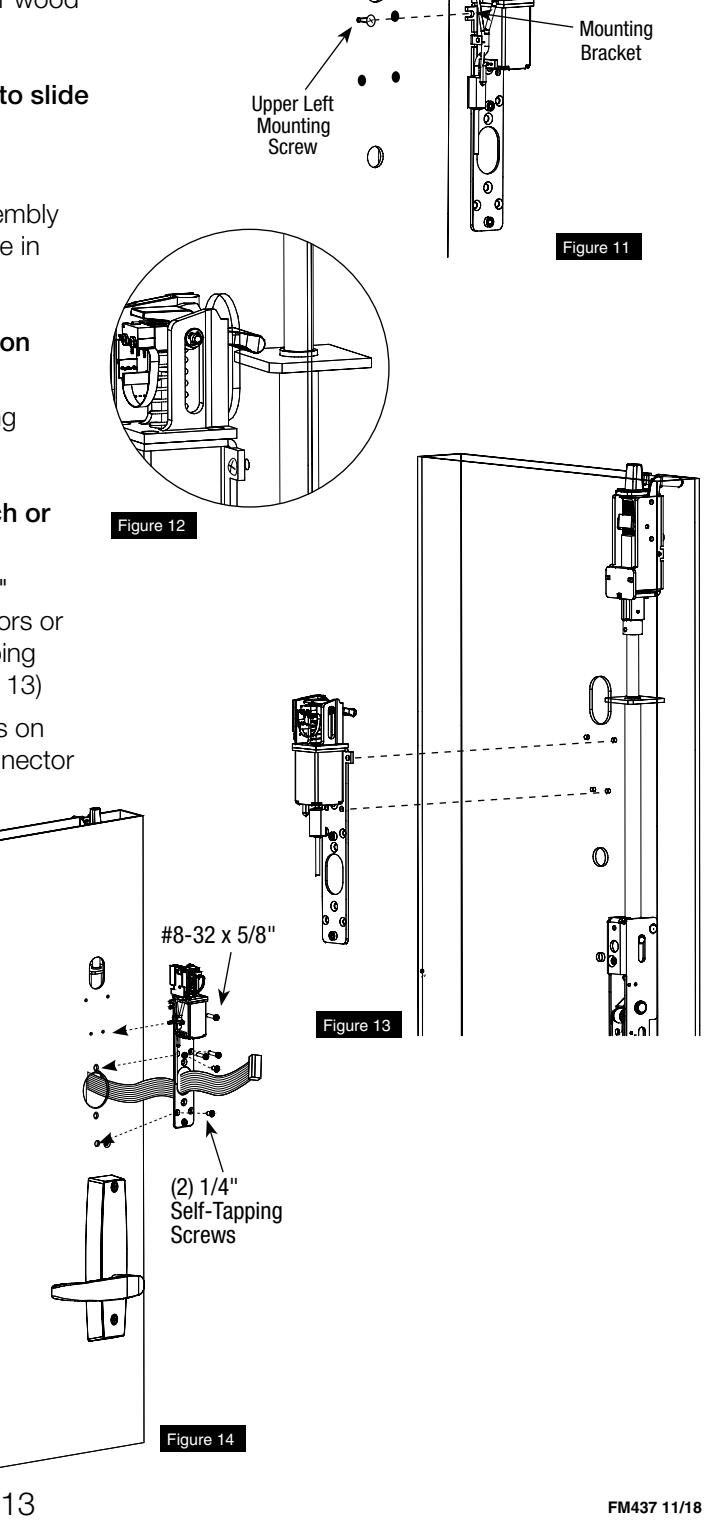
1. Install upper left mounting screw. #8 - 32 x 5/8" Fillister head for metal door or #8 x 5/8" self tapping wood screw for wood doors. (Figure 11)
NOTE: Leave screw loose enough to slide MELR assembly on.
- 2. Snake wire through MELR assembly.
- 3. Slide mounting bracket of MELR assembly underneath installed screw and secure in place.
IMPORTANT: Ensure MELR retraction lever is resting on plate. (Figure 12)
4. Completely tighten upper left mounting screw.
IMPORTANT: Be careful not to pinch or disconnect wires.
- 5. Install remaining three (3) #8-32 x 5/8" Fillister mounting screws on metal doors or remaining three (3) #8 x 5/8" self tapping wood screws on wood doors. (Figure 13)
- 6. Install two (2) 1/4" self-tapping screws on either diagonal; one above molex connector and one below. (Figure 14)
- 7. Connect 8-pin molex connectors.
Door
in part without the express written permission of ASSA ABLOY Access and Egress Hardware Group, Inc. is prohibited.
Installation Instructions

11 Installation continued
H. Attach trim ground wire.
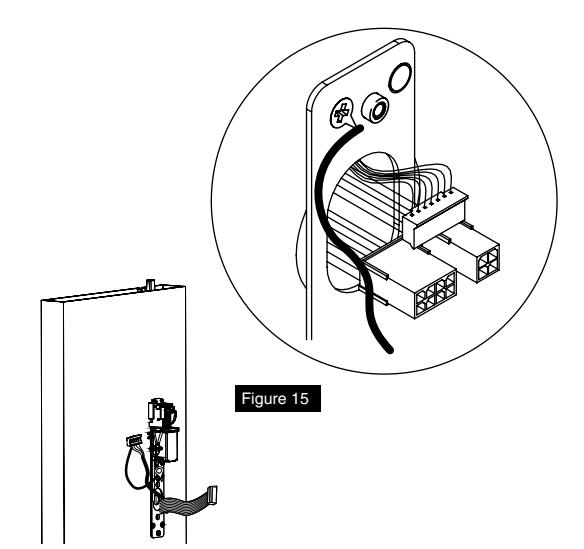
- 1. Connect pin 5 green/yellow ground wire ring terminal (from inside trim) to top left screw. (Figure 15)
- I. Connect Electrolynx® harness. (for Access 600 x M802)
NOTE: If installing an Access 600 M812 proceed to step K.
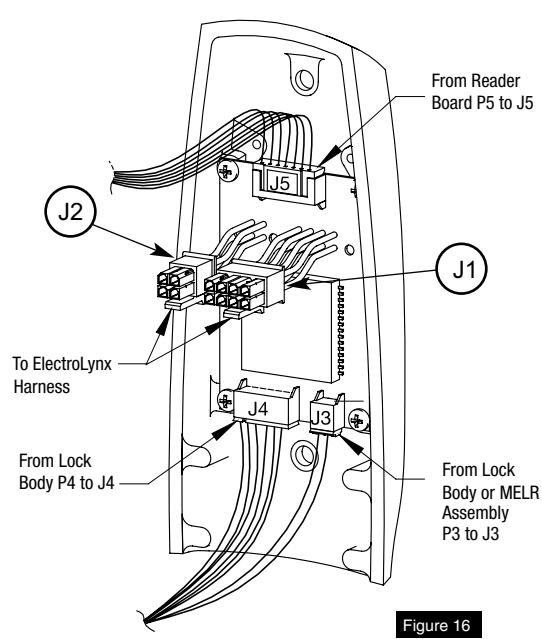
- 1. Connect P3 (2-pin connector) from lockbody or MELR assembly to J3 on interior PCB assembly.
- 2. Connect P4 (6-pin connector) from lockbody assembly to J4 on interior PCB assembly.
- 3. Connect P5 (7-pin connector) from Reader board to J5 on interior PCB assembly.
- 4. Connect ElectroLynx® harness (4 and 8-pin) from door harness to ElectroLynx® harness on interior PCB assembly. (Figure 16)
NOTES:
- Connectors attach properly in only one orientation.
- Do not offset connector.
- Be sure connection is secure by gently tugging on wire.
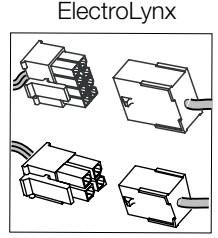
8-pin
4-pin ElectroLynx
| PCB Layout - Wire Assignments - ElectroLynx® Assembly (Molex) | |||||||||
|---|---|---|---|---|---|---|---|---|---|
| J2 J1 | |||||||||
| 1-Violet Lock DC Neg | 3 - Pink | 1- Black | 3-White | 5-Orange | 7-Brown | ||||
| (Solenoid, neg) | NOT USED | PWR GND | Wiegand DATA 1 | RX (N/O) | EGND | ||||
| 2-Gray, Lock DC Pos | 4-Tan | 2-Red | 4-Green | 6-Blue | 8-Yellow | ||||
| (Solenoid, pos) | NOT USED | PWR 12VDC | Wiegand DATA 0 | RX (COM) | LED | ||||
Installation Instructions

11 Installation continued
NOTE: If installing an Access 600 x M812 proceed to step K.
J. Position inside escutcheon and wires. (For Access 600 x M802)
NOTE: Follow these steps prior to installing inside escutcheon assembly to prevent any damage caused by pinching wires.
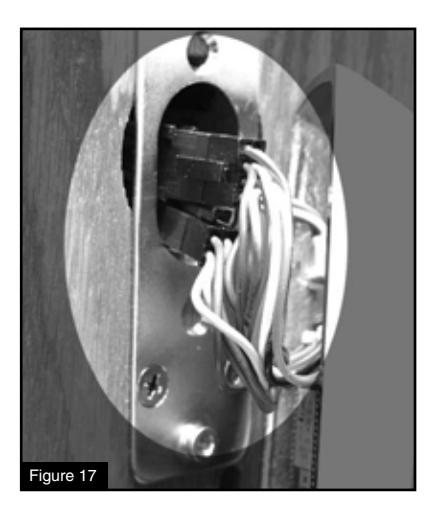
- 1. Align ElectroLynx® connectors (8 and 4-pin) to one side of wire guide inside of door. Reader connections and excess wire are arranged on other side.
- 2. Connect ElectroLynx® connectors (8 and 4-pin) and establish their position inside of door on proper side of wire guide. (Figure 17)
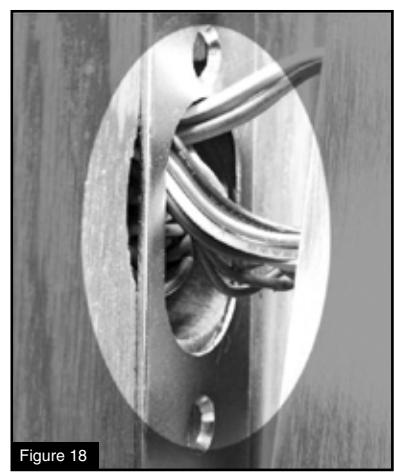
- 3. Neatly route remaining wires onto themselves and into remaining space to prevent pinching wires when mounting escutcheon. (Figure 18)
Note: To complete installation of Access 600 M802, proceed to step N.
K. Connect ElectroLynx harness. (For Access 600 x M812)
NOTE: Follow these steps prior to installing inside escutcheon assembly to prevent any damage caused by pinching wires.
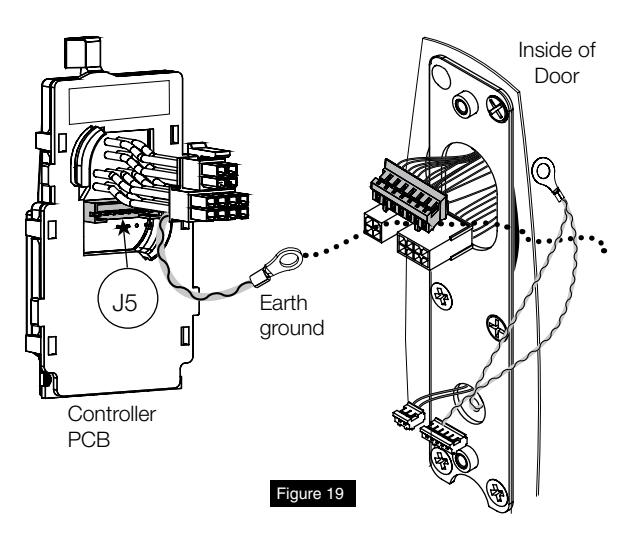
1. Feed controller harness earth ground into and around behind rim of large upper hole of mounting plate. (Figure 19)
Installation Instructions

11 Installation continued
L. Connect ElectroLynx harness. (For Access 600 x M812)
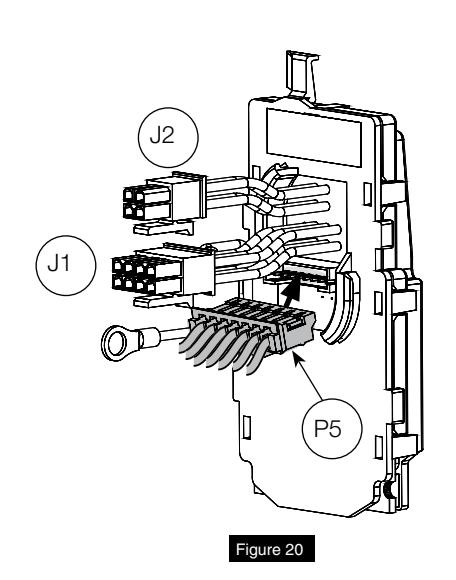
- 1. Connect P5 (7 Pin Connector) from reader board to J5 on interior escutcheon PCB assembly. (Figure 20)
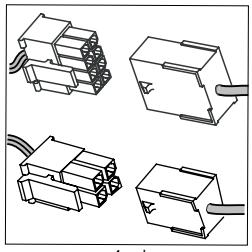
- 2. Connect ElectroLynx harness (4 and 8-pin) from door to interior PCB assembly. (Figure 20)
NOTES:
- Neatly fold wires into remaining space to prevent pinching wires when mounting escutcheon.
- Do not tuck extra mortise lockbody wires back inside lockbody cylinder hole.
- Connectors attach properly in only one orientation.
- Do not offset connector.
- Be sure connection is secure by gently tugging on wire.
8-pin ElectroLynx
4-pin ElectroLynx
| PCB Layout - Wire Assignments - ElectroLynx Assembly (Molex) | ||||||
|---|---|---|---|---|---|---|
| J2 | J1 | |||||
| 1-Violet Lock Neg | 3-Pink | 1- Black | 3-White | 5-Orange | 7-Brown | |
|
Actuator (+)
Solenoid (-) |
- | PWR NEG | DATA 1 | RX (NO) | EGND | |
| 2-Gray Lock Pos | 4-Tan | 2-Red | 4-Green | 6-Blue | 8-Yellow | |
|
Actuator (+)
Solenoid (-) |
- | PWR POS | DATA 0 | RX (COM) | LED | |
M. Install controller. (For Access 600 x M812)
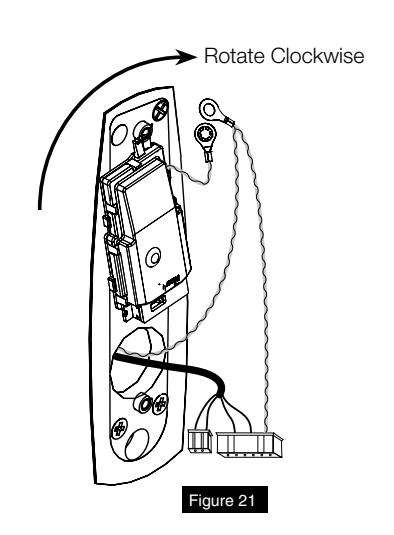
1. Once wires are arranged, position controller at a rotated angle against door, under earth ground wire.
Copyright © 2018, ASSA ABLOY Access and Egress Hardware Group, Inc. All rights reserved. Reproduction in whole or in part without the express written permission of ASSA ABLOY Access and Egress Hardware Group, Inc. is prohibited.
2. Press piece against door while turning clockwise. (Figure 21)
Installation Instructions
11 Installation continued
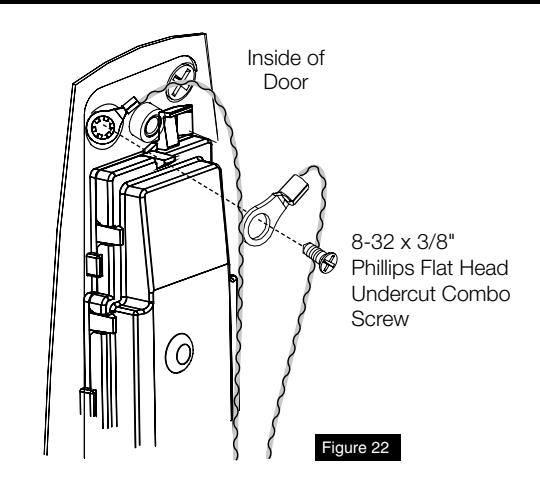
- 3. Twist into place, perpendicular with door. (Figure 22)
- 4. Position green/yellow ground wire ring terminal (from lockbody) over hole for top left screw. (Figure 22)
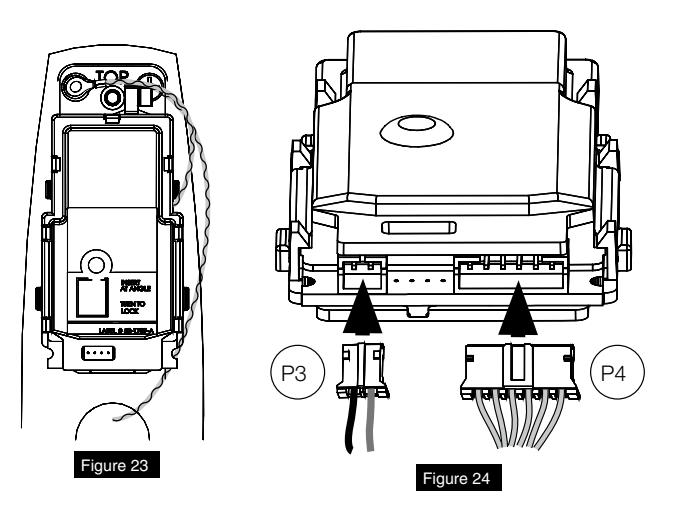
- 5. Position green/yellow reader harness earth ground on top of ground ring and thread both with one (1) 8-32 x 3/8" Phillips flat head undercut combo screw. (Figure 23)
IMPORTANT: Note orientation of ground ring terminals.
6. Tighten securely.
Connector Attachment (Exterior PCB Assembly)
- 1. Connect P3 (2-pin connector) from lockbody to J3 on module. (Figure 24)
- 2. Connect P4 (6-pin connector) from lockbody to J4 on module. (Figure 24)
N. Position inside escutcheon and wires. (MELR) M802 or M812
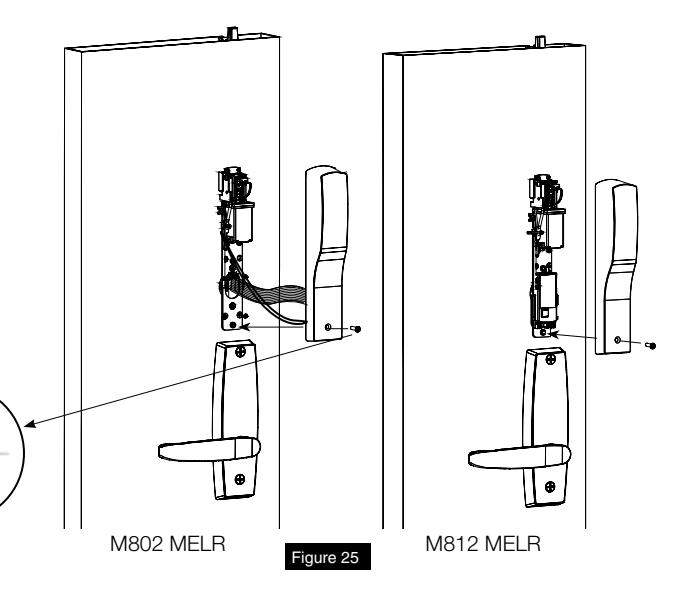
- 1. Position escutcheon against door by hooking top edge on top of MELR assembly. Verify that no wires are being pinched.
- 2. Mount inside escutcheon assembly to plate using one (1) #8-32 x 5/8" Phillips flat head undercut machine screw. (Figure 25)
Installation Instructions

12 Concealed Door Position Switch Installation
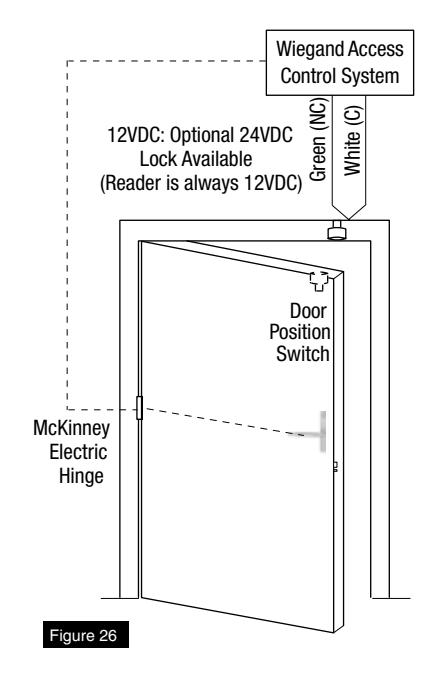
A. Use concealed door position switch 708F989 with this product:
- 1. Concealed door position switch 708F989 is included with this product. System integrator shall determine use and installation location.
- 2. Drill a 1" diameter hole for both magnet and switch. Both holes shall be 1" deep and for switch (if needed) drill a 1/4" hole for wires.
- 3. Connect common wire of switch to common input terminal of EAC.
- 4. Connect normally open wire of switch to normally open input terminal of EAC. (Figure 26)
13 Mechanical Operation Check
- 1. For devices with auxiliary controls, insert key into cylinder and rotate. Key will unlock thumbturn. Turn thumbturn to retract rods and latches. Key and thumbturn should rotate freely.
- 2. For devices without auxiliary controls, unlock trim in Section 14: Step 5. Confirm that lever retracts rods and latches.
Installation Instructions

14 Electrical Operation Check
NOTE: Once electrical wiring has been successfully completed according to proper application, complete following steps.
- 1. Turn power ON.
- 2. Verify LED located on reader is ON. Red or Green depending on reader configuration (See reader LED Configuration).
- 3. Present proximity credential and verify LED and sounder activity.
- 4. Verify valid card read at EAC Panel.
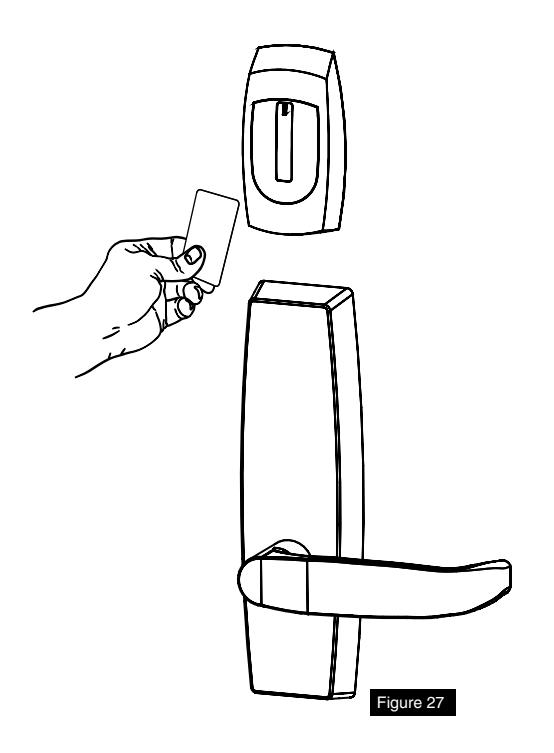
- 5. Verify system operation functions; i.e., when credential is presented to reader that door unlocks. (Figure 27)
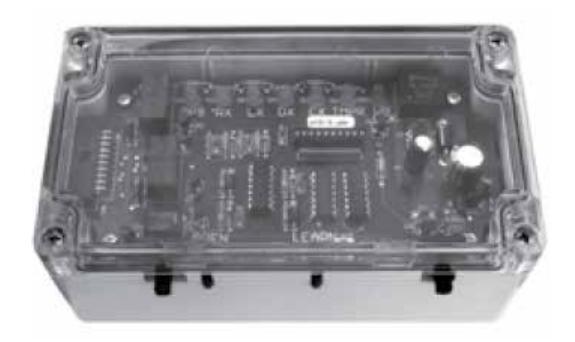
Wiegand Test Unit
ASSA ABLOY Wiegand Test Unit verifies installation in the field. Test unit checks for proper wiring, card reader data integrity, lock functionality including lock/unlock, door position status, and request-to-exit (REX) status.
In addition, this tool provides product demonstration abilities to highlight product's features and capabilities.
| Feature | WT1 | WT2 |
|---|---|---|
|
12 or 24VDC solenoid
lock voltage adjustable |
X | X |
|
Operates as Fail Safe or
Fail Secure |
X | X |
|
"Learn" mode allows
testing of specific cards without programming at the panel level |
X | X |
|
Card reader data integri
ty is validated at test unit |
X | X |
| Works with SE LP10 | X | X |
|
Displays detailed
Wiegand data, including hexadecimal string and total bits received |
X | |
|
Displays measured end
of-line resistor values (if applicable) |
X |

Corbin Russwin 225 Episcopal Road Berlin, CT 06037 Phone: 800-543-3658 Fax: 800-447-6714 corbinrusswin.com