Corbin Russwin ED5800 Series Concealed Vertical Rod Exit Device Installation Instructions
Open the original PDF document
View PDFInstallation Instructions

For installation assistance contact Corbin Russwin 1-800-543-3658 • techsupport.corbinrusswin@assaabloy.com
FM171 01/19
Concealed Vertical Rod Exit Devices
Installation Instructions

| TOC | Table of Contents | |
|---|---|---|
| 1 |
To Change Hands
|
3 |
| 2 |
Maintenance
|
3 |
| 3 | Options | 3 |
| 4 |
Check Before Starting
|
4 |
| 5 | Mark Door | 4 |
| 6 | Prepare Door, Frame and Sill | 5 |
| 7 |
Size Device
|
5 |
| 8 | Rod Assembly and Preliminary Adjustment | 6 |
| 9 | Install Rods | 7 |
| 10 | Install Device | 7 |
| 11 | Install Strikes | 8 |
| 12 | Complete Installation | 9 |
| 13 | Plastic Installation Template | 11 |
Concealed Vertical Rod Exit Devices
Installation Instructions

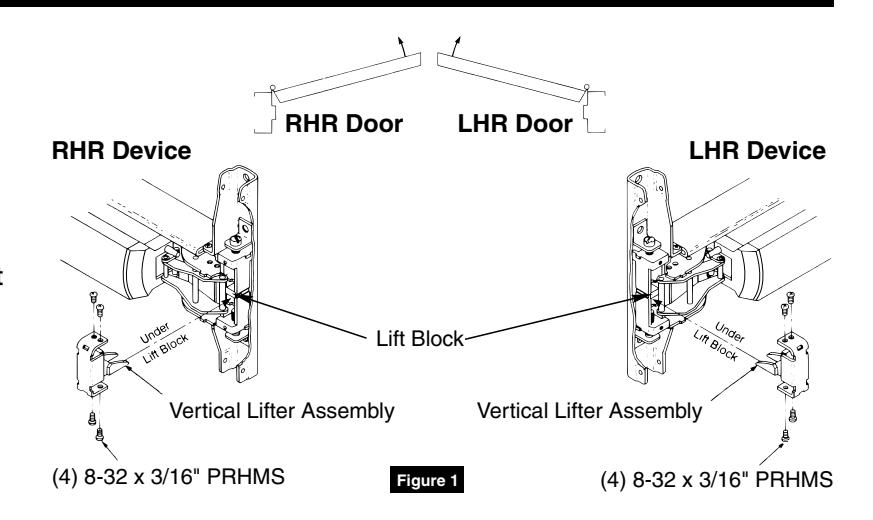
1 To Change Hands
- 1. Remove four (4) screws and Vertical Lifter Assembly.
- 2. Rotate device to opposite orientation (180° degrees).
- 3. Insert Lifter Assembly and reinstall screws.
NOTE: Lifter must fit under lift block as shown. (Figure 1)
2 Maintenance
- 1. Periodically remove covers and coat mechanisms with an appropriate lubricant. This is particularly required in corrosive environments for proper product function.
- 2. Check mounting fasteners periodically. Re-tighten if loose. Apply screw locking compound or change part fasteners if screws continue to back out.
- 3. Periodic checks (and adjustments) of strikes may be required, to compensate for changes in the opening (e.g.: door sagging).
3 Options
1/4-20 Sex Nut Option: (Figure 2)
Recommended for Unreinforced Metal Doors.
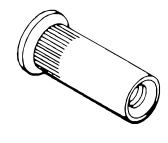
| Device | Quantity | Size | |
|---|---|---|---|
| No Trim | 4 | 1/4-20 | |
| With Trim | 2 | ||
Figure 2
Rod Extension Options: (Figure 3)
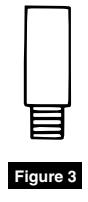
2" (51mm) 6" (152mm) 12" (305mm) 24" (610mm) (Specify Device Finish)
Concealed Vertical Rod Exit Devices
Installation Instructions

4 Check Before Starting
Doors and Frames with walls having a structural thickness (metal skin plus reinforcement) to engage less than three (3) full screw threads are considered unreinforced.
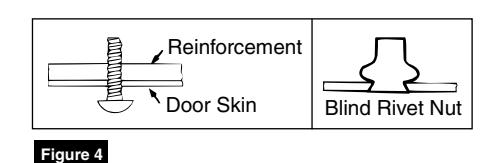
Unreinforced Doors: Use SNB (sex nuts and bolts). (Figure 4)
Unreinforced Frames: Use Blind
Rivet Nuts. (Figure 4)
Recommended fasteners for unreinforced openings are not necessarily supplied by Corbin Russwin.
- Door must swing freely.
- Door must not be warped.
- Door must not bind.
- Door must not sag.
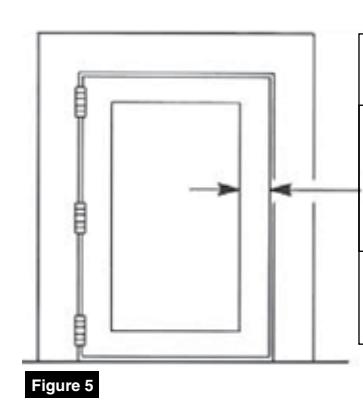
Minimum Door Stile: 4-1/2" (114mm)
Door and frame must meet structural and dimensional specifications on exit device template(s) for door and frame preparation.
Device must seat flush on door surface. To clear raised molding, consult the factory.
5 Mark Door
Single Door or Pair without Mullion
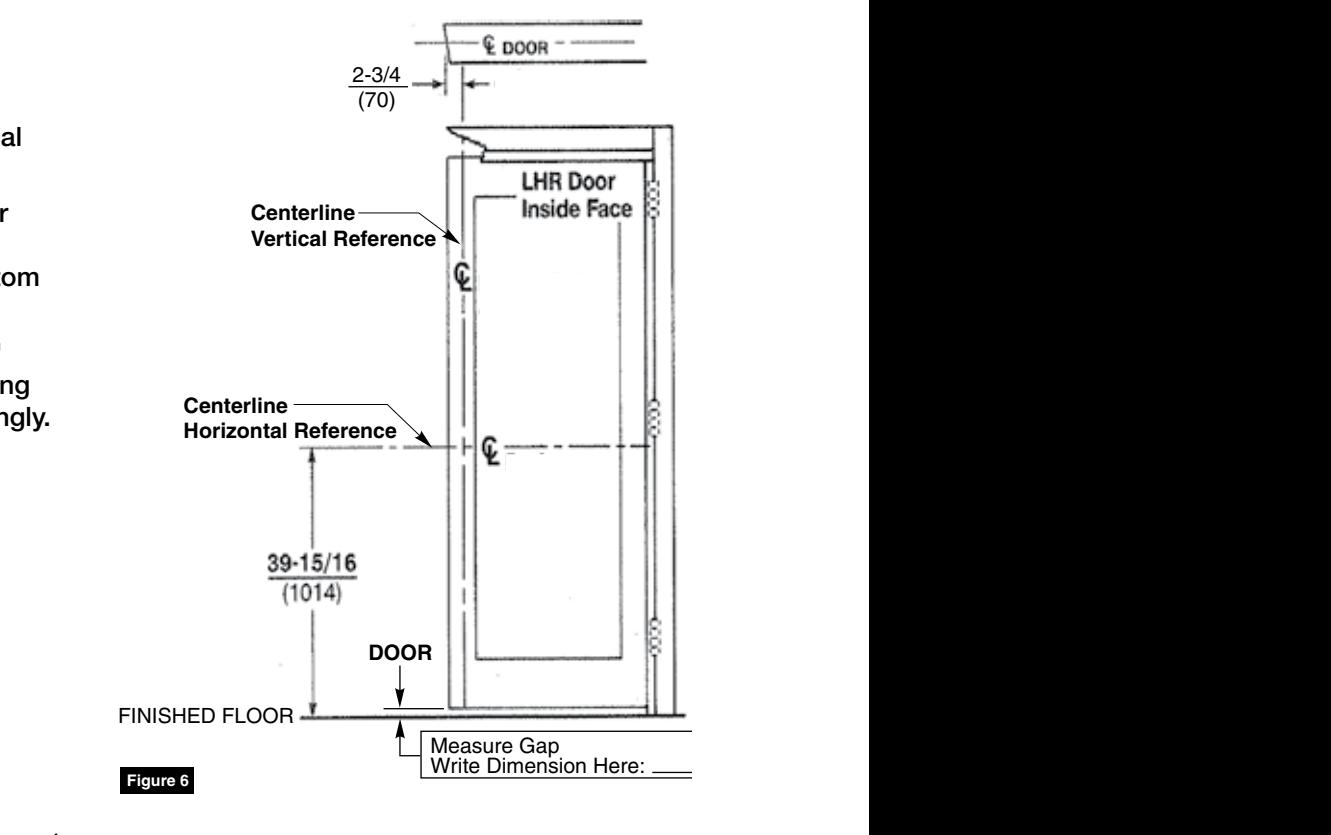
Locate and Mark Horizontal and Vertical Centerlines as shown. (Figure 6)
LHR door shown. Preparation is typical for both door hands. (Figure 6)
CAUTION: If device is mounted higher or lower than shown, rod length must change. Lengthen or cut top and bottom rods as shown in Section 8, page 6.
NOTE: Bottom Bolt will retract to 1/8" (3mm) above floor strike. Floor covering in the door path must be laid accordingly.
Concealed Vertical Rod Exit Devices
Installation Instructions

6
Prepare Door, Frame and Sill
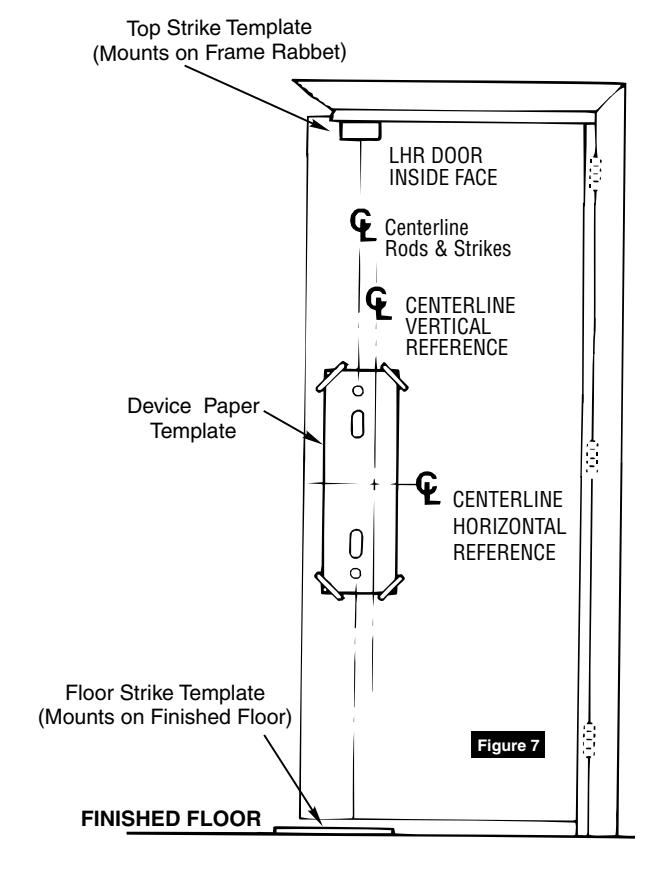
- A. Locate Device Template aligning VERTICAL REFERENCE and HORIZONTAL REFERENCE lines on door and template. Tape template to door face. (Figure 7)
- B. Locate Top Strike and Bottom Strike templates, aligned on centerline of Rods and Strikes on door. Tape templates in place and mark holes. (Figure 7)
- C. Locate and tape Trim template to door. (See instructions packed with trim.)
- D. Mark and prepare holes per installation template.
Device and Bolt Case Plates:
Each two (2) 1/4-20 machine screws for metal reinforced doors OR two (2) 3/8" (10) dia. sex nuts and bolts
Top Strike:
Two (2) 10-24 machine screws
NOTE: Third screw MUST ONLY be used to lock strike in final position (Step 8C).
Bottom Strike: 5/8" (16) dia. x 3/4" (19) deep
hole
Siz
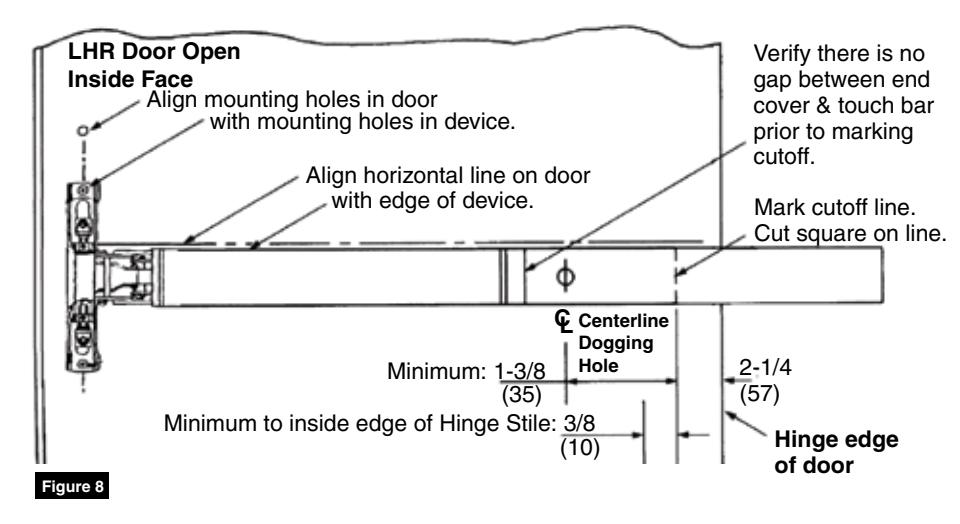
Size Device
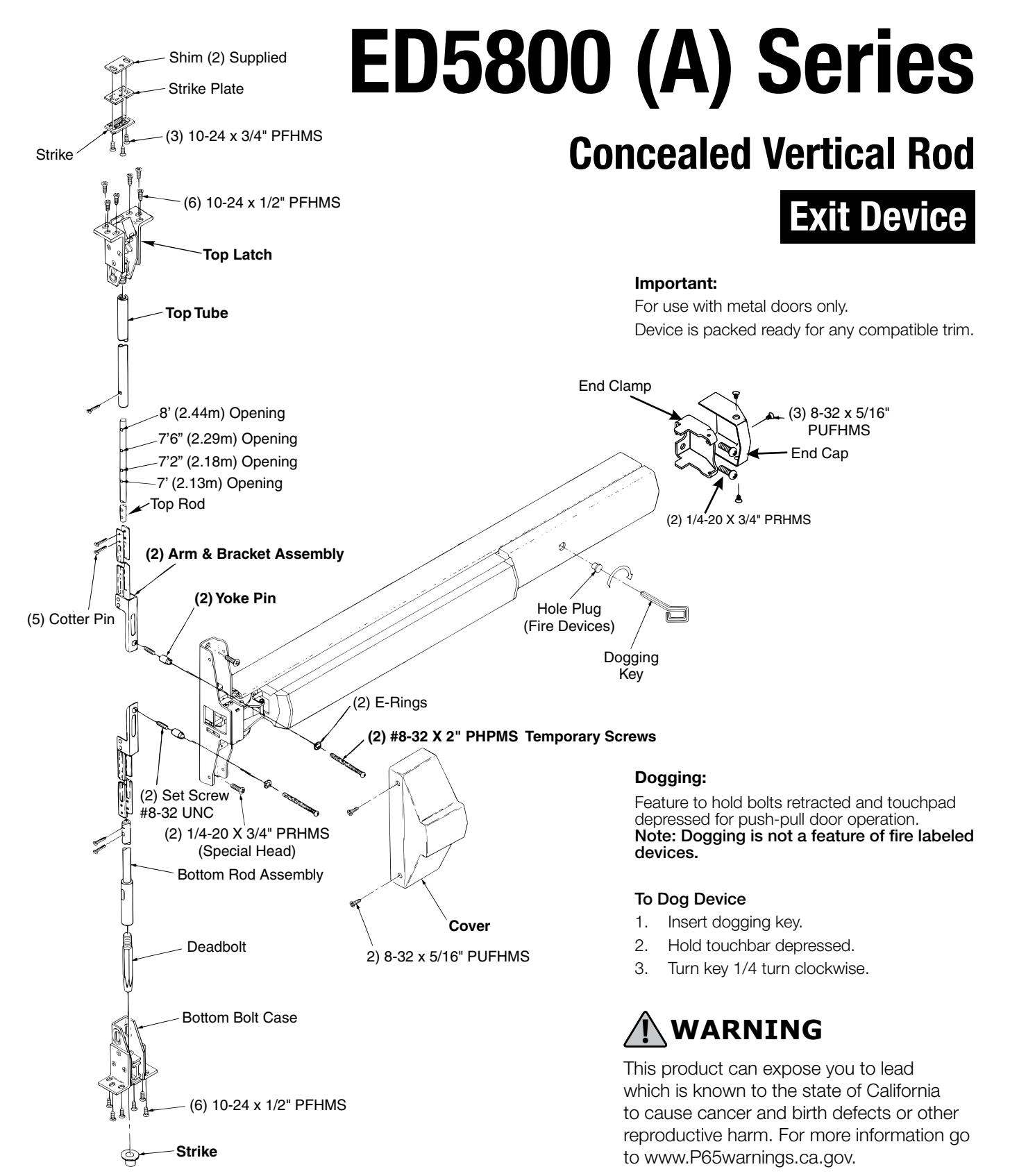
Device must be field cut to size, unless standard opening and device are 36" (0.91m). (Figure 8)
For installation assistance contact Corbin Russwin 1-800-543-3658 • techsupport.corbinrusswin@assaabloy.com
5
Concealed Vertical Rod Exit Devices
Installation Instructions

ASSA ABLOY
R
Rod Assembly and Preliminary Adjustment
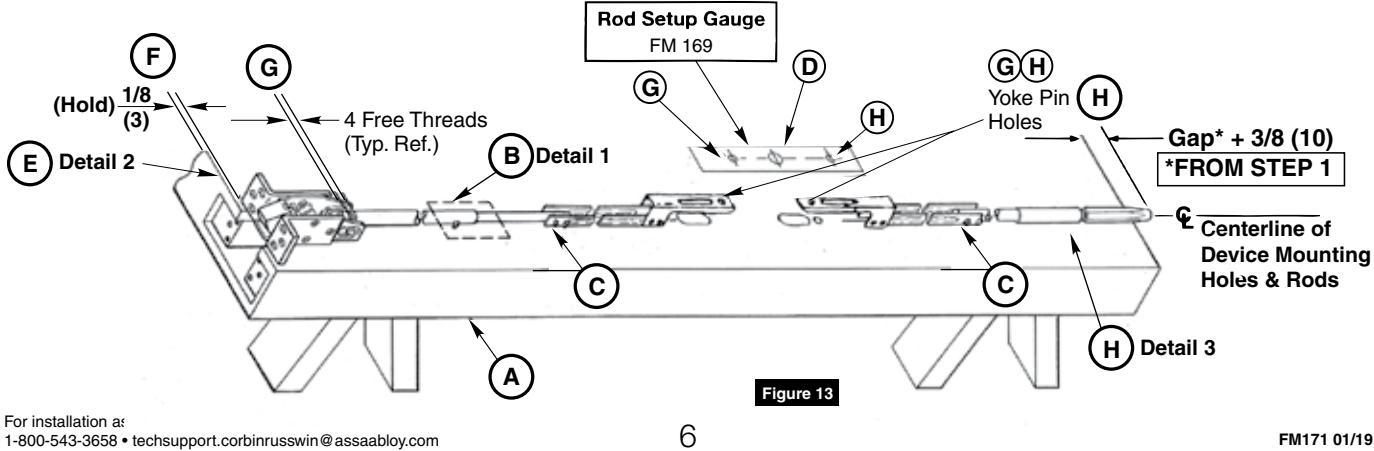
- A. Remove door from opening. Set flat; device side up. (Do not hang door until Section 12, Complete Installation beginning on page 11.)
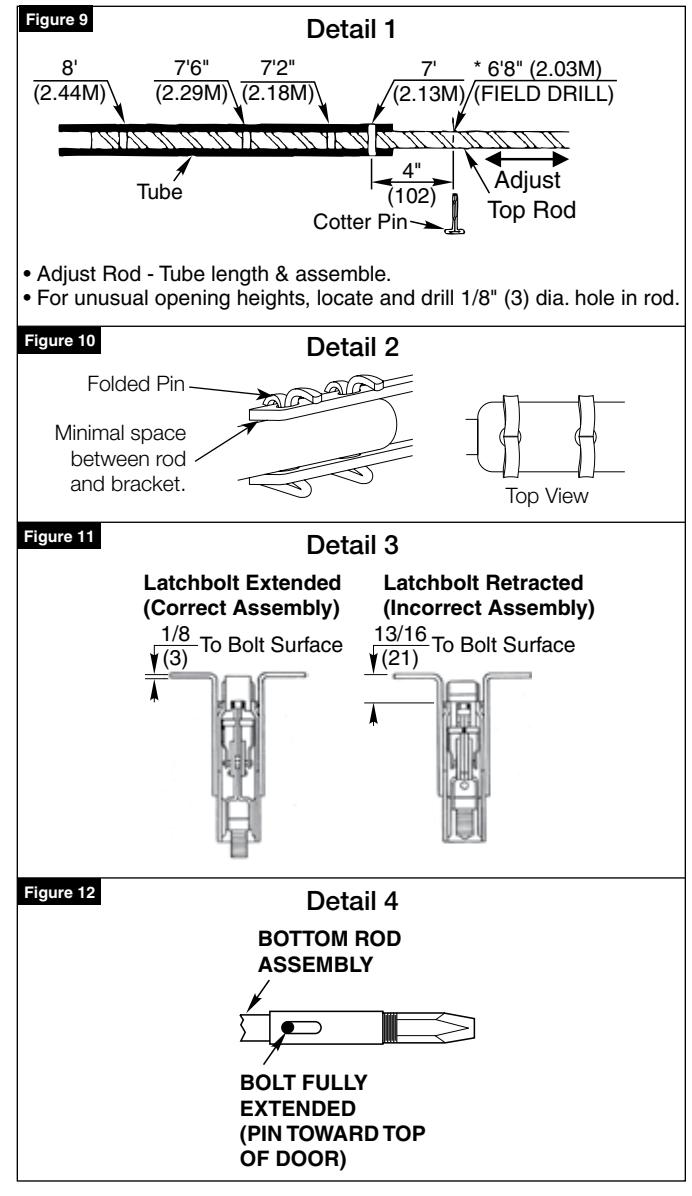
- B. Set length of top rod assembly. (Detail 1 Figure 9)
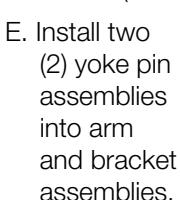
- C. Connect top and bottom rods to arm/ bracket assemblies. (Two (2) cotter pins each) Fold cotter pins over flush to arm and bracket assembly as shown. (Detail 2 - Figure 10) Clip off excess pin length. NOTE: Secure cotter so rods are rigid and inflexible.
- D. Align rod setup gauge over device cutouts and centerlines. Tape gauge to door face.
- E. Connect top latch to rod assembly. Latchbolt must be fully extended. (Detail 3 - Figure 11)
- F. Set top latch assembly in place on door. Maintain 7/8" (22mm) location from top of door as shown. (Figure 13)
- G. Align yoke pin holes in arm and bracket assembly with alignment hole in rod setup gauge. Adjust top latch and rod assembly for proper alignment.
- H. Thread deadbolt into bottom rod assembly. Set bottom rod assembly in place on door. Align yoke pin hole in bottom arm and bracket assembly with alignment hole in rod setup gauge. Adjust bottom bolt for proper length.
NOTE: Be certain bottom bolt is fully extended, (Detail 4 - Figure 12)
Concealed Vertical Rod Exit Devices
Installation Instructions

Detail 1
Figure 14
Yoke Pin
Temporary Screw
E-ring Groove
9 Install Rods
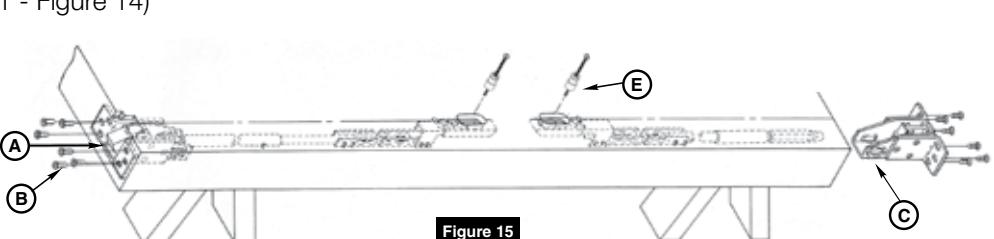
- A. Slide rod assemblies into door. (Figure 15)
- B. Attach top latch with six (6) #10-24 X 1/2" PFHMS.
- C. Install bottom bolt case with six (6) #10-24 X 1/2" PFHMS.
- D. Thread set screw into yoke pins (Insert with hex socket end inside pin). Thread #8-32 x 2" PHPMS screws into slotted end of yoke pins until seated to hex head set screw. (Detail 1 Figure 14)
1/4"
Set Screw
10 Install Device
- A. Mount trim when required. (Follow instructions packed with trim.)
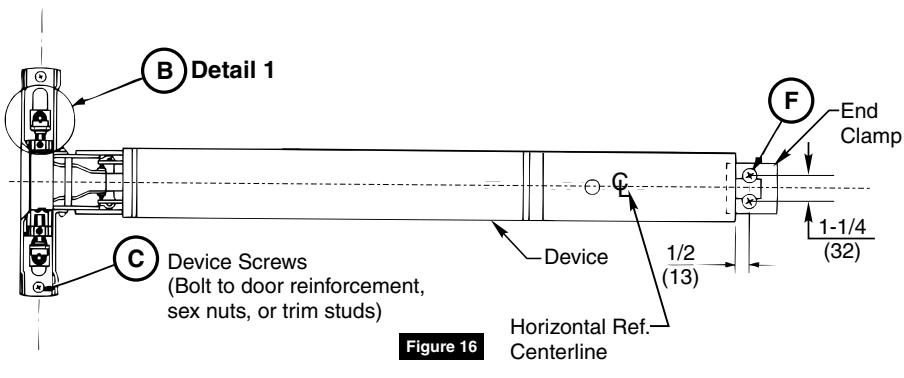
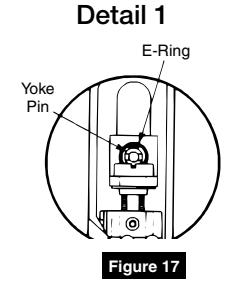
- B. Seat device in place. Connect device to arm and bracket assemblies using temporary screws to position yoke pins in latch head. Install e-ring into yoke pin grooves. (Detail 1 Figure 17)
(Figure 16)
- e-ring into yoke pin grooves. (Detail 1 - Figure 17) C. Fasten device latch head using two (2) 1/4-20 PRHMS or 3/8" (10) dia. SNB.
- D. Remove temporary screws. NOTE: Be certain to re-tighten yoke pins after removal of temporary screws.
- E. Center end of device on horizontal reference line of door. Using end clamp as a template, locate end clamp mounting holes.
- F. Prepare end clamp holes and mount end clamp using two (2) 1/4-20 PRHMS or 3/8" (10) SNB. (Figure 16)
Concealed Vertical Rod Exit Devices
Installation Instructions

11 Install Strikes
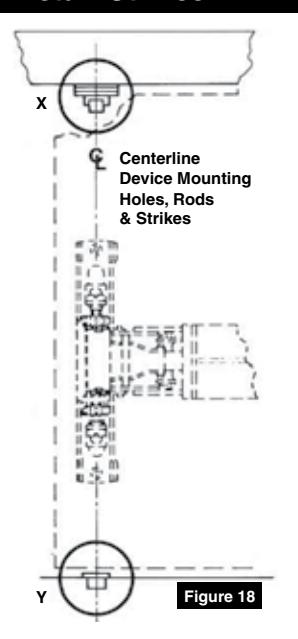
Detail X Upper Strike
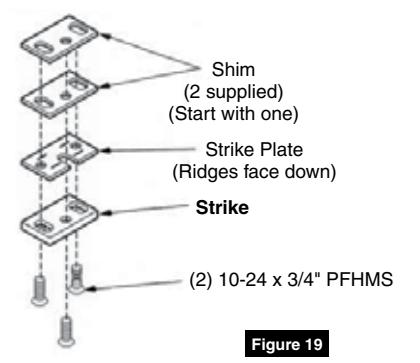
Note: Third screw must be installed after device is adjusted and works properly.
Detail Y Bottom Strike
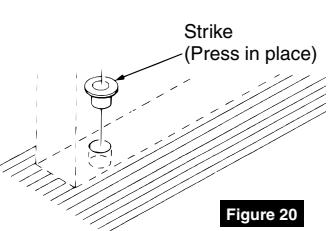
Note: Bottom Bolt will retract to 1/8" (3mm) above Floor Strike. Floor covering in door path must be laid out accordingly.
Concealed Vertical Rod Exit Devices
Installation Instructions

12 Complete Installation
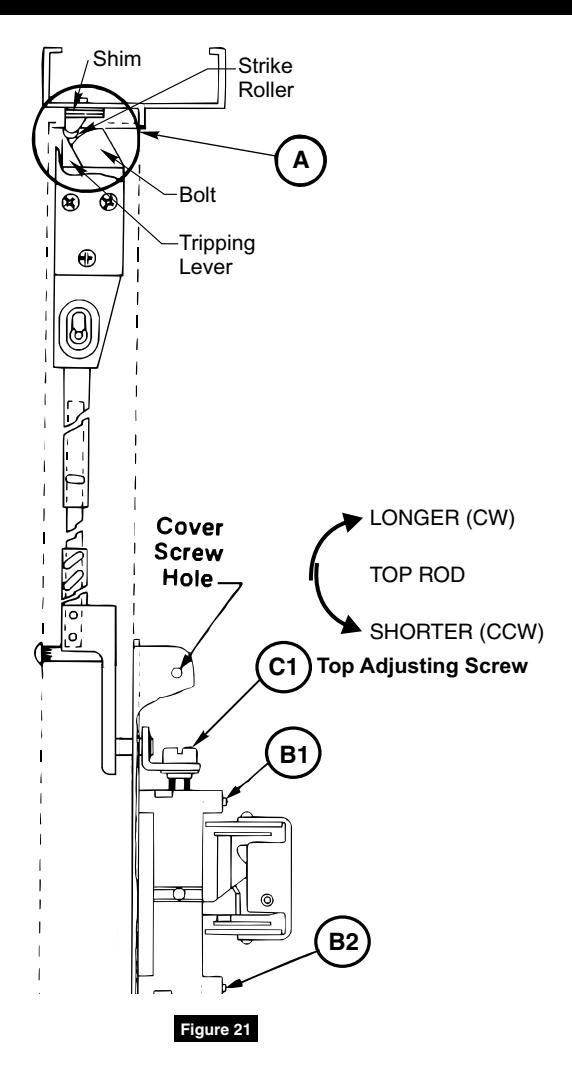
A. Rehang door plumb and in accordance with the opening. Set strike roller between tripping lever and bolt. DO NOT PRELOAD BOLT. Shim strike as needed. (Figure 21)
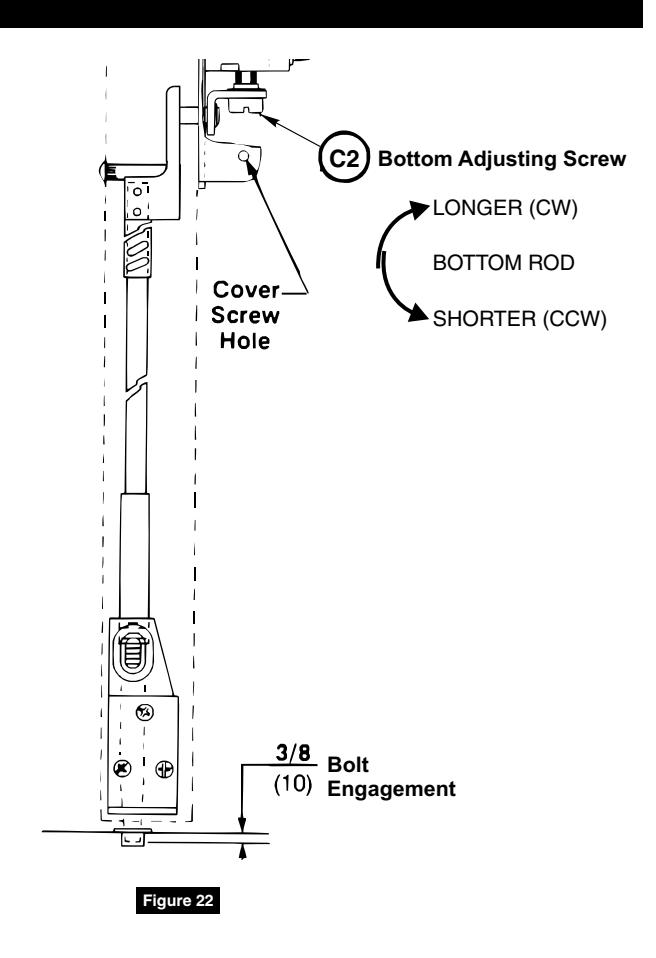
NOTE: Rods should move freely inside door. Bolts extend automatically and should deadlock when door closes and top strike hits tripping lever. Top bolt should retract flat. Bottom bolt should travel 1/2" (13) and engage 3/8" (9.5) into strike in down position without dragging on floor surface in up position.
Test device action by touchbar, by trim, and by dogging. Adjust as needed.
-
B. Rod Adjustment for Proper Bolt Throw
- 1. Use 3/32" (2.4) hex wrench to loosen set screws B1 and B2. (Figure 21)
- 2. Adjust top rod first with adjusting screw C1. (Figure 21) With device in dogged position (panic devices) or touchbar fully depressed (fire devices) adjust top rod so top latchbolt is flush and hold back feature is engaged. Lengthen top rod an additional 1/2 turn for proper latchbolt positioning.
NOTE: If adjusting screws bottom out before proper device operation, door and device must be removed so larger adjustments may be made by threading rod in or out, or by moving cotter pin to different hole in rod. (Section 8, page 6)
Concealed Vertical Rod Exit Devices
Installation Instructions

12 Complete Installation Continued
- 3. Adjust bottom rod with adjusting screw C2. (Figure 22) With top latch retracted in hold back position, and touchbar dogged or fully depressed, adjust bottom rod so deadbolt clears strike by 1/16" (1.6). Bottom rod should be in position in active case with square head of connector hanging in Guide. (See note in Step 2).
- 4. Check device operation by opening and closing door. An additional minor adjustment may be required for full retraction and correct strike engagement.
NOTE: To avoid thread damage and provide positive locking, be sure set screws engage flats on adjusting screws.
- C. After acceptable device function, install third screw in top strike to lock strike in position with 10-24 x 3/4" PFHMS.
- D. Install device cover and end cap with two (2) 8-32 PFHMS each.
Installation Instructions

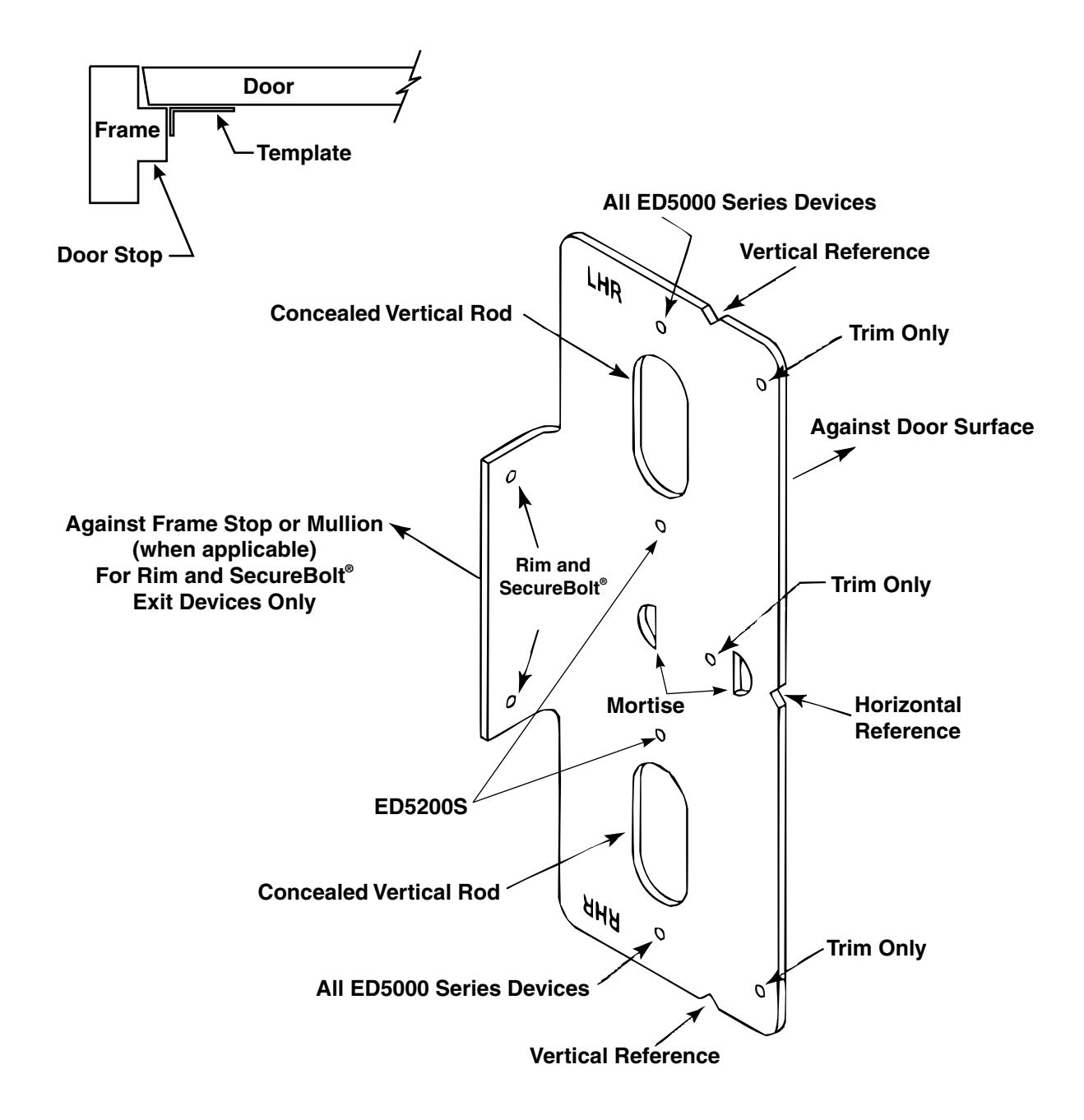
13 Plastic Installation Template
For use in conjunction with instruction sheets packed with exit device.
Holes and slots are identified below by exit device series and trim. Prep door and frame for only those features required for the exit device being installed.

Corbin Russwin 225 Episcopal Road Berlin, CT 06037 Phone: 800-543-3658 Fax: 800-447-6714 corbinrusswin.com