Camden Supplemental Installation Guide for CX-ED1259L Rim Strikes
Open the original PDF document
View PDF

SUPPLEMENTAL INSTALLATION GUIDE FOR CAMDEN CX-ED1259L RIM STRIKES
INTRODUCTION
RIM electric strikes, used with Pullman latch devices (i.e. crash bars) are very different from installing an electric strike for cylindrical or mortise locksets, and therefore require additional considerations and a different installation technique. In addition, Camden's CX-ED1259L RIM strike is unique from competitive brands of RIM electric strikes in two regards:
- CX-ED1259L requires the installer to use additional mounting screws. Although this may take more time during installation, the benefit is that once installed, Camden's RIM strike will not move out of alignment (and require a service call) – a common occurrence with competitive RIM strikes.
- CX-ED1259L is the only ½" thick UL Fire listed RIM strike on the market. This means that spacer plates (supplied with the strike) will need to be used whenever the latch projection (throw) is over ½", up to ¾".
This guide has been produced to help installers understand the most important physical considerations that need to be addressed when installing the CX-ED1259L RIM strike. Please reference the product manual for additional information.
STEP 1 – CONFIRM LATCH ENTRY TO RIM STRIKE
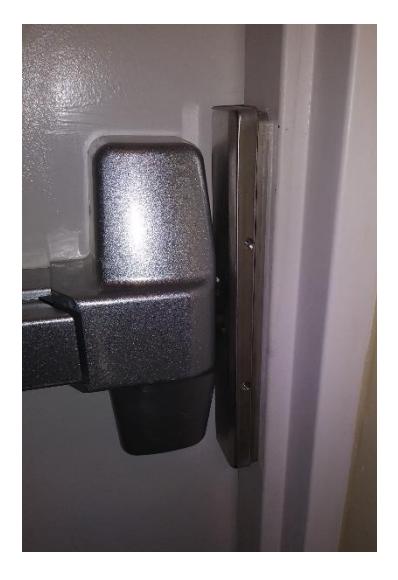
The position of the latch held by the RIM strike is of critical importance to the operation of the strike. The most important considerations, and potential causes of failure, are as follows:
- o The centerline of the keeper (jaws) of the RIM strike MUST line up with the centerline of the latch of the crash bar. Mark the centerline of the latch on the door frame, prior to mounting the strike, to provide a point of reference.
- o The crash bar latch MUST NOT apply pressure on the keeper (jaws) of the RIM strike.
Pre-load pressure on the jaws of the strike will prevent the strike from operating – and is the most common reason for a strike failing.
Position the RIM strike so that the jaws of the strike are just lightly resting against the latch of the exit device.
-
o
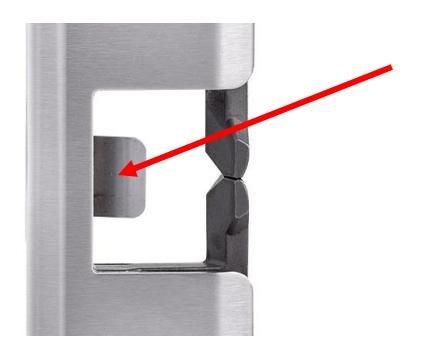
The exit device latch MUST depress (activate) the latch monitor 'paddle' of the RIM strike.
Even if the latch monitor is not used, this placement insures that the latch of the exit device is fully held by the keeper (jaws) of the strike.
- (2) Spacer plates are provided with the CX-ED1259L RIM strike and are used as needed for this.
STEP 2 – CONFIRM DOOR ALIGNMENT
Virtually all of Camden's electric strike models, including the CX-ED1259L RIM strike, offer horizontal adjustment, to compensate for doors that are misaligned with the door frame– but there is a limit to the strike adjustment.
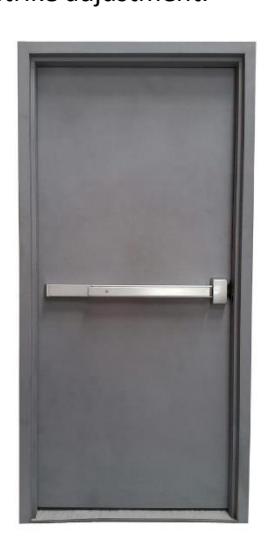
- o Check that the door is not binding on the frame. An electric strike cannot compensate for this. If present, the door hinges will need to be adjusted.
- o Check that the gap between the door and the stop of the frame (where the side edge of the door rests against the door frame) are the same at the top and at the bottom of the door. A ¼" difference in gap is very common and can be compensated for by the strike – IF INSTALLED CORRECTLY.
If the door stop gap at the top and bottom of the door is different, the electric strike cannot be installed plumb ('straight' up and down). The horizontal orientation of the RIM strike will need to be adjusted to match the angle of the misaligned door. To do this:
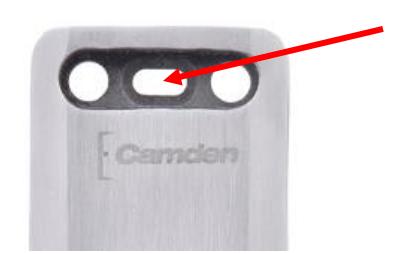
- o Mount the RIM strike in position on the frame, using only the (2) center (elongated) screw holes, top and bottom.
- o Rotate the strike until both jaws of the strike very lightly touch the crash bar latch, with equal gap, on both jaws.
- o Tighten the center screws and open/close door to confirm that the latch does not bind on the jaws of the strike.
- o After this is done, you can then affix the 6 screws that permanently mount the strike on the frame.
OTHER CONSIDERATIONS
Although the considerations above will address the majority of installation steps needed for a successful installation, there are a few additional items that you will need to check for:
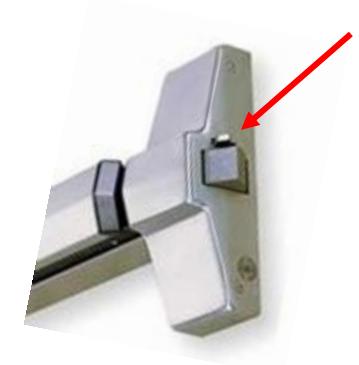
Consideration for deadlocking latch (as shown here)
If the exit device has a deadlocking latch, the CX-ED1259L RIM strike must be mounted so that the deadlocking latch does not enter the latch cavity of the RIM strike.
Position the strike so that the deadlocking latch rests against the face of the strike.
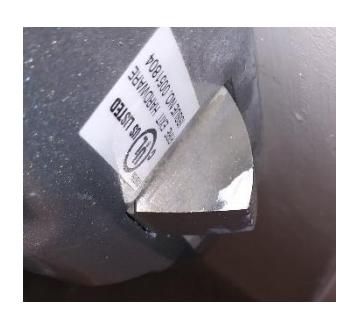
Consideration of the free movement of the exit device latch and the keeper (jaws) of the RIM strike.
Ensure the latch of the exit device and the keeper (jaws) of the electric strike have free and easy movement to operate together, with a minimum of friction. In this, a small amount of silicone lubricate on both the latch and jaws of the strike will improve the operation… but please be careful not to over spray.
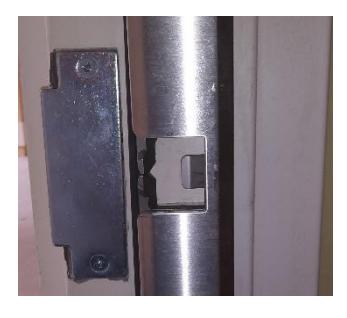
Consideration for a professionally finished retrofit installation.
Replacing electric strikes used with cylindrical or mortise locksets, with an exit device and RIM strike, will leave holes in the door and door frame that must be filled or covered. Cover or plug holes and check that new cover plates are flush with the frame… and will not interfere with the RIM strike.
SUMMARY
Adherence with the recommendations of this guide will avoid the most common problems associated with the installation of RIM strikes. If you require additional assistance, please contract our Technical Support department by phone at 1 877 226-2269 or email support@camdencontrols.com.