CM-PG1, CM-PG2, CM-PG3 AND CM-PG4 Spec Sheet
Open the original PDF document
View PDFCM-PG1, PG2, PG3 AND PG4
DOOR PRESSURE GAUGES
CM-PG1
AN ESSENTIAL TOOL FOR:
- AUTOMATIC DOOR SALESPEOPLE, AND INSTALLERS
- OVERHEAD DOOR INSTALLERS
- ENGINEERS, ARCHITECTS, AND CONTRACTORS
- BUILDING OWNERS, AND INSPECTORS
MEET ADA REQUIREMENTS:
A. The American with Disabilities Act and Canadian Regulations requires that both interior and exterior doors of a building be wheelchair accessible.
- B. Door Opening Force (4.13.11 ADAAG)
- Exterior hinged doors: (reserved)
- Interior hinged doors: 5 lbf. (22.2N)
- Sliding or folding doors: 5 lbf. (22.2N)
Automatic/Power Assisted Doors: (4.13.12) Such doors shall not open to back check faster than 3 seconds and shall require no more than 15 lbs. (66.6N) to stop door movement. If a power-assisted door is used, its door-opening force shall comply with 4.13.11 and its closing force shall conform to the requirements in ANSI A156.19 (1984).
MODEL: CM-PG1
- 0-7 lbs. force range
- This light duty gauge can be used in determining the lower limitations of interior and exterior door opening/ closing forces.
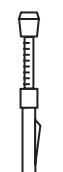
MODEL: CM-PG2
- 0-35 lbs. force range
- This unit is larger and more robust. It is suitable for measuring the force of full-size, normal speed door operators as well as measuring the closing force of "overhead doors" and "elevator doors".
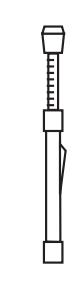
MODEL: CM-PG3
- 10-50 lbs. force range
- This robust unit is used to measure "door opening" and "sliding-door" breakout panel force.
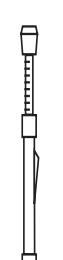
MODEL: CM-PG4
- 10-66 lbs. force range
- This robust unit is used to measure "door opening" and "sliding-door" breakout panel force.
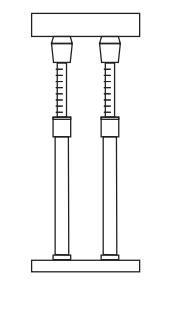

DOOR PRESSURE GAUGES
OPERATING INSTRUCTIONS:
- A- Set "o" ring on zero, down against the instruments flange, or on the desired maximum force.
- B- Holding the instrument firmly, either push or pull a given door at a point approximately handle-high and 30 inches toward the handle from the door's hinges.
- C- Read the amount of force required to open/close the door on the plunger scale closest to the bottom of the small "o" ring.