Arrow Lock & Door Hardware DB Deadbolt Revolution V2 Deadbolt V2 DB Push Instruction
Open the original PDF document
View PDF

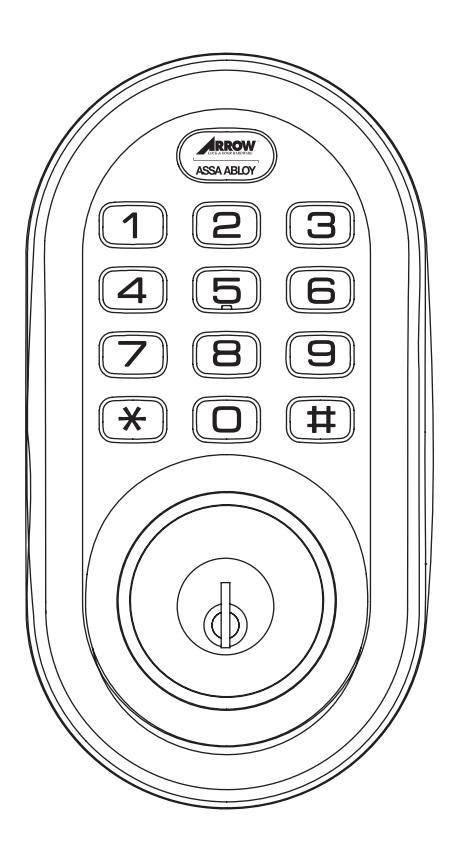
Arrow Revolution™ Push Button Deadbolt Installation and Programming Instructions
NOTE TO INSTALLER
FAILURE TO FOLLOW THESE INSTRUCTIONS COULD RESULT IN DAMAGE TO THE PRODUCT AND VOID THE FACTORY WARRANTY
For Technical Assistance contact Arrow Lock at 1-800-221-6529 www.arrowlock.com
TABLE OF CONTENTS
|
Warnings
2 |
|
|---|---|
|
Introduction
2 |
|
| Installation | |
| Components and Tools3 | |
| Prepare Lock for Installation4 | |
| Install Lock | 5-6 |
| Programming | |
| Programming Features-Menus-Keys-Definitions |
7-8 |
| Lock Operation | 9-10 |
| Miscellaneous Information | |
|
Return Lock to Programming Defaults
11 |
|
| Hardware Troubleshooting11 | |
|
Programming Troubleshooting
12 |
|
| Replace/Install Cylinder13 | |
|
Sample Pin Code Management Sheets
|
14-15 |
WARNINGS
CAUTION: Changes or modifications to this unit will void the the warranty.
IMPORTANT: The accuracy of the door preparation is critical for the proper functioning and security of this product. Misalignment can cause performance degradation and a lessening of security.
Finish Care: This lockset is designed to provide the highest standard of product quality and performance. Care should be taken to ensure a long-lasting finish. When cleaning is required use a soft, damp cloth. Using lacquer thinner, caustic soaps, abrasive cleaners or polishes could damage the coating and result in tarnishing.
INTRODUCTION
The Arrow Revolution™ Stand-alone Push Button Access Lock combines a robust lockset with a contemporary electronic aesthetic.
Users benefit from a proven push-button keypad that makes day-to-day access effortless and offers easy programming for simple updates to user information in the event of staffing changes or security breaches.
Arrow Revolution™ is engineered for quick and easy installation and fits in place of a standard deadbolt lock door preparation (ANSI/BHMA A156.115).
INSTALLATION
COMPONENTS AND TOOLS
Included in the box. . .
- Quick Start Guide
- Installation Instructions
- Door Marker
- Outside Escutcheon
- Inside Escutcheon
- Inside Mounting Plate
- Battery Cover
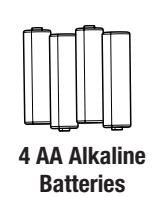
- 4 AA Alkaline Batteries
- Bolt
- Strike Plate
- Screw Pack
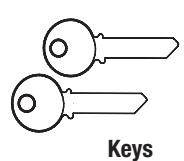
- Keys
Parts Illustrations
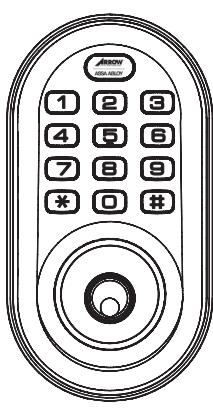

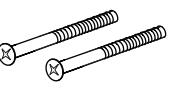
(2) Through bolts
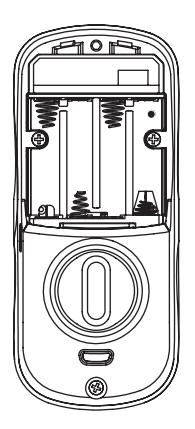
Inside Escutcheon
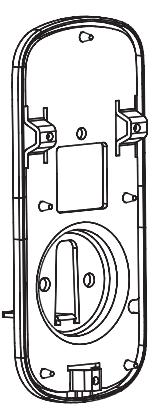
Inside Mounting Plate

(3) Mounting screws
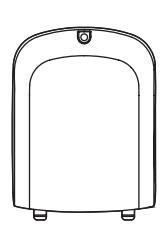
Battery Cover
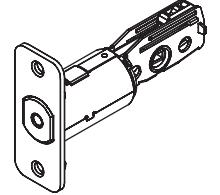
Bolt
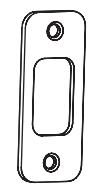
Strike Plate
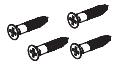
(4) screws
Tools Needed
Door Prep
- 2-1/8" (54mm) hole saw
- 1" (26mm) boring bit
- 7/64" (2.5mm) drill bit
- Chisel & hammer
Lock Installation
#2 Phillips screwdriver
PREPARE LOCK FOR INSTALLATION
Unpack the Lock
The lock is packed representative of how it will install on the door.
Before installing the lock on the door:
A. Inside escutcheon
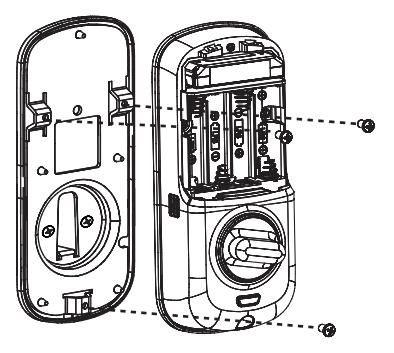
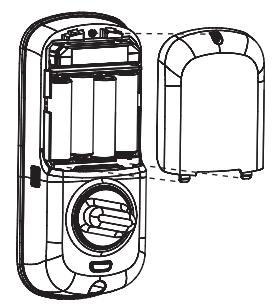
- 1. Loosen the screw (Phillips #2) holding the battery cover. (The screw remains attached to battery cover)
- 2. Slide the battery cover up and out (note the two tabs at bottom of battery cover).
- 3. Remove the inside mounting plate (with gasket) from the back (door side) of the inside escutcheon.
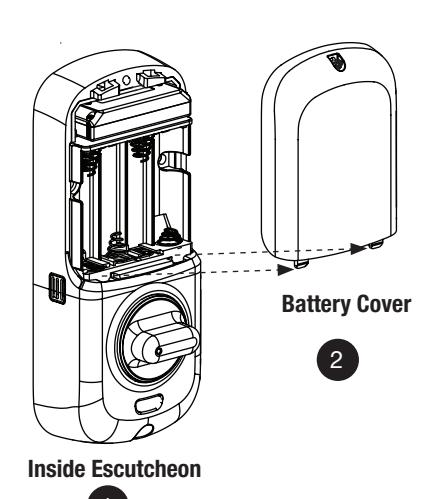
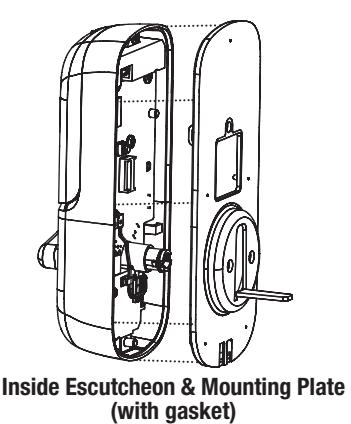
3
a. Ensure that gasket on Inside Mounting Plate is properly fitted. Note the positioning of the gasket's five rubber nubs (Figure 3A) .
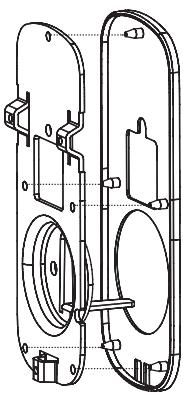
Figure 3A
B. Bolt
Note: Bolt ships with backset in 2-3/4" position. If required, press small black button on underside of bolt and push to shorten to 2-3/8" backset position.
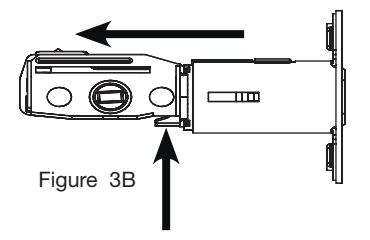
Image (Fig. 3B) shows proper orientation when installing the bolt.

Outside Escutcheon
INSTALL LOCK
1. Install bolt in door.
NOTE: The bolt must be in a retracted (unlocked) position when installing the lockset.
Attach with two (2) M4 x 25.4mm [8-32 x 1"] screws supplied.
2. Install strike on the door frame, making sure to allow for the bolt to be centered in the strike.
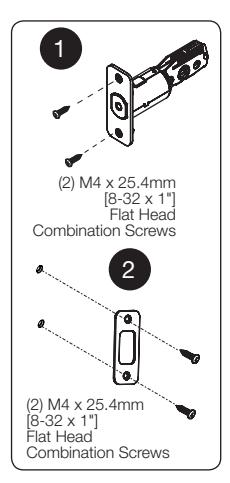
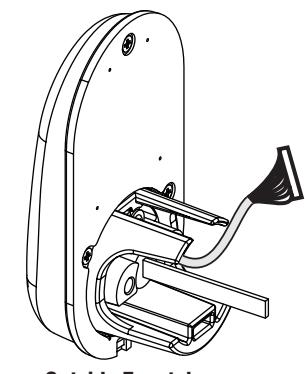
3. Install outside escutcheon.
As you position the outside escutcheon, route the cable through 2-1/8" diameter hole (Figure 3A).
NOTE: Cable goes under bolt and through.
Ensure that the tailpiece is oriented correctly (see arrows Fig. 3B).
4. Holding the outside escutcheon flush to the door, position the inside mounting plate by first routing the cable and connector through the mounting plate's 1/2" hole (Fig. 4A) and then inserting the mounting plate "tongue" into the bottom slot of the outside escutcheon (Fig. 4B).
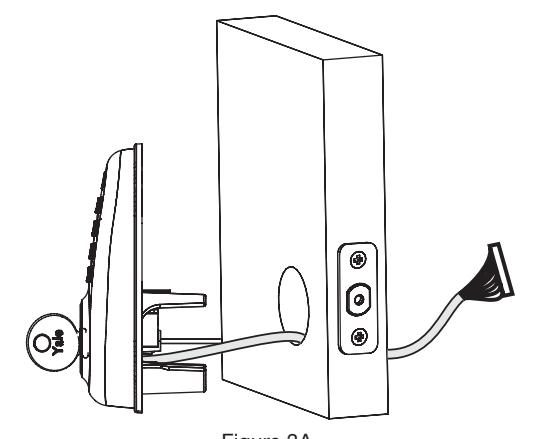
Figure 3A
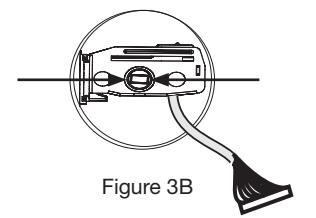
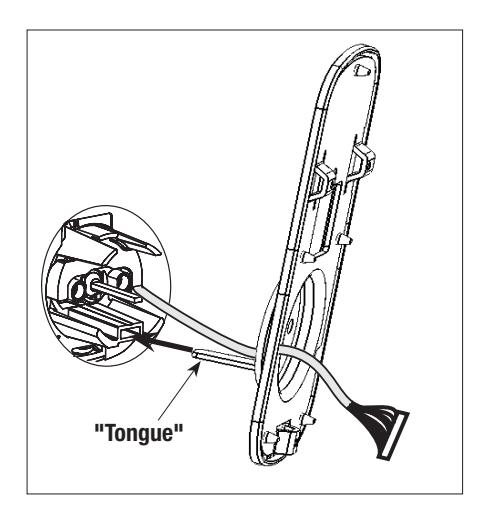
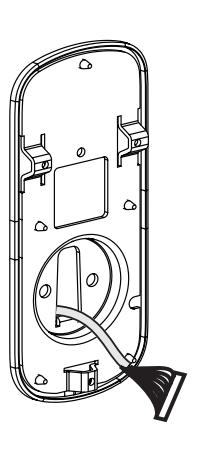
Figure 4A Figure 4B
5
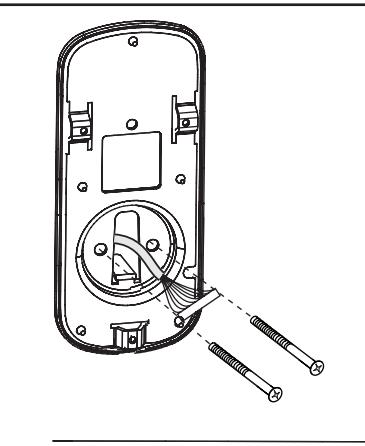
5. Secure both assemblies using (2) M6 x 59.5mm pan head machine screws, making sure that outside escutcheon is vertically aligned.
Hand-tighten until snug. Do not over-tighten.
CAUTION :
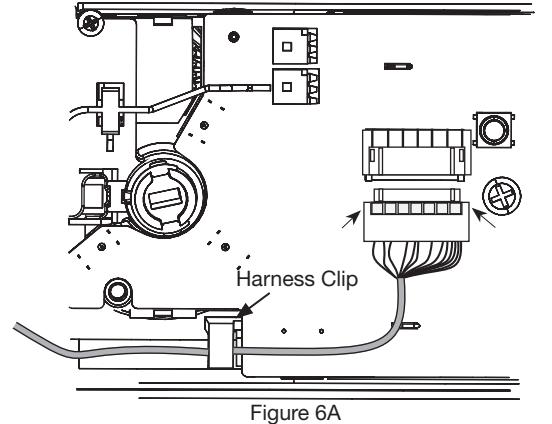
Use care when assembling to ensure that the cable lies against the back recessed area of the inside escutcheon (Fig. 6A).
Position and bend cable, using the harness clip as shown in Fig. 6A to prevent binding when installing the escutcheon over the mounting plate.
6. Attach cable assembly to the inside escutcheon PC board by lining up notches on top of cable connector to slots on PCB connector (Fig. 6B).
Note that connector should be pressed in firmly using thumbs until completely seated (proper position indicated by arrows on PCB as in Fig. 6A & 6B).
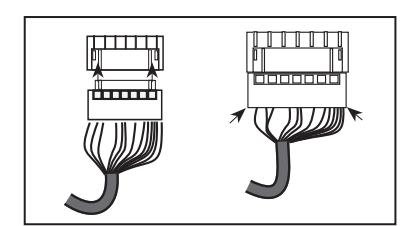
Figure 6B
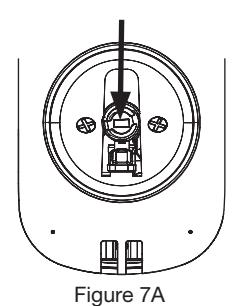
- 7. Install inside escutcheon on inside mounting plate. Note in Fig. 7A the horizontal orientation of the tailpiece as you insert the inside escutcheon (thumb turn should be vertical).
- 8. Install and secure using (3) M4 x 8mm [8-32 x 5/16"] pan head screws through the inside escutcheon into the mounting plate.
IMPORTANT: Before installing the batteries, test the mechanical operation of the lock by using both thumb turn and the key. The movement of the bolt should be smooth and unobstructed. If operation is not smooth, review the previous steps to ensure proper installation.
9. Insert four (4) AA alkaline batteries. Lock responds with a series of beeps and flashes .
Note: Refer to programming instructions prior to completion of step 10.
10. Install battery cover and tighten Phillips head screw.
PROGRAMMING FEATURES - MENUS - KEYS - DEFINITIONS
Outside
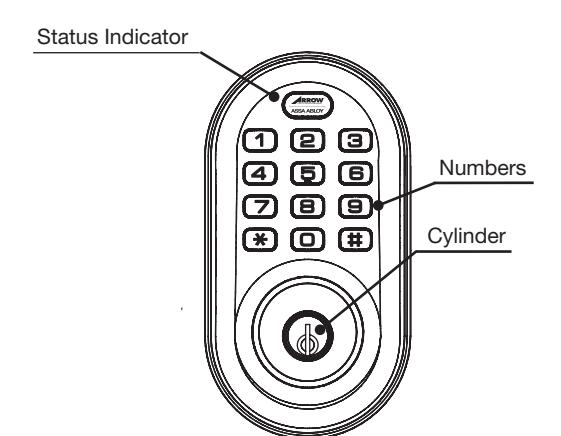
Menu and Icons Used in This Guide
| 1 ~ 0 | Click the indicated number. | MPIN | Enter M aster PIN code (4-8 digits in length). (Factory default: 12345678) |
|---|---|---|---|
| * | Press the Star key on the keypad to Enter or Accept entry. | UPIN | Enter U ser PIN. Can be 4-8 digits in length. |
| # | Press the Pound key on the keypad to enter Menu mode. | UN | User Number (1 - 25) |
Status Indicators
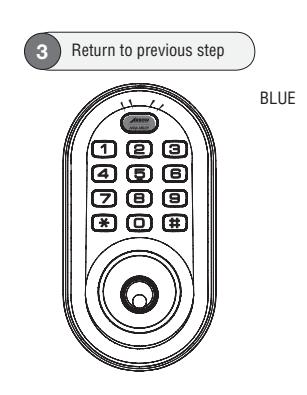
Definitions
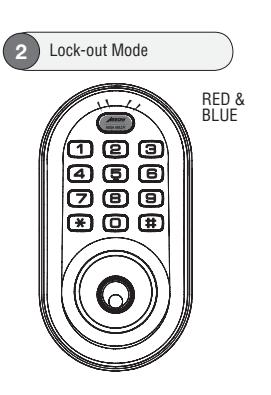
All Code Lockout : This feature is enabled by the Master code. When enabled, it restricts all user PIN code access. When the unit is in Lockout, the Status Indicator flashes RED and BLUE; the keypad flashes as well, when attempting to enter a code.
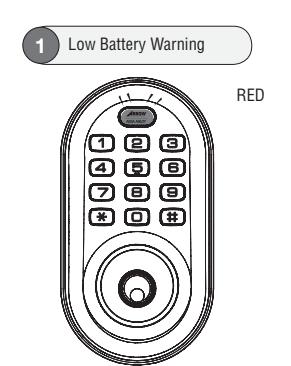
Low Battery : When battery power is low, the Status Indicator will flash RED. If battery power is completely lost, use the key override.
Master PIN Code : The Master PIN code is used for programming and feature settings. The NOTE: The default Master Pin Code must be changed prior to programming the lock. The Master code will also operate the lock.
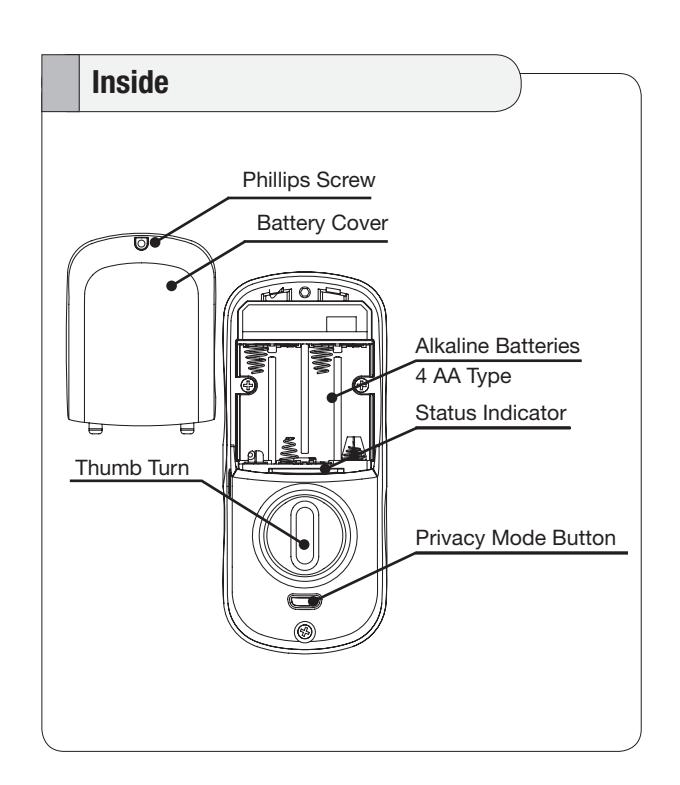
Privacy Mode : This button located under the thumb turn on the inside escutcheon, activates and deactivates the sound and keypad. It is also overridden by mechanically operating the thumb turn or key.
Auto Re-lock Time : After successful code entry and the unit unlocks, it will automatically re-lock after a default of thirty (30) seconds. Re-lock time is adjustable from five (5) to thirty (30) seconds.
One Touch Re-Lock: When the bolt is retracted electronically , activating the keypad will extend the bolt (during Auto Re-Lock duration or when Auto Re-Lock is disabled).
Shutdown Time : The unit will shutdown for a default of sixty (60) seconds and not allow operation after the wrong code entry limit has been met. While the unit is in Shutdown, the Status Indicator will flash RED and BLUE, as well as the keypad. When Shutdown expires, there is a series of beeps.
Silent Mode (Audio) : Choosing Disable (3) in Silent mode shuts off the code confirmation tone playback for use in quiet areas. Silent mode is enabled or disabled through feature programming by the Master code.
Status LED : Located on inside escutcheon.
User PIN Code : The User code operates the lock. Maximum number is 25 user codes.
Wrong Code Entry Limit : After five (5) unsuccessful attempts at entering a valid PIN code the unit will shut down and not allow operation.
Factory Defaults
| Settings | Factory Defaults |
|---|---|
| Master Code* | 12345678 |
| Auto Re-lock | Enabled |
| Audio | Enabled |
| Re-lock Time | 30 Seconds |
| Wrong Code Entry Limit | 5 Times |
| Shutdown Time | 60 Seconds |
* Default Master PIN Code must be changed prior to programming the lock.
Lock Operation
Change Default Master PIN Code Before Programming*
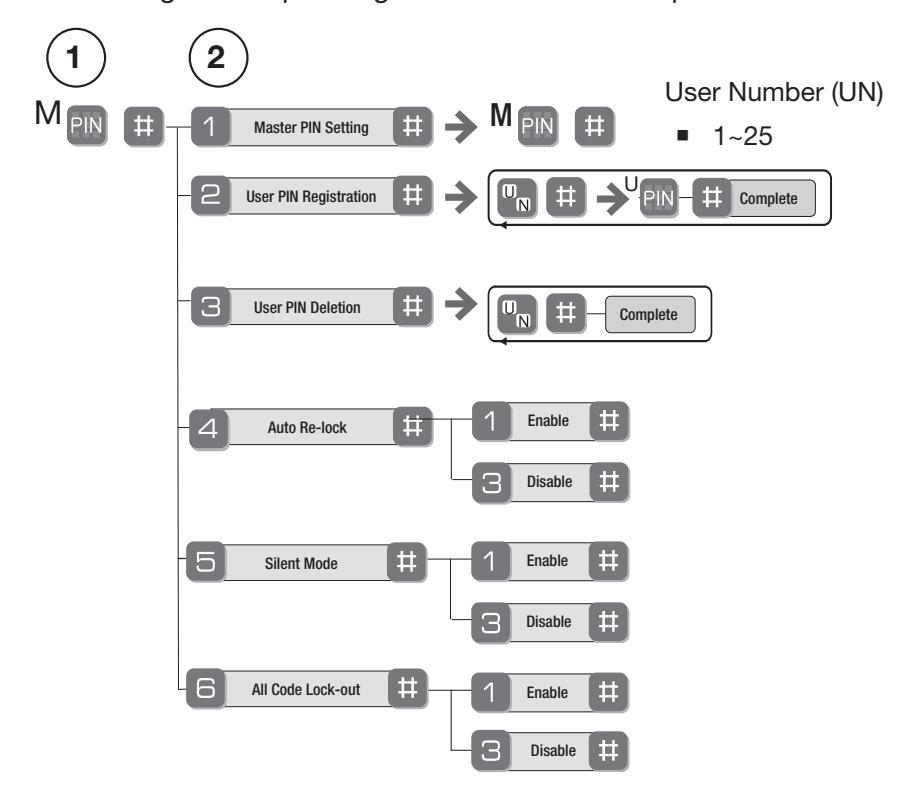
- 1. Enter the 8-digit default Master PIN code (12345678) followed by the key.
- 2. Enter "1" followed by the key.
- 3. Enter new 4-8 digit Master PIN code followed by the key.
* This step is required prior to any other programming of the lock.
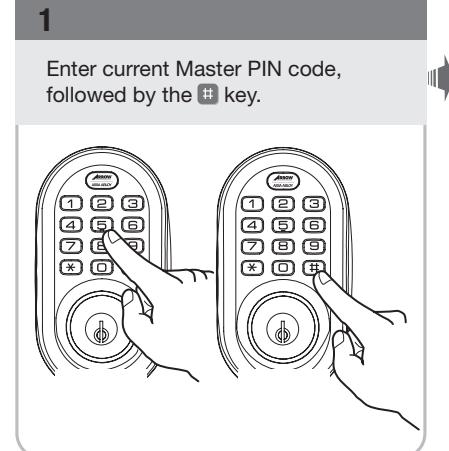
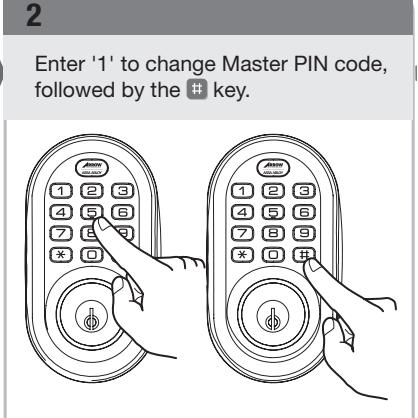
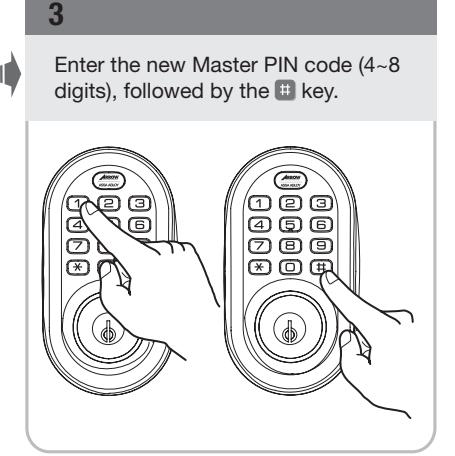
PIN code structure
Maximum number of user codes is 25.
Set Up User PIN Codes
User Codes can only be programmed through the Master Code*.
- 1. Enter the 4-8 digit Master PIN code* followed by the key.
- 2. Enter "2" followed by the key.
- 3. Enter the User number to be registered (1-25) followed by the key.
- 4. Enter a 4-8 digit PIN code for the User number followed by the key.
Note: When registering User codes, the code must be entered with in 20 seconds. If time expires, no codes are registered and the process must be re-started.
* The default Master Code must be changed prior to programming of the lock.
Open Door with PIN Code
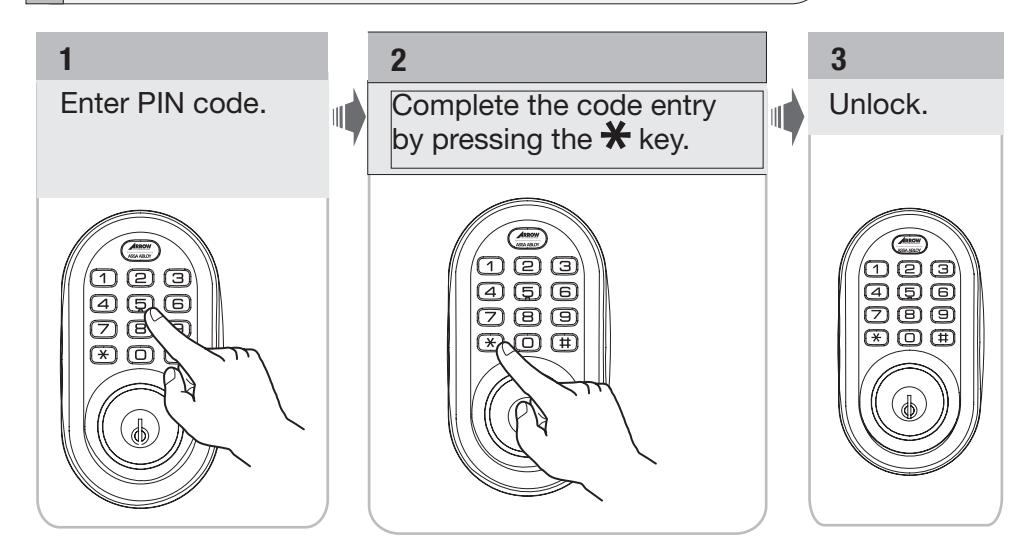
Feature Programming Through Menu Mode Using Master Code
- 1. Enter the 4-8 digit Master PIN code followed by the key.
- 2. Enter digit corresponding to the function to be pevormed followed by the key.
Privacy Mode vs. All Code Lockout Mode
- Lockout is a Menu feature that restricts Pin code access (except Master).
- Privacy mode is set by pressing and holding the button (found below the thumb turn) for a duration of four beeps. This deactivates the keypad and sound, and because it is set from the inside, provides a secure and silent lock for the convenience of the occupant(s).
For more information, see Definitions on page 8.
10
MISCELLANEOUS
|
Return Lock to Programming Defaults
11 |
|
|---|---|
| Hardware Troubleshooting11 | |
|
Programming Troubleshooting
12 |
|
|
How to Replace or Install Cylinder
13 |
|
|
Sample Pin Code Management Sheets
|
14-15 |
Return Lock to Programming Defaults
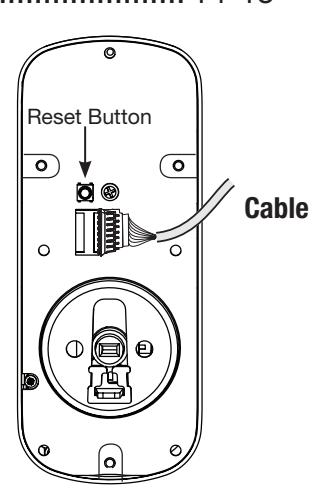
To return the lock to programming defaults:
- 1. Disassemble the lock using pages 5 and 7.
- 2. The reset button is located above the cable connector.
- 3. Hold down the reset button while reinstalling the batteries.
- 4. Reassemble the lock using pages 5 and 7. All programming should now be returned to factory defaults.
TROUBLESHOOTING
Hardware Troubleshooting
Cycle the lock in both the locked and the unlocked positions. If problems are found:
| Symptom | Suggested Action |
|---|---|
| Door is binding | a. Check that door and frame are properly aligned and door is free swinging. |
| b. Check hinges: They should not be loose or have excessive wear on knuckles. | |
| Bolt will not deadlock |
a. Check for sufficient clearance of the bolt within the strike-side jamb. Correct this by increasing
the depth of the pocket for the bolt. |
|
b. Check for misalignment of bolt and/or strike which may be preventing bolt from properly
entering the strike. With the door open, extend and retract the bolt; if it is smooth, check the strike alignment. |
|
| Bolt does not extend or retract smoothly | a. Bolt and strike are misaligned, see above. |
| b. Check the backset of door relative to adjustments already made to bolt. | |
| c. Verify proper door preparation and re-bore holes that are too small or misaligned. |
Arrow Revolution™ locks are automatically handed. On start up, hold down the reset button and wait while the lock tests bolt operation. The default Master Pin Code must be changed before any other programming.
Programming Troubleshooting
| Symptom | Suggested Action |
|---|---|
|
Lock does not respond – door is
open and accessible. |
•
Press each keypad button to see if they respond when pressed. • Check batteries are installed and oriented correctly (polarity) in the battery case. • Check batteries are in good condition; replace batteries if discharged. • Check to see if cable is properly connected and not pinched. |
|
Lock does not respond – door is
locked and inaccessible. |
•
Batteries may be completely discharged. • Use mechanical key to gain entry and replace batteries. |
|
Unit chimes to indicate code accep
tance, but the door will not open. |
•
Check to see if there is another locking device on the door (i.e. bolt). • Check the door gaps for any foreign objects between door and frame. • Check that the cable is firmly connected to the PC board. |
|
Unit operates to allow access, but will
not automatically re-lock. |
•
Check to see if Auto Re-lock Mode is enabled. • Disable Auto Re-lock Mode to lock the door (automatically). • If low battery indicator is lit, change batteries. |
| PIN codes will not register. |
•
PIN codes must consist of 4 to 8 digits to register. • The same PIN code cannot be used for multiple users. • Registration/management of PIN codes is set at the authority of Master. • Contact the Master user • User codes must be entered within 20 seconds or the process will have to be restarted. • The star (*) or pound (#) cannot be used as part of the PIN code. |
|
Upon entering a PIN code and press
ing the star (*) key, the lock gives a series of beeps, flashes red and blue LEDs seven times, and does not unlock. |
•
All Code Lockout Mode is enabled. • Only the Master can enable/disable All Code Lockout Mode. • Contact the Master user. |
|
Upon entering a PIN code and press-
ing the (*) key, there are different tones. |
•
Check to see if lock is set in Lockout Mode. • Setting/managing Lockout Mode is done through Master only. Contact the Master user. |
|
The unit operates, but it makes
no sound. |
•
Select 'Enable' in Silent Mode (this will turn the audio portion of the lock ON). See Definitions for more information. |
|
The unit displays intermittent RED
flashes. |
•
This is the Low Battery indicator alerting that it is time to replace the batteries. Replace all four (4) batteries with new AA Alkaline batteries. |
|
Upon entering a PIN code and press-
ing the star (*) key, the unit responds with a series of beeps and the keypad flashes three times. |
•
The digits entered were incorrect or incomplete. Re-enter the correct code followed by the star key. |
How to Replace or Install Cylinder
-
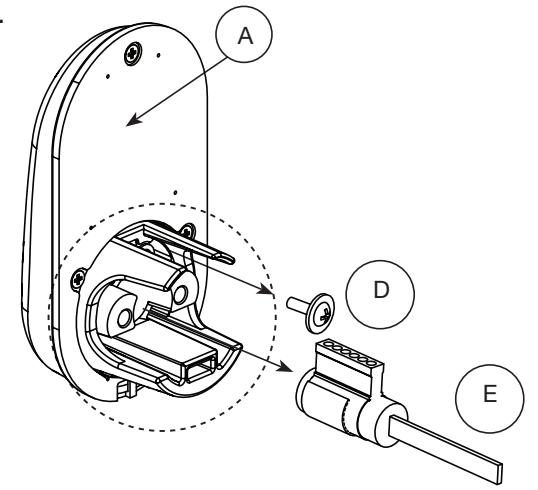
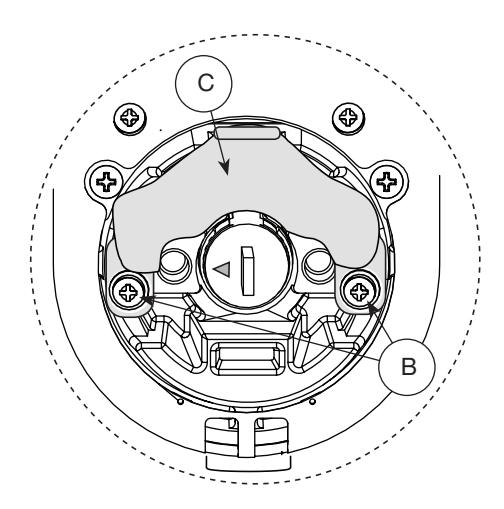
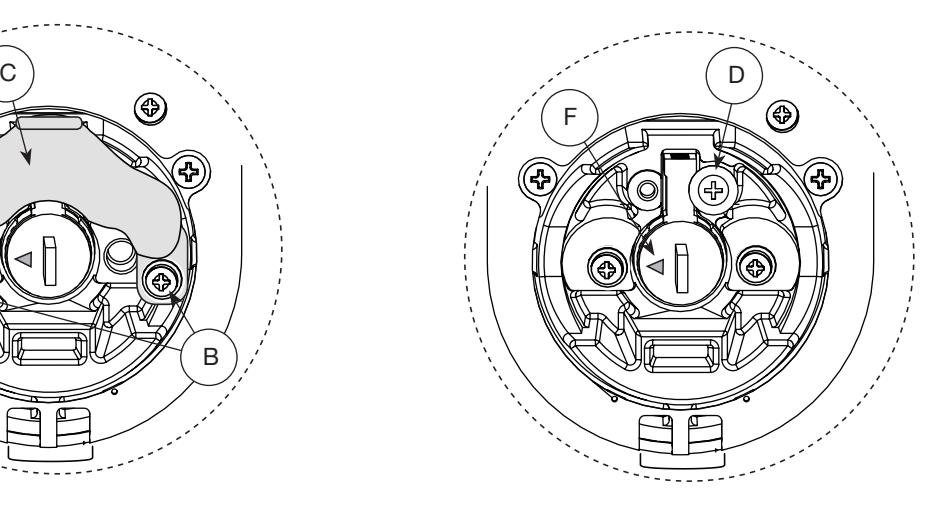
1. Remove cylinder:
- A. Remove outside escutcheon from door.
- B. Remove two screws holding plastic guide in place.
- C. Remove plastic guide.
- D. Remove screw with washer holding cylinder in place (visible after plastic guide is removed).
- E. Remove cylinder by pulling towards the door side of escutcheon.
- 2. Slide new cylinder into sleeve.
Important : Make sure the key cut side of key lines up facing towards the top of the lock.
Also make sure the mark on the cylinder faces the bolt (F).
If the cylinder is inserted incorrectly, the lock will reassemble and might appear to properly work; however, when the deadboat is activated, it will fail to move.
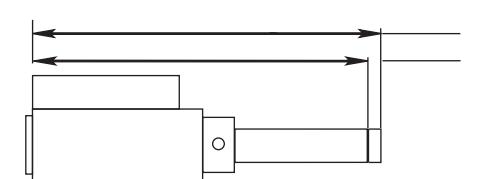
2-5/8" (66.5) For 6 pin cylinders, 1-3/8" thick doors 2-7/8" (73) For 6 pin cylinders, 1-3/4" thick doors ONLY
1-3/16" (30) For 6 pin cylinders, 1-3/8" thick doors 1-7/16" (36.5) For 6 pin cylinders, 1-3/4" thick doors ONLY
CAUTION: The cylinders furnished with for use in 1-3/8" doors have a tailpiece that is 1/4" shorter than the standard cylinders that are furnished for 1-3/4" doors. Trying to install a standard cylinder in 1-3/8" will DAMAGE the lock body.
PIN CODE MANAGEMENT SAMPLE SHEETS
| PIN Code Management - Up to 25 Users | |||||||
|---|---|---|---|---|---|---|---|
| Location: | Door Number: | User | User Name | User # | PIN Code | ||
| User | User Name |
User #
PIN Code |
|||||
| Master | N/A | User 13 | |||||
| User 1 | User 14 | ||||||
| User 2 | User 15 | ||||||
| User 3 | User 16 | ||||||
| User 4 | User 17 | ||||||
| User 5 | User 18 | ||||||
| User 6 | User 19 | ||||||
| User 7 | User 20 | ||||||
| User 8 | User 21 | ||||||
| User 9 | User 22 | ||||||
| User 10 | User 23 | ||||||
| User 11 | User 24 | ||||||
| User 12 | User 25 | ||||||
| ONLINE LITERATURE AND TEMPLATES |
|
For the latest information on Arrow products visit our website
www.arrowlock.com |
|
Arrow Lock and Door Hardware
3625 Allegheny Drive Salem, VA 24153 • Phone: 800-839-3157 • customer-service@assaabloyrss.com |
|
Arrow® is a registered trademark of Arrow Manufacturing Company, an ASSA ABLOY Group company.
Revolution™ is a trademark of Arrow Manufacturing Company, an ASSA ABLOY Group company. Other products or brand names may be trademarks or registered trademarks of their respective owners and are mentioned for reference purposes only. These materials are protected under U.S. copyright laws. All contents current at time of publication. |
Arrow Manufacturing Company, an ASSA ABLOY Group company, reserves the right to change availability of any item in this catalog, its design, construction, and/or its materials. Copyright 2011, Arrow Manufacturing Company, an ASSA ABLOY Group company. All rights reserved. Reproduction in whole or in part without the express written permission of Arrow Manufacturing Company is prohibited.