Adams Rite 3600, 8500, 8600 Exit Devices Owners Manual
Open the original PDF document
View PDF

3600/8500/8600 CVR Exit Device Owner's Manual
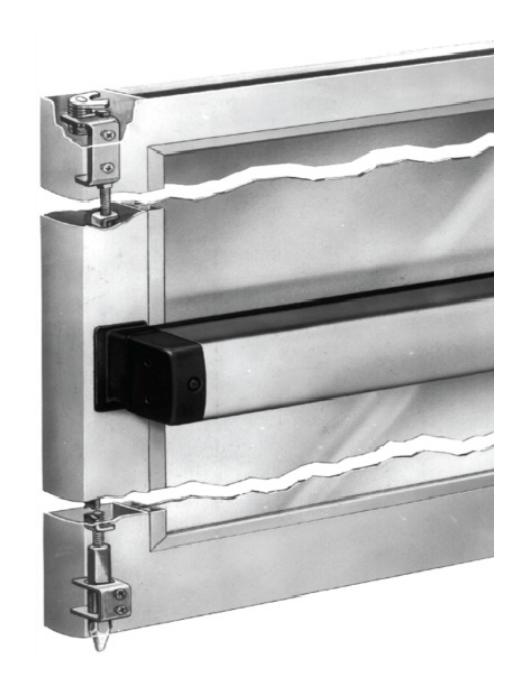
Table of Contents
| What This Owner's Manual Can Do For You | . 4 |
|---|---|
| Owner's Record | . 4 |
| Warranty | . 4 |
| Exit Device Operation | . 5 |
| Dogging the Push Bar | . 5 |
| Removing or Replacing the End Caps | . 6 |
| Positioning the Top Strike | . 7 |
| Operating the Top Actuator | . 8 |
| Maintenance | . 9 |
| Troubleshooting | . 9 |
What This Owner's Manual Can Do For You
- It shows exactly how to operate your exit device.
- It shows you simple things to do and check before you call for service, so you may save the cost of an unnecessary service call.
- It contains your Adams Rite Limited Warranty and what steps to take for service.
Owner's Record
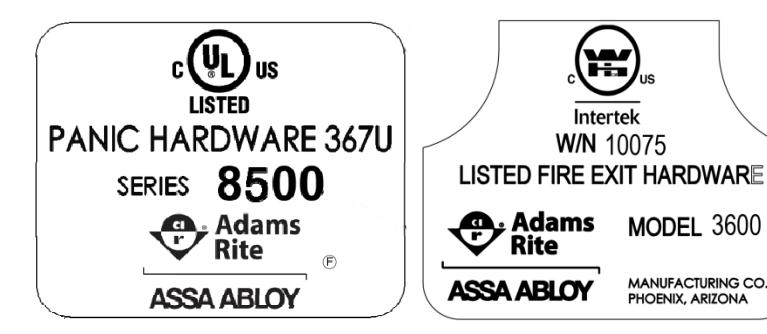
The model number is located on the hinge stile mounting base as shown below. Refer to this number and the additional information below when you call upon your local Adams Rite dealer regarding this product.
| Model Number | 3600/8500/8600 |
|---|---|
| Finish | |
| Door Size | |
| Hardware Supplier | |
| Date Installed |
Warranty
For warranty information:
http://www.adamsrite.com/site/adamsritecom/About/Warranty
Exit Device Operation
The Adams Rite Concealed Vertical Rod (CVR) devices for metal and glass doors provide for life safety and security by use of a rotating top bolt and post type header strike. The bottom bolt is a hardened steel, with a conical tip to center in the simple drilled strike required in the threshold.
When the push bar is depressed, the top and bottom rods retract to release the door. Upon closing, the actuator deadlatches around the top strike post. Action of the top bolt deadlocks the bottom bolt as well. Exterior entrance can be gained by key or with the extensive line of entry trim available from Adams Rite.
NOTE: The following is not applicable to 3000 Series (fire rated devices.
Dogging the Push Bar
Dogging the push bar disables the latching function, making the door a simple push/pull operation.
-
1. COMPLETE the following to dog the device.
- a. DEPRESS the push bar completely and HOLD.
CAUTION
Over-rotation of the key past the prescribed ¼ turn can cause damage to the Exit Device.
b. TURN the hex key 1/4 turn clockwise.
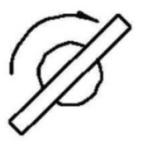
2. To release, TURN the hex key 1/4 turn counterclockwise.
Removing or Replacing the End Caps
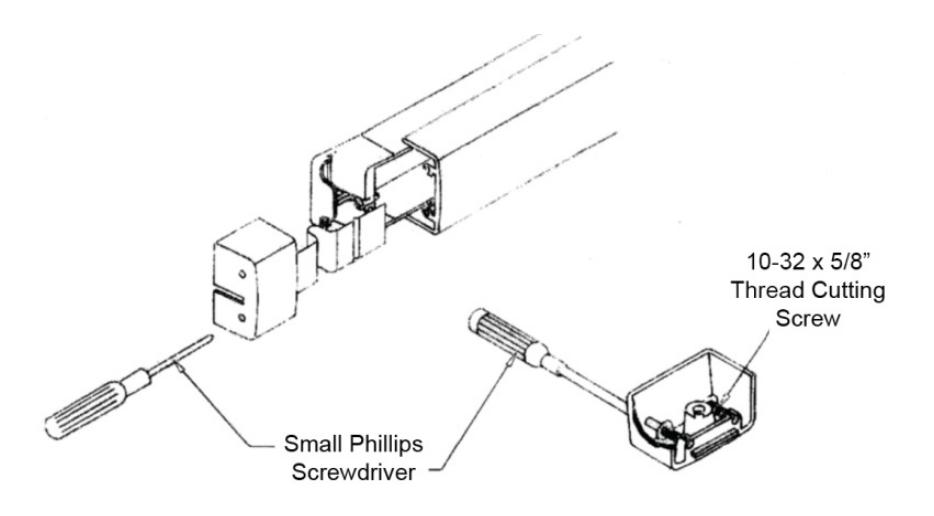
NOTE: To facilitate maintenance procedures, the two end caps can be removed.
-
1. PERFORM the following to remove the end caps.
- a. INSERT a small Phillips tip screwdriver through the holes located in the end caps and UNSCREW the concealed attachment screws.
- b. REMOVE the end caps and SET aside.
-
2. PERFORM the following to replace the end caps.
- a. LOCATE the end caps on the push bar.
NOTE: When replacing the end caps, the screws must be snapped in the screw clips on the inside of the end caps.
b. ATTACH the end caps using a small Phillips tip screwdriver through the holes located in the end caps and TIGHTEN the attachment screws hand tight only.
Positioning the Top Strike
CAUTION
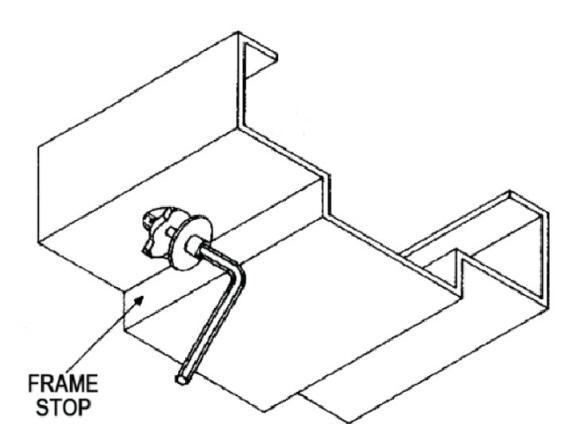
A proper frame stop must be used in conjunction with the door/exit device or damage may occur.
NOTE: The top post strike must be properly located and tightened securely for the device to properly operate.
-
1. PERFORM the following to position the top post strike.
- a. POSITION the strike assembly so that it is centered on the hole cutout.
- b. TIGHTEN with 5/32" [3.97 mm] Allen wrench.
- c. ENSURE proper engagement with top actuator of exit device.
- d. ADJUST, if necessary.
Operating the Top Actuator
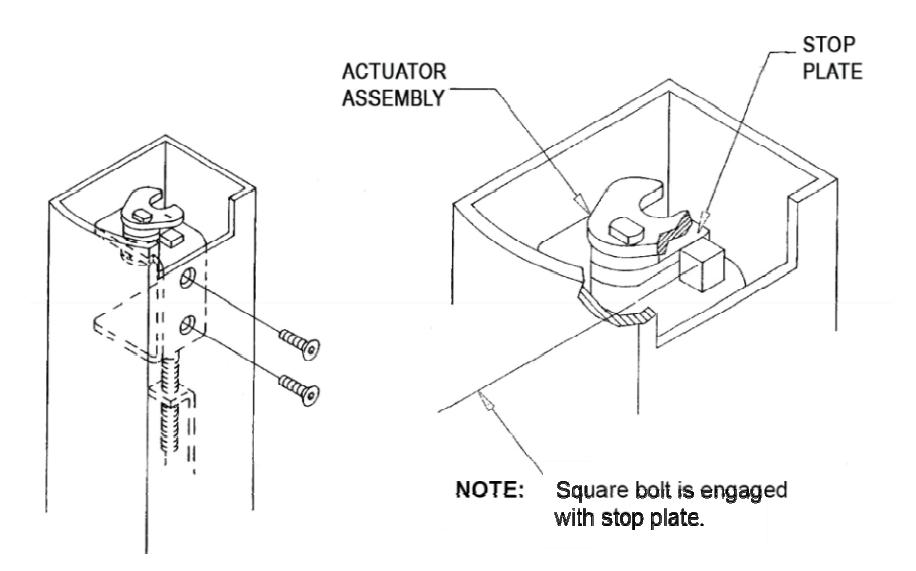
NOTE: Proper operation of this device relies heavily on the correct adjustment of the top actuator. The amount of travel of the bottom bolt is also governed by this adjustment..
1. With actuator assembly in locked position and push bar released, ENSURE end of square bolt is engaged with stop plate as shown in figure below.
-
2. PERFORM the following for fine adjustment.
- a. REMOVE the two screw fasteners to take off actuator assembly.
- b. ADJUST bolt up (counterclockwise) or down (clockwise) to conform to the illustration above, and ENSURE square bolt is flush with top of stop plate.
- c. REINSTALL actuator assembly.
- d. TIGHTEN the two screw fasteners securely.
Maintenance
Exit devices are designed for life safety first. Adams Rite devices are cycle tested in excess of one million operations, both as prototypes during design and as quality control samples periodically during production. Atmospheric and other localized conditions vary greatly, but extremely dirty, salty or abrasive situations could require service attention such as lubrication of moving parts from time to time to assure reliability. Service personnel should be reminded that life safety is the goal.
Other maintenance that might be required specifically for a Rim device includes:
- Tightening of top strike screws
- Ensuring debris is clear from the bottom strike cutout
- Tightening of push bar mounting screws
Troubleshooting
| Symptom | Possible Causes | Corrective Action | |
|---|---|---|---|
|
Push bar is not fully
depressed. |
Review dogging
procedures |
||
| Device will not dog. |
Dogging assembly is
damaged. |
Remove and inspect;
and replace, if necessary. |
|
| Device is dogged. |
Undog device per
dogging procedures. |
||
|
Closer is not set at sufficient
speed. |
Make appropriate
adjustments. |
||
|
Device is not
latching. |
Top strike post is improperly
aligned. |
Strike must fully engage
top actuator. It must be far enough toward door to fully rotate top bolt. |
|
|
No or improper cutout for
bottom bolt. |
Hole should be 1/2" in
diameter located directly below bottom bolt with the door in the fully closed position. The hole should be free of any debris. |
||
| Symptom | Possible Causes | Corrective Action | |
|---|---|---|---|
|
Bottom bolt dragging
or is hitting |
Top actuator is out of
adjustment. |
Refer to the "Operating
the Top Actuator" section for instructions on top actuator adjustment. |
|
| threshold. |
Bottom bolt is out of
adjustment |
Remove bottom bolt
guide. Rotate bolt for desired height. |
|
| Remove bottom bolt | |||
| Excessive rod noise. |
Bottom bolt guide bushing
missing. |
guide to ensure bushing
is in place and not damaged. Bushing should be in the down position. |
|
|
Spider silencers missing
from top or bottom rods. |
Spiders can be ordered
from local supplier. Taller doors will require additional spiders. |
||
| Once the rods are | |||
|
Need to make
frequent rod adjustments. |
initially adjusted to the
proper length the two #6- 32S1/2 cap screws are pierced through the rod sleeves as shown below. |
||
|
Rod piercing cap screw not
set properly. |
|||
|
When these two screws
are set it puts the interior rod and the sleeve in sheer maintaining the adjustment. If the screw is not through the sleeve, the rods will continue to slip out of adjustment. Ensure the screws are set in the prescribed manner. |
|||
Adams Rite
10027 S. 51st St. Ste 102 Phoenix, AZ 85044
Tel: 1-800-872-3267
Mon-Fri: 6:00am - 4:00pm PDT
Fax: 1-800-232-7329
www.adamsrite.com