ASSA ABLOY ACCENTRA 7160(F) Series CVR Exit Device Installation Instructions_80-9470-0060-000
Open the original PDF document
View PDFConcealed Vertical Rod Exit Devices
Installation Instructions
This product can expose you to lead which is known to the state of California to cause cancer and birth defects or other reproductive harm. For more information go to www.P65warnings.ca.gov.
WARNING
WARNING
Attention Installer: Any retrofit or other field modification to a fire rated opening can potentially impact the fire rating of the opening, and ASSA ABLOY makes no representations or warranties concerning what such impact may be in any specific situation. When retrofitting any portion of an existing fire-rated opening, or specifying and installing a new fire-rated opening, please consult with a code specialist or local code official (Authority Having Jurisdiction) to ensure compliance with all applicable codes and ratings.

Concealed Vertical Rod Exit Devices Installation Instructions
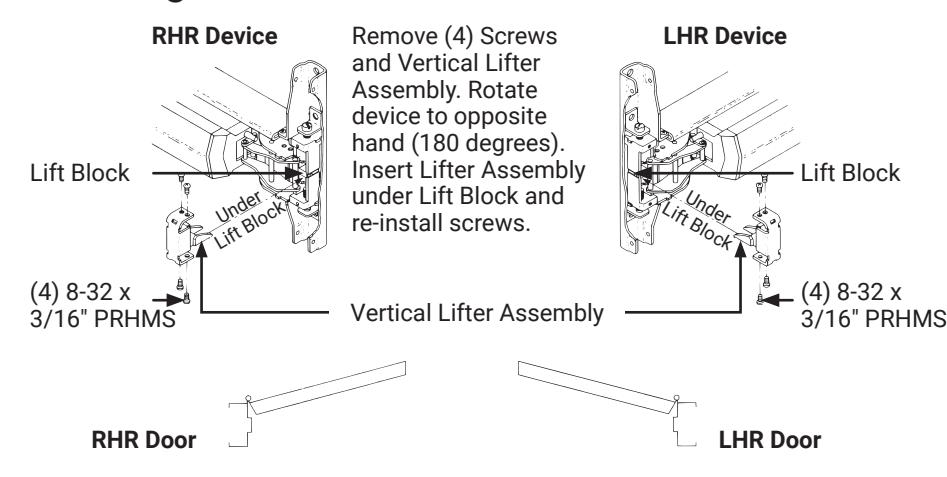
To Change Hand Maintenance
- 1. Periodically remove covers and coat mechanisms with a silicone base lubricant. This is particularly required in corrosive environments for proper product function.
- 2. Check mounting fasteners periodically. Retighten if found loose. Apply screw locking compound (available at automotive part stores) or change part fasteners if screws continue to back up.
- 3. Periodic checks (and adjustments) of strikes are required to compensate for changes in the opening (e.g. door sagging).
Check Before Starting Unreinforced Doors or Frames
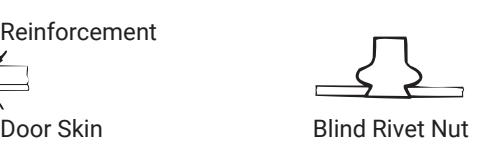
Doors and Frames with walls having a structural thickness (metal skin plus reinforcement or solid hardwood) to engage less than (3) full screw threads are considered unreinforced.
Unreinforced Doors: Use SNB (sex nuts and bolts) or Blind Rivet Nuts.
Unreinforced Frames: Use Blind Rivet Nuts. Recommended fasteners for unreinforced openings are not necessarily supplied by ASSA ABLOY ACCENTRA.
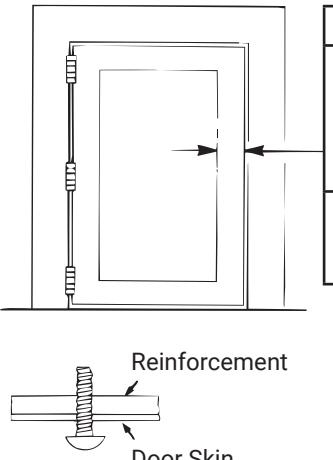
Min. Door Stile 4-1/2" (114mm)
Door and frame must meet structural and dimensional specifications on exit device template(s) for door and frame preparation.
Device must seat flush on door surface. To clear raised molding, consult the factory.
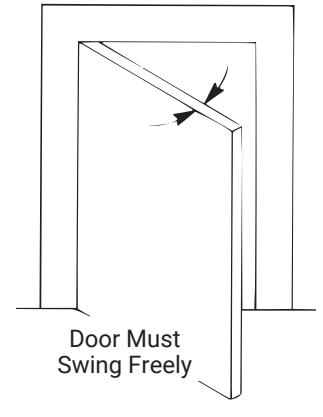

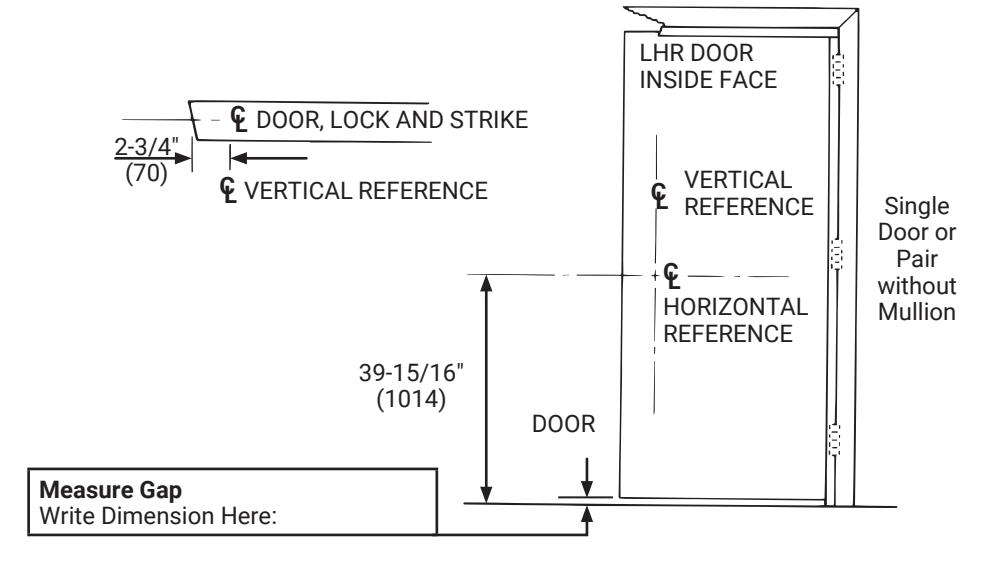
Locate and Mark Horizontal and Vertical Reference Centerlines as shown.
LHR door shown preparation is typical for both door hands.
LBR - For Less Bottom Rod Devices, omit bottom latch and strike installation steps and see separate instructions for top latch and strike.
NOTE: Less Bottom Rod (LBR) Devices should not be used where security is a primary concern.
NOTE: Bottom Bolt will retract to 1/8" (3mm) above Floor Strike. Floor covering in the door path must be l aid out accordingly.
80-9470-0060-000 04/24
1-855-557-5078 Ext. 2 • www.accentra-assaabloy.com
Concealed Vertical Rod Exit Devices Installation Instructions
ACCENTRA ASSA ABLOY
2. Prepare Door, Frame & Sill
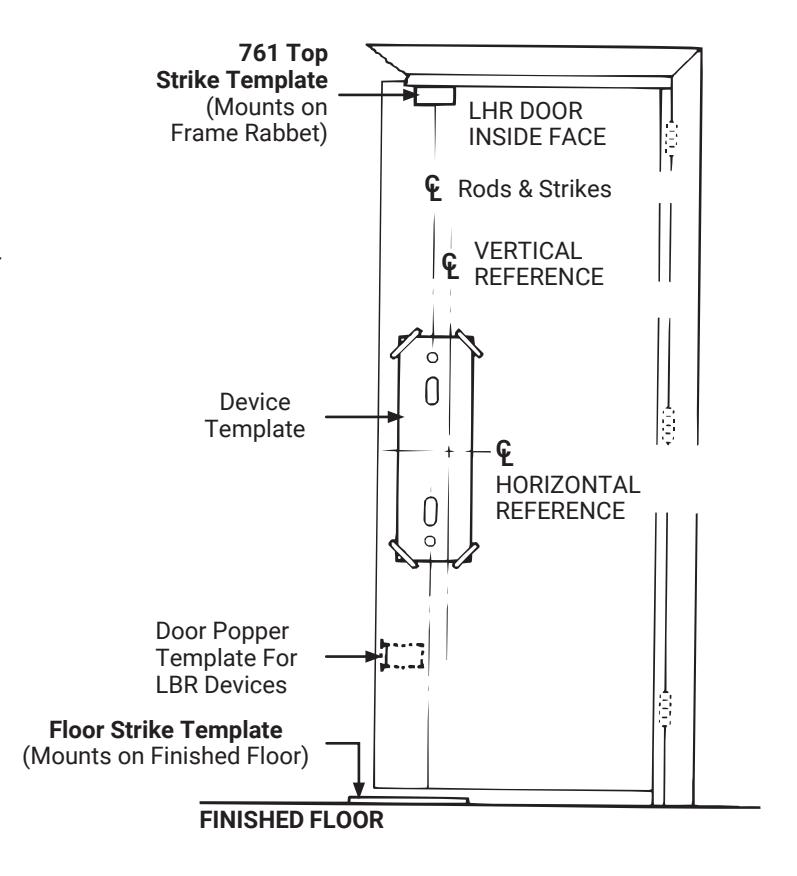
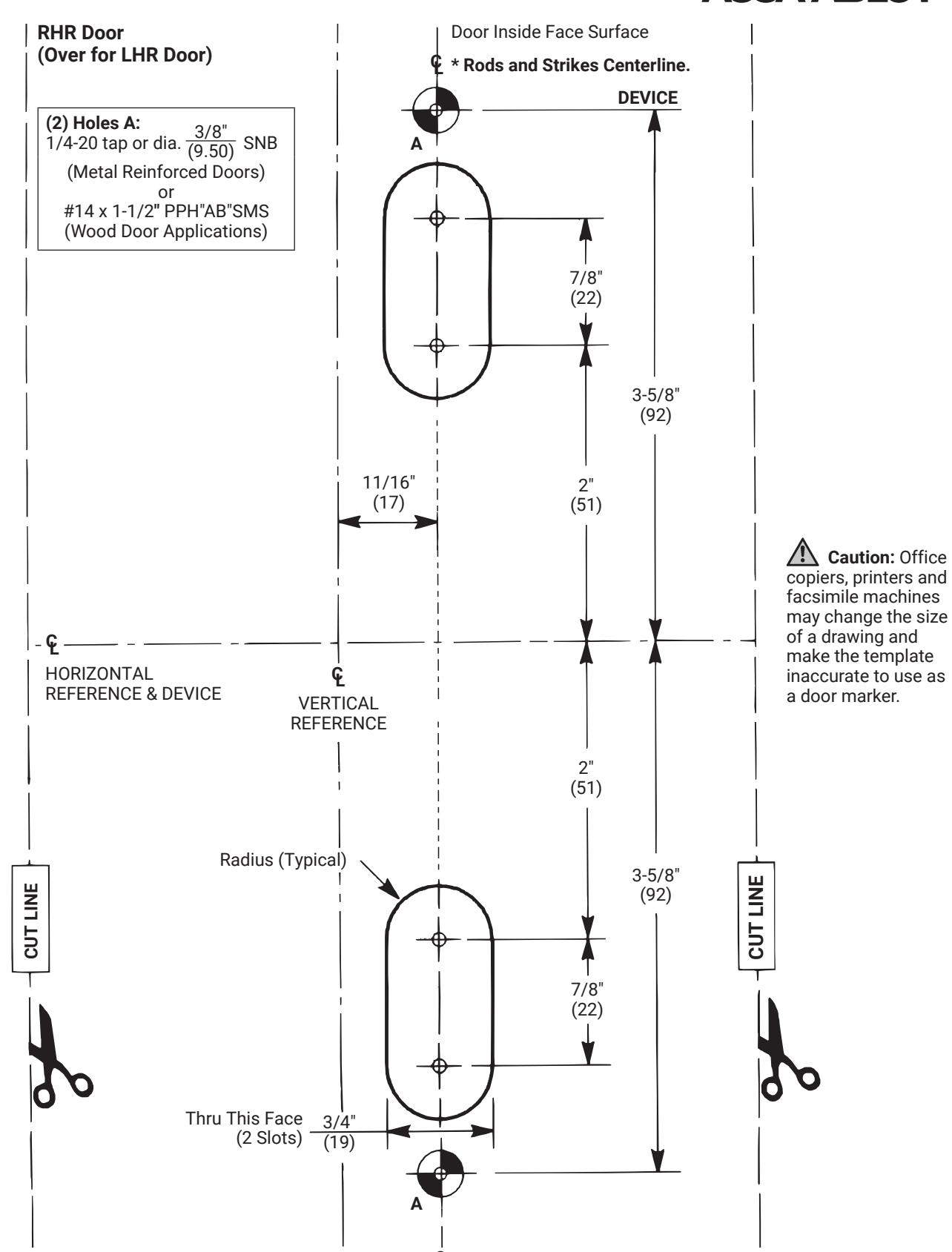
- 1. Locate "Device Template" aligning VERTICAL REFERENCE and HORIZONTAL REFERENCE lines on door and template. Tape template to door face.
- 2. Extend centerline of Rod and Strikes from "Device Template" to door top and bottom, on door face.
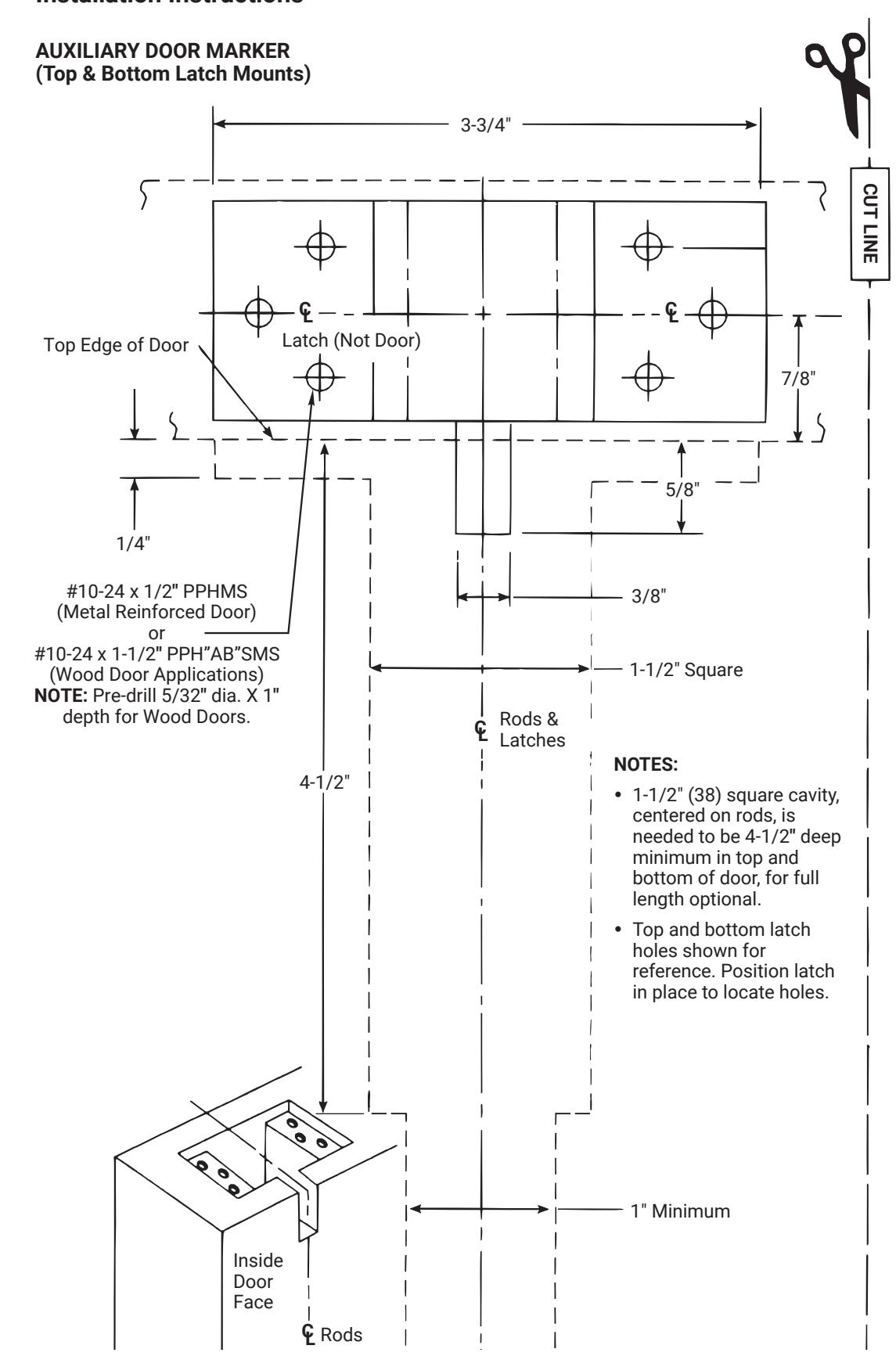
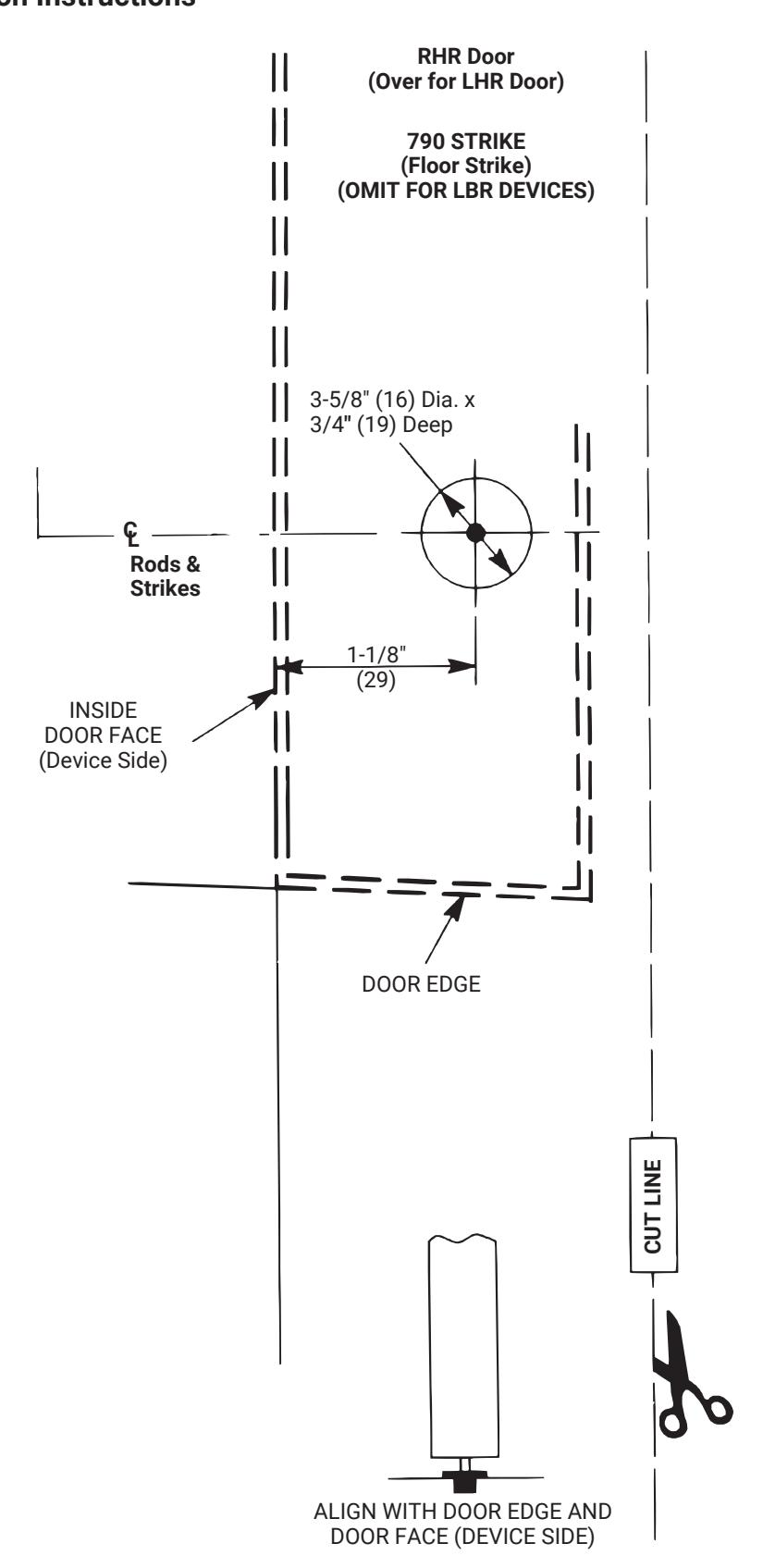
- Locate "Top Strike" and "Floor Strike" templates, aligned on centerline of Rods and Strikes on door. Tape templates in place. NOTE: An auxiliary door marker is included to verify correct door preparation. Reinforced doors and frames, with factory made cutouts, are recommended.
- 4. Locate and tape Trim Template to door. (See instructions packed with Trim.)
- 5. Spot and prepare holes:
Device Latch Assembly:
Each (2) 1/4-20 Machine Screws* or (2) 3/8" (10) dia Sex Nuts & Bolts (*) Metal reinforced door only.
Each (2) #14 x 1-1/2" PPH"AB"SMS** (**) Wood Door Applications
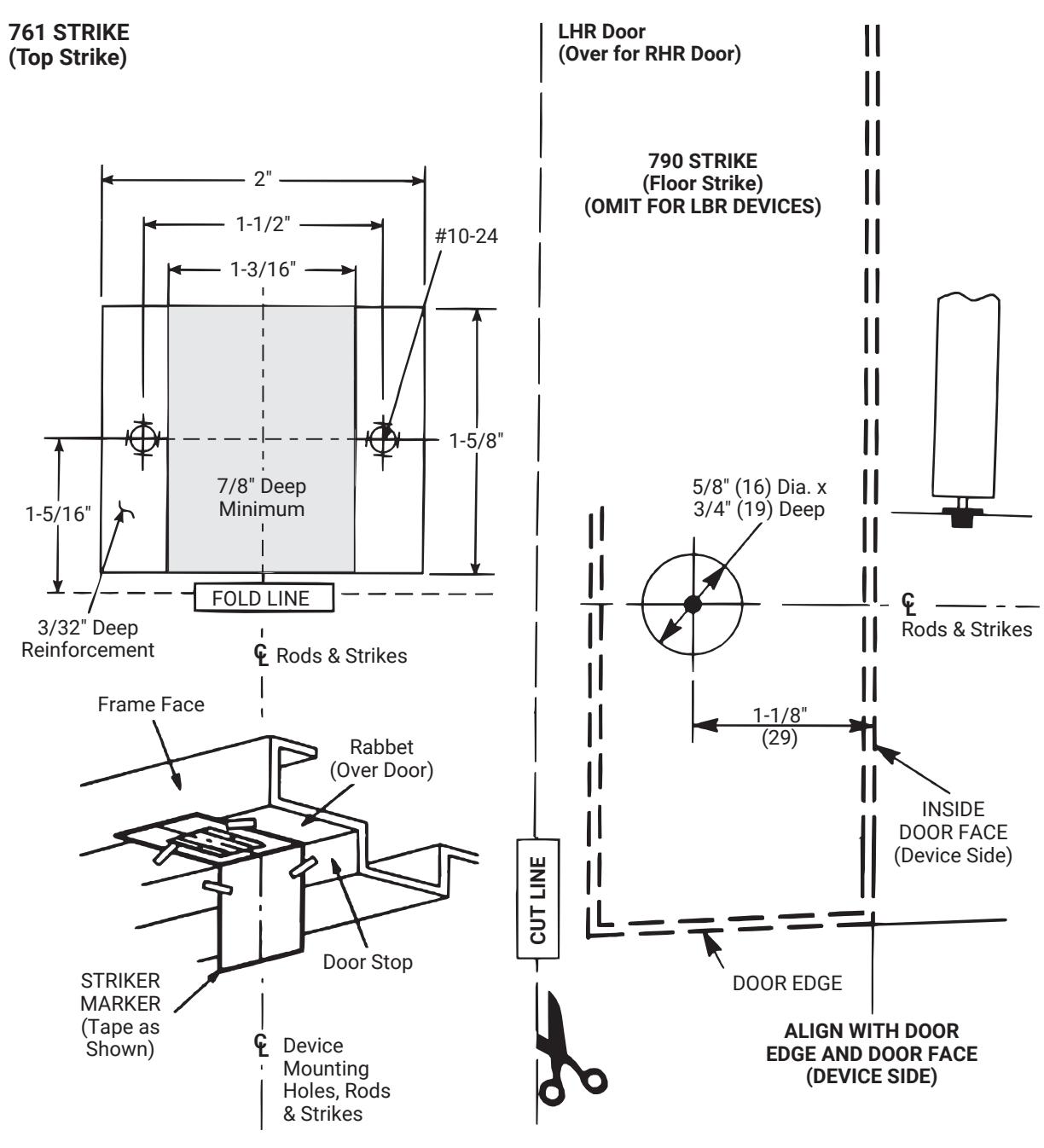
Top Strike: (2) 10-32 Machine Screws;
Bottom Strike: 5/8" (16) dia x 3/4 (19) deep hole
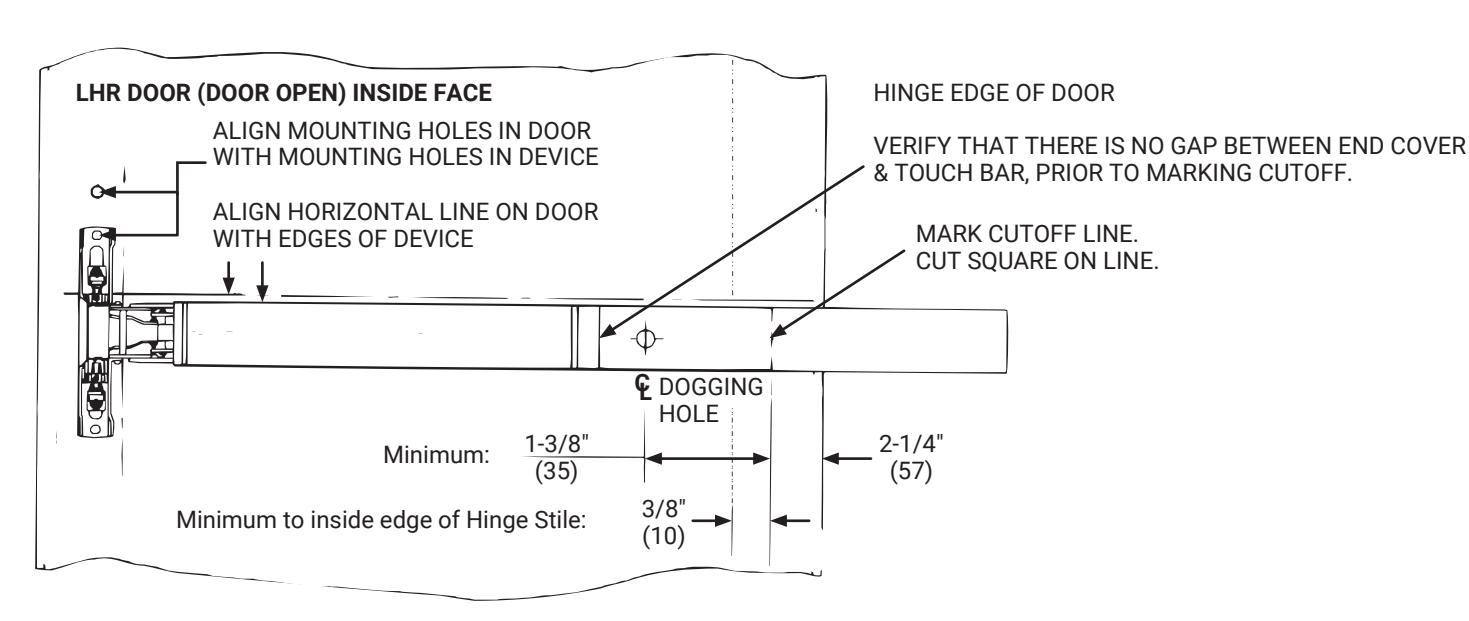
3. Size Device
Device must be field cut to size, unless standard opening and device are 36" (0.91mm)
80-9470-0060-000 04/24
Experience a safer and more open world
ACCENTRA
7160(F) Series Concealed Vertical Rod Exit Devices Installation Instructions
ASSA ABLOY
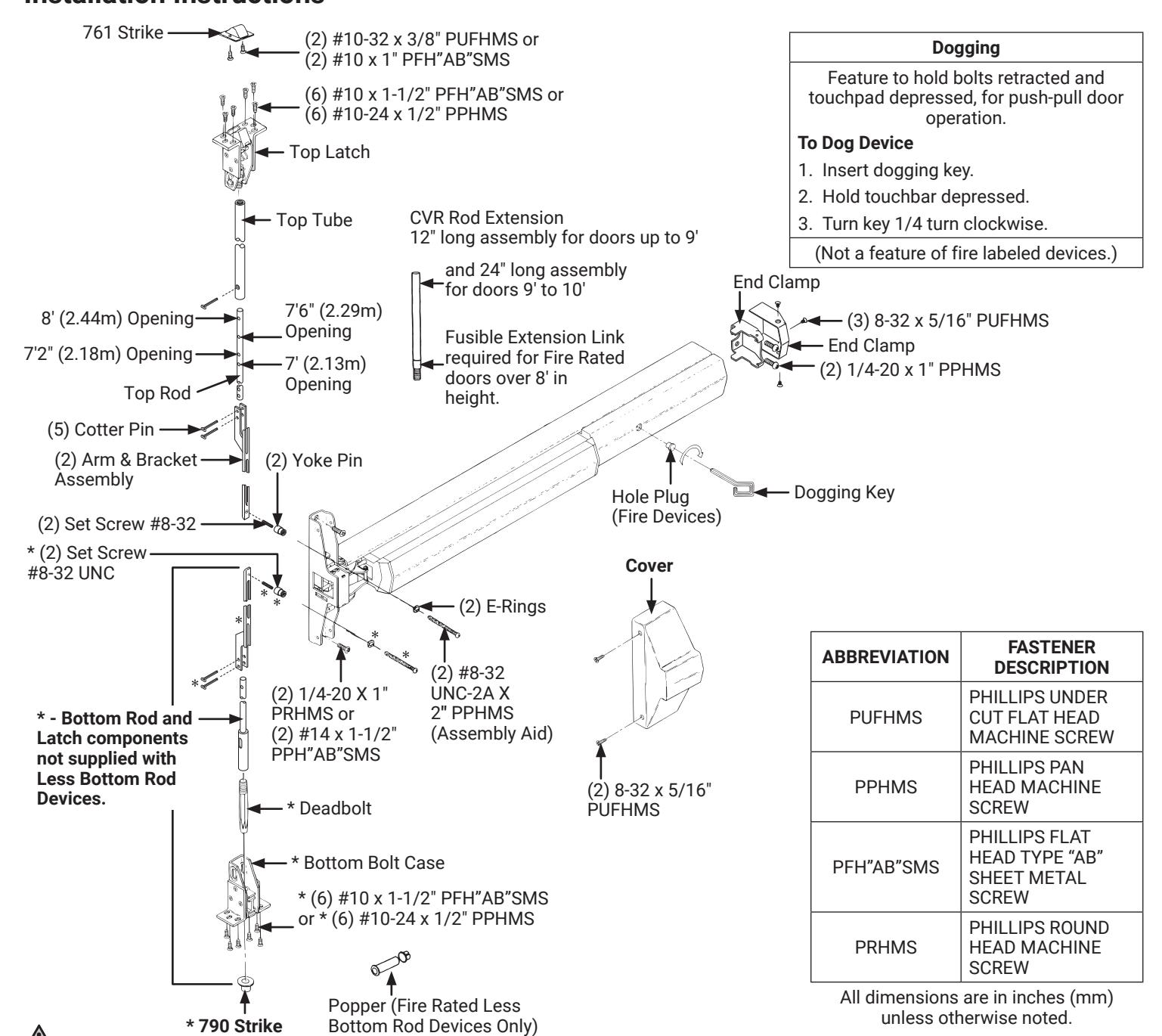
4. Rod Assembly and Preliminary Adjustment
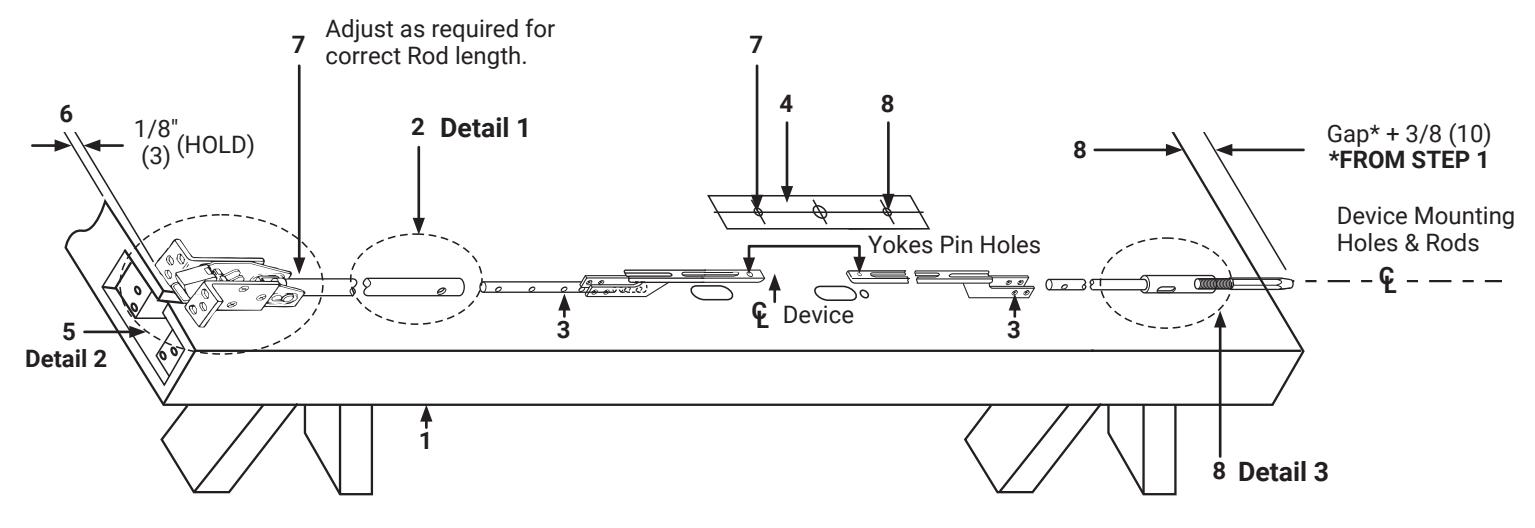
- 1. Remove door from opening. Set flat, device side up. (Do not hang door until Step 8 of device installation sheet).
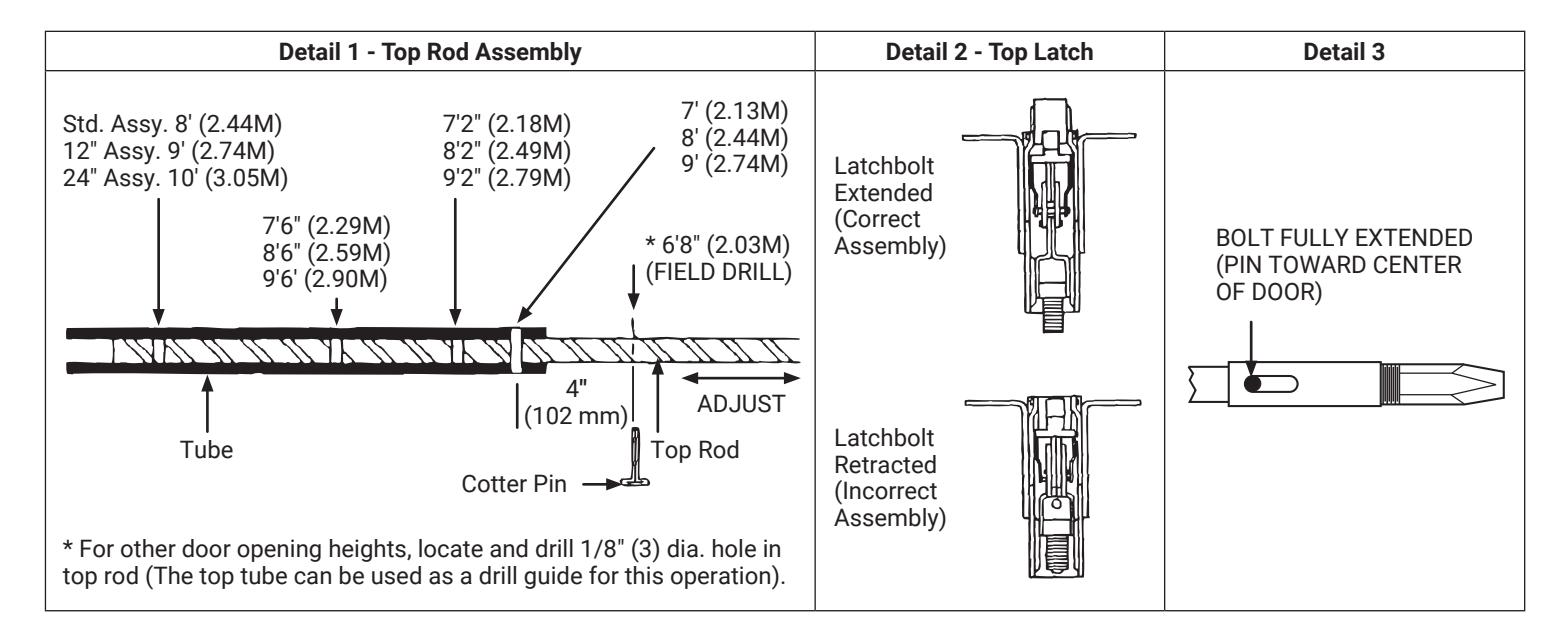
- Slide Top Tube over Top Rod and attach with one cotter pin (For predrilled hole locations in Top Rod Assembly, See Detail 1 ). For doors between 8' and 9' a 12" rod extension assembly must be threaded into the top tube. For doors between 9' and 10' a 24" rod extension assembly must be threaded into the top tube.
- 3. Connect Top and Bottom Rods to Arm/Bracket Assemblies (2 cotter pins each).
- 4. Align Rod Setup Gauge over device Cutouts and Centerlines. Tape Gauge to door face.
- 5. Connect Top Latch to Rod Assembly.
- Set Upper Latch and Rod Assembly in place on the door surface (1/8" below upper edge of door). Latch bolt must be extended (See Detail 2).
- Align Yoke Pin holes in Arm and Bracket Assembly with Alignment Hole in Rod Setup Gauge. Adjust Top Latch and Rod Assembly for proper alignment. Latchbolt must be extended. (See Detail 2 ).
- 8. Thread Bottom Bolt into Bottom Rod Assembly. Set Bottom Bolt Rod Assembly in place on door. Align Yoke Pin Hole in the Bottom Arm and Bracket Assembly with Alignment Hole in Rod Setup Gauge. Adjust Bottom Bolt until it protrudes 3/8"(10) + the gap from Step 1, past the bottom edge of door. Make sure the Bottom Bolt is fully extended (See Detail 3 ).
Concealed Vertical Rod Exit Devices Installation Instructions
5. Install Rods
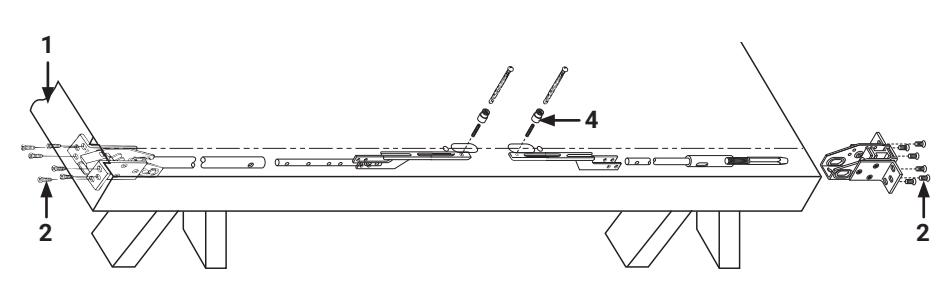
- 1. Slide Rod Assemblies into door.
- 2. Attach Top Latch and Bottom Bolt Case with (12) #10-24 X 1/2" PFHMS (Metal Door) or (12) #10 X 1-1/2" PFH"AB"SMS (Wood Door). NOTE: Pre-drill 5/32" dia. X 1" depth for Wood Doors.
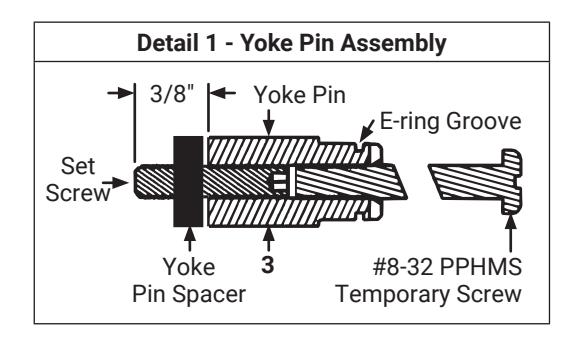
- 3. Thread Set Screw into Yoke Pins (Insert With Hex Socket End Inside Pin). Thread #8-32 X 2" PPHMS Screws into slotted end of Yoke Pins, until seated to Hex Head Set Screw. (See Detail 1.) NOTE: For Wood Door with Metal Edge use optional Yoke Pin Spacer (See Detail 1).
- 4. Install (2) Yoke Pin Assemblies into Arm and Bracket Assemblies.
6. Install Device
- 1. Mount Trim when required per installation instruction sheet provided with trim pack.
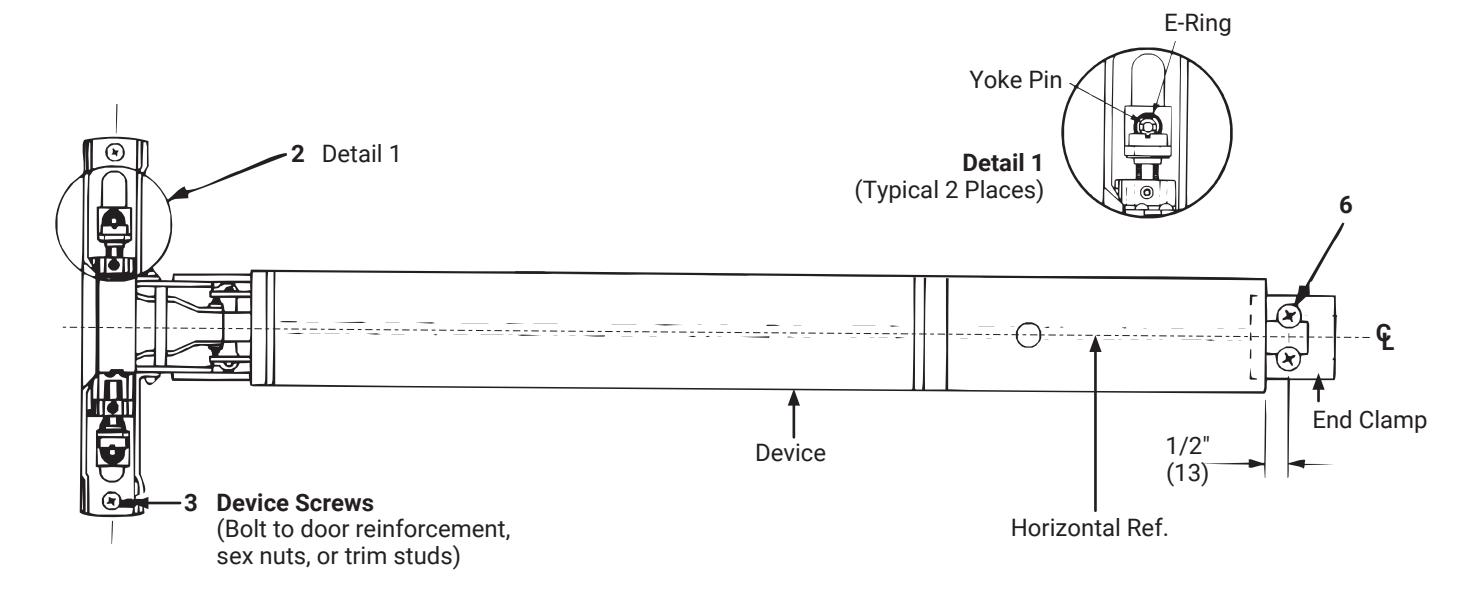
- 2. Seat device in place using the Temporary Screws from Step 5 to position the Yoke Pins to the Latch Head. Install E-Ring into Yoke Pin Grooves. (see Detail 1).
- 3. Fasten Device Latch Head using (2) 1/4-20 PPHMS or 3/8" (10) dia. SNB (Metal Door) or #14 X 1-1/2" PPH"AB"SMS (Wood Door).
- 4. Remove Temporary Screws. NOTE: Be certain to tighten Yoke Pins after removal of Temporary Screws.
- 5. Center end of device on horizontal reference line of door. using the End Clamp as a template, locate the end clamp mounting holes.
- 6. Prepare end clamp holes and mount End Clamp using (2) 1/4- 20 PPHMS or 3/8" (10) dia. SNB (Metal Door) or #14 X 1-1/2" PPH"AB"SMS (Wood Door).

7. Install Strikes
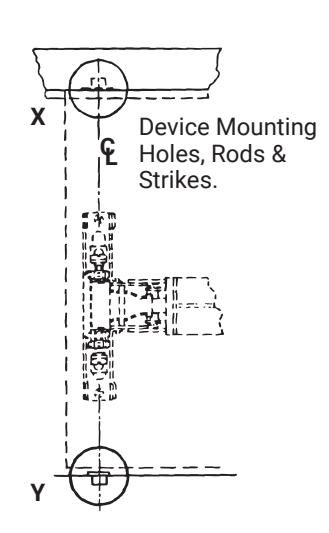
Detail X (Upper Strike)
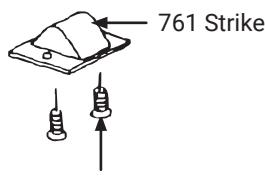
(2) #10-32 x 3/8" PFHUMS (Metal Frame) 81-0012-0558-036 or (2) #10 x 1" PFH"AB"SMS (Wood Frame) 81-3111-0520-036 ( NOTE: Pre-drill 5/32" Dia. x 1" Depth.)
790 Strike (Press In Place)
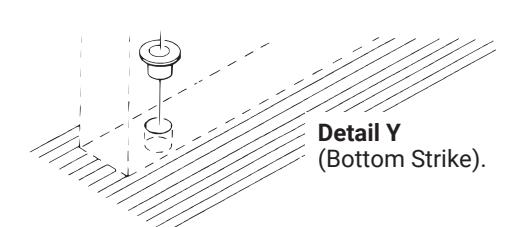
NOTE: Bottom Bolt will retract to 1/8" (3mm) above Floor Strike. Floor covering in the door path must be laid out accordingly.
8. Complete Installation
1. Rehang the door plumb and true to the opening. Door prep must not cause bolt to be pre-loaded.
NOTE: Rods should move freely inside door. Bolts extend automatically and should deadlock when door closes and latch trigger contacts frame stop. Top bolt should retract flat. Bottom bolt should travel 1/2" and engage 3/8" into strike in down position, without dragging on floor surface in up position.
Test device action by touchbar, by trim, and by dogging. Adjust as needed.
-
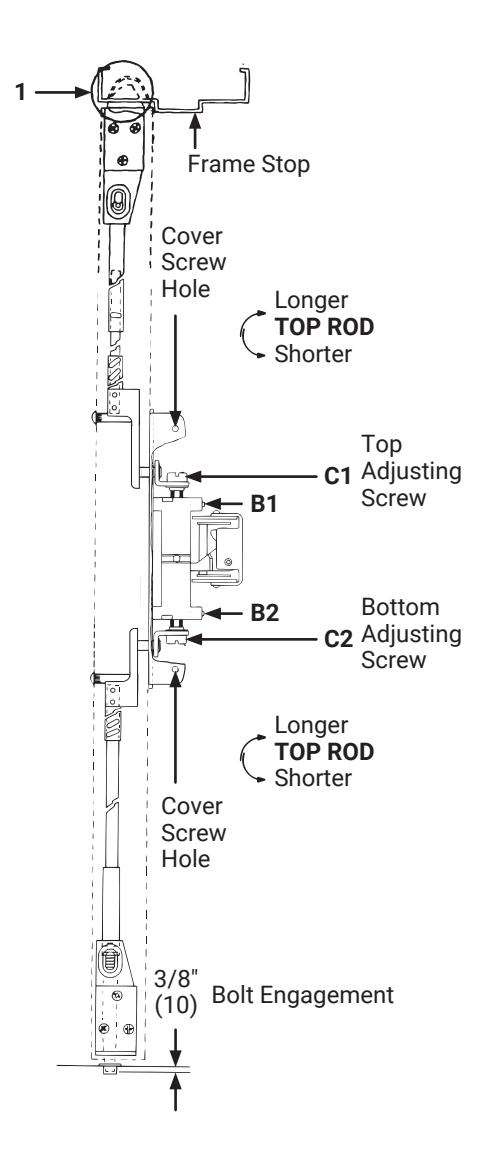
2. Rod Adjustment for Proper Bolt Throw
- a. Use 3/32" hex wrench to loosen set screws B1 and B2.
- b. Adjust the top rod first with adjusting screw C1. With device in dogged position (panic devices) or touchbar fully depressed (fire devices) adjust top rod so that the top latchbolt is flush and the hold back feature is engaged. Lengthen top rod an additional 1/2 turn for proper latchbolt positioning.
NOTE: If adjusting screws bottom out before proper device operation, door and device must be removed so larger adjustments may be made by threading rod in or out, or by moving cotter pin to different hole in rod (See Installation Instructions Step 4).
- c. Adjust bottom rod with adjusting screw C2. With top latch retracted in hold back position, and touchbar dogged or fully depressed, adjust bottom rod so that the deadbolt clears the strike by 1/16". The bottom rod should be in position in the active case with the square head of the connector hanging in the guide. (See note in Step 2 above).
- d. Check device operation by opening and closing the door. An additional minor adjustment may be required for full retraction and correct strike engagement.
NOTE: To avoid thread damage and provide positive locking, be sure set screws engage flats on adjusting screws.
3. Install device cover and end cap with (2) 8-32 PFHMS each.
Concealed Vertical Rod Exit Devices Installation Instructions

Door Inside LHR Door *Rods and Strikes Centerline. Face Surface (Over for RHR Door) DEVICE VERTICAL REFERENCE (2) Holes A: -20 tap or dia. 7/8' (Metal Reinforced Doors) #14 x 1-1/2" PPH"AB"SMS (Wood Door Applications) 3-5/8" (92)(51)Caution: Office (*) Mark ? Rods on door face. Note that the copiers, printers and 11/16' facsimile machines centerline of the rods and (17)may change the size strikes, used to install top of a drawing and and bottom bolts, is not make the template the Vertical Reference inaccurate to use as centerline. a door marker. HORIZONTAL REFERENCE & DEVICE (51) Radius (Typical) 3-5/8" (92)7/8' (22)3/4" Thru This Face (2 Slots) (19)

Concealed Vertical Rod Exit Devices
Installation Instructions

Caution: Office copiers, printers and facsimile machines may change the size of a drawing and make the template inaccurate to use as a door marker.

Concealed Vertical Rod Exit Devices Installation Instructions

Instructions:
- 1. For LBR Devices, omit bottom latch and strike in installation steps.
- 2. Less Bottom Rod (LBR) Devices should not be used where security is a primary concern.
- 3. Unreinforced frames (total wall thickness less than 1/8" (3.2) require) that 10-24 blind rivet nuts (by others) be used to bolt strike.
- 4. Dimensions given in inches (mm).
CAUTION : Office copiers, printers and facsimile machines may change the size of a drawing and make the template inaccurate to use as a door marker.

(*) Mark & Rods on door face.
centerline of the
rods and strikes,
used to install top
and bottom bolts,
is not the Vertical
Reference
centerline.
Note that the
Concealed Vertical Rod Exit Devices Installation Instructions
ACCENTRA
ASSA ABLOY
1-855-557-5078 Ext. 2 · www.accentra-assaabloy.com
Experience a safer and more open world

Concealed Vertical Rod Exit Devices Installation Instructions

Caution: Office copiers, printers and facsimile machines may change the size of a drawing and make the template inaccurate to use as a door marker.

Concealed Vertical Rod Exit Devices Installation Instructions

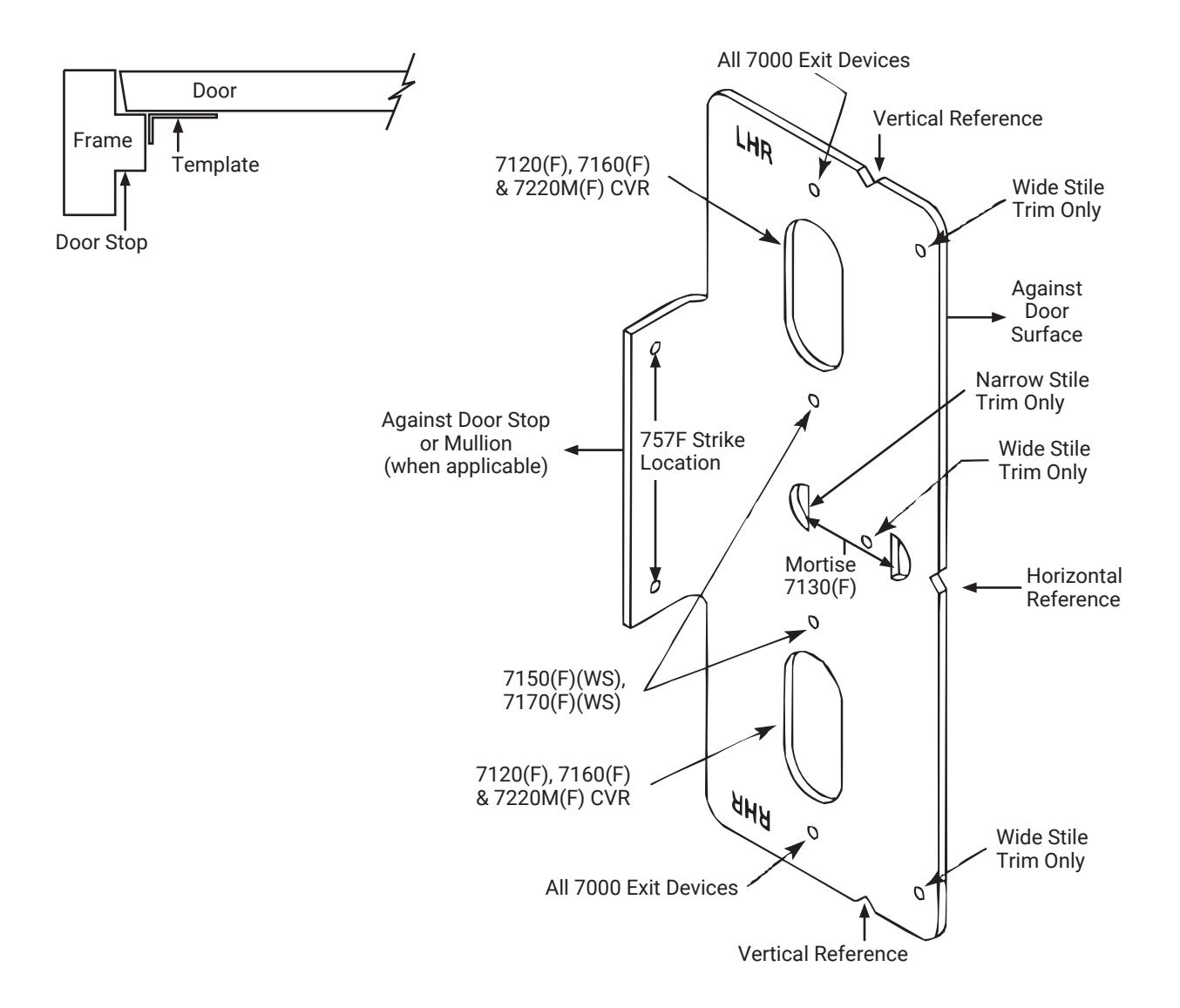
Plastic Installation Template 7000 Exit Devices
For use in conjunction with instruction sheets packed with exit device.
Holes and slots are identified below by exit device series and trim. Prep door and frame for only those features required for the exit device being installed.