ASSA ABLOY ACCENTRA 6000 Series Motorized Electric Latch Retraction (MELR_80-8150-0077-000
Open the original PDF document
View PDF6000 Series Motorized Electric Latch Retraction (MELR)

Exit Devices
Installation Instructions with Optional "S" Bolt Monitor, "B" Touchbar Monitor, and "O" Trim Monitor Connection
WARNING
This product can expose you to lead which is known to the state of California to cause cancer and birth defects or other reproductive harm. For more information go to www.P65warnings.ca.gov.
WARNING
Attention Installer: Any retrofi t or other fi eld modifi cation to a fi re rated opening can potentially impact the fi re rating of the opening, and ASSA ABLOY makes no representations or warranties concerning what such impact may be in any specifi c situation. When retrofi tting any portion of an existing fi re-rated opening, or specifying and installing a new fi re-rated opening, please consult with a code specialist or local code offi cial (Authority Having Jurisdiction) to ensure compliance with all applicable codes and ratings. 80-8150-0077-000 04/24
1-855-557-5078 Ext. 2 • www.accentra-assaabloy.com

Table of Contents
|
1. Overview
4 |
|
|---|---|
| A. Functions 4 | |
| B. Installation Notes 5 | |
| C. Hinge Requirements 5 | |
| D. Wire Gauge Chart 5 | |
| E. Power and Contact Ratings 5 | |
| F. Controller Installation 6 | |
| G. Wire Locations and Positions 7 | |
| H. DIP (Dual Inline Package) Switch Settings 8 | |
| I. ElectroLynx Wiring System 9 | |
|
2. Power Mode
10 |
|
| A. Installation 10 | |
| B. Wiring 12 | |
| C. Configuration of DIP Switch Setting ("S") 13 | |
| D. LED Signaling 13 | |
| E. Troubleshooting 14 | |
|
3. Timer Mode
15 |
|
| A. Installation 15 | |
| B. Wiring 16 | |
| C. Adjustment 19 | |
| D. Configuration 20 | |
| E. Led Signaling Chart 21 | |
| F. Troubleshooting 21 | |
| 4. Optional "O" Trim Monitor Switch 15 |
6000 Series MELR Exit Devices Installation Instructions

1. Overview
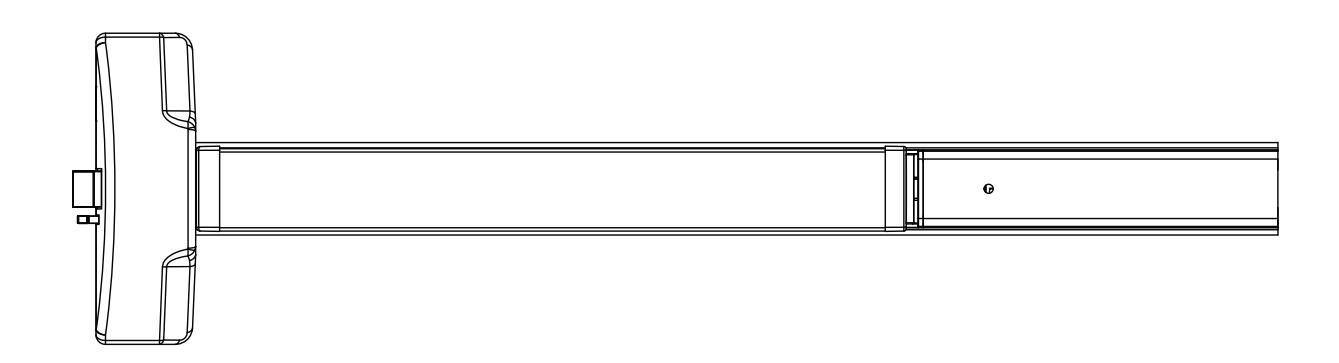
The Commercial Motorized Electric Latch Retraction (MELR), see Figure 1, works with the 6000 series exit devices (6100, 6130, 6150, 6160, 6170, 6200, 6210, 6250, 6220) to provide remote-controlled latch retraction option. It is compatible with the following:
- "S" Latchbolt Position Monitor: Provides indication of the position of the latch bolt. Used with security systems to monitor the latch bolt. Also used to activate automatic door operators upon latch retraction.
- "B" Touchbar Monitor: Provides indication of the pushbar being depressed. Used as a request to exit to shunt alarm systems, release electromagnetic locks or monitor egress.
- "O" Trim Monitor Switch Provides indication of the device being operated from the outside. Used as a request to enter signal switch to shunt alarms. Also used to monitor entry.
NOTE: The MELR option is also compatible with hex key, cylinder key and fire rated mechanical configurations.
A. Functions
The MELR option can be configured to work in either of two modes:
- Power Mode (See Section 2, Page 10): The device is not energized when locked. When power is applied, the pushbar and latch(es) will retract and remain in the retracted position until power is removed. Power is typically applied through a relay triggered by an access control device.
- Timer Mode (See Section 3, Page 15): The device is always energized and retraction is triggered by a momentary or maintain switch.
When the timer circuit is closed using a momentary switch, the device retracts, remains retracted for a set duration, and releases. The duration of the retraction is set through an onboard timer setting.
When the timer circuit is closed using a maintain switch, the device retracts. The device releases when the contact is opened.
Caution: Disconnect all input power before servicing.
- Installer must be a trained and experienced service person.
- Wiring must comply with applicable local electrical codes, ordinances and regulations.
- Hex key or cylinder (6XX5) mechanical dogging CANNOT be used on Fire Rated Doors.
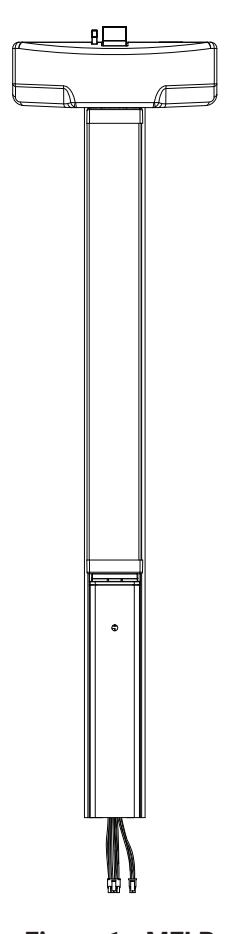
Figure 1 - MELR

B. Installation Notes
- The MELR option pushbar works only with Commercial 6000 Series exit devices.
- Always perform mechanical installation using the appropriate installation instructions, prior to electrical wiring.
- Earth Ground: Required for electrostatic discharge (ESD) protection, unless grounded through the metal door and frame.
C. Hinge Requirements
| Hinge Information | |||||
|---|---|---|---|---|---|
| Without Timer | With Timer | ||||
| Application | Wires | Recommended Hinge | Wires | Recommended Hinge | |
| MELR | 3 | QC8 | 5 | QC12 | |
| "S" MELR | 5 | QC8 | 7 | QC12 | |
| "B" MELR | 6 | QC8 | 8 | QC12 | |
| "S", "B" MELR | 8 | QC8 | 10 | QC12 | |
| "O" MELR | 5 | QC12 | 7 | QC12 | |
| "S", "O" MELR | 7 | QC12 | 9 | QC12 | |
| "B", "O" MELR | 8 | QC12 | 10 | QC12 | |
| "S", "B", "O" MELR | 10 | QC12 | 12 | QC12 | |
D. Wire Gauge Chart
| Wire Gauge Information | ||||||||
|---|---|---|---|---|---|---|---|---|
| Total One-Way | Load Current @ 24VDC | |||||||
|
Length of Wire
Run (ft.) |
1/4A | 1/2A | 3/4A | *1A | 1-1/4A | 1-1/2A | 2A | 3A |
| 100 | 24 | 20 | 18 | 18 | 16 | 16 | 14 | 12 |
| 150 | 22 | 18 | 16 | 16 | 14 | 14 | 12 | 10 |
| 200 | 20 | 18 | 16 | 14 | 14 | 12 | 12 | 10 |
| 250 | 18 | 16 | 14 | 14 | 12 | 12 | 12 | 10 |
| 300 | 18 | 16 | 14 | 12 | 12 | 12 | 10 | - |
| 400 | 18 | 14 | 12 | 12 | 10 | 10 | - | - |
| 500 | 16 | 14 | 12 | 10 | 10 | - | - | - |
| 750 | 14 | 12 | 10 | 10 | - | - | - | - |
| 1,000 | 14 | 10 | 10 | - | - | - | - | - |
| 1,500 | 12 | 10 | - | - | - | - | - | - |
|
*When calculating voltage drop, use 1A as the recommended current draw for the
MELR |
||||||||
E. Power and Contact Ratings
MELR Contact Ratings
Voltage: 24VDC
- Filtered and regulated power supply
- Motor operating current: 800mA
- Motor hold current: 330mA
| Contact Ratings | |||||
|---|---|---|---|---|---|
| "S" Latch Bolt | "B" Touch Bar | "O" Trim | |||
| 200mA@28VDC | 1A@30VDC | 1A@28VDC | |||

F. Controller Installation
1. Plug motor harness into controller.
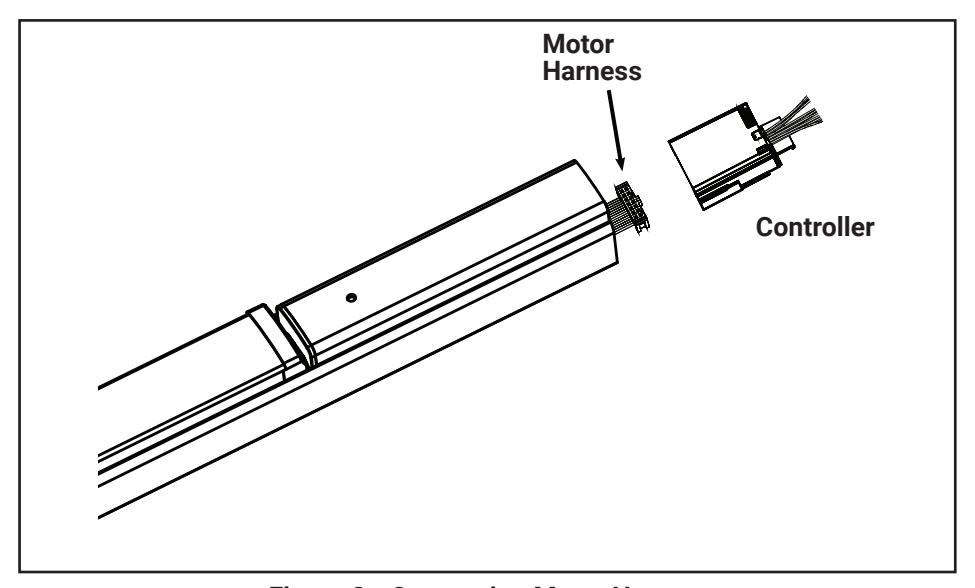
Figure 2 - Connecting Motor Harness
2. Slide controller into touch bar, making sure tab is securely attached over end of chassis.
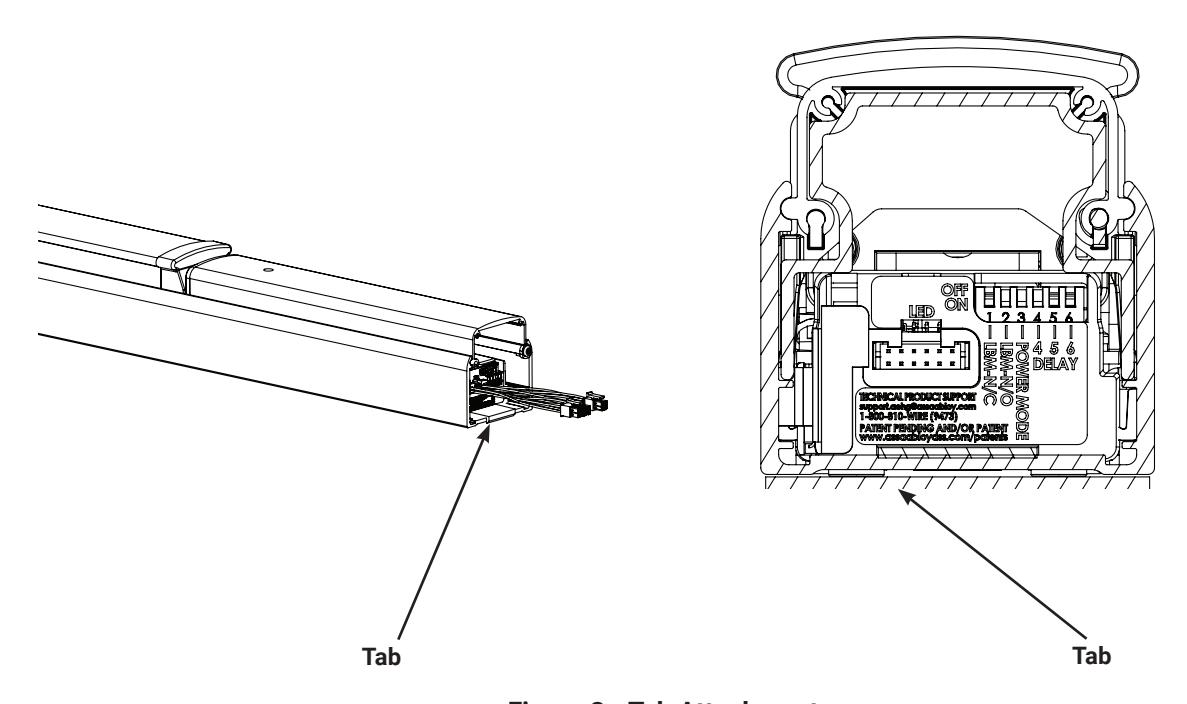
Figure 3 - Tab Attachment

G. Wire Locations and Positions
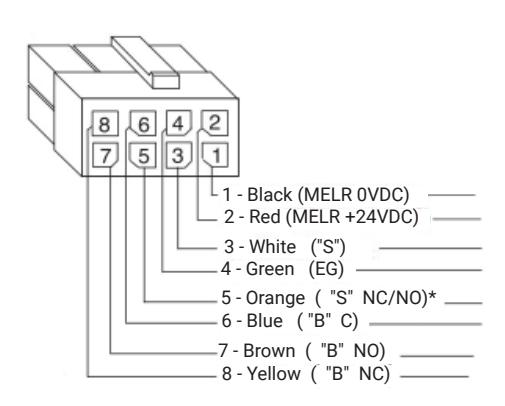
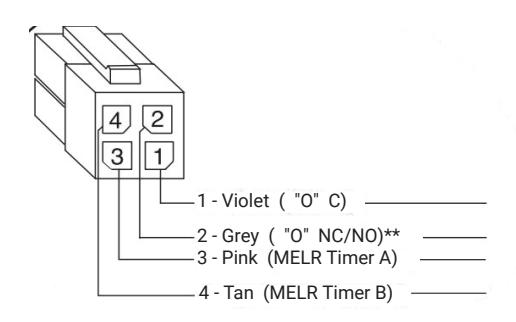
MELR option devices are supplied with one (1) 4-pin and one (1) 8-pin Molex® connector (See Figure 4). Molex connectors allow simple installation using the ASSA ABLOY ElectroLynx® system.
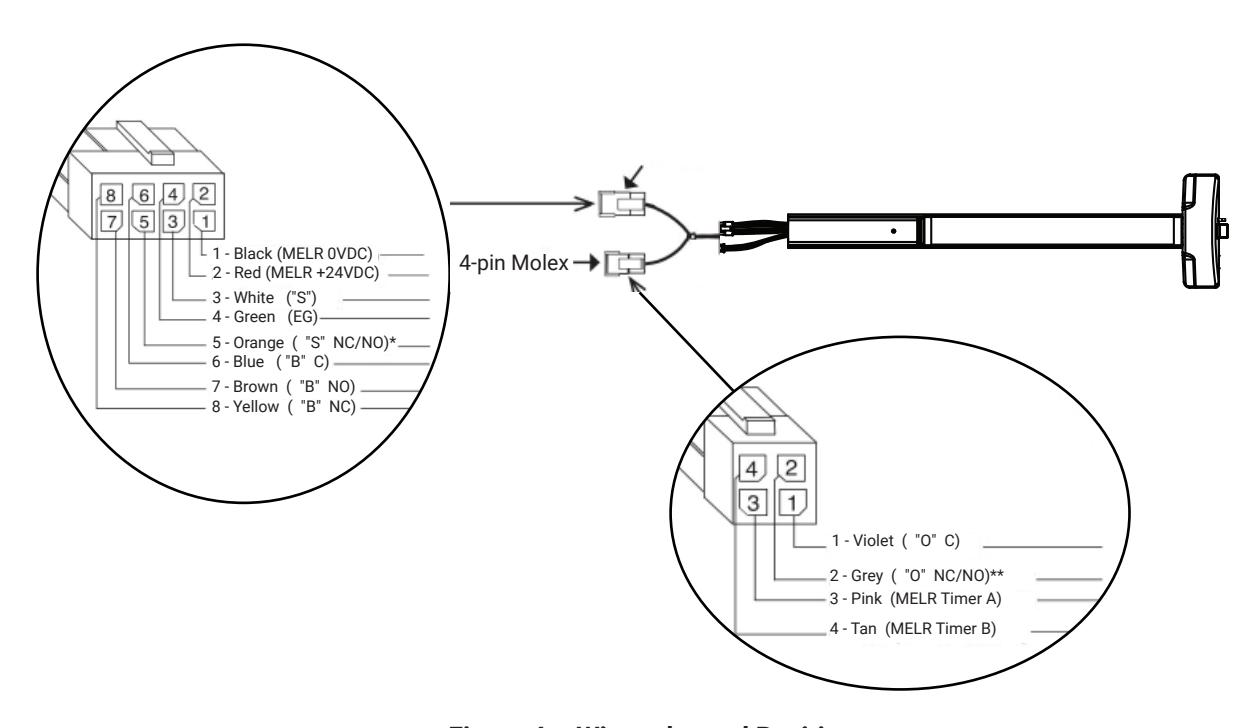
Figure 4 - Wire color and Position
* & quot;S" NO/NC (Normally Open/Normally Closed) is selectable on controller (refer to "S" DIP switch Instructions). Factory preset is NO. See Section 3-C, Timer Mode, Configuration Instructions DIP Switch settings for more details.
** & quot;O" NO/NC (Normally Open/Normally Closed) is selectable on controller. Factory preset is NO. See Section 4 Optional "O" Trim Monitory Switch for details.

H. DIP (Dual Inline Package) Switch Settings
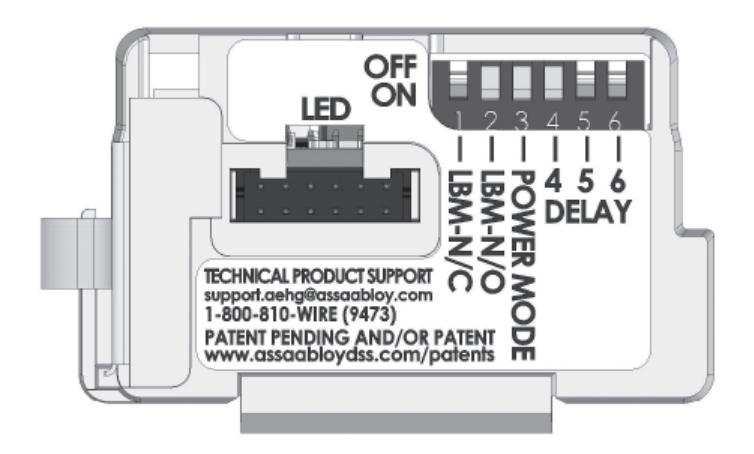
DIP Switch assignments are as follows, starting from left in Figure 5:
A. Closed (Switch #1 set to ON ) when selecting LBM/NC (Normally Closed) contact.
Or
B. Closed (Switch #2 set to ON ) when selecting LBM/NO (Normally Open) contact.
NOTE:
- ¸ Only 1 or 2 should be closed at one time, not both.
- ¸ 3: Closed when bypassing external trigger, i.e. Power Mode.
- ¸ 4, 5, 6: Select software options, allows up to 8 Time/Delay settings (See Section 3 Timer Mode).
- ¸ Default Setting: LBM/NO and Power Mode set to ON.
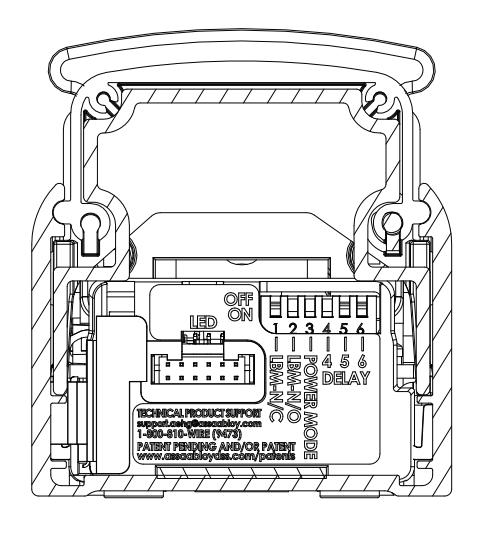
Figure 5 - DIP Switch Settings (Factory Default Shown)

I. ElectroLynx Wiring System
Important:
Do Not Force - ElectroLynx connectors plug and lock together in only one way. See Figures 6 & 7.
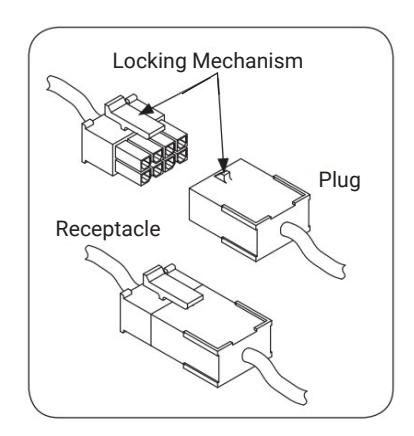
Figure 6 - ElectroLynx Connections
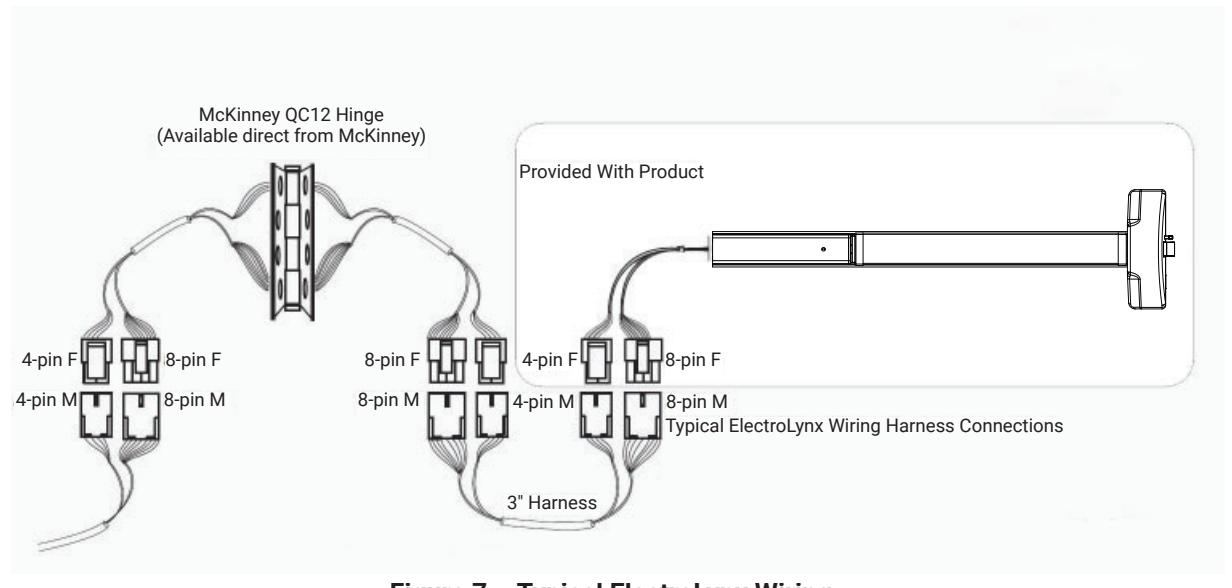
Figure 7 - Typical ElectroLynx Wiring
NOTE:
- Devices ordered with "S", "B", "O" and MELR Options wired in Timer Mode require all 12 wires.
- The 3" Harness is not included with the product, door or hinge and must be ordered separately.

A. Installation
In this configuration, the device is not energized when locked. When energized with a 24 volt input, the pushbar and latch(es) will retract and remain in the retracted position until power is removed. Power is typically applied through a relay triggered by an access control device. For installations using the onboard timer circuit, refer to Section 3 Timer Mode.
Rail retracts when power is applied and releases when power is removed.
1. Mount 6000 Series exit device using mechanical installation instruction sheet(s) provided.
NOTE:
- Ensure proper mechanical function before attempting electrical retraction:
- Verify the pushbar can be fully depressed and the latch is fully retracted.
- On vertical rod devices, verify latch bolts do not enter hold-back position until pushbar is fully depressed.
- Adjust device mechanically as required, before applying power.
- 2. Connect the ElectroLynx harness in the door. See Figure 8.
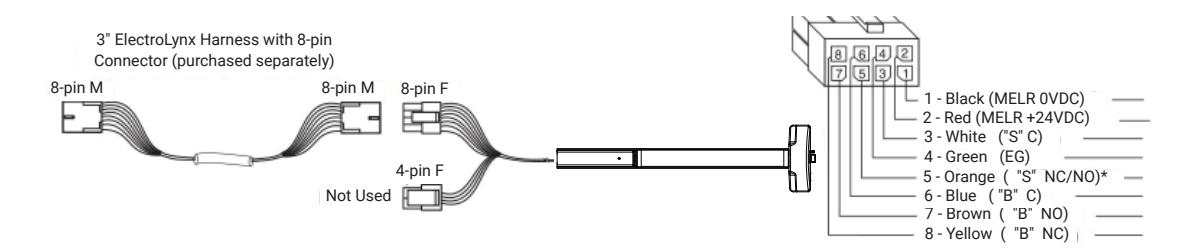
Figure 8 - Typical ElectroLynx Power Mode Wiring
-
* "S" NO/NC (Normally Open/Normally Closed) is selectable on controller (refer to "S" DIP switch instructions in Section 3). Factory present is NO.
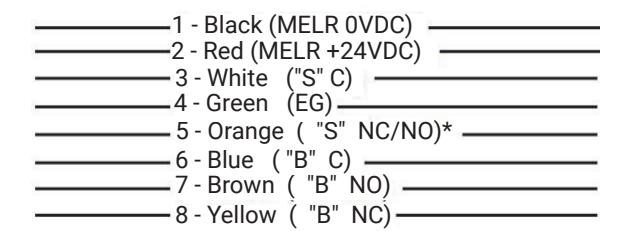
- 3. Plug the 8-pin ElectroLynx connector from the pushbar into the 3" ElectroLynx harness or splice into non-ElectroLynx harness. See Figure 9.
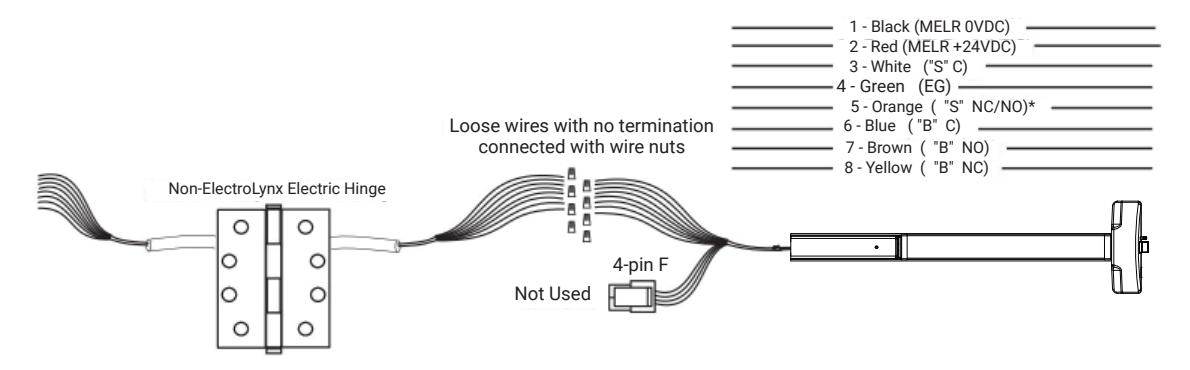
Figure 9 - Non-ElectroLynx Power Mode Wiring MELR Wires with ElectroLynx Connector Removed

A. Installation
4. Feed the 3" harness through the 1" hole in the door and secure the pushbar to the door using the mounting bracket and two (2) supplied screws (Figure 10).
NOTE:
- Do not install the end cap until electrical operation is verified in order to confirm LED signaling.
- Do not discard the end cap and hardware.
- 5. Ensure DIP switch (position 3) enables Power Mode (Figure 11)
- 6. Connect the ElectroLynx harness to the hinge and secure the hinge to the door.
NOTE:
- Make sure no wires are pinched or damaged in the process.
- Refer to detailed wiring instructions under Power Mode wiring.
- 7. Apply a 24V source which complies with the Content Ratings table MELR contact ratings. Confirm the LED is blinking, the system fully unlocks and all bolts clear the strikes. Troubleshoot the device if issues are observed using the steps outlined at the end of this section.
- 8. Store excess wiring under end cap and assemble with provided screws. Avoid pinching wires.
NOTE:
Earth Ground is required for Electrostatic Discharge (ESD) protection unless the metal door and frame are already earth grounded; otherwise, earth ground wiring is required at pin 4. See Figure 9.
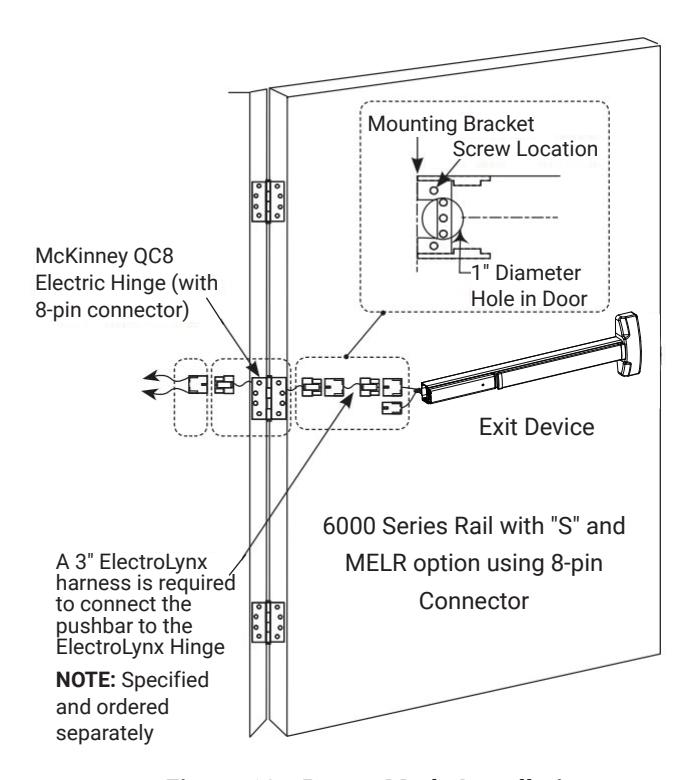
Figure 10 - Power Mode Installation
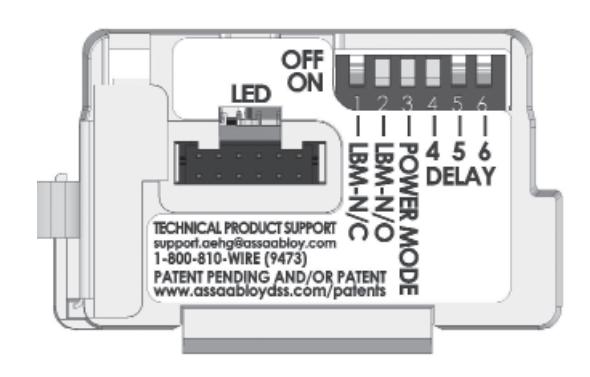
Figure 11 - DIP Switch Setting for Power Mode Installation

B. Wiring
ElectroLynx Opening Installation
This is the simplest installation method, requiring the installer to plug the ElectroLynx connectors from the exit device to the harness to the hinge and then to the pigtail, which is connected to the access control system.
Requirements:
- MELR Exit Device
- 3" ElectroLynx connector harness (not supplied with MELR option)
- McKinney QC ElectroLynx hinge (type of hinge depends on the application)
- ElectroLynx door
Non-ElectroLynx Opening Installation
Standard door with standard electric hinge. Molex connectors with flying leads purchased separately (See Figure 13 and the Molex Connectors Table).
To identify part numbers and order harness(es), visit the McKinney website, www.mckinneyhinge.com, and search the catalog for ElectroLynx.
If Molex pinned connectors are not available, remove the ElectroLynx connector from the MELR Exit Device and wire nut the MELR wires to the wires from the electric hinge (color coordinating wire colors is recommended).
Power Mode Wiring
Use when wiring in Power Mode. See Figure 13.
NOTE:
- Onboard timer will not function in Power Mode. Add external time delay, if necessary.
- The switch is wired between the power supply and the load. Do not cycle the power supply.
| Molex Connectors | |||||
|---|---|---|---|---|---|
| Size | Both Ends | To PINS | |||
| 3 Inch | QC-C003 | QC9C003P | |||
| 6 Inch | QC-C006 | QC9C006P | |||
| 12 Inch | QC-C012 | QC9C012P | |||
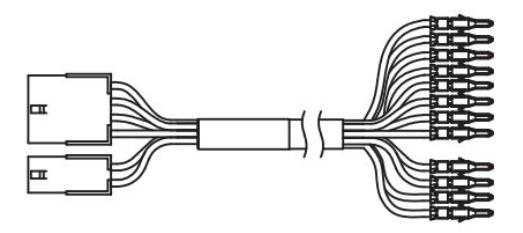
Figure 12 - Molex with 12-pin Connector Pinned
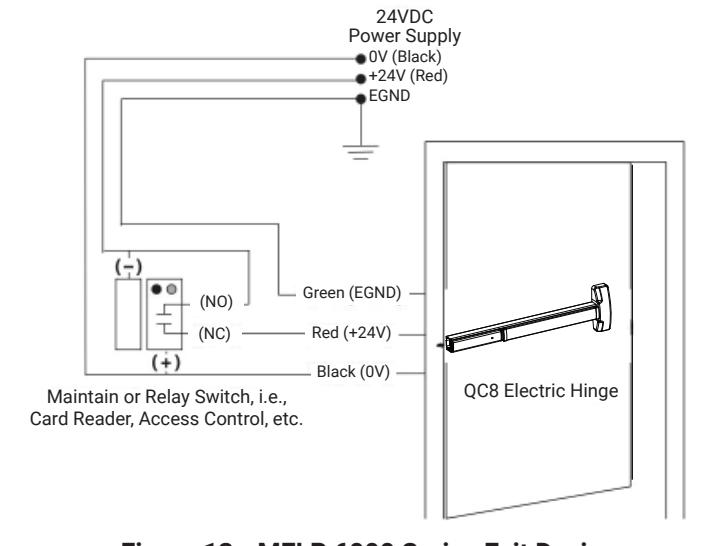
Figure 13 - MELR 6000 Series Exit Device Typical Power Mode Wiring

C. Confi guration of DIP Switch Setting ("S")
For MELR applications using the optional "S" latch bolt monitor switch, pin 5 of the 8-pin ElectroLynx connector will be either a NO contact or NC contact, depending on the position of the DIP switches on the motor controller faceplate (Figure 14).
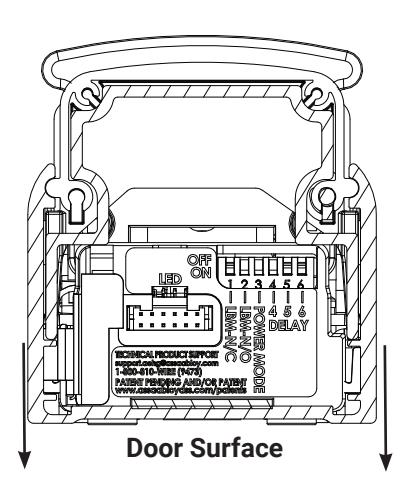
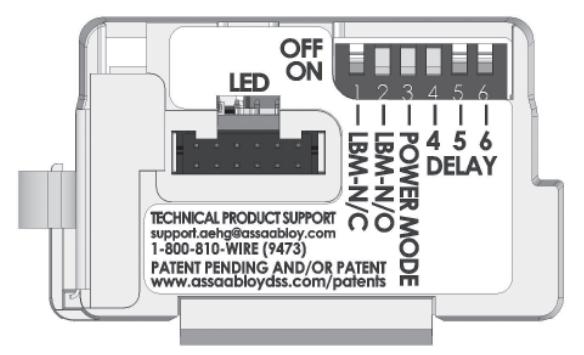
DIP Switch Setting for "S" Latch Bolt Monitoring NO (Default) Shown NC Alternative DIP Switch Setting
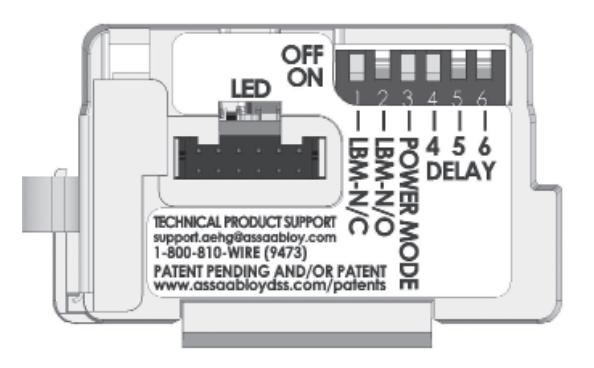
Figure 14 - Molex with 12-pin Connector Pinned
D. LED Signaling
| Signal | Cause | Troubleshooting |
|---|---|---|
| Dark / Unlit |
Controller microprocessor is
not active |
Confi rm connections and incoming power |
| Steady Flashing | Normal operation | Check that Power Mode switch is set |
| Solid Light |
Input voltage is dropping out
of operation range |
Check wire run and power supply output |
|
2 Flashes
Followed by Pause |
Retractor sensor problem | Call 1-800-810-9473 for assistance |
6000 Series MELR Exit Devices Installation Instructions

2. Power Mode
E. Troubleshooting
Prior to electrical troubleshooting, confirm that the mechanical system properly functions; i.e., that the pushbar fully retracts all latches and the door opens freely. See the table on page 13. Refer to applicable 6000 Series Exit Device product instruction sheet to correct mechanical installation issues.
IMPORTANT:
* ALWAYS disconnect power before making any mechanical adjustments to the system.
Table 6 - Power Mode Troubleshooting
The pushbar does not move when 24V input is applied:
- Check inputs to confirm proper voltage and wiring orientation (Figure 6 ElectroLynx Power Mode Installation).
- Remove end cap from pushbar and confirm that LED is blinking steadily when power is applied. If not, refer to LED signaling.
NOTE:
When configured in Power Mode, power is released to lock the device (LED will not blink when power is released).
Confirm DIP switch position 3 is set to ON.
The pushbar does not fully retract or pushbar retracts completely and holds but does not open door:
-
* Verify mechanical installation and correct as necessary:
- − Is excessive force required to depress the pushbar?
- − Are latches fully clearing the strikes when mechanically cycled?
The pushbar retract and unlocks electrically but does not relock:
- Physically disconnect power from pushbar and confirm that input is off.
- *Check for mechanical interference (e.g., warped door, lack of shims, misalignment of pushbar, etc.).
Rail behaves abnormally (multiple cycles, clicking, delayed retraction, etc.):
Remove end cap from pushbar and confirm that LED is blinking steadily when power is applied. If not, refer to LED signaling.
NOTE:
When configured in Power Mode, power is released to lock the device (LED will not blink when power is released).
For applications using automatic operator(s): Door(s) fail to unlock before doors begin to open:
Adjust timing of operator to allow 900ms for the pushbar to fully retract.
"S" switch wiring: The design requires normally open functionality and the circuit is normally closed (or vice versa).
There is only a two-wire input for the "S" circuit. Normally open or normally closed configuration is set by toggling the DIP switches on the controller bracket to the required position
For additional installation assistance, please contact 1-800-810-9473. When calling, please provide the following information to improve our service (provide what you can):
- Your name and contact number.
- 6000 Series Exit Device product type with options.
- Location and identification of the affected opening (e.g., site, building, and door number).
- Order Number (located on product box), if available.
- Power supply manufacturer and rated output (i.e, voltage and current).
- Method of operation (e.g., Power Mode).
- The number of devices connected to the power supply.
- Symptoms of problem (i.e., observed behavior).

A. Installation
In this configuration, the device is always energized with a 24 volt input, and a timer circuit is opened or closed to control pushbar retraction. A momentary or maintain switch is typically used to perform this operation. For installations where the power input is cycled to retract the device, refer to Section 2: Power Mode.
1. Rail retracts when timer input is closed. Mount 6000 Series exit device using mechanical installation instruction sheet(s) provided.
NOTE:
Ensure proper mechanical function before attempting electrical retraction:
- Verify the pushbar can be fully depressed and the latch is fully retracted.
- On vertical rod exit devices, verify that the latch bolts do not enter hold-back position until the pushbar is fully depressed.
- Adjust device mechanically, as required, before applying power.
- 2. Ensure DIP Switch (position 3) disables Power Mode (Figure 15). Set to OFF to disable.
- 3. Connect the ElectroLynx harness in the door (Figure 16).
- 4. Plug the 8-pin and 4-pin ElectroLynx connectors from the pushbar into the 3" ElectroLynx harness or splice into a non-ElectroLynx harness.
- 5. Feed the 3" harness through the 1" hole in the door and secure the pushbar to the door using the mounting bracket and two (2) supplied screws.
NOTE:
Do not install the end cap until electrical operation is verified in order to confirm LED signaling.
Do not discard the end cap and hardware.
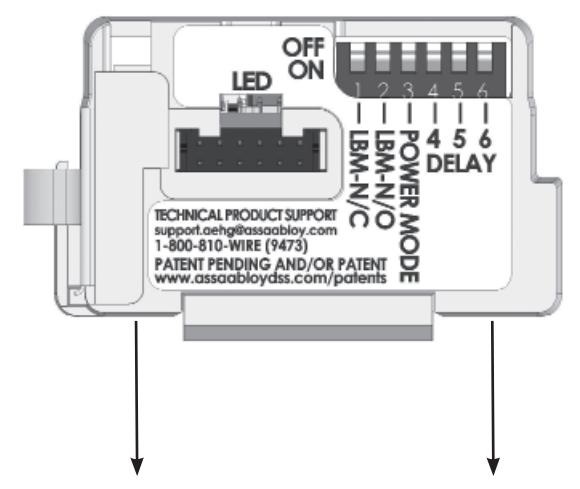
Figure 15 - DIP Switch Setting for Timer Mode Installation
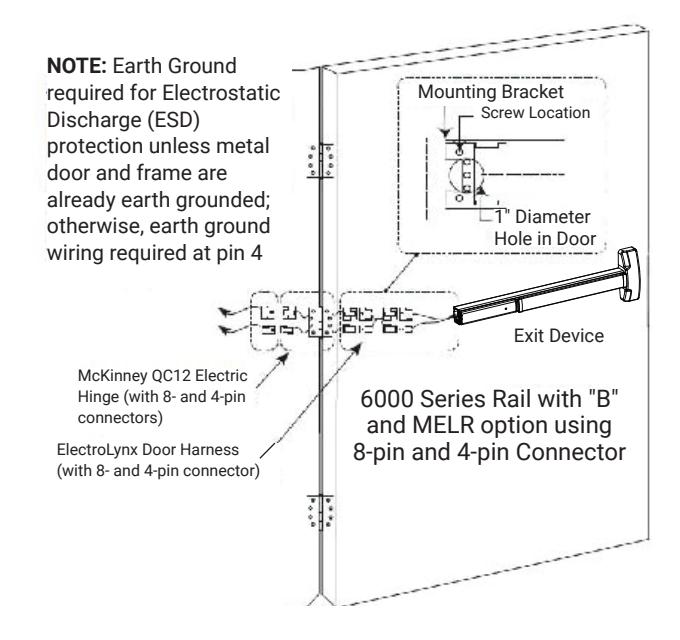
Figure 16 - Timer Mode Installation

A. Installation
- 6. Connect the ElectroLynx harness to the hinge.
- 7. Plug the door harness's 8-pin and 4-pin connectors into the hinge's ElectroLynx connector.
- 8. Secure the electric hinge to door.
NOTE:
- Make sure no wires are pinched or damaged in the process.
- Refer to detailed wiring instructions under Timer Mode wiring.
- 9. Apply 24V according to MELR contact ratings: Confirm that the LED is blinking and close the timer input circuit to retract the device. When the system retracts electrically, confirm that it fully unlocks and that all bolts clear the strikes. Troubleshoot the device if issues are observed using the steps outlined at the end of this section.
- 10. Store excess wiring under end cap and assemble with provided screws. Avoid pinching wires.
B. Wiring
ElectroLynx Opening Installation
This is the simplest installation method, requiring the installer to plug the ElectroLynx connectors from the exit device to the harness to the hinge and then to the pigtail, which is connected to the access control system. See Figure 17 on the next page.
Requirements:
- MELR Exit Device
- 3" ElectroLynx connector harness (not supplied with MELR option)
- McKinney QC ElectroLynx hinge (type of hinge depends on the application)
- ElectroLynx door

B. Wiring
* "S" NO/NC (Normally Open/Normally Closed) is selectable on controller (refer to "S" DIP switch instructions in Section 3).
Factory present is NO.
** "O" NO/NC (Normally Open/Normally Closed) is selectable on controller. Factory present is NO. See Section 4 Optional "O" Trim Monitory Switch for details if NC is preferred.
3" ElectroLynx Harness with 8 and 4-pin connectors (purchased separately)

Figure 17 - Timer Mode Installation
Non-ElectroLynx Opening Installation
Standard door with standard electric hinge: Remove the ElectroLynx connector from the MELR Exit Device and wire nut the MELR wires to the wires from the electric hinge. Color coordinating the wires are recommended.
To identify part numbers and order harness(es), visit the McKinney website, www.mckinneyhinge.com, and search the catalog for ElectroLynx.
* "S" NO/NC (Normally Open/Normally Closed) is selectable on controller (refer to "S" DIP switch instructions in Section 3). Factory present is NO.
| Molex Connectors | |||||
|---|---|---|---|---|---|
| Size | Both Ends | To PINS | |||
| 3 Inch | QC-C003 | QC9C003P | |||
| 6 Inch | QC-C006 | QC9C006P | |||
| 12 Inch | QC-C012 | QC9C012P | |||

B. Wiring
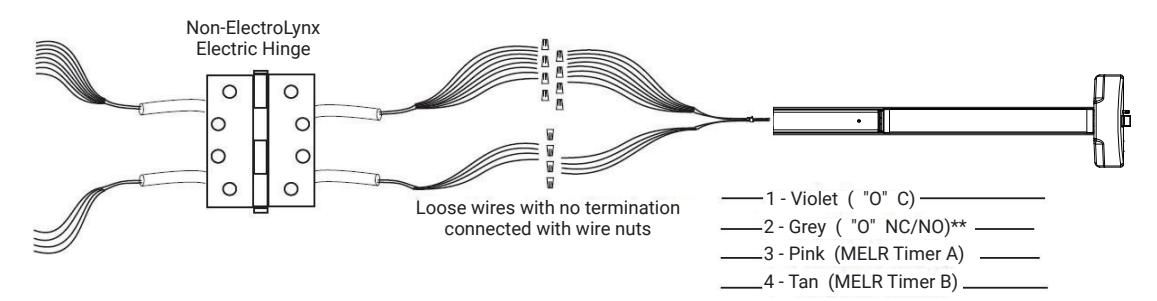
Figure 19 - Time Mode Typical Wiring
Timer Mode Typical Wiring
For use when wiring in Timer Mode (Figure 19) using the onboard timer. If more than 20 seconds timed delay is necessary, an external timer delay relay is required (not provided).
Note:
- 4V supply is constant in Timer Mode.
- Refer to settings in SECTION 3 Confi guration Instructions DIP Switch Settings.
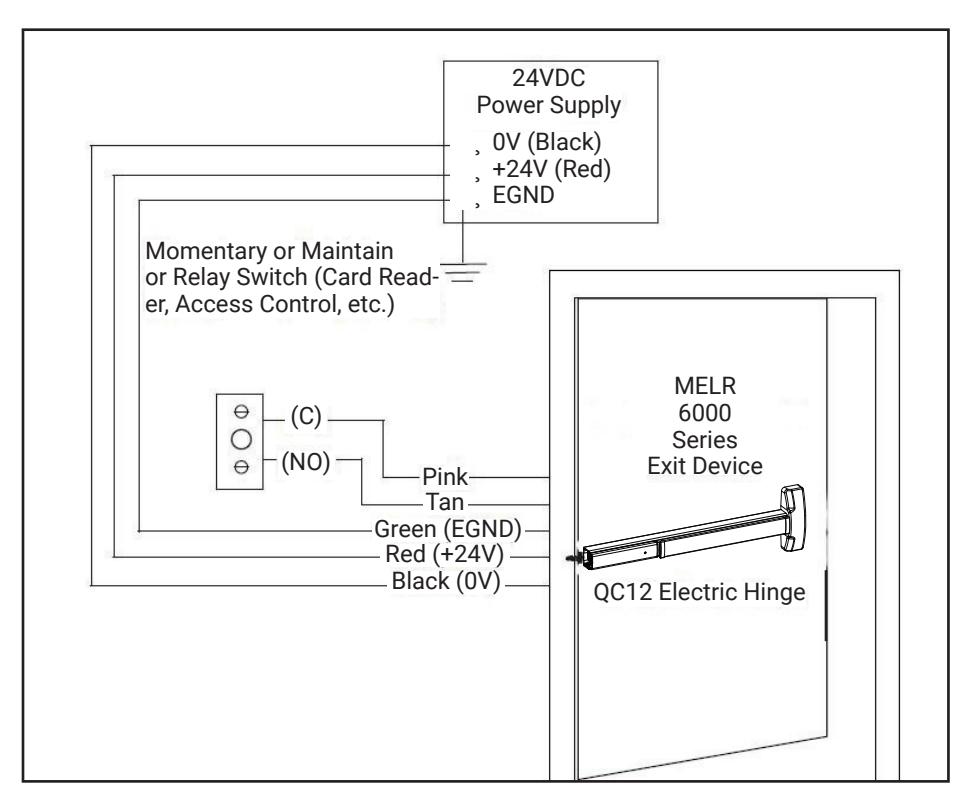
Figure 18 - Non-ElectroLynx Timer Mode Connection MELR Wires with ElectroLynx Connector Removed

C. Adjustment
The 24 volt input is always energized and the system retracts when the timer input circuit is closed.
- When the timer circuit is closed utilizing a momentary switch, the device retracts, remains retracted for a set duration, and releases. The duration of retraction is set using an onboard timer setting (0 – 20 second timer adjustment).
- The device retracts when timer circuit is closed using a maintain switch and releases when circuit is reopened.
NOTE:
- 24V supply is constant in Timer Mode. The duration of retraction is determined by whichever is longer: the maintain switch closure or the onboard timer delay.
- If more than a 20 second delay is necessary (exceeding the maximum setting), an external timer delay relay is required (not provided).
- Refer to settings in Figure 20 for DIP Switch timer delay settings.
Timer Delay Settings (Default = 5 Seconds (Sec))
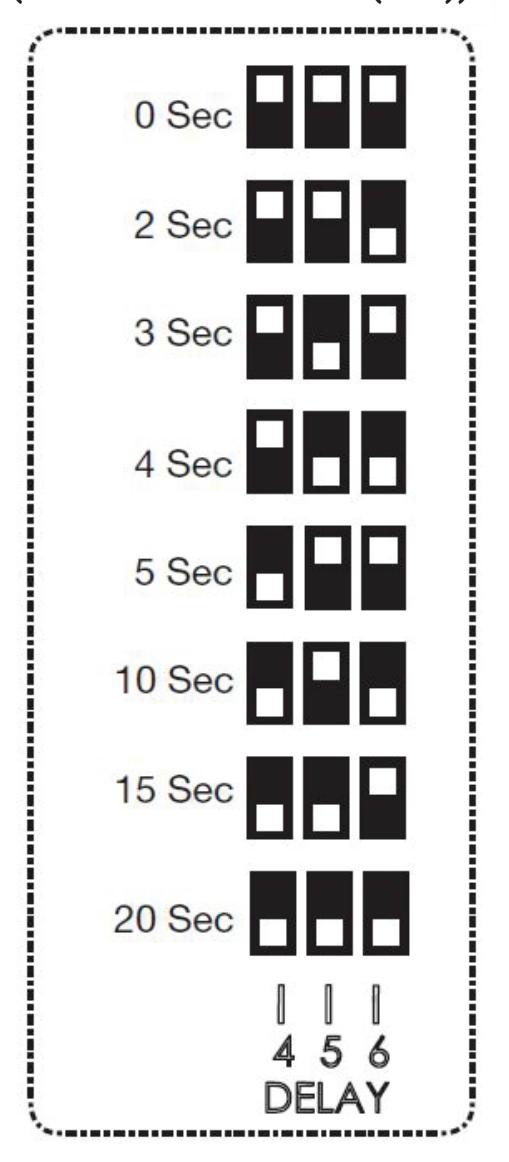
Figure 20: DIP Switch Settings

D. Confi guration
For MELR applications using the optional "S" latch bolt monitor switch ("S" MELR), pin 5 of 8-pin ElectroLynx connector will be either NO or NC contact depending on position of the DIP switches on motor controller faceplate.
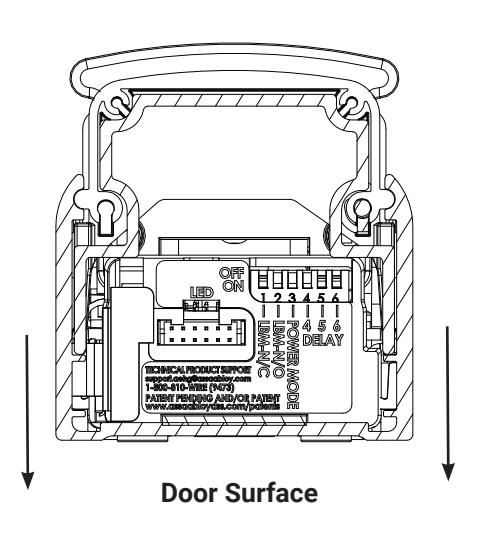
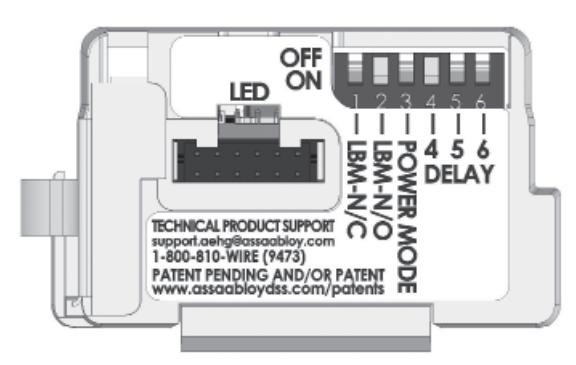
DIP Switch Setting for "S" Latch Bolt Monitoring NO (Default) Shown
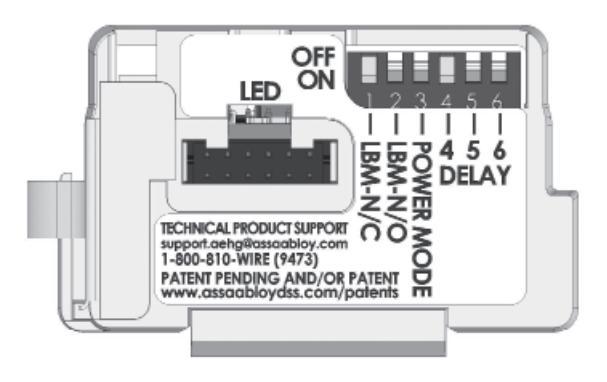
NC Alternative DIP Switch Setting

E. Led Signaling Chart
| Signal | Cause | Troubleshooting |
|---|---|---|
| Dark / Unlit |
Controller microprocessor is
not active |
Confi rm connections and incoming power |
| Steady Flashing | Normal operation | Cycle device by closing the timer circuit. |
| Solid Light |
Input voltage is dropping out
of operation range |
Check wire run and power supply output |
|
2 Flashes
Followed by Pause |
Retractor sensor problem | Call 1-800-810-9473 for assistance |
F. Troubleshooting
Prior to electrical troubleshooting, confirm that the mechanical system properly functions; i.e., that the pushbar fully retracts all latches and the door opens freely. Refer to applicable 6000 Series Exit Device product instruction sheet to correct mechanical* installation issues.
IMPORTANT:
* ALWAYS disconnect power before making any mechanical adjustments to the system.
The pushbar does not move when 24V input is applied:
- Check inputs to confirm proper voltage and wiring orientation. When configured for the timer Mode, 24V must be constantly applied and the timer circuit must be closed to cycle the device.
- Remove end cap from pushbar and confirm that LED is blinking steadily when power is applied. If not, refer to LED signaling.
The onboard timer duration adjustment is not working:
- Remove power when making adjustments to time delay settings (DIP switches).
- When a momentary signal is applied to timer circuit, circuit must be reopened for timer to function.
The pushbar does not fully retract or pushbar retracts completely and holds, but does not open door:
-
*Verify mechanical installation and correct as necessary:
- − Is excessive force required to depress the pushbar?
- − Are latches fully clearing the strikes when mechanically cycled?
The pushbar retracts electronically but does not release. System does not relock:
- Confirm that Timer Mode contact is opened ( the pushbar will remain depressed until contact is opened and delay has expired.)
- Physically disconnect power from pushbar (While electronically retracted,) to verify if issue is mechanical.
- Check for mechanical interference (e.g., warped door, lack of shims, misalignment of pushbar. etc.)
Rail behaves abnormally (multiple cycles, clicking, delay retraction, etc.):
- If a momentary contact is applied to time circuit, adjust onboard timer to a longer duration.
- Remove end cap from pushbar and confirm that LED is blinking steadily when power is applied. If not, refer to LED signaling.
6000 Series MELR Exit Devices Installation Instructions

3. Timer Mode
F. Troubleshooting
For applications using automatic operators(s): Door(s) fail to unlock before doors begin to open:
Adjust timing of operator to allow 900ms for the pushbar to fully tract.
If momentary contact is applied to the timer circuit, adjust the onboard timer to a longer duration to prevent the device from locking prior to operator actuation.
M91 switch wiring: The design requires normally open functionality and the circuit is normally closed or (vice versa):
There is only a two-wire input for the "S" circuit. Normally open or normally closed configuration is set by toggling the DIP switches on the controller racket to the required position
If further assistance is required 1-800-810-9473 and for optimum support provide as much of the following information as possible.
- Your name and contact number.
- 6000 Series Device produced with your name and contact number.
- 6000 Series Exit Device product type with options.
- Location and identification of the affected opening (e.g. site, building, and door number).
- Power supply manufacturer and rated output (i.e voltage and current.)
- Method of operation (e.g timer Mode).
- The number of devices connected to the power supply.
- Symptoms of problem (i.e., observed behavior.)

4. Optional "O" Trim Monitor Switch
For MELR applications using the optional "O" trim monitor switch, the NO or NC output can be selected on the controller. Factory preset is NO, however to change to NC perform the following:
- 1. Remove the controller for the exit device.
- 2. Move the trim monitor switch wire harness to the desired configuration as shown in Figure 22.
- 3. Place the controller back into the Exit Device, ensuring that the tab is attached to the Exit Device chassis.
NOTE:
Connector position is relative to the block.
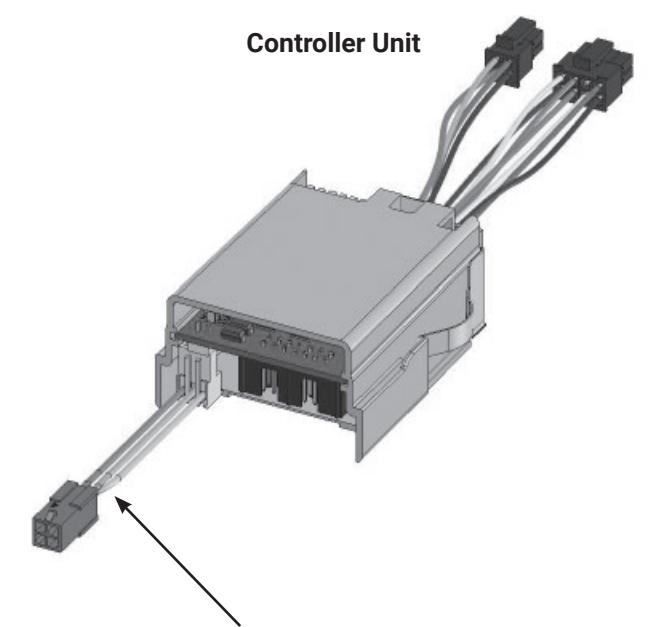
Trim Monitor Switch Wire Harness
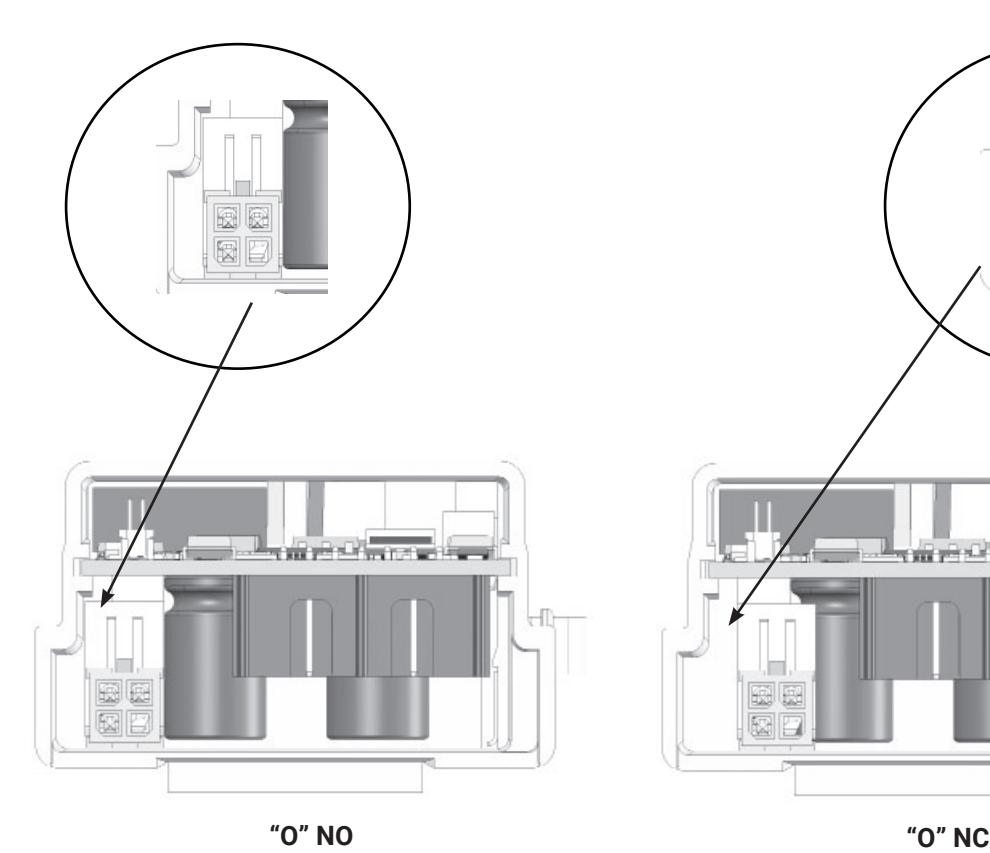
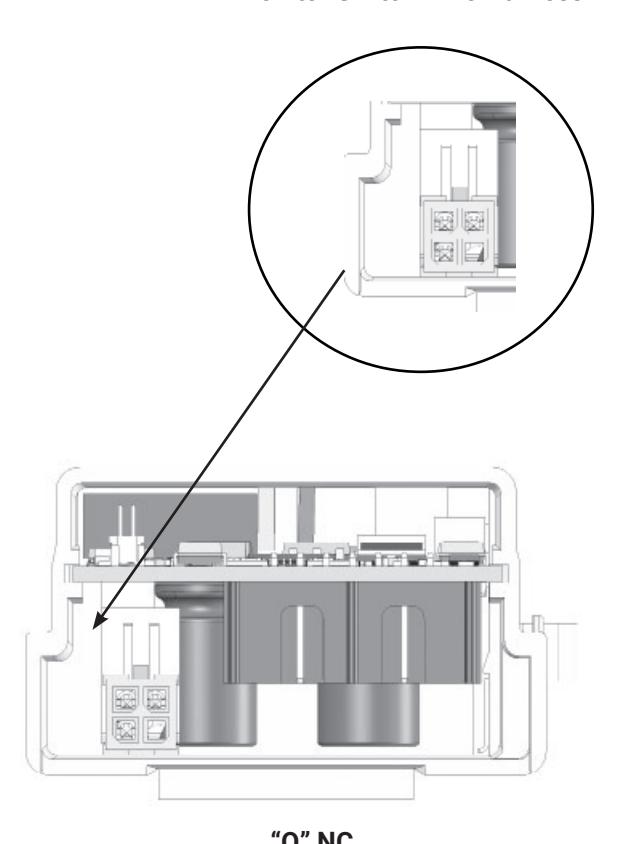
Figure 21: Changing "O" Preset
80-8150-0077-000 04/24
1-855-577-5078 Ext. 2 • www.accentra-assaabloy.com
6000 Series MELR Exit Devices Installation Instructions