ASSA ABLOY ACCENTRA 4700LN and 5300LN Series Cylindrical Locks Installation Instructions_80-9150-0060-010
Open the original PDF document
View PDF5300LN Grade 2 or 4700LN Grade 1 Cylindrical Lever Locksets

Installation Instructions
IMPORTANT: The accuracy of the door preparation is critical for the proper functioning and security of this lever handle lock. Misalignment can cause premature wear and tear and a lessening of security.
1. Parts
| Tools Required | |
|---|---|
| 2-1/8" (54mm) hole saw | Chisel & hammer |
| 1" (26mm) boring bit | #2 Phillips screw driver |
| 5/16" (8mm) drill bit | Handle removal tool (supplied) |
| 7/64" (2.5mm) drill bit | 3/8" or 1/2" drill |
2. Installation
A. Mark Door
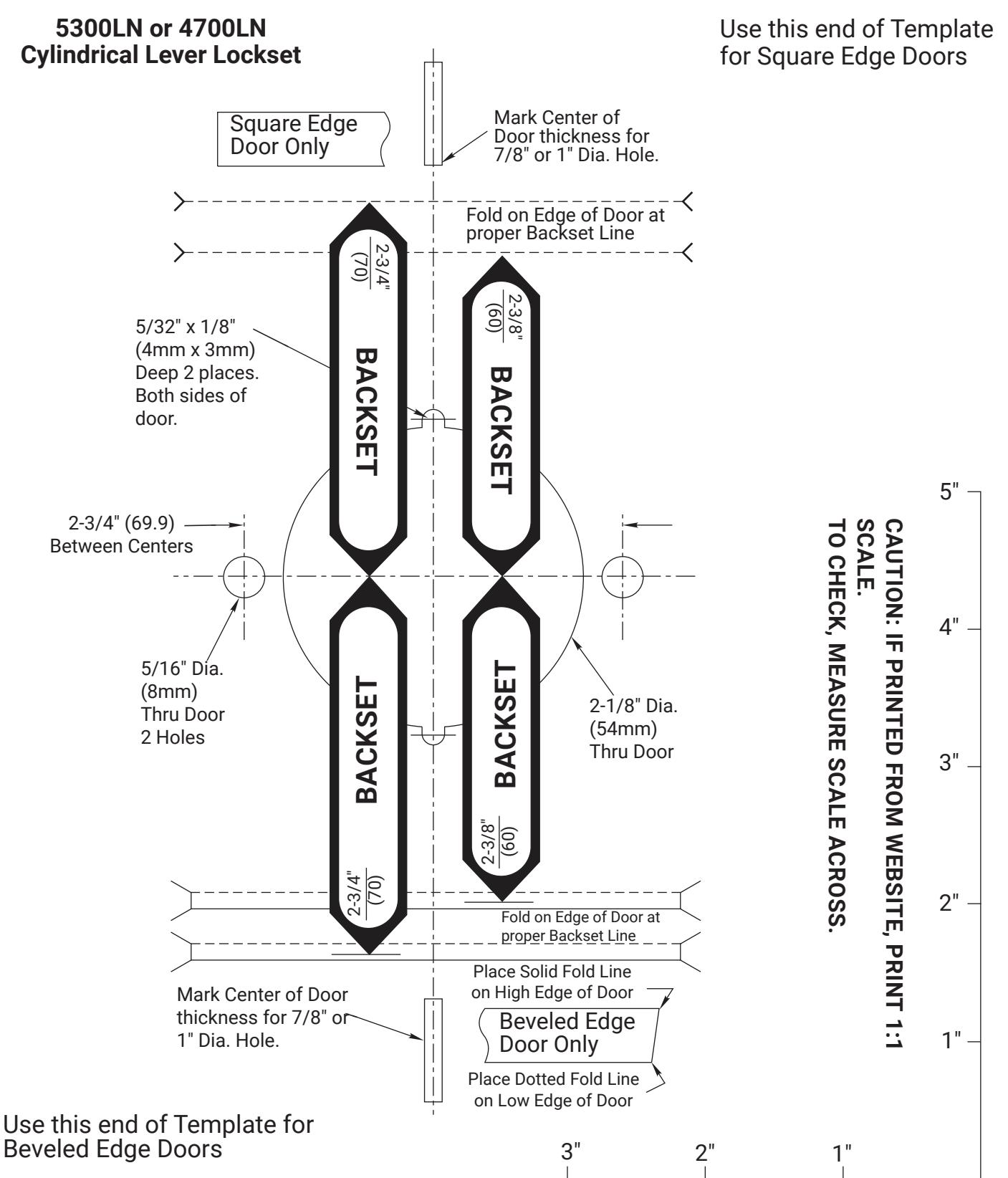
Mark horizontal line across edge of door for centerline of lock at desired installation height. Fold template over edge of door, centering on horizontal line. Mark centers of holes at proper backset.
NOTE: For beveled and square edge doors mark both sides of the door. Be sure to verify backset before marking & drilling door.
B. Drill Door
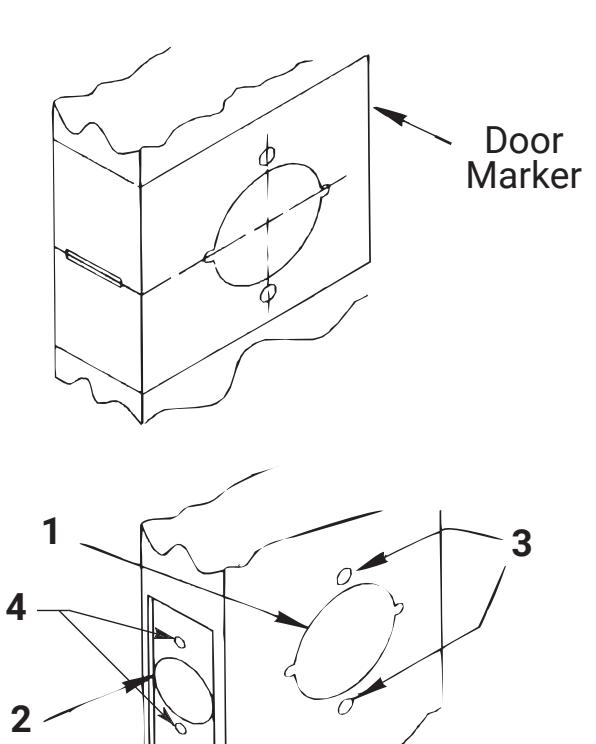
- 1. Drill 2-1/8" (54mm) dia. hole thru the door. Cut notches as shown on template. See note. (Except Dummy Trim)
- 2. Drill 1" (26mm) dia. hole in edge of door. Mortise for latch front 1-1/8" (29mm) wide x 2-1/4" (57mm) high x 5/32" (4mm) deep. (Except Dummy Trim)
- 3. Drill two (2) 5/16" (8mm) dia. holes thru door. See note.
- 4. Drill pilot holes for latch screws. 7/64" (2.5mm) dia. (Except Dummy Trim)
NOTE: To avoid splintering wood doors, drill holes (1) and (3) from both sides of door.
WARNING
This product can expose you to lead which is known to the state of California to cause cancer and birth defects or other reproductive harm. For more information go to www.P65warnings.ca.gov.
WARNING
Attention Installer: Any retrofi t or other fi eld modifi cation to a fi re rated opening can potentially impact the fi re rating of the opening, and ASSA ABLOY makes no representations or warranties concerning what such impact may be in any specifi c situation. When retrofi tting any portion of an existing fi re-rated opening, or specifying and installing a new fi re-rated opening, please consult with a code specialist or local code offi cial (Authority Having Jurisdiction) to ensure compliance with all applicable codes and ratings.


2. Installation
C. Install Latch
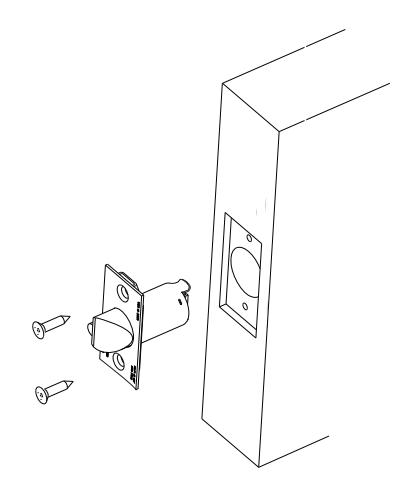
Insert latch in door. (Be sure bevel edge of bolt faces strike plate.) Attach with two screws supplied.
D. Unpack Lock
2. Installation
E. Adjust lock for door thickness (if necessary)
(Lock is packed pre-adjusted for 1-3/4" (44mm) doors. Available for 2-1/4" (57mm) doors upon request.)
To Adjust for Thicker Door
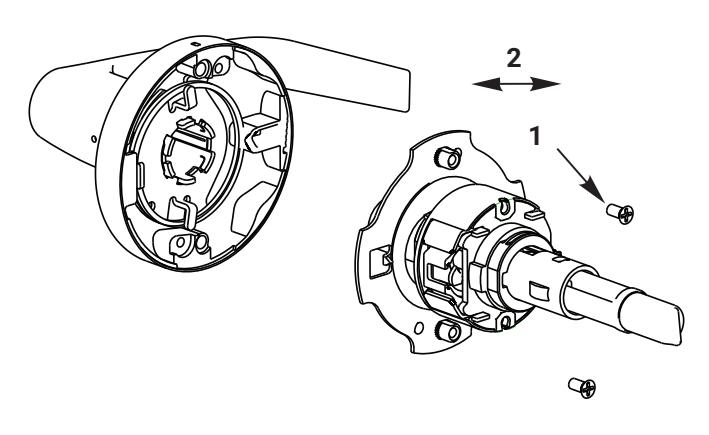
- 1. Remove two (2) screws from outside rose.
- 2. Slide outside rose away from lock body.
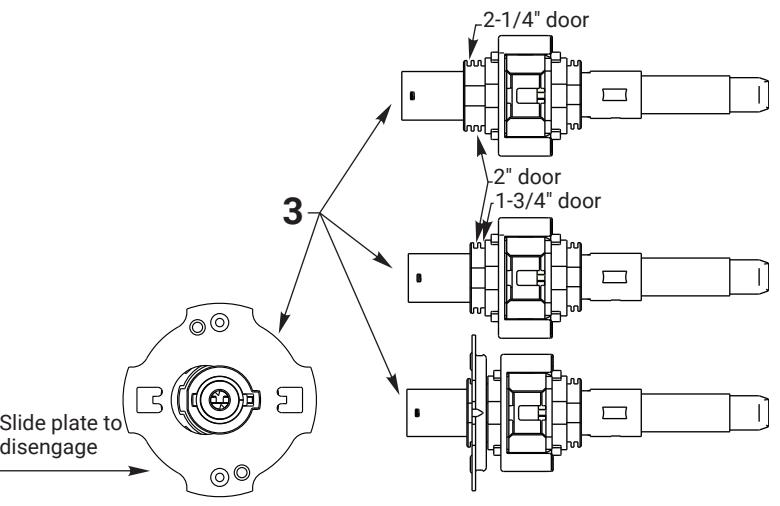
- 3. Adjust rose plate to desired door thickness per illustration at right.
- 4. Fasten outside rose to lock body with two (2) screws.
F. Install Lock
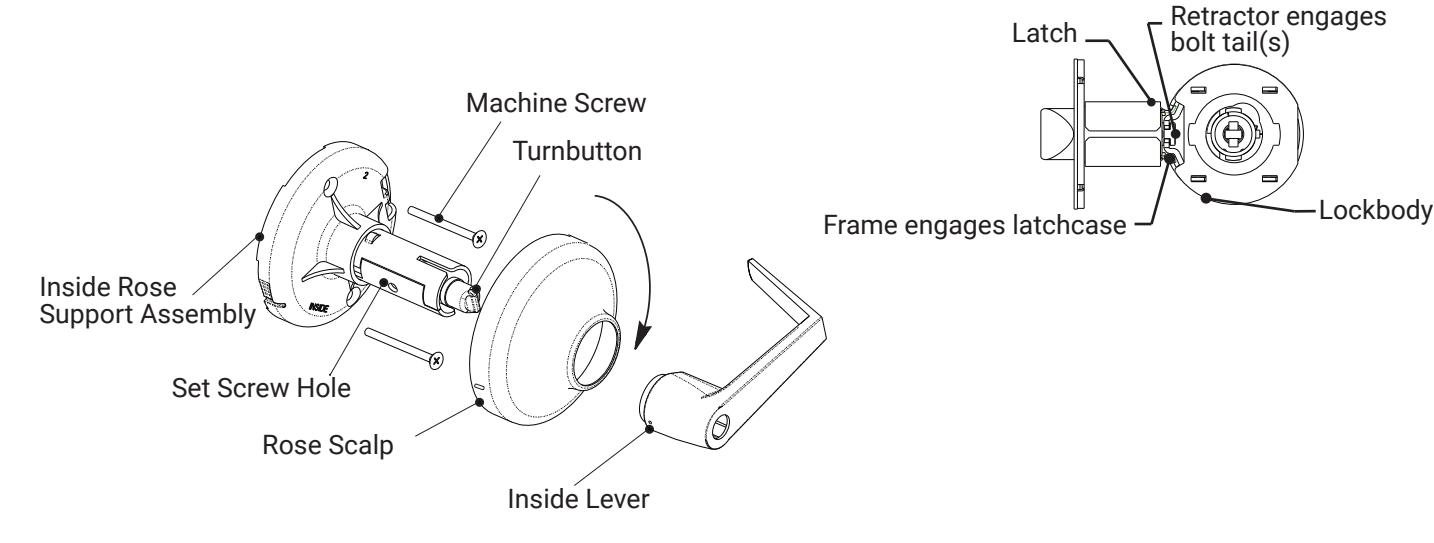
Insert lockbody into door from outside making sure that lockbody frame hooks latch case and retractor engages bolt tail(s). DO NOT FORCE. (If lockbody does not engage latch easily, check door preparation for errors.)
G. Install Inside Components.
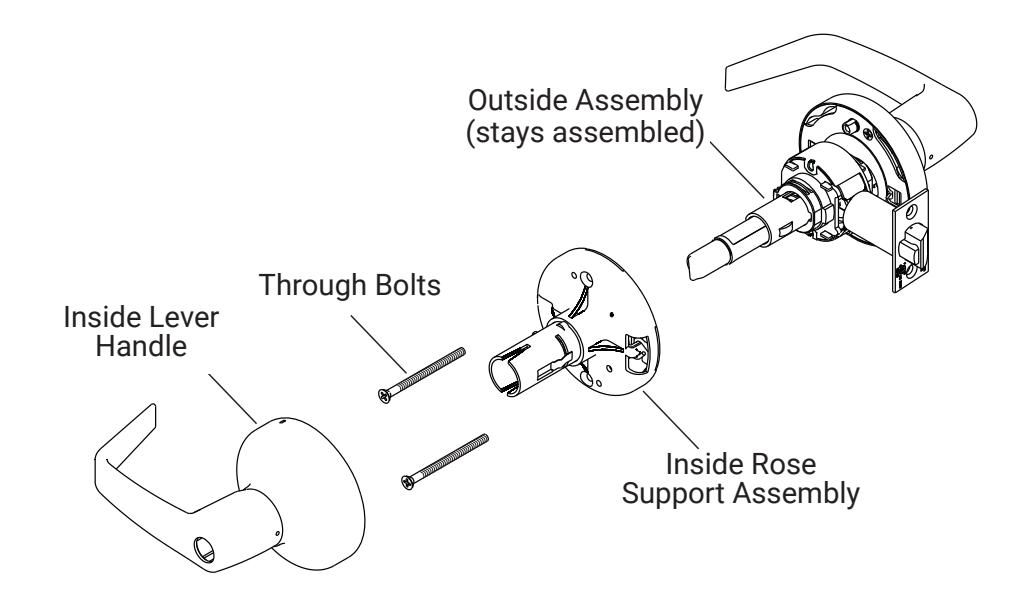
- 1. Slide inside rose support assembly onto lockbody and tighten through bolts.
- 2. Place rose scalp on rose support assembly aligning the dimple with the notch. Rotate the rose scalp clockwise to lock.
- 3. Note: Repeat on outside rose if necessary
- 4. Install lever handle. For double cylinder functions, install the inside cylinder and lever as shown on the next page.

2. Installation
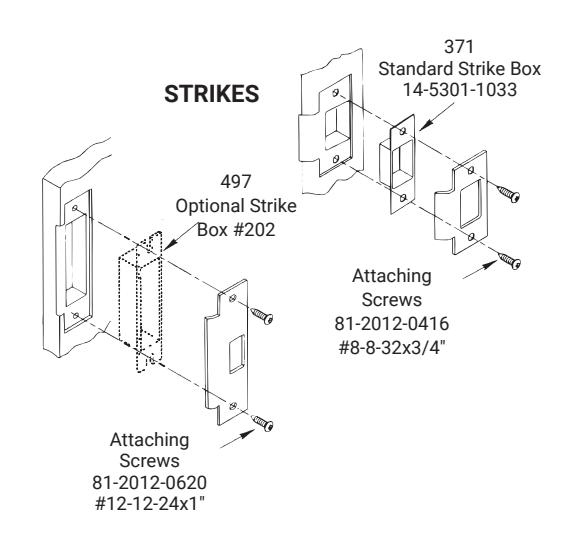
H. Strike Installation (Wood Frames Only).
- 1. Close door and mark a horizontal line from the center of the template to the frame of the door.
- 2. Measure half the thickness of the door. Mark this same distance with a vertical line starting from the stop side of the frame and where both lines cross. Make a 1 inch (26mm) diameter hole and 1/2 inch (13mm) in depth.
- 3. Align the holes of the strike with the vertical line. Trace the outline of the strike and mortise with 1/16 inch (1.6mm)depth. Attach the strike with two screws (provided).

TEST THE OPERATION OF THE LOCKSET
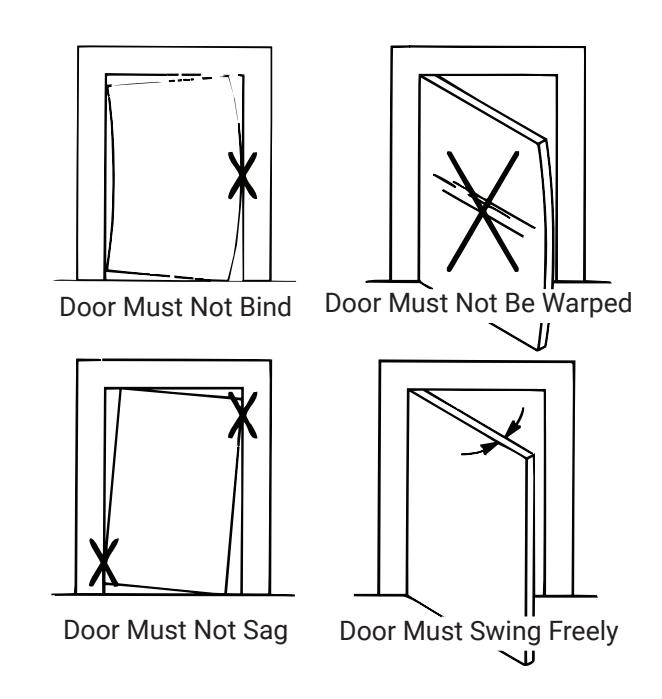
Cycle the lock in both the locked and unlocked positions. If lock functions smoothly when door is open, but binds when closed, check door and frame alignment. If problems are found see Troubleshooting below.
3. Troubleshooting
- 1. Check door.
- 2. Check hinges. They should not be loose or have excessive wear on knuckles.
- 3. Latchbolt will not deadlock.
- 4. Either strike is out of line or gap between door and jamb is too great.
- 5. Realign strike or shim strike out towards flat area of latchbolt.
- 6. Latchbolt does not retract or extend properly.
- 7. Latchbolt tail and retractor not properly positioned.
- 8. Remove lockset. Look through 2-1/8" hole and verify latchbolt tail centered between top and bottom of hole.
- 9. Remove latchbolt and insert lockset. Look through latch hole and verify retractor mouth centered in hole. Adjust outside rose plate if not. (See E on page 3)
- 10. Rebore holes if necessary to line up retractor and tail.

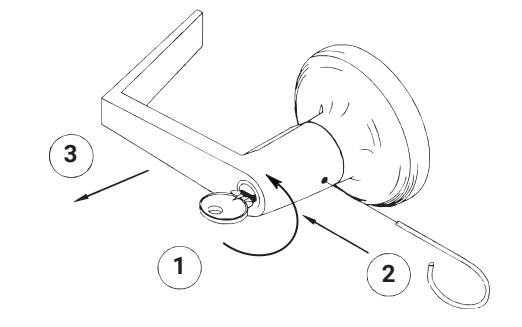
- 1. Insert key and rotate 45° counterclockwise.
- 2. Depress retainer with tool provided.
- 3. Slide lever off lock. (Also applies to inside lever of 5321LN or 4721LN Function).
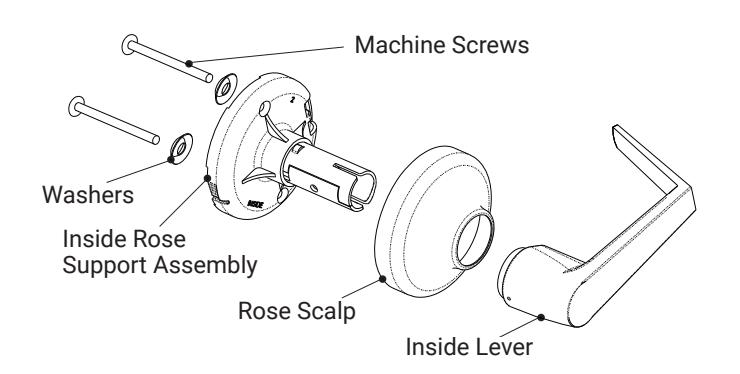
5. Dummy Trim Installation
Secure the Rose Support assembly to the door using screws and washers provided and install the rose scalp and inside lever.
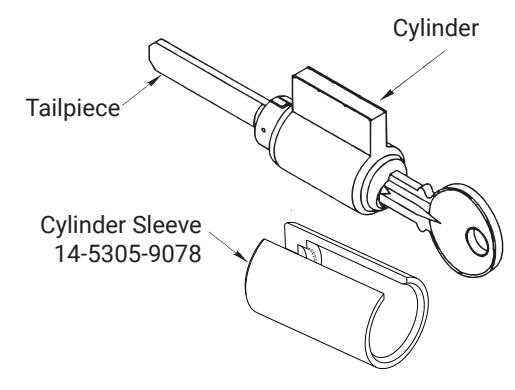
6. To Replace or Install Cylinder
- 1. Remove the sleeve from inside the shank or from the old cylinder.
- 2. Slide cylinder into sleeve.
- 3. Rotate key 45° counterclockwise. Depress retainer plate, push the handle onto the shank until fully seated. Pull on handle to ensure properly seated.
NOTE: (Cylinder and Sleeve must be properly installed or the security of the lock will be compromised.)
5328LN, 5329LN, 5339LN, 4728LN, 4729LN or 4739LN Functions Only Adjust for Door Thickness
80-9150-0060-010 04/24
7. Finish Care
This lockset is designed to provide the highest standard of product quality and performance. Care should be taken to insure a long-lasting finish. When cleaning is required use a soft,damp cloth. Using lacquer thinners, caustic soaps, abrasive cleaners or polishes could damage the coating and result in tarnishing.